For a versatile two-in-one build, review our hybrid golf bags — A corporate event golf stand bag is a long-lived brand asset, not a one-day give-away, so the design principle is restraint — a clean hero lockup in the corporate colourway on a quality-feeling 6-way or 14-way build, planned backwards from the event date so the 10-20 day sampling and 45-60 day bulk window clear the calendar with margin. This guide walks a marketing or events team through architecture, branding, MOQ, and QC for a corporate program that lands on guest shoulders and keeps working for years.
Corporate golf days, client-appreciation events, and tournament sponsorships all share one goal: a gift that feels considered rather than promotional. A branded stand bag sits in a guest's rotation for seasons, which makes it one of the highest-value items in a corporate golf budget. The factories serving QUANZHOU JUNYUAN BAGS build these programs on an audit-tested affiliated line, so the brand value is backed by real manufacturing quality rather than a veneer.
Key Takeaways
- A corporate bag is a multi-season brand asset — design with restraint.
- 6-way carry or hybrid for broad give-aways; 14-way for VIP or principals.
- Plan backwards: 10-20 days sampling plus 45-60 days bulk.
- Regular MOQ 200 pieces with 100-piece test orders.
- QC: stand cycle, zipper cycle, strap load, drop test, AQL inspection.
Why a Corporate Golf Bag Is an Asset, Not a Swag Item
The strategic difference between a corporate golf stand bag and most event swag is lifetime. A pen or a cap gets used briefly and discarded; a quality stand bag is carried on the course for multiple seasons and often becomes the guest's regular bag, which means every round they use it is an impression of your brand. That makes the perceived value of the gift matter as much as the unit cost — a bag a guest keeps is worth far more than a cheaper bag they rehome.
This changes the design philosophy. Instead of maximising logo area, the strongest corporate bags are tasteful: a clean brand lockup in the corporate colourway, a quality-feeling fabric and build, and a usable feature set. Restraint reads as premium, and premium builds brand equity. When you brief a factory, lead with the feeling you want the product to convey — "a gift a client would keep" — then let structure, material, and branding support that brief. The factory's engineering team can then balance the feature set and the price point to match your corporate tier.
Architecture Choice: Match the Bag to Whom You Honour
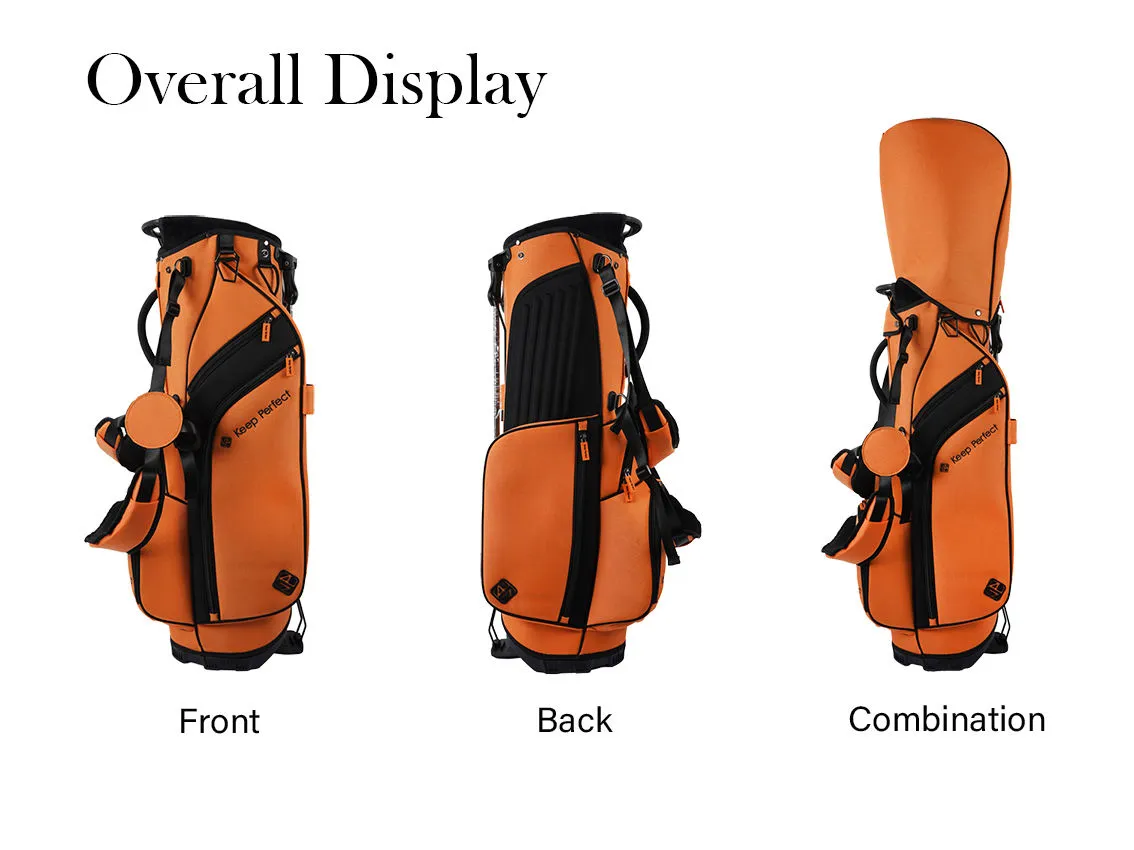
A corporate event usually consists of several tiers of guests, and a single architecture rarely fits every tier. For broad give-aways across a client golf day, a mid-range 6-way carry or hybrid bag balances cost, weight, and perceived value, and the brand carries the premium feel. For a headliner or VIP package, a 14-way full-length bag signals a conclusion and protects the guest's clubs — appropriate for a prize, a principal sponsor's gift, or a very senior client. A lightweight structure suits resort-style days and easier carrying.
The architecture sets the divider, weight, and material before branding. Decide the audience per tier, confirm the divider count and whether it is full length, pick the shell (a 400D shell keeps weight and cost down for broad give-aways; a 600D or TPU shell suits premium tiers), and set the stand and strap expectations. If an event runs both a broad give-away and a VIP bag, plan two architectures on the same colourway so the brand reads consistently across the tiers. Lock this before sampling so cost, weight, and price tier all stay aligned.
Branding with Restraint: The Hero Lockup and Colourway
Corporate branding is where restraint pays the highest return. Place a single clean hero lockup on the highest-visibility, lowest-flex zones — the front lower panel and the top lid — and resist covering every panel with logos. The method should match the brand: an embroidered mark reads classic and durable on nylon; a molded patch gives a raised, premium lockup; a tonal or debossed-style mark using the brand's Pantone colours feels understated and expensive. Provide vector AI or EPS artwork with fonts outlined and Pantone-separated colours.
The colourway should be your brand's palette, tested against the production fabric, because a corporate logo that disappears into a dark shell defeats the purpose. Choose the base colour before the logo colour, and request a colour chip pack or a small trim-down before bulk. On the course, a contrast panel or a tonal logo helps the brand read at distance and in photographs. Because many corporate programs are recorded and photographed, a clean, legible lockup is itself a marketing asset. This is where a corporate bag becomes a walking brand statement rather than generic merch.
Feature Set: A Premium Feel Without Overbuilding
A corporate bag should feel premium without becoming a costume of features. Choose a small, usable feature set that matches the audience: a rangefinder pocket for the frequent player, a valuables pouch with a soft lining for the client day, or a lightweight structure for easy carrying. One or two signature touches read more premium than a cluttered bag, and they keep the weight down and the QC list short. The perceiver judges "quality" as much by how the bag balances and closes as by the badge.
Each feature has a cost and weight contribution, so decide it against the bag's target. A magnetic rangefinder pocket adds hardware but is a widely recognised high-value touch; a padded valuables pouch adds a soft fabric and perceived care. Because the bag is a gift, the small details matter — the zipper pull feel, the strap padding, the stand deployment smoothness. Brief the factory on the audience so it tunes these details to premium rather than utility. On the corporate tier, the difference between "a bag with a logo" and "a gift" is precisely this attention to the small finishing touches.
Planning the Timeline Backwards From the Event Date
A corporate event has a fixed date, and a custom stand bag program has fixed production windows — about 10-20 days for sampling and approval plus 45-60 days for bulk production. The disciplined approach is to plan the calendar backwards from the event: subtract the delivery and buffer, subtract the bulk window, subtract sampling, and subtract your own design and approval time. That yields the day you must send the first brief, and it should sit comfortably ahead of the event with room for one design revision.
Commit the event date to the factory in writing so it reserves material and production capacity, which both protects the timeline and often prices better than a rush order. February-limited production runs are avoided by reserving the line early. The teams with successful corporate programs treat the event date as non-negotiable and build the buffer in from day one, rather than discovering mid-way that the sampling round ran long. Starting early is the cheapest risk-control a corporate buyer can apply to the whole program.
MOQ, Cost Tiers, and a Real Sample Before Commit
Corporate budgets are set before the design, so keep cost predictable with a tiered approach: a base tier (6-way, single-colour hero embroidery), a value tier (premium 600D shell, rangefinder pocket), and a premium tier (14-way full-length, TPU package, molded patch). Our affiliated facility runs a regular MOQ of 200 pieces per model with test orders from 100 pieces, so a corporate program can start with a small test run to photograph the real branded unit — the most persuasive proof of the gift's quality — before committing to the full quantity.
The test run is especially valuable for a corporate product because brand decision-makers need to see and hold the physical item before signing off. Approve a pre-production sample built on the exact production fabric with the real thread and hardware, so what the decision-maker approves is what ships. Lock materials, the hero lockup, and the colourway before bulk, and keep the sealed master plus a Pantone chip for any future corporate programs or reorders. This discipline keeps the MOQ business-focused and the deliverable predictably premium.
QC for a Gift That Must Reflect the Brand
A corporate gift carries the brand on its logo, so QC is about protecting both quality and reputation. Run in-line QC checkpoints at cutting, sewing, assembly, and final inspection, and a first-article check on the first unit so a systematic defect is caught early. Tie functional tests to the actual run: a stand deployment cycle test, a base stability check, a zipper cycle test, a strap anchor load test, and a packed drop test, with pass/fail criteria written into the PO. AQL-based inspection with clear defect classes keeps the lot consistent.
Because the visible branding is the whole point of a corporate bag, add a branding checkpoint that verifies logo registration, thread colour against the approved chip, and placement coordinates against the placement spec. Verify wash, edge, and finish quality so a gift bag feels as premium in the hand as it does in the render. For the widest consistency, define a sample size per carton and per lot and record the acceptance numbers, so the corporate buyer can inspect a documented program rather than a promise. This is how a gift maintains the brand's standard all the way to the guest.
Presentation, Packing, and the Delivery Buffer
The delivery impression matters as much as the bag itself, so plan the presentation and packing with care. A corporate gift often benefits from a clean hang tag, a premium poly or dust-bag cover, and clear branded packing that makes the unboxing feel deliberate. Confirm the carton count per carton and the packed dimensions, because stand bags are bulky relative to their weight and the packing affects both freight cost and whether the bag arrives immaculate. Agree Incoterms early so risk and freight sit where your finance team expects.
Reserve a two-week buffer for shipping and delivery after bulk production, and run a pilot of a few cartons to verify the pack-out against the technical file before the full shipment. If the event spans gift tiers, confirm the packing segregates the tiers with clear labels so distribution is simple on site. With the event date fixed and the buffer built in, the program ends cleanly: a documented, on-time delivery of a premium branded bag that reflects the company throughout. This closing discipline turns a well-designed product into a well-executed corporate gesture.
Specification Table (Whitepaper View)
Use this table to structure the corporate brief and align every tier with the factory.
| Parameter | Broader Give-Away | Value / VIP Tier | Corporate Plan Detail |
|---|---|---|---|
| Architecture | 6-way hybrid/carry | 14-way full-length | Match to honoured tier. |
| Shell material | Nylon 400D | 600D or TPU-coated | Name denier and finish. |
| Branding | Single hero lockup | Molded patch / premium lockup | Use corporate Pantone; vector art. |
| Features | Rangefinder / valuables | Rangefinder + lined valuables | Premium-feel without clutter. |
| MOQ | Start 200 pcs / test 100 | Per tier per colourway | Photograph the real branded unit. |
| Timeline | Sampling 10-20 d, bulk 45-60 d | Add buffer | Work back from event date. |
| QC | AQL + stand/zipper/strap/drop | Plus branding checkpoint | Protect quality and reputation. |
Recommended Internal Links
- Products (Stand Bag Architectures)
- OEM/ODM Service
- Factory & QC
- Golf Stand Bag Buying Guide
- Creative Custom Logo Ideas
- How to Choose Customization Features
A Corporate Program & QC Checklist
Use this list to keep a corporate gift program premium and on time.
- A backward calendar from the event date with a two-week buffer
- Architecture per honoured tier chosen before branding
- A clean hero lockup with a placement spec and corporate Pantone
- Vector AI/EPS artwork, fonts outlined, audited before sampling
- PPS approved on production fabric; sealed master + chip kept
- AQL inspection + stand/zipper/strap/drop tests + branding check
- Presentation, pack-out, labels, Incoterms, freight buffer
Branding Multiple Corporate Tiers Without Diluting the Look
Corporate events often run several tiers — a broad give-away for many guests and a smaller, more premium tier for principals or sponsors. Multi-tier branding works best when every tier shares one crest and palette, so the fleet reads as one brand even though the builds differ. Set a placement spec that works across tiers: the hero lockup lives on the front lower panel and lid, and any co-brand or sponsor mark is confined to the side panels. Then vary the banding method by tier — a single embroidered hero on the give-away, a molded patch on the premium — so the premium bag feels richer without redesigning the whole identity.
Keep the shared branding rules in one document so the agency, the factory, and the print partners stay aligned: the exact vector files, the Pantone references, the placement coordinates, and the minimum clear space. When a reorder or a next-season version arrives, the same spec reproduces the same look, which is what keeps a corporate program looking intentional year after year. The teams that manage multi-tier branding this way get the coherence of a single program with the flexibility of different price points, and they avoid the fragmented, unbranded look that comes from letting each tier find its own design.
Pantone Control and Label Compliance for a Corporate Program
Colour discipline is what keeps a corporate bag exactly on brand, and it starts with anchoring every colour to a physical reference. Provide a Pantone reference for the base shell, each trim, and the logo, and confirm them against physical chips on the actual production fabric — the same Pantone number reads differently on a 400D nylon than on a 600D coated shell, so a colour that looked right on a screen can drift once sewn. Lock the thread and embroidery colours separately, and keep a sealed colour master so the whole corporate fleet and any future reorder reproduce the identical brand tone.
Label compliance is the quiet risk in a corporate gift that ships to high-profile recipients. Confirm the interior label, care label, and material composition label, plus any country-of-origin or fibre-content labels your market and the recipient's country require, and verify them on the pre-production sample before bulk. A branded gift that misses a mandatory label can be refused at customs or embarrass the brand at the handover, undoing the months of careful work. Because the bag represents the company, keep a sealed label master and audit every label's layout and information before production. Colour and label control is how a corporate gift lands perfectly on brand and without risk at the event.
Sustainable and Ethical Brand Choices in Corporate Gifting
Corporate buyers increasingly tie gifting to sustainability and ethical sourcing, and a custom stand bag can carry that message honestly. Recycled or responsibly sourced shell fabric, reduced-water dyeing for the colourway, and recyclable or minimal packaging give the corporate gift an environmental narrative that aligns with the company's values and appeals to guests. A small woven "recycled materials" label or a clearly designed colourway tied to a sustainability initiative turns the bag from a promo item into a statement the guest may mention in follow-up conversations with the brand.
Make the sustainability claim verifiable: name the recycled-content fabric and the dyeing method, confirm the packaging, and verify on the pre-production sample rather than accepting a verbal assurance. An honest sustainability angle also guides the budget sensibly — a recycled shell added at the base tier costs less than a stack of trims and gives the marketing team a clearer story. For a company already investing in ESG reporting, a program with a documented, audit-tested supplier reinforces the broader message. This is how a generous gift becomes a values-aligned, brand-positive statement rather than a generic expense.
FAQ
What makes a good corporate golf stand bag?
A clean brand lockup in the brand's colourway, a quality-feeling build, and a usable feature set such as a rangefinder or valuables pocket. The bag should feel like a premium gift, not a logo-billboard, so restraint in branding often lands better.
Which bag architecture suits a corporate event gift?
A mid-range 6-way carry or hybrid bag balances cost, weight, and perceived value for most corporate days. A premium 14-way bag suits VIP or principal gifting, while a lightweight build fits broader give-aways. Match architecture to whom the event honours.
What MOQ do I need for a corporate branded golf bag?
Our affiliated facility runs a regular MOQ of 200 pieces per model with test orders from 100 pieces. A corporate program usually sits comfortably within this range, and a small test run can photograph the real branded unit before committing.
How long does a corporate branded golf bag take to produce?
With a clear brief, expect about 10-20 days for sampling and approval plus 45-60 days for bulk production. Plan backwards from the event date and lock branding early so a design revision does not push the ship date.
How should corporate branding be placed on a golf bag?
Use a clean hero lockup on the front lower panel or lid, keep sponsor or co-brand marks on the side panels, and consider an interior label for a full partner list. Lock method, colour, and placement before sampling to avoid a revision.
Is a custom golf stand bag a good corporate gift?
Yes, when it aligns with the guest and the event. It is a high-perceived-value, long-lived item that keeps the brand in the rotation for years. Winning or attending guests typically keep and reuse the bag, which extends the branding far beyond the event day.
Request a B2B quote for golf stand bags
Send your target market, expected MOQ, and reference photos. We respond within 24 hours with a sampling plan.