For the most compact small carry, see our pencil bags — Practice golfers can also browse our range and simulator golf bags — A B2B buyer can build a genuinely sustainable golf stand bag today by specifying GRS-certified recycled polyester or recycled nylon for the shell, water-based and PFAS-free coatings, recycled hardware, and certified recycled fabric for the lining, with the total component mix typically adding 8-15% to unit cost while holding abrasion resistance at 20,000+ cycles. This guide turns a broad sustainability goal into the concrete material, certification, and QC decisions we apply at our affiliated SGS-verified plant in Quanzhou, an 4,950㎡ facility of 4,950 sqm, 7 production lines, and 149 machines, so your brand claim is backed by an audit trail rather than a marketing phrase.
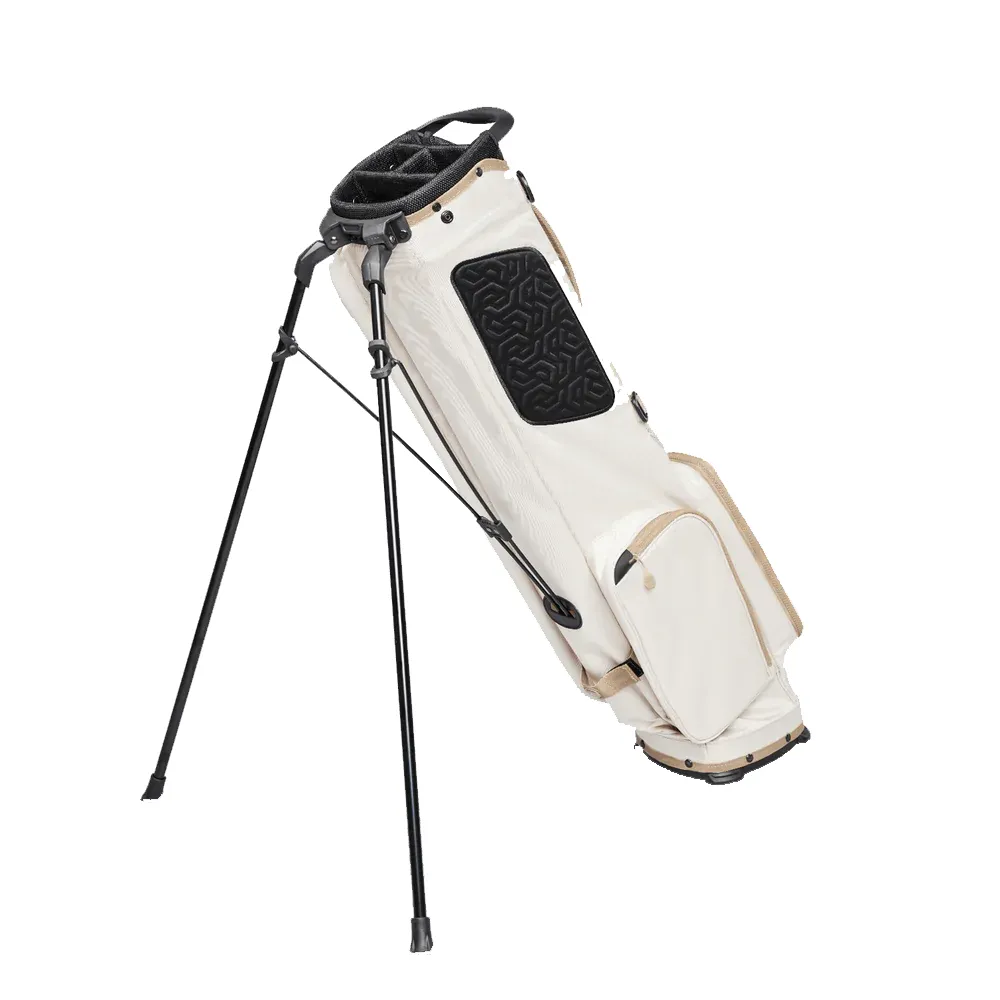
Key Takeaways
- Recycled polyester and recycled nylon are the practical hero materials; GRS backs the recycled-content percentage with an audit.
- A movable 30-60% recycled share on shell panels keeps performance and holds cost uplift to about 8-15%.
- Water-based and PFAS-free coatings, recycled zipper tape, and webbing matter more to a credible claim than a single hero fabric.
- Print only claims your tech pack can prove; vague words create compliance and greenwashing risk.
- Qualify recycled fabric with the same abrasion, tear, and colorfastness tests as virgin so your eco bag does not underperform.
Why the material spec is the real sustainability lever
When retailers and procurement teams talk about a "sustainable golf stand bag," the phrase maps to a handful of measurable choices: what the shell is woven from, how it is coated, what the lining and padding use, and how the hardware and thread are made. None of this is decided by a single logo or a green hang tag; it is decided in the material to-do list you hand to the factory before a single sample is cut. The fastest way to waste a sampling round is to ask for an "eco-friendly bag" without naming the fiber, the recycled-content percentage, the coating chemistry, and the certification you want the certificate to carry.
The economics are the second reason the spec matters. A recycled-content program usually does not scale like a single premium fabric; it scales with the share of the bag that actually uses recycled input. Putting GRS-certified recycled yarn into the face of a 600D shell, the lining, and the interior webbing is a very different cost picture from upgrading only an outer panel. In practice, buyers who move the needle cost-efficiently start with the two biggest surface areas — the main shell and the main lining — and then add recycled zipper tape, webbing, and hardware trim once the unit-cost picture is clear. This is where the 8-15% uplift figure comes from, and it is controllable only if the material share is written down and sealed at the sampling stage.
The material options ranked for a stand-bag build
For a lightweight stand bag that still has to survive a season of course abuse, the realistic list of sustainable shell fabrics is narrower than the marketing suggests. Recycled polyester (rPET) in 400-600D is the workhorse: it reuses PET bottles and post-industrial fiber, holds color well, and its abrasion and tear performance sits within a few percent of virgin polyester when the denier is held constant. Recycled nylon is the premium upgrade — stronger per gram and better in rains and on rough terrain, but it carries a higher fibre price and a tighter supply. On the trim side, water-based PU coatings and water-based synthetic leather are replacing solvent-based coatings, which cuts VOC emissions in finishing and avoids the headline chemical risk in many green claims. Recycled zipper tape, recycled webbing, and barley or cork accents for the branding patch round out a credible, packageable system.
The honest caveat is that "bio-based" fabrics and experimental materials are rarely economical at the 500-2,000-unit quantities most custom programs start at, and many are not yet available in the deniers a stand bag needs. For that reason, the repeatable, certification-backed path for a brand is recycled-content synthetic fiber plus low-impact coatings, not an exotic plant fiber. When a client pushes for something unusual, we recommend a small trim-down sample first — 20-30 units — to confirm the material survives the stand hinge flex and the zipper pulls before you commit to bulk production of 45-60 days at our Quanzhou facility.
Recycled content and the numbers you should lock
A credible environmental claim is a percentage, not an adjective. If you want to say on a hang tag that your bag "contains recycled polyester," the supplier should be able to show the recycled share of the fabric lot on the dye-lot certificate. GRS is the standard that makes this auditable: the Global Recycled Standard verifies the recycled content with a chain-of-custody and adds requirements on environmental management and social responsibility across the certified facilities. In a typical certified program, a fabric that is "100% GRS recycled polyester" means the input yarn itself is reclaimed, which is the strongest single-fiber claim you can print.
Most practical custom bags do not need every gram to be recycled to make a defensible claim. A common, credible architecture is a 60% recycled-content shell in 600D rPET, a fully recycled lining, recycled zipper tape, and metal hardware with a proportion of recycled content. That mix lets you state a specific percentage that a lab or a fabric supplier can verify, which is exactly the kind of claim that survives a retailer compliance review. The thing to avoid is a claim like "eco-friendly bag" with no percentage and no certificate, because modern retail compliance teams probe for it, and a failed claim can stop your product from listing at all.
| Sustainability Parameter | Typical Spec for Brand Line | Buyer Note |
|---|---|---|
| Shell face fabric | 600D recycled polyester (rPET), GRS-verifiable | Hold denier; keep tear/abrasion targets equal to virgin. |
| Recycled-content share | 60% on shell, 100% lining (target) | State an exact % you can evidence per dye lot. |
| Coating / finish | Water-based PU, PFAS-free | Ask for the coating chemistry and a declaration. |
| Abrading reinforcement | Recycled 600D or recycled nylon at stress zones | Same denier as virgin; qualify with abrasion test. |
| Zipper tape / webbing | Recycled yarn where possible | Small cost adder, large credibility gain. |
| Certification | GRS (fabric) / Oeko-Tex Standard 100 (product) | Confirm certificate scope covers the articles you ship. |
| Cost uplift | +8-15% vs equivalent virgin build | Driven by material share and chain-of-custody fees. |
Coating and chemical content: the hidden claim
Many buyers fixate on the recycled yardage and forget that a stand bag spends its life outdoors, which means coatings and finishes carry most of the chemical risk in a sustainability review. The mainstream move is water-based, PFAS-free coatings: they keep the bag lightweight and water-repellent for fair-weather use without relying on the fluorocarbon chemistry that triggers scrutiny in the EU and North America. If your product brief calls for full waterproofing, the chemistry shifts to a TPU or PU laminate layer, and the environmental claim changes too — a fully waterproof bag is not typically the same lightweight, breathable carry bag, so we help you pick the trade that matches your retail story.
The declaration side is where programs stall. A coating is typically described by its chemistry and its PFAS status, and the factory should be able to hand you a materials declaration that states the coating type, the absence of targeted restricted substances, and the test method, such as an EN 14350 or a PFAS screen. In the EU market especially, this feeds directly into REACH documentation, and in the US it connects to California Prop 65 exposure assessments for components the user touches. Locking the coating declaration at sampling, not during bulk, is what stops a late-stage chemistry surprise from blocking a shipment.
Certifications your supply chain should carry
The three certifications that matter most for a sustainable stand-bag program are GRS for recycled fiber, Oeko-Tex Standard 100 for product-level chemical safety, and, where a buyer sells into regulated markets, an additional Restricted Substances List (RSL) compliance document aligned to REACH and Prop 65. GRS is about recycled content; Oeko-Tex is about what is not in the finished article; an RSL declaration is the practical document that connects both to a real market. You rarely need all three on day one, but a buyer targeting German or Nordic retail will almost always be asked for the Oeko-Tex certificate and a REACH-relevant declaration before a purchase order is cut.
The practical instruction for a small order is to check the scope of each certificate. A GRS certificate on a fabric dyed lot says that lot's recycled content; it does not automatically certify the zipper or the webbing. An Oeko-Tex certificate can be issued for an article or for a material class, and the wording matters when you forward it to a retailer. We walk clients through what each document actually covers so that the claim they print matches the evidence they hold, which is the single best defence against a greenwashing complaint.
Documentation and the audit trail a buyer should demand
Every credible sustainability program rests on a folder of evidence rather than a single certificate. The files a buyer should collect and keep with the artwork are the fabric supplier's dye-lot test report, the GRS or recycled-content certificate for each affected material, the water-based and PFAS-free coating declaration, the Oeko-Tex Standard 100 certificate where the target market requires it, and the materials declaration that lists each component and its recycled status. When these are in hand, a retailer's compliance team can approve a product from documents alone; when they are missing, even a well-made bag can be held at a distribution center waiting for paperwork.
The discipline matters most at reorder time. Because a sustainability claim is tied to a specific dye lot and certificate, a reorder in a later season should reuse the same certified material or re-qualify a new lot before bulk production. At QUANZHOU JUNYUAN BAGS we freeze the evidence set with the sealed master, so a relaunch later matches both the performance and the documentation of the first run. This is the practical difference between a sustainability story and a sustainability system, and it is what protects the claim across multiple seasons, price renegotiations, and retailer audits.
Thread, padding, and hardware: the small components that decide credibility
A sustainability program is undermined faster by a visible inconsistency than by a wrong percentage. If the hang tag says "recycled shell" but the zipper is a standard nylon coil and the webbing is virgin, a sharp retailer or consumer will notice, and the claim loses trust. The cheap wins are recycled zipper tape, recycled webbing on the carry straps, and recycled or low-impact thread. The padding inside a stand bag — the cushioned dual straps and the foam that shapes the bag — is often the least visible and the most controversial, so many programs specify recycled or bio-based EVA foam where the performance permits.
None of these small components needs to be exotic. Recycled zipper tape and recycled webbing are produced at scale in China and carry modest premiums, and laptop-grade recycled EVA foam is available from mainstream suppliers. The effect on the unit cost is usually under 2%, yet these are the components a compliance auditor will check against the spec sheet. If you intend to make a public claim, list every material component on a single page — shell, lining, coating, thread, webbing, zipper, hardware, foam — with its recycled status, so the technical evidence matches the packaging.
Cost engineering an eco build without giving up performance
The mistake most teams make in eco sourcing is treating sustainability as a single upgrade. The smarter approach is to distribute recycled content where it costs least per square metre of visible surface. Start with the liner and inner panels, move to the main shell, then reserve the premium recycled nylon for the highest-wear panels like the base, back shield, and stand-hinge reinforcement. This way the hero material appears in the places that photograph well and wear fastest, while the cheaper recycled polyester keeps the surface area and unit cost under control.
Because our affiliated plant runs 7 production lines and 149 machines, we can prototype a recycled build and a virgin-equivalent build side by side on the same sample round and let you compare weight, cost, and test results directly. Sampling at our Quanzhou facility runs 10-20 days, and a bulk program typically runs 45-60 days. If you are targeting a season date or a retailer compliance window, tell us the deadline and we will schedule the material qualification and the inline inspection to hit it. Standard first orders start at an MOQ of 200 units, with 100-unit test orders for qualification runs.
Certifications, labels, and what to print
The label is where the entire sustainability effort is communicated, and it is the part most likely to invite a challenge. Two label layers matter. First, the fiber-content label that states recycled content and material names should match the fabric's dye-lot record. Second, the claim line on packaging — whether you say "made with X% recycled content" or "PFAS-free" — must be supportable by the certificate and by a materials declaration. If a retailer or a regulator asks, you should be able to name the standard, the lot, and the test.
The safe way to phrase a claim is to be specific and qualified: "Shell: 60% GRS recycled polyester," "Water-based, PFAS-free coating," "Recycled zipper tape." These read as engineering facts, not marketing, and they are easy to evidence. Vague or absolute claims — "100% sustainable," "planet-friendly," "zero waste" — are exactly the wording that triggers greenwashing scrutiny in the EU and US markets. If your brand story needs a tonal phrase, keep it on the brand side of the hang tag, separate from the technical claim, so the line between emotion and evidence stays clear.
Test plan: prove the eco bag performs like the standard one
Retail buyers do not accept a drop in durability just because a bag is sustainable, so the eco program runs through the same functional tests as the standard line. The shell should hold a fabric abrasion target in the 20,000-50,000 cycle range on the same method as your virgin fabric, tear strength at the reinforcement seams should meet the same threshold, and the recycled lining and recycled zipper should pass the same zipper smoothness and cycle test. Colorfastness deserves extra attention on recycled fabric because some recycled lots vary in shade, so we set a delta-E limit and approve a lab dip before bulk.
- Fabric abrasion test on recycled shell (method + cycles, ≥20,000 typical)
- Tear and seam strength at stress-point reinforcement
- Zipper and webbing cycle test on recycled components
- Colorfastness and delta-E against the approved recycled lab dip
- Stand deployment cycle test on the finished eco bag
- Materials declaration + certificate scope check against printed claims
Procurement worksheet for an eco program
Copy this short worksheet into your RFQ so the sustainability intent is unambiguous and the factory quotes against a sealed target rather than an assumption.
| Requirement | Your Target | Notes / Questions |
|---|---|---|
| Hero shell material | Recycled polyester (rPET) or recycled nylon | Denier 400/600; recycled-content % per dye lot? |
| Recycled-content targets | Shell & lining % | Name a % you can evidence; agree the basis. |
| Coating / finish | Water-based, PFAS-free | Ask for coating chemistry declaration. |
| Certifications required | GRS / Oeko-Tex / RSL | Confirm certificate scope covers shipped articles. |
| Recycled components | Zipper tape, webbing, thread, foam | List which and their recycled status. |
| Label claims | Specific, evidenced phrasing | Approve the exact line you will print. |
| Testing | Same as virgin line | Abrasion, tear, colorfastness, stand cycle. |
Recommended Internal Links
- Products (Stand Bag Architectures)
- OEM/ODM Service
- Certificates & Compliance
- Factory & QC
- REACH & Prop 65 for Golf Bag Materials
- Golf Stand Bag Buying Guide
Two closing notes for B2B buyers. First, order a small material qualification run — even 20-30 units — before your first container so you can photograph the true recycled fabric, confirm the coating holds on the stand hinge, and approve the exact label you will print. Second, keep the recycled spec and the certificate file together with the artwork so a reorder seasons later matches the first run; a program is easiest to sustain when the evidence and the claim are frozen at the same time. Reach us at service@junyuanbags.com or +86 17750020688 and we will support your evaluation sample.
FAQ
What is the most practical sustainable material for a golf stand bag shell?
Recycled polyester (rPET) and recycled nylon from GRS-certified yarn are the most practical for a shell because they keep abrasion and tear performance within a few percent of virgin fiber while cutting embodied carbon. rPET is the economical workhorse; recycled nylon is the premium upgrade for high-wear and weather.
Does an eco-friendly stand bag cost more than a standard one?
Yes, by roughly 8-15% depending on material share and certification. Recycled yarn in a 60% shell portion adds the least; a full GRS program with chain-of-custody fees adds more than the fiber itself. Distributing recycled content into less expensive surfaces keeps the uplift tighter.
What does GRS certification actually cover?
GRS (Global Recycled Standard) verifies the recycled-content percentage of the input material and adds environmental and social requirements across the certified supply chain. A GRS certificate on a fabric lot tells you that lot's reclaimed share is audited, not just claimed.
Can I use recycled materials without losing high abrasion resistance?
Yes. Recycled 600D polyester and recycled nylon hold to typical targets around 20,000-50,000 abrasion cycles when denier, coating, and reinforcement panels are specified. We qualify recycled fabric with the same tests as virgin so the eco bag does not underperform.
What sustainable claims are safe to print on packaging?
Print claims you can evidence: '60% recycled content (GRS)', 'water-based adhesive', 'PFAS-free coating'. Avoid unverifiable words like 'planet-friendly' without a specific claim and an audited record behind it. Specific, qualified phrasing survives compliance review.
Do you support OEM and ODM for eco-friendly golf stand bags?
Yes. We support OEM (your branding on proven sustainable architectures) and ODM (co-developing recycled materials, pocket layouts, and hardware). Send your target market, expected MOQ, and sustainability brief and we will return a sealed material recommendation.
Request a B2B quote for golf stand bags
Send your target market, expected MOQ, and reference photos. We respond within 24 hours with a sampling plan.