When a B2B buyer compares sustainable stand-bag material families, recycled 600D nylon and recycled 600D polyester (rPET) are the two practical heroes, and the choice between them comes down to a 2-4% unit-cost trade and a tear-strength versus price equation, while water-based PU trim and recycled components round out a package that can be GRS- and PFAS-free across the shell. This guide compares the material families a stand bag can be built from, the production economics behind each, and the QC and documentation that turn a "sustainable choice" into an auditable product, backed by our experience running an SGS-verified plant with 7 lines and 149 machines. For the wider golf bag category — cart bags, staff bags and more — our affiliated golf bag factory is the one-stop reference.
Key Takeaways
- Recycled nylon and rPET are the practical hero materials; recycled nylon cost more but beats rPET on tear strength and weather.
- Water-based PU and PFAS-free coatings matter as much as recycled fiber to a credible low-impact claim.
- A sustainable build typically carries an 8-15% uplift depending on material share and certification.
- Match the eco fabric to the segment: cost-led lines use rPET, premium/high-wear lines use recycled nylon.
- Qualify recycled material with the same abrasion, tear, and colorfastness tests as virgin fiber.
The material family map for a stand bag
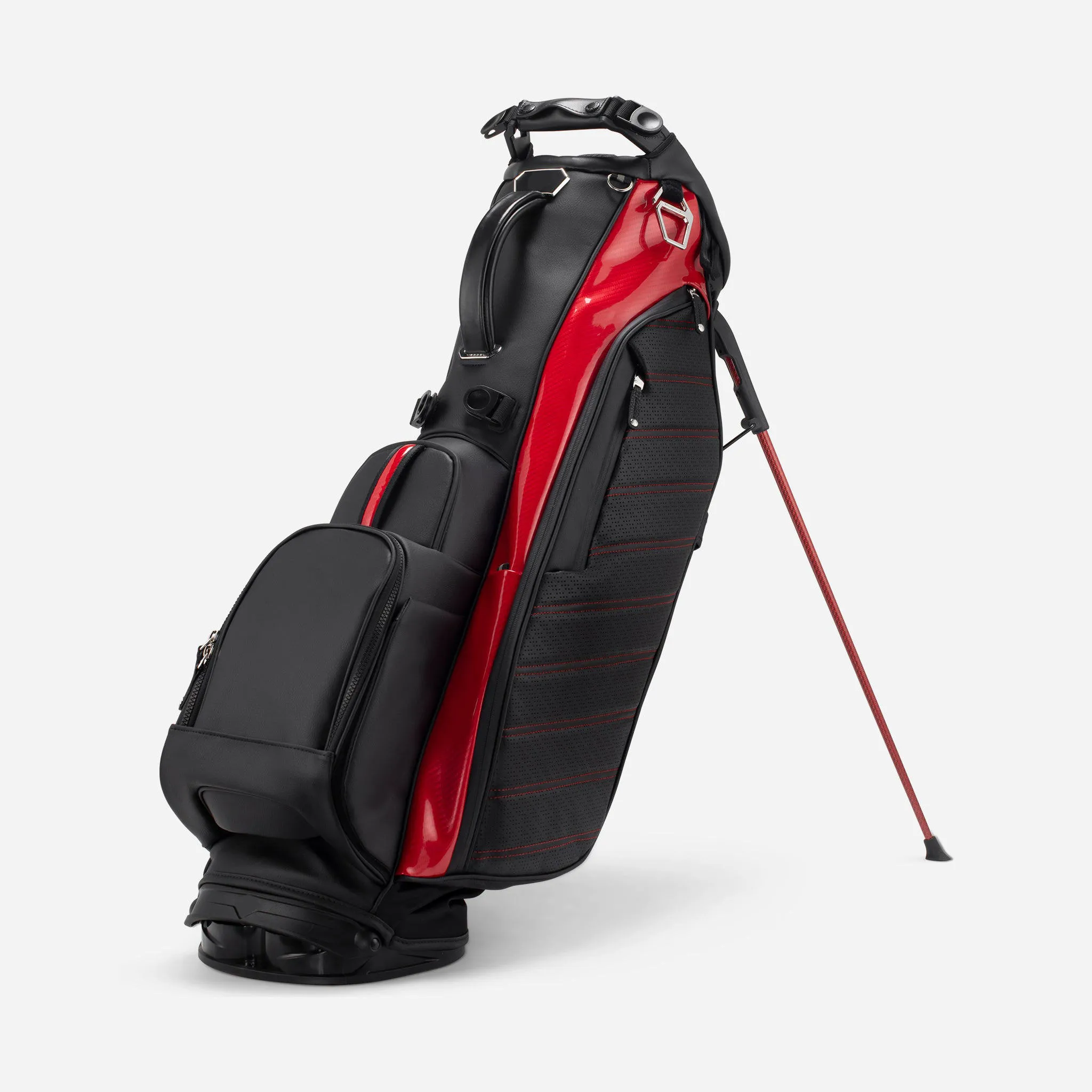
A stand bag is assembled from four material families, and each family has a sustainable option with real trade-offs. The shell is the largest surface and is almost always a woven nylon or polyester, so this is where recycled rPET and recycled nylon earn their place. The lining and inner panels provide the second surface and are the cheapest place to switch to recycled content. The trims — PU synthetic leather on the pockets, the branding patch, and the velour or mesh zones — carry the look and the chemical risk. Finally, the structural layer, including the foam padding, webbing, zippers, and the stand hardware, decides weight and durability more than the outer fashion fabric does.
What surprises most first-time buyers is how little of the "feel" of a bag comes from the outer shell. Weight is dominated by the hardware and foam; stiffness is dominated by the reinforcement and the stand; the premium look is carried by the PU panels and the thread. That is good news for sustainability, because it means a large recycled-content shell can be paired with recycled webbing and hardware without the bag feeling cheap. It also means the buyer should spec the whole material map on one page, not just the face fabric, so the sustainable share is real rather than cosmetic.
Recycled polyester (rPET): the economical workhorse
Recycled polyester, usually written as rPET, is made from reclaimed bottles and post-industrial fiber and is the most practical sustainable shell fabric at most order sizes. In a 400D or 600D construction it holds color well, keeps the bag lightweight at the 4-5 lb target most carry bags aim for, and its abrasion and tear performance sits within a few percent of virgin polyester when the denier and finish are held constant. Its production reuses material that would otherwise be waste, and because polyester is the backbone of so much bag manufacturing, recycled polyester yarn is available from mainstream suppliers at a modest and predictable premium.
The main limitations are that rPET is not quite as strong per gram as nylon, and on very abrasive or rain-heavy courses a recycled nylon line will outlast it. For a volume, cost-led brand line selling to moderate climates, rPET is almost always the right hero fiber. It also photographs and prints well, which matters because the shell is the panel retailers show in the thumbnail. At our affiliated Quanzhou manufacturing plant we routinely run rPET shells at conventional MOQs starting around 200 units, and we qualify the recycled lot with the same fabric tests as virgin so the claim never costs the bag its durability.
Recycled nylon: the premium, high-wear upgrade
Recycled nylon is the upgrade path for brands that sell into wetter or rougher conditions or that position at a premium price. Nylon is stronger per gram than polyester, resists abrasion and tearing better at the same weight, and handles rain and coarse turf with less wear, which is exactly what a stand bag's base, back shield, and stand-hinge reinforcement need. Recycled nylon carries the same environmental logic as rPET — recovering material that would otherwise be discarded — but the fibre is more expensive and the supply is tighter, which is why it typically lands 2-4% higher in unit cost than rPET for the same surface.
The smart way to use recycled nylon is not on every panel but on the panels that wear fastest and photograph most: the base, the back shield, the stand-hinge block reinforcement, and the grab-loops. That way the premium fiber earns its keep where abrasion and weather actually strike, while the cheaper rPET carries the large flat surfaces. This hybrid build is one of the strongest value-for-money sustainability packages we produce, because it concentrates both cost and performance exactly where they matter. A brand that wants a single hero fabric, by contrast, should choose recycled nylon only when the target market justifies the premium.
| Material | Best Used For | Performance & Cost |
|---|---|---|
| Recycled polyester (rPET) 400/600D | Main shell, large flat panels | Lightweight, good color; 20,000-50,000 abrasion cycles; economical uplift. |
| Recycled nylon (recycled 600D nylon) | Base, back shield, hinge reinforcement | Stronger per gram, rain and abrasion resistant; +2-4% cost. |
| Recycled lining / inner panel | Interior, divider, pocket lining | Cheapest recycled surface; trust-building detail. |
| Water-based PU synthetic leather | Premium trim, branding patch, velour | Lighter finish, lower VOC vs solvent-based PU. |
| TPU / PU laminate | Waterproof programs | Durable, PFAS-free option; heavier, less breathable. |
| Recycled zipper tape, webbing, thread | Closures, straps, seams | Small components, under 2% cost, large credibility gain. |
PU synthetic leather and TPU laminates in a sustainable build
PU synthetic leather appears on a stand bag as pocket facing, a branding patch, or the top cuff, and its sustainability depends almost entirely on the resin used. Solvent-based PU carries a higher VOC load in manufacturing and is increasingly restricted, while water-based PU synthetic leather uses a waterborne resin that cuts emission during production and reads better in a green claim. For a premium look that still qualifies as low-impact, water-based PU trim is the choice to spec, and it can be paired with a debossed or foiled logo for a high-end finish without adding chemistry risk.
TPU is a different category: it is a durable, PFAS-free thermoplastic film used in waterproof laminations and welded seams. A fully waterproof TPU stand bag is heavier and less breathable than a lightweight carry bag, so it suits a waterproof program rather than a general go-light line. If a buyer wants a fully waterproof, ecologically credible bag, TPU lamination is the strongest PFAS-free option, and the breathability trade is the honest cost of that performance. Waterproof requirements and material choice should be decided together, because they set the weight, the breathability, and the claim your line can make.
The production economics of an eco build
Sustainability does not sit on top of a normal build; it changes how the fabric is sourced and qualified. Recycled yarn often comes in larger minimum dye lots, so the same colorway across a season needs to be planned in batches to avoid shade drift between lots. The water-based coating and the PFAS-free finish can require a slightly longer finishing step, and a certified program adds a chain-of-custody and audit component. All of this bundles into the 8-15% uplift buyers should plan for rather than discover at quotation time.
The way to hold that uplift down is to put recycled content where it costs least per visible square metre. Lining and inner panels are the cheapest recycled surfaces; the main rPET shell is the high-value middle; recycled nylon reserved for stress zones is the premium addition. Because our affiliated plant runs 7 lines and can prototype a recycled build next to a virgin build on the same sample round at 10-20 days, you can compare the two cost and weight pictures directly before committing to bulk production of 45-60 days. That side-by-side is the surest way to separate a genuinely cost-engineered eco program from a premium-surcharge one.
Segment fit: matching the eco material to the buyer
The "right" sustainable material is not universal; it is the material that matches your price point and use case. A value retailer in a moderate climate wants rPET across the shell and a simple water-based coating, because it keeps the eco story affordable at scale. A premium brand selling to wet, coastal courses wants recycled nylon on the high-wear panels and a water-resistant water-based finish, because the performance justifies the 2-4% premium. A tour or corporate program shipping to 100+ countries has to balance weight, breathability, and a fully waterproof option, which points toward a hybrid TPU or laminate build.
We help buyers fix this by anchoring the material direction to a target retail price and a season before anything is sampled. When the buyer states the target price and the primary climate, we can map a material mix that lands the cost and meets the tests without over-specifying. A common mistake is to specify the most expensive sustainable fabric for every panel "to be safe", which bloats unit cost. The better discipline is to nominate one hero material, one durability target, and one coating, then let the factory engineer the rest of the surface cost-efficiently. At an MOQ of 200 units we can still hit that mix; at 100-unit test orders we qualify the fabric before the full run.
Supply, lead time, and reorder planning for recycled lots
Recycled yarn is mass-produced, but it is not as instantly available in every denier and color as virgin polyester, so supply planning matters more. The recycled-colorweave you want in a 600D rPET may need a stock-fabric or a minimum dye-lot commitment, which means locking the colorway earlier in the season than you would with a virgin catalog fabric. In practice, this favors selecting recycled colorways from the factory's own stock-lot range for the first run, then moving to a custom dye once volume justifies it. Because our affiliated plant runs 7 lines and keeps recycled stock ranges, most first eco orders can be sampled at 10-20 days and produced at 45-60 days without a color-supply surprise.
Reorders deserve the same discipline. A reorder should specify the same dye lot or be re-qualified before bulk, because a shade drift between recycled lots is the most common reorder defect we see. Keep the original lab dip and the certificate together with the artwork, and approve the incoming lot against the sealed standard at inspection. That routine makes the sustainable claim reproducible season after season, which is what a retailer actually means when it asks for a "consistent eco program" — a bag and a story that do not change between orders.
Indoor vs outdoor performance of eco fabrics
Recycled shell fabrics are put to the same course stress as virgin ones, so the test plan is identical, but there are two places where eco material deserves extra attention. The first is colorfastness: recycled lots can vary in shade more than virgin, so we set a delta-E limit and approve a lab dip for every colorway before bulk. The second is the coating bond on the stand hinge and the zipper area, where a recycled face plus a water-based coating can behave slightly differently under repeated flex, so we run a small adhesion and flex check on the actual panel before the production scale-up.
- Fabric abrasion test on recycled shell (≥20,000 cycles typical)
- Tear strength at reinforcement seams, equal to virgin target
- Colorfastness and delta-E against an approved recycled lab dip
- Coating adhesion on hinge and zipper flex zones
- Stand deployment cycle test on the finished bag
- Materials declaration matched to printed claims
Documentation and certification behind the material claim
The claim you print is only as strong as the documents in the folder. For each recycled material, the buyer should hold the supplier dye-lot report and the GRS or recycled-content certificate. For coatings, a water-based and PFAS-free declaration. For markets with strict rules, an Oeko-Tex Standard 100 certificate and an RSL declaration aligned to REACH and California Prop 65. These together let a retailer approve the product from paper alone and let a reorder later match both performance and evidence.
At QUANZHOU JUNYUAN BAGS we freeze the evidence set with the approved sample and the sealed master, so the sustainable claim stays reproducible across seasons. The practical advice is to name the exact structure of the claim early — the recycled percentage, the standard, the coating, the PFAS status — and then build the documentation to match it. Vague phrasing creates compliance risk; specific, evidenced phrasing becomes an asset you can forward to every retailer and every regulator without rewriting it each season.
Quality control checkpoints for a sustainable material program
A sustainable program fails the same way any program does — if the QC is loose. The recycled shell still needs the same inspection gates as a virgin build, starting with the incoming fabric check where the lot's denier, recycled-content certificate, and shade are verified against the spec. The water-based coating deserves a dedicated pull test on the hinge and zipper region, and the recycled zipper and webbing should run the same cycle test as standard hardware. Because recycled lots can batch differently, we recommend an inline inspection rather than relying on a final random check, so a shade or coating deviation is caught while it is still cheap to fix.
The documentation gate closes the loop. Each carton should carry a label compatible with the printed claim, and the QC record should note the dye-lot number so a later reorder can reference the exact certified material. In a regulated market this paperwork is not optional — it is the difference between a product that clears a distribution center and one that is held. Freezing the evidence set with the sealed master at the first run is what lets a reorder months later match both the performance and the record, which is the real meaning of a repeatable sustainable program.
Choosing between recycled nylon and rPET with a quick comparison
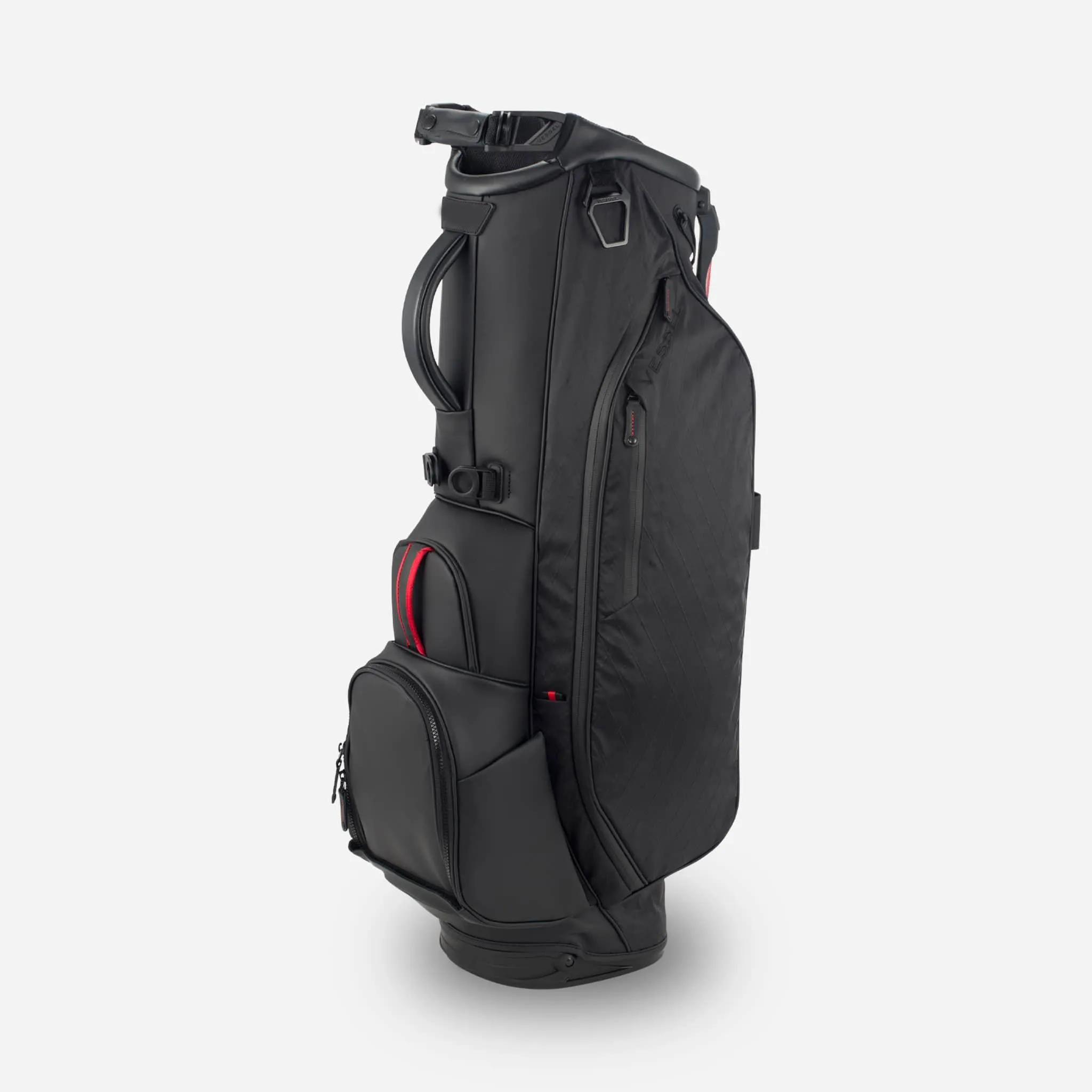
If the decision has come down to recycled nylon versus rPET, the cleanest way to choose is to weigh four factors: tear strength, rain resistance, cost, and supply. Recycled nylon wins on the first two, rPET wins on the last two. A premium, wet-climate line that photographs the bag in heavy use should lean recycled nylon at the stress zones. A volume, cost-led line in a moderate climate should build rPET across the shell and spend the saved money on better zippers and webbing, which improve durability more per dollar than an exotic shell fabric does.
A hybrid build often beats both single-fabric choices. Put rPET on the large flat panels, recycled nylon on the base, back shield, and hinge reinforcement, recycled lining inside, and water-based PU on the trim. That architecture concentrates the premium fiber exactly where abrasion strikes, keeps the case cost within the target, and gives you a specific, defensible recycled-content percentage to print. This is the build we most often recommend for a first sustainable program, because it is economical, auditable, and performs on the course exactly like a standard bag but with a story the retailer can sell.
Recommended Internal Links
- Products (Stand Bag Architectures)
- OEM/ODM Service
- Certificates & Compliance
- Eco Materials, Certifications & Claims
- Golf Stand Bag Buying Guide
Two closing notes for B2B buyers. First, order a small material qualification run of 20-30 units before your first container so you can photograph the true recycled fabric, confirm the coating holds on the hinge, and lock the exact label claim. Second, decide the material map — rPET, recycled nylon, or a hybrid — before sampling, because that decision sets the cost, the weight, and the claim together. Reach us at service@junyuanbags.com or +86 17750020688 and we will support your evaluation sample.
FAQ
Is recycled nylon or recycled polyester better for a stand bag?
Recycled nylon is stronger per gram and more weather-resistant, which suits high-wear panels like the base and hinge. Recycled polyester (rPET) is the more economical choice for the large shell surface and holds color well. A hybrid build uses both to balance cost and performance.
How much more does a sustainable material cost per unit?
Depending on material share, a recycled-content shell and lining typically add 8-15% to unit cost, and a certified GRS program adds chain-of-custody fees. Small components like recycled zipper tape and webbing add under 2%.
Which eco fabric resists the course environment best?
Recycled 600D nylon and 600D rPET both reach 20,000-50,000 abrasion cycles when coated and reinforced. Recycled nylon leads on tear strength and rain resistance; rPET leads on cost and availability.
Are PU synthetic leather or TPU laminates sustainable choices?
Water-based PU synthetic leather is a credible sustainable trim with lower VOC finishing. TPU is a durable, PFAS-free waterproofing option, but it makes the bag heavier and less breathable, so it suits waterproof programs rather than a lightweight go-light line.
What material claims can I prove to a retailer?
Prove claims with a percentage and a standard: '60% GRS recycled content', 'water-based coating', 'PFAS-free'. Keep the dye-lot test report, certificate, and materials declaration so your label matches your evidence.
Do you support OEM and ODM with eco materials?
Yes. We support OEM on proven sustainable architectures and ODM co-developing recycled fabric, pocket layouts, and hardware. Send your target market, expected MOQ, and sustainability brief and we will map a material mix that lands your cost and claim.
Request a B2B quote for golf stand bags
Send your target market, expected MOQ, and reference photos. We respond within 24 hours with a sampling plan.