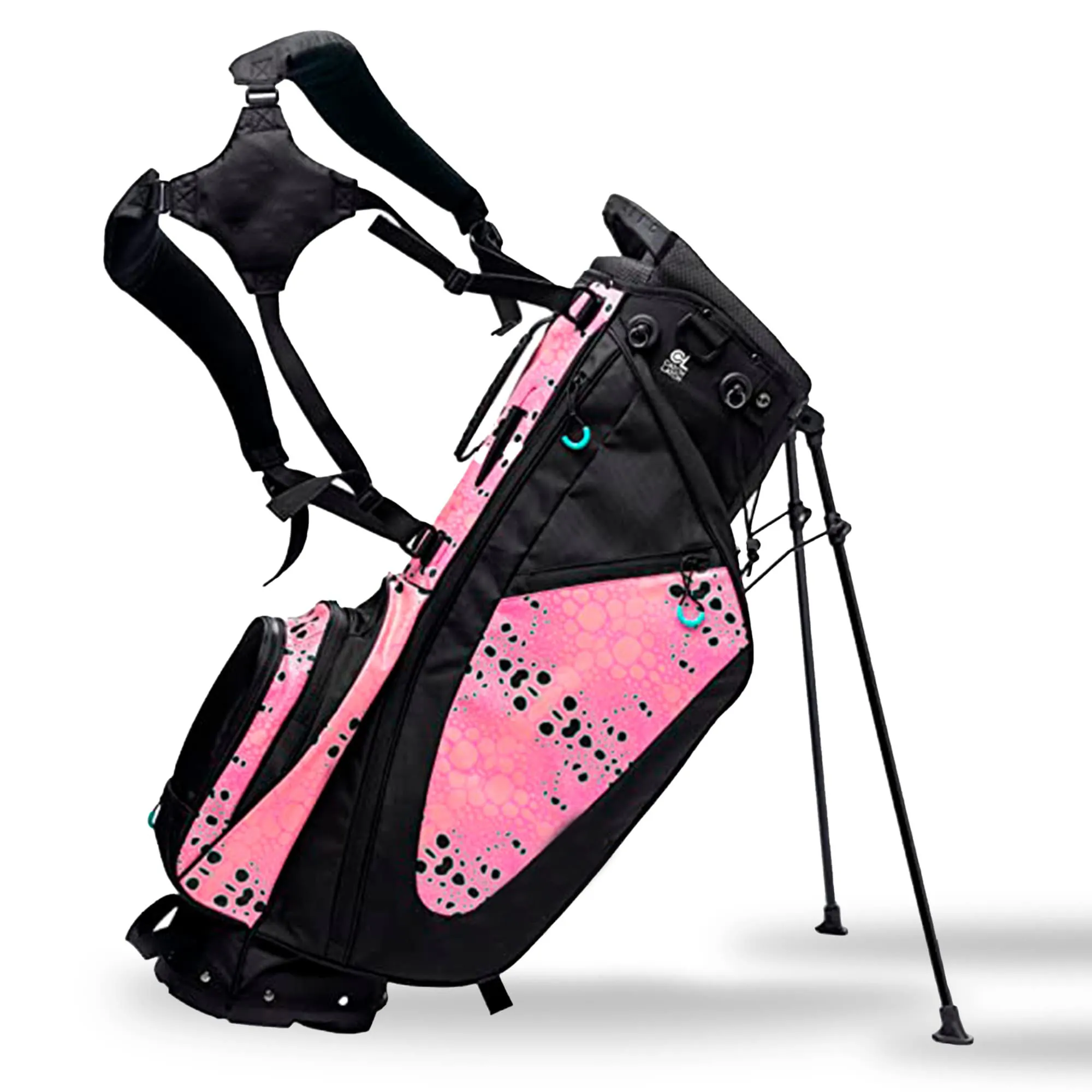
For the most compact small carry, see our pencil bags — Padding is the comfort-vs-weight balancing act of every stand bag: a fully padded dual-strap and lumbar system adds roughly 180-300 g over a minimal strap, so a 4.2 lb walker and a plush 5.5 lb resort bag are literally 3-4% of total weight apart in padding philosophy. For a B2B buyer, strap and lumbar padding is where carrying feel is won — our SGS-verified Quanzhou affiliated plant (4,950 sqm, 7 lines, 149 machines, 137 staff) tailors foam density, thickness, and cut to the target shoulder load and weight budget.
Key Takeaways
- Strap padding is the whole "carry feel" story — density and thickness, not padding presence, decide comfort under an 8-9 kg loaded bag.
- Foam density ranges roughly 18-60 kg/m³; a heavier, denser foam carries better over long rounds while a low-density foam only feels soft in the hand.
- Padding adds 180-300 g to a bag; the buyer who locks a weight budget controls how plush the final carry can be at QUANZHOU JUNYUAN BAGS.
- Stress zones — strap anchors, lumbar back, and hip — get denser inserts that resist compression for a season of use.
Specification Table (Whitepaper View)
Use this table as your internal padding spec. Confirm each row on the pre-production sample and lock the values before bulk so reorders keep one comfort signature.
| Parameter | Typical Spec | Buyer Notes |
|---|---|---|
| Strap core foam density | 25-45 kg/m³ | Denser foam carries better and resists compression over time. |
| Strap foam thickness | 6-10 mm | Thicker feels softer but adds weight and bulks the strap. |
| Dual-strap width | 28-35 mm | Wider spreads load across the shoulder. |
| Lumbar pad | Molded insert, 10-15 mm | Distributes bag weight across the lower back. |
| Hip pad | Rebound foam 20-30 kg/m³ | Resists flattening where the bag rests on the hip. |
| Padding weight budget | 180-300 g total | Locks the comfort-feel ceiling for your tier. |
| Cover fabric | Breathable mesh or soft PU | Mesh wicks sweat; PU reads premium but can hold heat. |
Why padding decides the carry feel
A stand bag is carried for 4-6 hours and 5-7 miles in a round, so the strap and back padding is not cosmetic — it is the entire tactile story. Two bags with the same shell, weight, and divider feel completely different based on foam density and strap geometry. A buyer sourcing for a walking-brand markets that comfort, and a bad strap is the fastest way to generate returns from players who carry rather than ride.
The mistake is to equate softness with comfort. A low-density foam feels plush in the hand at the store but bottoms out under an 8-9 kg load, transmitting sharp strap pressure to the shoulder by the third hole. The correct choice is a denser foam in the 25-45 kg/m³ range that compresses modestly and holds its shape under sustained load, spreading the weight across a wider footprint. Density, not softness, is the real comfort lever, and it is a measurable spec a buyer can lock.
Dual-strap geometry and load spreading
The dual-strap is a carry system, not just two shoulder straps. It balances the bag across both shoulders, spreads the mass, and lets the bag sit close to the body's center of gravity instead of swinging. Strap width, contour, and where they meet the bag all matter: a 28-35 mm strap with a contoured shoulder pad spreads load better than a narrow strap even at the same foam density. The two straps should also be adjustable so players of different height carry the bag at the right point on their back.
Strap integration with the plate and shell matters for longevity. The strap anchors take the full carry load, so they need reinforced stitching and a metal or heavy-duty plastic slide that will not creep under load. We test the anchor with a static load well above real carry weight and check that the strap does not pull the fabric over time. A bag that feels great on day one but sags at the anchors by week six fails the buyer's real test.
Lumbar and hip: the zones most bags get wrong
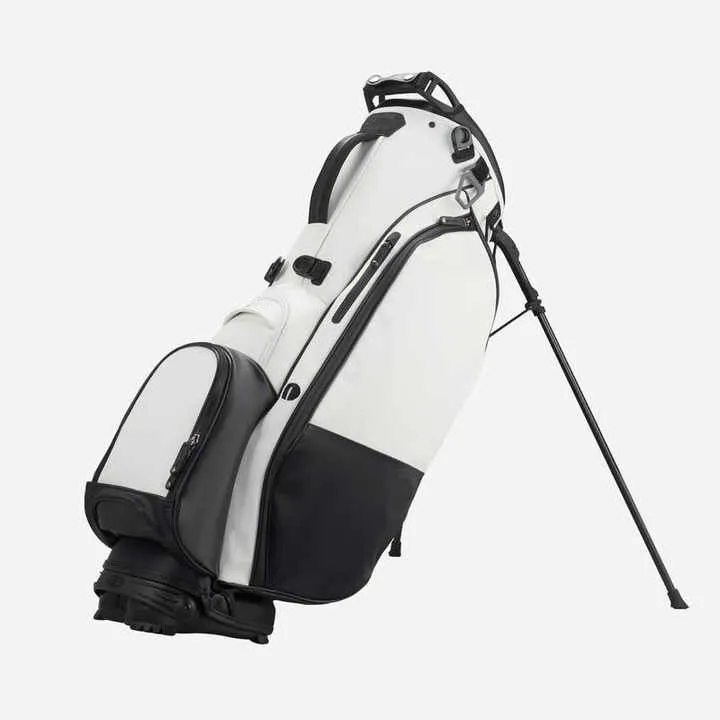
The lumbar back pad and the hip pad are the zones that separate a premium carry bag from a budget one, and they are the easiest to cut cost on. A molded lumbar insert of 10-15 mm distributes the bag's weight across the lower back so the shoulders do not take all of it; without it the bag rides heavy and the wearer feels the load focus in two hot spots. We fit a contoured lumbar pad that follows the back curve, not a flat slab.
The hip pad sits where the bag rests when the strap loosens and the bag hangs low on the hip, a common walking posture. It needs a rebound foam of 20-30 kg/m³ that resists flattening, because constant hip contact compresses soft foam within weeks. A padded hip also protects the shell fabric from rub-wear against the body over a season, which is why the hip pad doubles as both comfort and durability protection.
Foam chemistry: density, rebound, and lifespan
Foam is specified by density and rebound, and both drive cost and feel. Density (kg/m³) controls how much load the foam supports before it bottoms out; rebound controls how fast it returns to shape after compression. Wake-up or memory foam has high damping but slow rebound, which feels fine in a pillow but wrong in a strap that must recover between carries; mid-density PU foam with good rebound is the strap workhorse. Open-cell vs closed-cell also matters — open-cell breathes and drains, while closed-cell resists water but holds heat.
Foam lifespan is the hidden quality metric. Cheap foam loses 20-30% of its thickness within a season of daily use, flattening the very zones the buyer paid to pad. Denser, higher-rebound foam holds dimension for years, which is why it costs more. For a program sold on "carries like the first round even after season two," we lock a foam density and rebound spec and test compression recovery on the sample, so the comfort story survives reorders.
Cover fabrics: mesh vs PU and breathability
The fabric that wraps the padding controls breathability and hand-feel. A breathable 3D mesh wicks sweat and stays cool on hot rounds, which is why most walking bags use it on the shoulder and back. A soft PU cover reads premium and photographs well but holds heat and can feel sweaty under a long carry. The right choice depends on the target climate and the selling story — a tour-level walker wants mesh; a resort or luxury line may accept PU for the premium look.
Cover durability matters where the strap flexes. The foam bends along the strap edges every carry, so the cover must not crack at the fold lines; we use a stretch-tolerant knit or a laminated covering that flexes with the foam instead of pulling away. Moisture from sweat and rain also reaches the strap, so the foam should be water-resistant or the cover should shed water, preventing the strap from becoming a soggy, smelly sponge by mid-season.
Weight management in the padding budget
Padding is the lever a buyer uses to dial comfort without blowing the weight target. Set a padding weight budget of 180-300 g and let the factory trade density against thickness inside it: a 6 mm high-density strap plus a 12 mm lumbar sits in the same budget as a 9 mm medium-density strap, and each carries differently. The buyer who stays inside a hard total weight target gets an honest carry bag; the buyer who lets padding creep up gets a plush bag that quietly misses its weight promise.
Weights also vary by tier. A 4.2 lb lightweight line uses the minimum effective padding — a dense 6 mm strap and a slim lumbar — to stay light. A 5.5 lb comfort line spends the full budget on a plush dual-strap, molded lumbar, and padded hip. Telling the factory your tier and weight budget up front lets us recommend the exact padding stack instead of defaulting to one generic spec that serves neither line well.
Test Plan and acceptance criteria
Validate padding with compression and comfort tests, not a hand squeeze. The set below is what we run on a padding build before it leaves our Quanzhou facility:
- Load compression: 8-9 kg on the strap pad, 5,000 cycles, thickness recovery within 5%.
- Anchor load: static strap-anchor test above carry weight, no stitch failure.
- Balance: loaded bag rests level on a shoulder simulation, no forward or rear tilt.
- Cover flex: 5,000 flex cycles at the strap fold line, no cover cracking or peel.
- Rebound: hip and lumbar pad re-expand within spec after compression.
- Weight audit: padding within +/-20 g of the locked budget.
Common padding failures and prevention
The recurring failures on cheap padding are waist or shoulder foam bottom-out, strap-anchor stitch tear, cover delamination at the fold, and a soggy water-clogged strap. Bottom-out is low-density foam — fixed by locking 25-45 kg/m³. Anchor tear is weak stitching — fixed by reinforced anchors and a static load test. Cover delamination is a thin or inflexible covering — fixed by a stretch-tolerant knit. The soggy strap is unprotected open-cell foam — fixed by a water-resistant foam or shedding cover.
These are caught in the test set above, which is why we run compression and anchor tests before the shell gets its own checks. For a buyer, the two fastest filters are the loaded compression test video and the anchor-load certificate on the first article. They catch the majority of padding differences between a durable carry bag and a bag that is flat and torn by mid-season.
Comfort customization and branding
Padding is also a branding surface. The dual-strap often carries a woven brand label or a tonal logo, and the lumbar pad can host a printed brand mark or a signature colorway accent. Because the pad is curved, plan branding for the flat strap face rather than the curved lumbar edge where a logo would distort. A colorway-matched strap piping ties the padding into the shell palette and gives retailers a finishing detail to photograph.
Comfort can be a product signature, not just a spec. Some of the strongest carry programs pair a distinct strap color or a monogrammed lumbar with the brand story. At QUANZHOU JUNYUAN BAGS we handle OEM (your branding on proven padding architectures) and ODM (co-developing the strap geometry, foam stack, lumbar shape, and cover). Tell us your target shoulder load and weight budget, and we will size the padding that carries well at the right cost.
Padding across bag tiers and markets
Padding stacks should vary by tier and market, and the buyer who treats it as one generic spec leaves value on the table. The walk-first junior or light line wants the minimum dense padding to hold the 4.2 lb promise. The tour-level line spends the budget on a plush contoured dual-strap and molded lumbar because a tour player carries 7 miles in a competitive round. The resort and corporate-giveaway tier often favors PU-covered padding because it photographs premium, even if the buyer accepts the slight heat penalty of closed-cell construction.
Climate matters as much as tier. A desert-market bag should bias to breathable mesh padding that sheds sweat and heat; a cooler, rainy market can accept denser closed-cell padding that retains warmth and resists moisture. Telling the factory the target climate alongside the tier lets us select the foam and cover chemistry that will actually feel right in use, which is something a one-size padding spec never delivers. Lock both in the brief so the comfort story matches the geography the product is sold into.
Strap hardware: slides, buckles, and durability
Padding sits on hardware that must not fail under years of adjustment. The strap slides and buckles take constant tugging as a golfer finds the right carry position, so they need to be metal or a heavy-duty plastic that does not creep or crack. We hold the adjuster so it locks firmly but slides smoothly — a slide that is too loose lets the bag sag mid-round, and too tight is frustrating to adjust. Both are caught in a 500-cycle adjuster test.
The attachment to the bag is where reorders often drift. The dual-strap meets the shell at reinforced anchor points with dense stitching and, on heavier bags, a webbing loop or metal ring. If the anchor is under-specified, the strap pulls the panel fabric over a season and the carry feel degrades even though the foam is fine. We test the anchor with a static load above real carry weight and confirm the fabric around it does not stretch, so the bag keeps its balance and its shoulder line for years.
After-sales and padding service life
Padding is the part of a stand bag a buyer may need to service over the bag's life, so plan for it in the after-sales story. A dual-strap that can be unhooked and replaced without tearing the shell extends the bag's usable life, and offering a spare-strap kit for heavy-use lines reduces warranty claims on the comfort components. We build removable strap attachment into the design so a worn strap is a $10 repair, not a $150 bag replacement.
Communicating foam life to the end customer also protects your brand. A balloon or a full-breathability note that a dense strap will carry consistently for several seasons sets the right expectation and reduces "this bag is already flat" complaints from players who confuse a normal pack-in with premature failure. If your market includes heavy daily walkers, we recommend publishing the compression-recovery test result and offering the spare-parts kit; both protect your margin and your reputation after the sale.
Branding on padded surfaces done right
Padded surfaces limit where and how you can brand. The flat face of the dual-strap is the reliable spot for a woven label or a tonal logo; the curved lumbar edge distorts a print, and the shoulder pad top is an abrasion zone for embroidery. A colorway-matched strap piping is the safest way to carry accent color into the padding without a risky print. Plan padding branding in the same tech pack as the shell logo so the strap and the front panel tell one coherent story.
Function and branding can reinforce each other. A signature strap color, a monogrammed lumbar, or a small reflective strip on the strap for twilight play gives retailers a finishing detail to photograph and gives the brand a reason to be seen during a carry. The strongest programs treat padding as part of the design system, not an invisible liner, which is exactly the kind of differentiated detail that separates a premium line on a crowded retail floor.
Final note on comfort and weight
Padding is the closest a stand bag gets to a personalized fit, and it is fully controllable by spec. Set the target shoulder load, the weight budget, the foam density, and the cover fabric, and the factory turns those numbers into a bag that carries well on day one and after season two. Whether you build a 4.2 lb walker with minimal dense padding or a plush 5.5 lb comfort line, the foam stack, the strap geometry, and the lumbar are one coordinated system worth locking. Reach us at service@junyuanbags.com or +86 17750020688 and we will size the padding to your tier.
Sampling and QC workflow for a padding build
Padding samples need to be worn and compressed, not just viewed. Approve a pre-production sample that has passed the loaded compression and anchor-load tests, and specify the foam density and cover chemistry on the signed tech pack. Keep one sealed master of the strap and lumbar so a reorder reproduces exactly the same comfort signature. Budget one or two sample rounds — a concept sample to lock the feel, then a technical pre-production sample on the production materials, typically within a 14-20 day sampling loop.
Finally, ask your supplier for a compression-recovery certificate on the foam lot, not just on the first sample. Batch-to-batch foam density drift is real, and a certificate per lot keeps season-two padding identical to season-one. A buyer who verifies density per batch and keeps the sealed master gets a comfort story that survives every reorder.
The padding choices below are validated on the sample with compression and anchor tests, then locked in the tech pack so the comfort story you approve is the one every production batch ships.
Recommended Internal Links
- Products (Stand Bag Architectures)
- Lightweight Stand Bag
- OEM/ODM Service
- Factory & QC
- Golf Stand Bag Buying Guide
FAQ
Is softer foam more comfortable for a golf stand bag strap?
Not necessarily. Low-density soft foam bottom out under an 8-9 kg load and transmit sharp pressure by the third hole. A denser foam in the 25-45 kg/m³ range compresses modestly and spreads load, which carries more comfortably over a round.
How much weight does padding add to a stand bag?
A full padded dual-strap, lumbar, and hip system adds roughly 180-300 g over a minimal strap. Lock a padding weight budget so comfort does not silently push the bag over its weight target.
What foam density is best for a carry bag strap?
A mid-density PU foam around 25-45 kg/m³ with good rebound is the strap workhorse. It supports the load, recovers between carries, and resists flattening within a season.
Why do some stand bags get a soggy sweaty strap?
An unprotected open-cell foam absorbs sweat and rain and becomes a smelly sponge. Use a water-resistant foam or a shedding cover so moisture does not clog the strap.
What does the lumbar pad actually do?
A molded lumbar insert of 10-15 mm distributes the bag's weight across the lower back so the shoulders do not take all of it. Without it the bag rides heavy with two hot spots on the shoulders.
How do I keep a comfort-feel reorder consistent?
Lock the foam density, thickness, strap width, lumbar shape, and cover fabric in the tech pack, approve a compression-tested pre-production sample, and keep a sealed master. Then the carry feel stays identical run to run.
Request a B2B quote for golf stand bags
Send your target market, expected MOQ, and reference photos. We respond within 24 hours with a sampling plan.