For a versatile two-in-one build, review our hybrid golf bags — Practice golfers can also browse our range and simulator golf bags — The global golf equipment market is widely estimated at roughly USD 9 billion, of which golf bags hold a low-single-digit share, and stand bags now account for about 55-60% of new walker-oriented bag volume in the United States as walking, resort, and junior participation rebound after 2020. For a B2B buyer, that shift matters because it is moving demand away from heavy cart bags toward lighter, organized, waterproof stand bags that carry higher margin per unit. This guide translates the market-size signals into manufacturing decisions, using the SGS-verified March 2026 factory data of QUANZHOU JUNYUAN BAGS — 4,950 sqm, 7 lines, 149 machines, 137 staff, roughly 200,000 units of monthly line capacity — so you can size a SKU stack that actually sells.
Key Takeaways
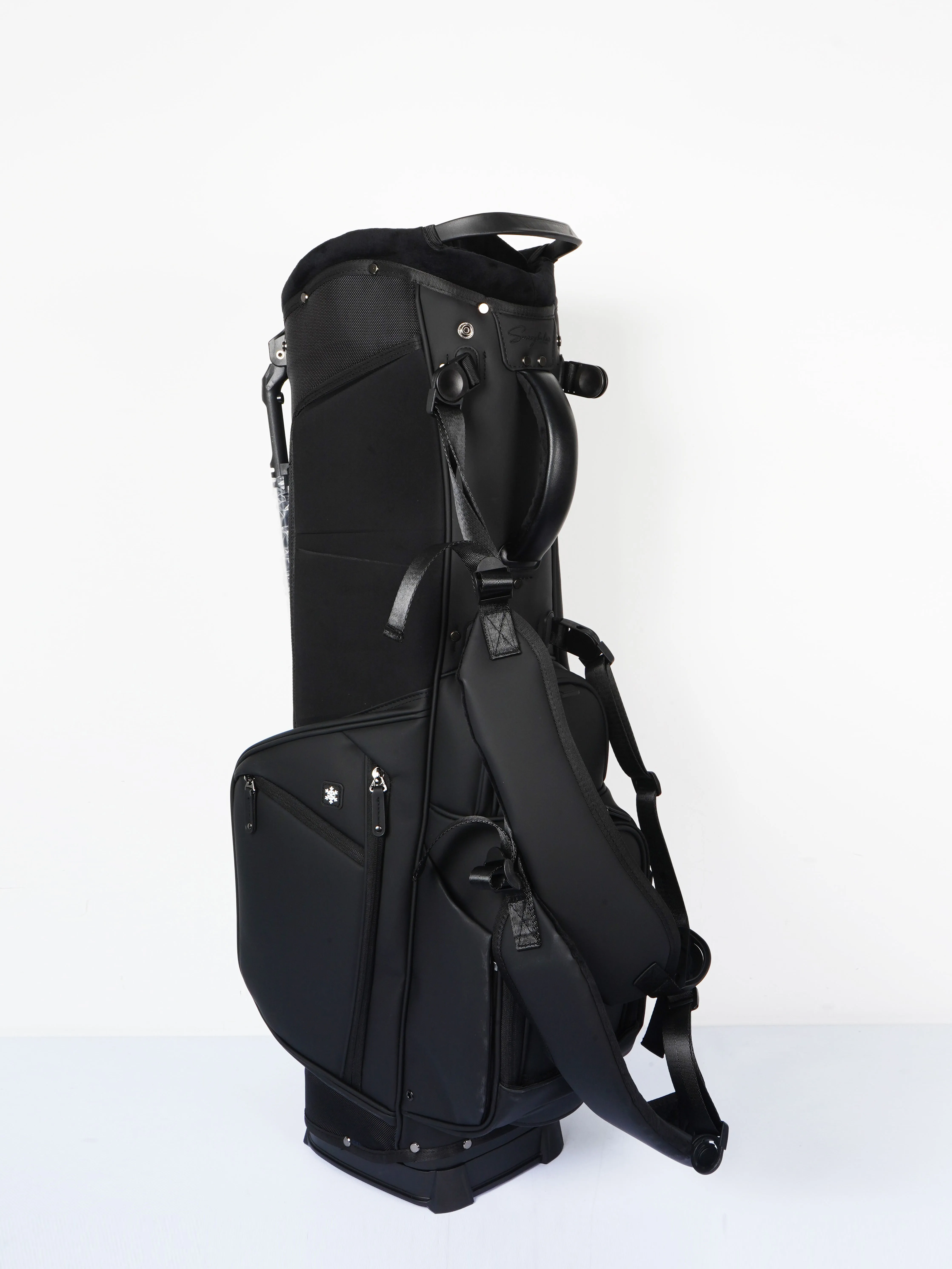
Before we dig into the numbers, here is the executive summary for a sourcing team. The stand bag category is growing because its four biggest feature trends — lightweight carry, 14-way full-length organization, waterproof construction, and the hybrid stand-cart silhouette — all map to one underlying buyer behavior: more people walking the course with less stuff. Markets inside the US and Europe are mature but stable, while Asia-Pacific is adding courses and players faster than any other region. For a manufacturer, the opportunity is not in chasing every feature but in locking two or three proven architectures and repeating them at scale.
- Stand bags now represent ~55-60% of new walker bag volume in the US
- Asia-Pacific is the fastest-growing sourcing and selling region for golf gear
- Waterproof and 14-way full-length features drive the premium price bands
- Recycled rPET can add 8-15% to fabric cost but earns shelf-space premium
- A lean 3-SKU stack covers most high-intent search demand
Reading the market-size numbers correctly
Market-size reports for golf equipment are directional, not precise, and the difference matters when you are setting an MOQ. The commonly cited global golf equipment figure of roughly USD 8.5-9 billion includes clubs, balls, bags, and accessories, and it grows around 3-4% per year. Golf bags are a small slice of that whole — analysts typically put the bag and accessory bucket in the low hundreds of millions to just over a billion dollars depending on how you count cart bags, staff bags, stand bags, and travel covers. What is more reliable than the headline is the mix shift: stand bags have been taking share from cart-only bags for years because courses in warmer climates and resort destinations now expect players to carry when it is convenient.
Regionally, the data points in the same direction. The US remains the largest single golf market, with participation estimates above 25 million on-course golfers and a strong rebound in rounds played after 2020. Europe is stable and premium-oriented, with Scandinavia and the UK carrying a high share of walking play. The fastest-moving region for our order books is Asia-Pacific — Japan, South Korea, and China are all adding modern courses and a younger player base that buys light, organized stand bags. If you are a distributor choosing where to launch a first SKU, the safer bet is the walking-heavy premium corridor of North America and Northern Europe, and the higher-growth bet is the Asia-Pacific resort and junior market.
For a factory, the practical takeaway is that market size sets the floor for your MOQ decisions. A premium 14-way stand bag with a waterproof package sells at a multiple of a basic lightweight carry bag, so it can justify a smaller first run at a higher landed price. Conversely, a high-volume lightweight bag needs a container-level order to make the economics work. We help buyers model both paths because the architecture choices we make in our lightweight product line versus our 14-way organizer line are driven by which market corridor they are targeting.
Why the walk-player rebound reshapes demand
The single most important trend behind the stand bag category is that more rounds are being walked. Course operators across the US and Europe have actively encouraged walking to manage pace and reduce cart wear, and a generation of casual players has discovered that a well-balanced stand bag actually makes the round more pleasant. That has two manufacturing consequences. First, bag weight targets have come down: a comfortable carry bag now targets roughly 2.6-3.2 kg (about 5.7-7.0 lbs) depending on organization level, and buyers reject bags that feel dead-heavy on the shoulder. Second, the stand deploy mechanism must survive hundreds of cycles because it is used on virtually every hole instead of resting in a cart the whole round.
This is why our test plan for a walker-first stand bag includes a stand deployment cycle target, a base stability check, a zipper cycle test, and a strap-anchor load test. When a bag is carried, the strap anchors and stand hinge take real, repeated stress, so the steel or aluminum leg, the hinge block, the base geometry, and the leg spread consistency all become quality-critical to prevent returns. A brand that reinforces those points quietly differentiates itself from a catalog bag that merely looks light on paper. The market rewards it: reviewers flag "stand wobble" and "strap pulled away" far more often than they flag pocket count.
Weight and stability pull against each other, so the winning specification is usually a compromise — a lightweight frame, a low center of gravity base, and a strap system that self-balances. If you are a buyer, bring a weight ceiling and a stability expectation to the RFQ rather than just a bag photo. Our factory QC page lists the exact checks we run so you can align expectations before sampling.
The four feature trends that actually sell
Search and retail data consistently surface four stand bag feature clusters that carry real demand, in roughly this order of importance for a new program.
Lightweight carry. The pure Sunday or lightweight carry bag targets beneath 2 kg (about 4.4 lbs) and markets itself to walkers, juniors, women, and resort rental fleets. It is the highest-volume, price-sensitive end of the category, and it sells on weight first and organization second. The cost drivers are the stand mechanism and the strap comfort at a low frame weight, and the classic failure modes are stand fatigue and strap-anchor abrasion, so reinforcement at stress points is non-negotiable.
14-way full-length organization. The category's premium end is the 14-way top with full-length dividers that keep clubs from tangling. It sells to mid-to-upper handicap players and serious walkers who want both carryability and club protection. The cost drivers are the top assembly, the divider tubes, and the top-frame reinforcement, and the typical failure modes are top alignment issues and divider wear over time. This is often the highest-margin SKU in a catalog.
Waterproof construction. In rainy markets — the UK, Scandinavia, the Pacific Northwest — a truly waterproof stand bag commands a meaningful price premium and fewer returns if the package is executed correctly. The cost drivers are waterproof fabric, seam tape, and waterproof zipper hardware, and the failure modes are seam-tape peel and zipper leakage at openings. A waterproof bag is not something you can retrofit cheaply, so it belongs in the spec from day one.
Hybrid stand-cart. The hybrid silhouette rides the line between a cart bag and a stand bag for buyers who do both. It tends to run heavier and is a good distributor catalog option, but it can suffer from weight creep and pocket-access issues when it tries to be both. We usually recommend it as an optional third SKU rather than a hero.
These four clusters map cleanly onto the stand bag architectures we build, and they are the reason a lean SKU stack outperforms a sprawling one.
Market data: sizing the opportunity by segment
To turn the macro trend into a purchasing decision, here is a practical sizing view. The numbers below are planning ranges that a B2B team can use to model a first run; they reflect typical industry references and our own order book, not a third-party paid report.
| Segment | Typical Weight | Relative Unit Price Band | Best-Fit Market | First-Run Suggestion |
|---|---|---|---|---|
| Lightweight Carry / Sunday | 1.8-2.4 kg (4.0-5.3 lbs) | Entry-mid | Resort, junior, women's, rental fleets | 200-500 units |
| Core 4/5/6-way Stand Bag | 2.6-3.0 kg (5.7-6.6 lbs) | Mid | Walking majority, North America/Europe | Container-level |
| 14-Way Full-Length Organizer | 3.0-3.5 kg (6.6-7.7 lbs) | Premium | Serious walkers, club pros | 300-800 units |
| Waterproof Stand Bag | 3.1-3.6 kg (6.8-7.9 lbs) | Premium-high | UK, Scandinavia, Pacific NW | 250-600 units |
| Hybrid Stand-Cart | 3.4-4.0 kg (7.5-8.8 lbs) | Mid-premium | Distributor catalogs, mixed usage | Optional / on demand |
Notice that the two premium segments — 14-way and waterproof — justify smaller first runs at higher landed price, which is exactly why they dominate the margins of a modern stand bag catalog. The lightweight end is a volume game, and the core mid-tier bag is the dependable middle. A distributor who launches with the core bag plus one premium option covers most of the search intent and most of the price points without bloating inventory.
Where sustainability is changing cost and positioning
Sustainability is no longer a footnote in this category; it is a positioning lever that moves shelf space and retailer approval, and it changes unit cost in measurable ways. Recycled polyester (rPET) made from PET bottles, and bio-based or recycled nylon options, are the most common eco directions. Recycled rPET typically runs 8-15% higher in fabric cost than virgin polyester at equivalent denier, and certified or traceable sourcing (for example GRS, RCS, or Oeko-Tex) adds a certificate cost on top. The good news is that a smaller cost hit than most buyers expect, and it can be absorbed with order volume and justified with a certificate of origin to retailers who audit sustainability claims.
There is a real risk of greenwashing that a serious brand should avoid. Retailers and regulators in the EU are tightening claim rules, so you cannot simply call a bag "eco" without documented recycled content and a certificate. When we source eco materials for a brand, we specify the certificate type, the recycled-content percentage, and the audit trail up front, and we confirm the fabric's performance on the actual production panels. A recycled fabric that looks great on a swatch can behave differently in a high-flex stand-bag hinge area, so we test it before bulk.
If sustainability is part of your positioning, the smart move is to lock the recycled-content spec and its certificate early in the same RFQ as the bag architecture. Our buying guide walks through how to turn an eco claim into a documented spec that passes an audit.
How to differentiate without copying
The market is crowded, and the fastest way to commoditize a catalog is to chase me-too features. Differentiation that survives a factory audit is built on measurable specifications — a stated weight ceiling, a divider width, a zipper cycle target, a waterproof hydrostatic-head rating, a strap-load test — rather than adjectives. "Premium," "tour-grade," and "durable" mean nothing without a number attached, and the retail team and the QC team should be reading the same numeric spec.
The most credible differentiators we see in winning programs are functional signatures: a genuinely flat-packable lightweight bag, a 14-way top that does not tangle clubs even at 4% slope, a waterproof bag that survives a UK winter without seam failure. Those are hard to copy because they are built into the architecture and the QC loop, not painted on. Decide on one or two functional signatures for your brand and make them measurable, then let the rest of the construction follow a proven baseline. That is how you stand for something in retail photography instead of blending into the category.
Catalog planning: the lean SKU stack
Catalog depth is a cost you carry, not a feature you sell. The data favors a lean stack: one lightweight carry bag for the walker entry point, one core stand bag with a 4/5/6-way top for the mass middle, and one premium 14-way full-length or waterproof bag for the high-margin tier. Each SKU should be a distinct architecture rather than a decoration of the same frame, because buyers and search engines both reward clear differentiation.
Within that stack, plan deliberate variations instead of accidental ones: men's and women's sizing, 14-way versus 6-way, waterproof versus standard, and a colorway system that gives retailers season-to-season freshness without retooling the frame. Every variation shares the same QC baseline, which keeps reorder quality predictable and lets you scale a winner quickly. The product architecture page shows how we separate the four hero line-ups so you can plan variations without bloating the tooling.
Cost drivers a sourcing team must control
Four cost drivers dominate a stand bag program, and controlling them is what keeps a landed price competitive:
- Stand system — leg material, hinge block, base geometry, and tips drive the largest mechanical cost and the return risk.
- Strap system — padding thickness, adjust hardware, and a removable design are a premium differentiator but must pass wear testing.
- Pocket architecture — pocket count, lining, magnetic and cooler designs add labor and QC variability, so spec them deliberately.
- Hardware and trims — zippers, pullers, buckles, D-rings, and logo plates need consistent sourcing to avoid bulk failures.
These four interact: a budget stand system can make a premium bag behave cheaply, and a cheap zipper can sink a waterproof claim. We encourage buyers to treat cost as a system to be optimized, not a single line to be minimized. When you lock the stand, strap, pocket, and hardware standards together in one spec, you get a repeatable product rather than a collection of bargains.
Failure modes that drive returns and how to control them
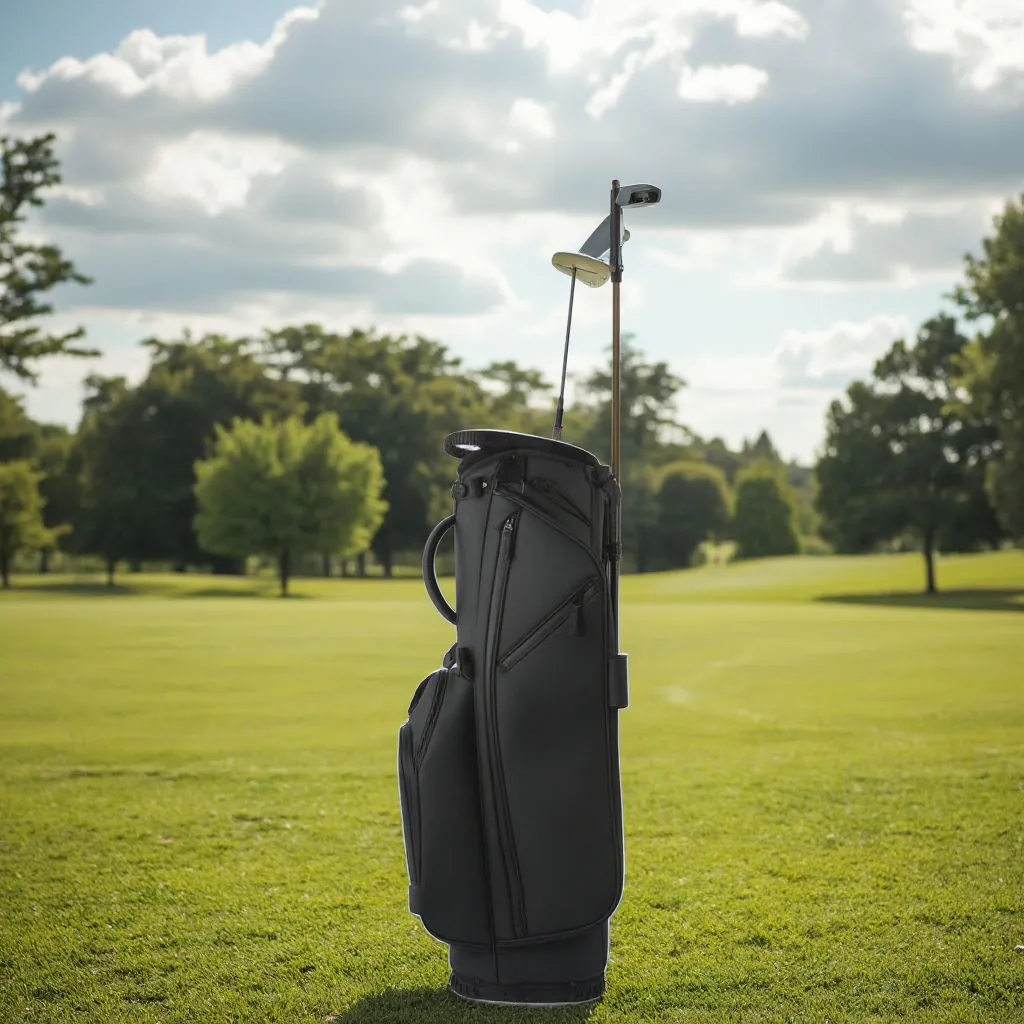
Returns and warranty claims are the hidden tax on a golf stand bag program, and they concentrate in a handful of well-known failure modes. Stand wobble over time comes from hinge-tolerance drift, leg-tube fatigue, or base wear, and it is controlled by a cycle test plus a stability criterion at final inspection. Zipper jamming or leakage usually traces to a low-grade zipper, misalignment, or a waterproof package mismatch, and it is prevented by specifying the zipper standard and testing the seam and lip design around openings. Strap-anchor failure is driven by weak reinforcement and stitch patterns, and it needs a static load test with a stitch-failure criterion. Pocket seam tearing comes from high-load pockets and thin fabric, and it is handled by reinforcing high-load seams with an inline sewing checkpoint. Divider wear and noise stem from tube material friction and top misalignment, and are caught by verifying top alignment in final inspection.
| Failure Mode | Root Cause | Prevention / QC Control |
|---|---|---|
| Stand wobble over time | Hinge tolerance drift, leg fatigue, base wear | Cycle test + stability criteria; inspect hinge block and base traction |
| Zipper jamming / leakage | Low-grade zipper, misalignment, waterproof mismatch | Zipper standard, cycle test, seam lip design |
| Strap anchor failure | Weak reinforcement, stitch pattern, fabric tearing | Static load test + reinforcement spec |
| Pocket seam tearing | High-load pocket, poor seam allowance, thin fabric | Reinforced seams; inline sewing QC |
| Divider wear / noise | Tube friction, poor lining, top misalignment | Specify tube/lining; verify top alignment |
Build your QC plan around these five, and the bulk of after-sales complaints disappear. They are also the five points a data-savvy retailer will quiz you on during an audit, so having documented test methods is good for both quality and selling.
Positioning stand bags against cart bags in your catalog
Every sourcing decision is a trade between the walker-first and the cart-first buyer, and knowing which corridor you serve prevents a muddled catalog. Cart bags sell on storage and club access for players who ride most rounds, while stand bags sell on portability and course convenience for players who walk at least part of the round. Because many players do both, the market's answer has been the hybrid silhouette — but a hybrid engineered poorly pleases neither buyer and carries a heavier frame. The cleaner strategy is to keep a dedicated lightweight and a dedicated 14-way stand bag as your heroes, and to add a hybrid only when a specific distributor channel asks for it, so each architecture stays focused and priced correctly.
For a factory, this positioning discipline also protects reorder quality. When every SKU shares a distinct architecture and a locked QC baseline, a winning design can be scaled and repeated season after season without introducing the drift that comes from "one bag that does everything." If you are weighing a cart-bag extension, tell us the usage mix in your target corridor and we will model whether a hybrid or a separate cart bag earns its shelf space better for your price point.
How to put trend data into a procurement worksheet
Once you have read the market the way this guide describes, turn it into a one-page worksheet before you send an RFQ. The worksheet should capture the target market and corridor, the bag type and weight ceiling, the divider configuration, the material direction and any eco content, the pocket list, the logo method, and the QC/testing requirements including AQL level. Locking those on paper forces the product, sourcing, and sales teams to agree before a sample is ordered, which is where most of a program's speed and cost are actually won.
When you are ready, include your target market, expected MOQ, and reference photos or a simple tech pack in the first message to service@junyuanbags.com or +86 17750020688. That reduces back-and-forth and lets us return a sampling plan — typically 10-20 days to a pre-production sample and 45-60 days for bulk — that matches the corridor you have chosen, rather than a generic quote.
FAQ
How large is the global golf stand bag market?
The golf equipment market is widely estimated at roughly USD 9 billion worldwide, with golf bags representing a low-single-digit share; stand bags specifically have grown to around 55-60% of new walker-oriented bag sales in the US as walking golf and resort play rebound.
What is driving growth in the golf stand bag segment?
Rebound in walking play, resort and international travel courses, the popularity of lightweight Sunday bags, and a younger demographic that demands organization features such as 14-way full-length dividers alongside portability.
Which market regions are growing fastest for stand bags?
Asia-Pacific and the Middle East are growing fastest as new courses open and domestic golf participation rises, while the US and Europe remain the largest volume regions for premium and mid-tier stand bags.
How should a B2B buyer size a first production run of stand bags?
Start with a test order of around 100-200 units to validate the production sample against your target market, then scale in containers once weight, divider spec, and QC points are locked.
Does sustainability actually change stand bag unit cost?
Recycled polyester and bio-based fabrics typically add 8-15% to fabric cost, but recycled rPET with certified sourcing can be absorbed through order volume and should be specified with a certificate of origin to justify the premium.
What is the fastest way to get an accurate quote for custom stand bags?
Send bag type, material direction, divider (4/5/6/14-way), pocket list, logo method, target MOQ, timeline, and reference photos or a tech pack to service@junyuanbags.com.
Recommended Internal Links
Request a B2B quote for golf stand bags
Send your target market, expected MOQ, and reference photos. We respond within 24 hours with a sampling plan.