For a featherweight minimal carry, explore our Sunday bags — For the most compact small carry, see our pencil bags — The fastest way to shorten your sampling loop with a golf stand bag factory is to send a structured one-page brief that names your target market, expected MOQ, divider count, material denier, and pocket list — buyers who do this typically cut sampling rounds from three or four down to one or two, saving 10-20 days on the calendar. This guide explains exactly which decisions to make before you write to a factory, how to structure those decisions into a tech pack, and the QC and MOQ questions that keep a first order from turning into a costly rework.
Everything here reflects how we work with OEM and ODM buyer teams at QUANZHOU JUNYUAN BAGS and its SGS-verified affiliated plant in Quanzhou — a facility of 4,950 sqm, 7 production lines, 149 machines (126 of them sewing machines), and 137 staff, producing from a 200-piece regular MOQ up to a line capacity near 200,000 pieces a month. The point is not the numbers themselves but the discipline: a factory can only quote, sample, and inspect what it has been clearly asked to build.
Key Takeaways
- A structured one-page brief cuts sampling rounds from 3-4 to 1-2 and saves 10-20 days.
- Name your divider count, material denier, and pocket list before requesting a quote.
- Our affiliated facility runs a 200-piece MOQ with test orders from 100 pieces.
- Lock functional tests for the stand, zippers, and straps in the PO, not at the port.
- SGS-verified facility: 4,950 sqm, 7 lines, 149 machines, 137 staff.
Why Most Custom Stand Bag RFQs Stall Before They Start
Almost every slow project we see begins the same way: a buyer sends a message that says they want a "nice, premium, customizable golf stand bag," and the factory has to guess what that means. There are roughly ten independent decisions hidden inside that single sentence — the divider layout, the material and its denier, the pocket count, the strap system, the stand trigger and base geometry, the hardware finish, the branding method, the target weight, the MOQ, and the lead time. When none of those are specified, the estimator either quotes a worst-case price to protect margin or asks for a dozen clarifying emails, and both outcomes cost you momentum.
Estimators quote fastest on specificity. If you say "a 6-way, 4.2-5.0 lb carry bag in 600D polyester with a dual-strap system, five pockets, a magnetic rangefinder pocket, and one embroidered logo," that sentence contains every major cost driver. Compare that to "a premium golf bag" and the difference in quote turnaround is usually measured in days, not hours. The single most useful habit a sourcing team can adopt is to decide the bag's skeleton before any conversation about logos or colours, because structure is where cost, weight, and QC risk all live.
The One-Page Brief: The Seven Decisions a Factory Needs on Day One
You do not need a 40-page engineering document to start. You need a one-page brief that answers seven questions in plain language. First, the target market and price level — a tournament give-away bag at US$18 and a tour-level carry bag at US$60 are built differently, so naming the price corridor sets realistic material and hardware expectations. Second, the bag type and intended use — carry-focused walking bag, hybrid cart/stand, or a lightweight Sunday bag, because weight and structure priorities flip. Third, the divider configuration — 4, 5, 6, or 14-way, and whether you need full-length dividers to stop club grip tangle.
Fourth, the primary material and denier direction — nylon 400D or 600D, polyester, or a PU/TPU waterproof variant, with reinforcement named at the stress points. Fifth, the stand system expectation — a reinforced hinge block, a stability-focused base geometry, and the deployment feel you want. Sixth, the branding method and its placement. Seventh, target MOQ, sampling budget, and a rough timeline to an on-sale date. If you answer those seven items in writing, a factory can usually return a meaningful quote in one business day and route your project to the right production line without guessing.
Divider Count and Full-Length Dividers: The First Structural Decision
The divider layout is the single most visible structural choice on a stand bag, because it directly changes how the bag is sewn, how many tubes it needs, and how heavy it ends up. A 4-way bag is the lightest and cheapest to build; it suits a minimal carry set and keeps weight near the bottom of the range. A 6-way adds a little organisation and is the most common all-rounder for mid-range bags. A 14-way bag with independent full-length tubes prevents clubs from tangling but adds material, internal baffles, and weight, and it changes how the top opening is framed.
When you brief a factory you should say not just "6-way" but whether you want full-length dividers running to the base, because that detail changes the sewing sequence and the cost. Full-length dividers stop grips from catching but add around 0.2-0.4 lb versus a half-length system, and they need stiffer internal material to hold shape. If weight is your priority, drop to a half-length system. If club protection is the selling point, commit to full-length. Either way, writing the choice down removes the most common source of "that is not what I pictured" feedback on the first sample.
Materials, Denier, and Why They Change the Price
Material is where a vague "premium" request turns into an unquotable project. On a stand bag the main shell is usually a coated nylon or polyester, and the number that matters is the denier — roughly, the thickness of the yarn. A 400D fabric is lighter and cheaper, suits casual carry bags, and keeps the overall bag under 4.5 lb. A 600D fabric is denser, more abrasion-resistant, and is the default for range or heavier-duty bags, adding a little weight. Above that, TPU or PU-coated variants add waterproofing and a more technical look but raise both material cost and minimum quantities.
What buyers often miss is that the reinforcement points matter as much as the shell: the stand hinge block, the base wear plate, the dual-strap anchor points, and the divider frame take the most abuse and need heavier fabric or webbing even when the shell stays light. When you brief material, name the shell denier and then add a sentence about reinforcement at the stress points. A factory with sewing experience in stand bags will match the reinforcement to the usage you describe, so be honest about whether the bag is a walk-only carry bag or a cart-heavy hybrid — the hinge and base fastenings are specified differently for each.
The Stand System and Base Geometry: Engineering, Not Eyeballing
The stand is the part that separates a true stand bag from a cart bag, and it is the most engineering-heavy component of the build. A stand bag deploys legs from a trigger near the top so the bag stands upright on the ground. The quality of that mechanism comes down to the hinge block, the leg spread geometry, and the base plate that contacts the ground. A weak hinge leads to wobble, a narrow leg spread tips the bag, and a thin base plate wears through after a season of course use.
In your brief, define the deployment outcomes rather than the parts: you want legs that deploy consistently on uneven ground, a bag that does not tip when fully loaded with 14 clubs, and a hinge that survives repeated use across a season. Ask the factory for the stand deployment cycle target — a reasonable starting point is a 3,000-10,000 cycle test with no cracking and no severe wobble. And confirm the stability angle when the bag is fully loaded, because a bag that looks aligned on a rack can still tip on a slope. Writing these outcomes into the spec turns the stand from a guess into an audited component.
Pocket Layout, Access Logic, and the Case for a Drawing
Pockets are where buyer teams most often over-specifiy in words and under-specifiy in space. You can list "a cooler pocket, a rangefinder pocket, a valuables pocket, an apparel pocket, and a ball pocket" and still have no idea how the bag will feel or close. The detail that matters is access logic: where each pocket sits on the bag, how the zippers run, whether interiors are lined, and how the pockets behave when the stand deploys. A rangefinder pocket that is magnetic feels premium but can tear the flap-open label if the magnet is undersized; a valuables pocket without a soft lining abrades lenses and jingles coins.
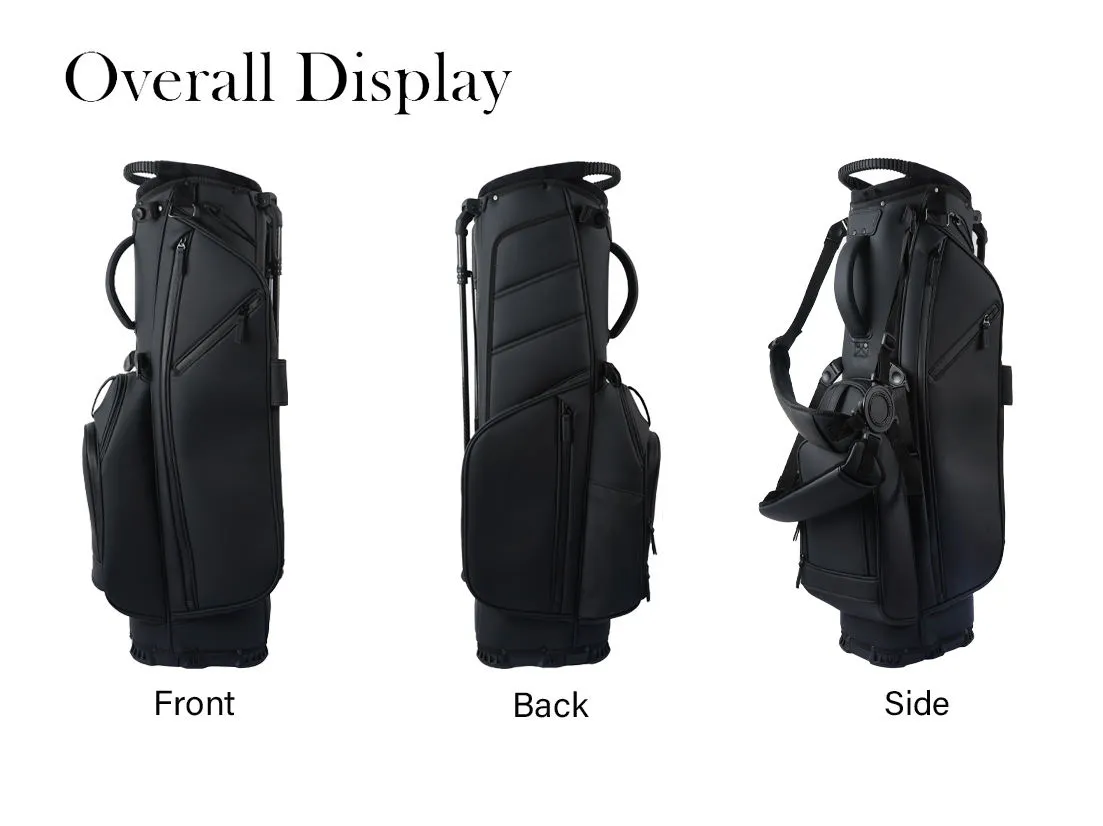
The fastest way to communicate all of this is a simple hand drawing or a labelled photo of a reference bag with your pocket placements annotated. Factories read drawings faster than paragraphs, and a sketch removes the ambiguity that costs a sample round. On your first order, resist adding every pocket you can imagine; pick the five or six that the use case demands, get the access logic right, and add extras on the reorder once you have seen the construction in person. Simplicity on round one makes the QC checklist shorter and the delivery date more certain.
Straps, Padding, and the Dual-Strap Question
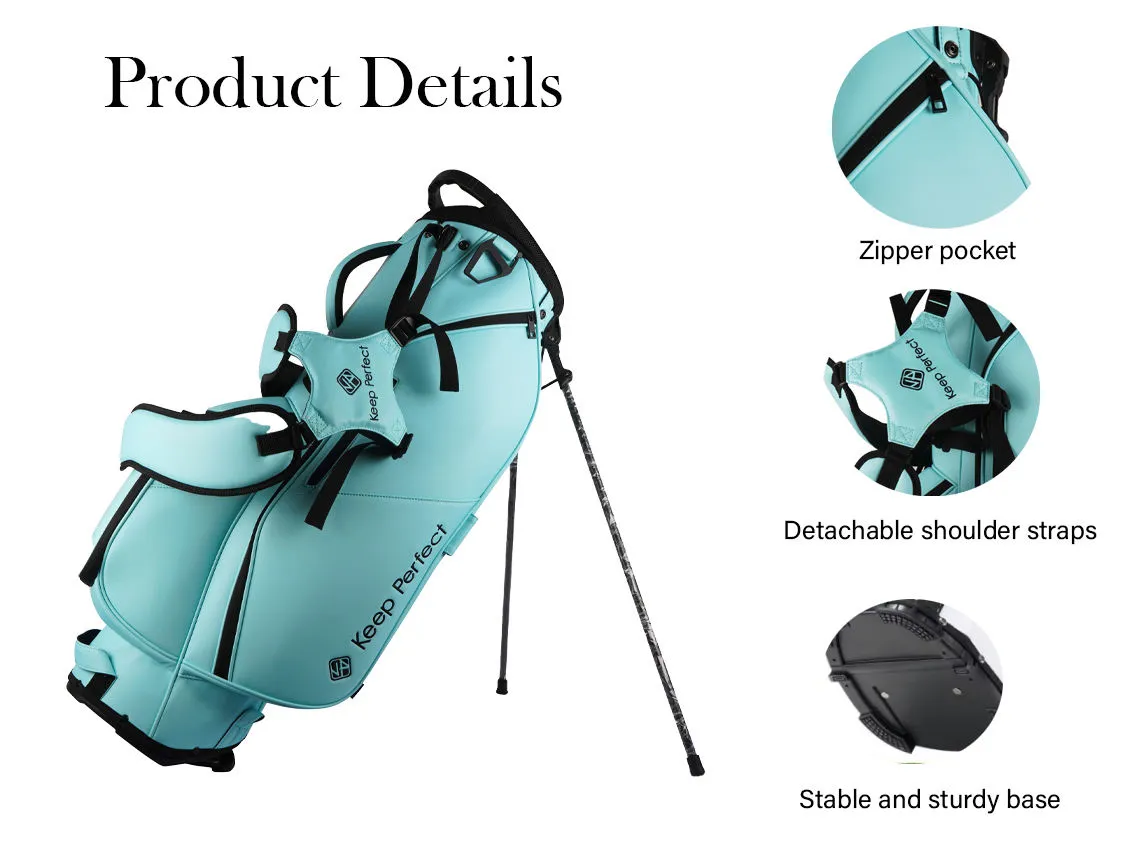
The strap system is the part your customer feels every single round, so it deserves explicit attention in the brief. A walk-focused carry bag needs a dual-strap, self-balancing system with padded shoulder segments that distribute weight across both shoulders; a lighter Sunday bag or a cart-heavy hybrid can often run a single, simpler strap. Do not leave the strap to chance — specify the padding thickness, the adjust range, and whether you want the straps removable, because all three change both comfort and cost.
In QC terms the strap is a failure point that returns the most warranty claims, so tie it to a test. Ask for a strap anchor load test with a defined static load and a stitch failure criterion, and confirm the anchor points are reinforced on the inside where they meet the shell. When you brief the factory, describe the strap's job: who carries it, how long their typical round is, and whether both-shoulder carry is essential. That one paragraph prevents the most common complaint on a first sample, which is straps that look fine on the rack but dig in after nine holes.
Branding Method and Placement in the Same Exchange
Branding interacts with structure, so it should be briefed together with the bag architecture rather than as a later afterthought. On a stand bag the logo usually sits on the front lower panel or the top lid — high-visibility, low-flex zones — while embroidered chest marks and woven interior labels add a second and third impression. The method matters for both durability and cost: embroidery is the most durable standard option, molded TPU patches read premium and layer cleanly over waterproof panels, heat transfer is fastest for short runs but wears fastest on high-flex areas, and sublimation delivers full-panel colour with no thread.
Because the logo is applied to the actual panel fabric, the placement you choose affects the sewing and the finished look. In the same brief where you name the divider and material, include the logo method, the thread or film colour by Pantone reference, and a placement diagram with measurements rather than the words "left chest." Vector AI or EPS artwork is required for embroidery digitizing, so have it ready. Factories quote most accurately when the branding file is already audited, which is why we recommend keeping the same artwork and spec standard across your whole bag line from the start.
MOQ, Lead Time, and How to Structure a First Order
MOQ is the conversation that decides whether a first order makes financial sense, and it deserves an honest plan before you quote. Because our affiliated facility operates a 200-piece regular MOQ per model with test orders from 100 pieces, a buyer can validate a market with a smaller committed quantity and then scale. The smart way to structure a first order is one architecture, one or two colourways, and the full branding — this keeps your committed units low, front-loads the setup cost into a single build, and gives your retail partners a real product to photograph rather than a CGI render.
Lead time follows the same principle of locking decisions early. Sampling runs 10-20 days; bulk production runs 45-60 days depending on materials and how many colours you run. If you lock the material, hardware, and branding in the first brief, you almost never need a second sampling round, and the calendar stays honest. If your target is a tournament date or a trade-show launch, build the lead time backwards from that date and tell the factory the deadline up front — scheduled materials and production lines are a very different thing from a rush job, and committing to the date earlier always prices better.
QC and Inspection Standards: Write Them Into the PO
Quality disagreements almost always come from the QC standard being unwritten. When you order custom stand bags, ask for AQL-based inspection with clearly defined defect classes — critical, major, and minor — and examples of each. Define the functional tests that matter for your product: stand deployment cycles and base stability, zipper smoothness and cycle life, strap anchor load, and a packed drop test. A reasonable starting target is a zipper and stand test in the 3,000-10,000 cycle range, a strap anchor static load test, and a packed drop from 0.76-1.0 m on the carton corners and edges.
Do not rely on a final random check alone. Ask for in-line QC checkpoints at cutting, sewing, assembly, and final inspection, and request a first-article inspection on the first unit of the run so a systematic defect is caught early. Standardise a QC record that captures PO number, model, lot size, sample size, inspector, defect counts, and functional pass/fail on the stand and zippers. When you record the acceptance numbers per lot, reorders stay consistent and the supplier knows you audit — that alone raises the quality of an entire program. Write the acceptance criteria into the PO and add a seal-process check if the bag is waterproof, because seam sealing is a common hidden defect.
Incoterms, Packaging, and Shipping Risk Control
A custom stand bag order does not end at final inspection — the way it moves decides whether it arrives saleable. Agree on the Incoterm before production because EXW, FOB, CIF, and DDP shift where risk and freight cost sit, and the pack-out spec changes the total shipping cost. Stand bags are bulky relative to their weight, so the way they are folded, compressed, and boxed affects both freight charges and whether shelves, stands, and zippers survive transit. Confirm the carton count per carton, the packed dimensions, and the master carton strength against the drop-test target you agree.
If you ship to a retailer, also lock the labeling and pack-out verification: every carton marked with the correct SKU, barcode, and carton marks, and each bag carrying the right hang tags and interior labels. A mislabeled carton at the port is the costliest kind of small error because it delays the whole lot. On a custom program, make a pilot run of a few cartons before the full container, verify the pack-out against the technical file, and photograph the result as the shipping reference. This closes the loop between the factory floor and the shelf, exactly the way a risk-control-minded buyer should plan a first order.
Recommended Internal Links
- Products (Stand Bag Architectures)
- OEM/ODM Service
- Factory & QC
- Golf Stand Bag Buying Guide
- How to Choose the Right Customization Features
- Step-by-Step Customization Process
Specification Table (Whitepaper View)
Use this table as the skeleton of your one-page brief. Confirm each row on the pre-production sample and lock the value before bulk production. The figures reflect the standards our affiliated facility holds at QUANZHOU JUNYUAN BAGS.
| Parameter | Typical Spec | Buyer Note |
|---|---|---|
| Bag type | Carry / hybrid / lightweight Sunday | Pick one; structure priorities flip. |
| Top divider | 4 / 5 / 6 / 14-way | Full-length tubes? Confirm separately. |
| Target weight | 4.2-6.2 lb | Set tolerance and verify on sample. |
| Primary material | Nylon 400D/600D or polyester | Name denier, finish, reinforcement. |
| Stand system | Reinforced hinge + stable base | Define deployment feel and angle. |
| Straps | Dual self-balancing, optional removable | Define padding and adjust range. |
| Stand deployment cycles | 3,000-10,000 cycles | No cracking, no severe wobble. |
| Zipper cycle test | 3,000-10,000 cycles | Track jam rate and pull force. |
| Packed drop test | 0.76-1.0 m | Corner/edge/face on carton. |
Sampling & QC Checklist
Use this list to align expectations before sampling and before bulk production. Each item protects a specific part of the program from ambiguity.
- Reference photos or a one-page tech pack
- Weight target and tolerance on the actual build
- Stand system cycle and stability expectations
- Zipper and hardware standard with cycle test
- Waterproof / seam-sealing scope (if applicable)
- Packaging, carton, and labeling requirements
- AQL inspection level and defect classes
FAQ
What is a tech pack and why does a golf stand bag factory need one?
A tech pack is the written specification that turns an idea into a buildable product: divider count, material denier, pocket list, hardware, dimensions, and tolerances. It matters because a factory pricing and producing from a clear tech pack quotes faster, samples in fewer rounds, and reduces spec drift on bulk runs.
How much information do I need to send to get an accurate factory quote?
A one-page brief is enough: target market, expected MOQ, bag type, divider spec, material direction, pocket list, logo method, and a timeline. Reference photos or a sketch cut the back-and-forth and prevent quoting the wrong architecture.
What MOQ should I plan for a first custom stand bag order?
Our affiliated facility runs a regular MOQ of 200 pieces per model and supports test orders from 100 pieces while you validate the market. Colours within one model share the run, so plan one architecture and a small colour set first.
How long does sampling and bulk production take?
Sampling runs 10-20 days and bulk production 45-60 days depending on materials and complexity. Locking materials, hardware, and branding at the start prevents sampling rounds that push the timeline.
What QC standards should I ask a golf stand bag factory about?
Ask for AQL-based inspection with critical/major/minor defect classes, a stand deployment and base stability check, a zipper cycle test, and a strap anchor load test. Writing the pass/fail criteria in the PO prevents disputes at the port.
Do you support OEM and ODM golf stand bags?
Yes. OEM places your branding on proven stand bag architectures; ODM co-develops structure, dividers, materials, and hardware with our engineering team. Send your target market and quantity to route the right workflow.
What factory data should I verify for golf stand bags?
An SGS audit is a strong signal. Our affiliated plant is SGS-verified (March 2026) at 4,950 sqm with 7 production lines, 149 machines (126 of them sewing machines), and 137 staff, running a current monthly output near 150,000 pieces.
How can I avoid miscommunication when my bag has many customisations?
Number every spec risk, reference the actual material and hardware, and add a simple test for each functional area. Agree on one decision owner and write down every revision so bulk production matches the approved sample.
Request a B2B quote for golf stand bags
Send your target market, expected MOQ, and reference photos. We respond within 24 hours with a sampling plan.