For a versatile two-in-one build, review our hybrid golf bags — For a bulk golf stand bag order, what separates a smooth program from a season of disputes is the spec quality you hand over: a clean tech pack that locks material, divider, stand, and QC cuts the number of sample rounds and keeps a 200-piece run — and every reorder after it — repeatable. Getting the working relationship right ahead of time is how a brand avoids late shipments and mismatched colors. This guide lays out the exact MOQ, sampling, QC, and payment structure behind bulk golf stand bag orders, grounded in how our SGS-verified Quanzhou plant (4,950 sqm, 7 lines, 149 machines, 137 staff, monthly line capacity 200,000 units) runs its bulk programs.
Understand the Bulk Order Lifecycle Before You Start
A bulk order does not begin at the container; it begins when the buyer and factory agree on a spec. The lifecycle runs: RFQ and tech pack, sampling of 10-20 days, first-article approval, then bulk production of 45-60 days, followed by an AQL inspection and shipment. Each step transfers a specific piece of responsibility, and the buyer who understands the whole chain controls the outcome rather than reacting to it.
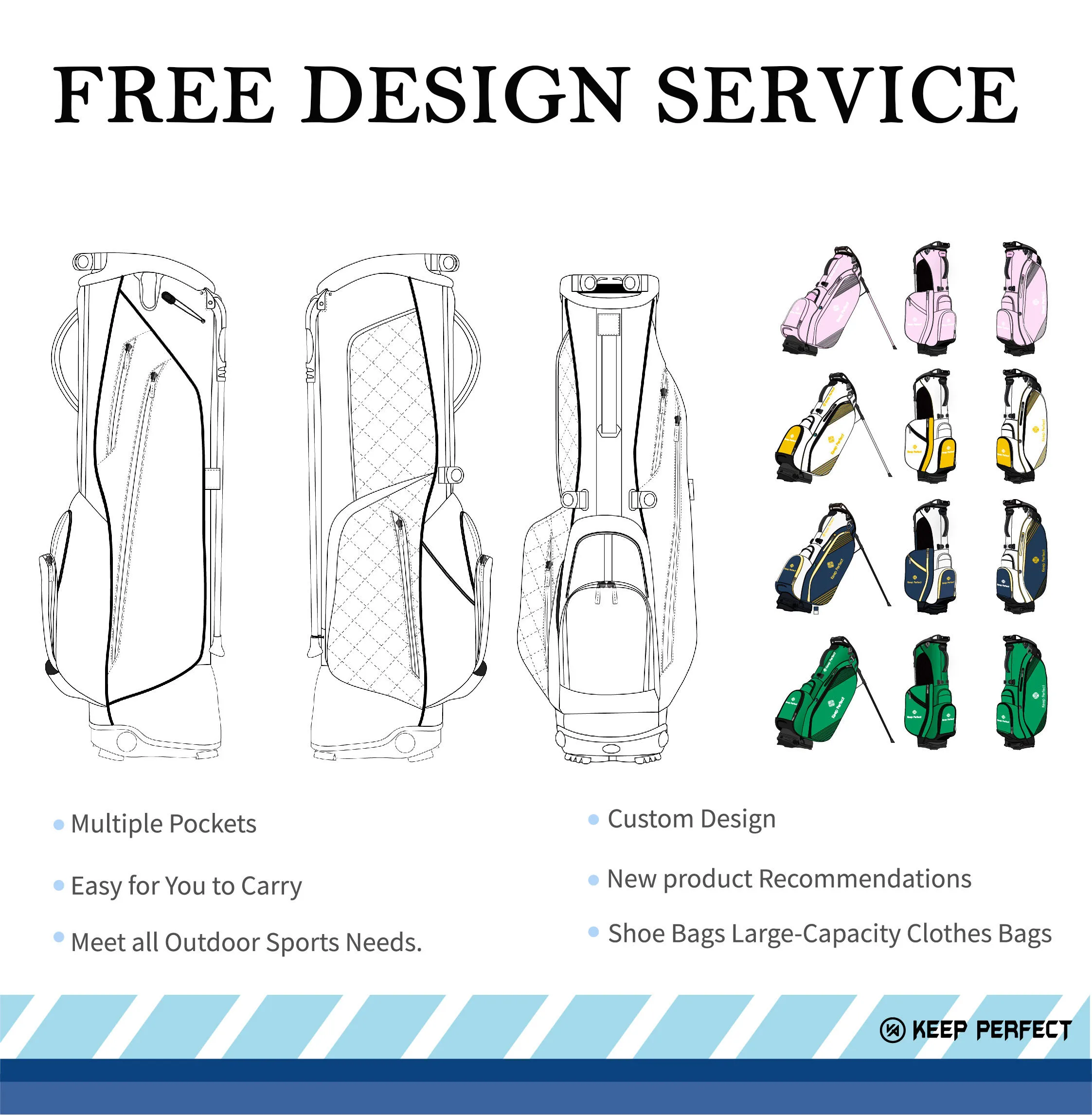
The first thing to grasp is that a stand bag is a system, not a single item. The shell fabric, the divider configuration, the stand assembly and hinge, the zippers and pockets, the straps, and the branding all interact. Change one and the others shift — a heavier 600D shell changes the weight target and the stand load, a 14-way divider changes how the bag is built and how the stand sits. So the tech pack must describe the system together, not hand the factory a wish list of unrelated features.
For bulk especially, consistency beats novelty. A mature plant executes a known architecture predictably; adding a novel pocket stops the line and multiplies risk. The smartest bulk buyers start with a proven architecture and add the few differentiators their customers actually feel — a signature pocket, a colorway, a logo — rather than reinventing the whole bag on the first run. That discipline is what keeps a first bulk order on time and on spec, and it is the foundation of every reorder that follows.
MOQ Planning: Right-Size Your First Bulk Order
The MOQ is the minimum quantity a factory will run profitably for your model, and it is usually quoted per model and per colorway rather than as one global number. In the golf stand bag market a regular bulk MOQ sits at roughly 200 pieces, while a first test program for a new brand can often start smaller — around 100 pieces — so you can validate samples and sell-through before committing to a full container. Confirm the MOQ structure in writing before you design a SKU plan around it.
The trap most new buyers hit is over-fragmenting the first order. If your catalog needs 4 models in 3 colorways each, that is 12 SKUs against a per-SKU MOQ — a large and risky first commitment. Instead, start with one architecture and a small set of colorways, confirm sell-through, then expand. The per-unit cost is modestly higher on a smaller first run, but the flexibility and reduced risk almost always outweigh it for a brand that is still learning its market.
Connect the MOQ to peak season timing. Because bulk production runs 45-60 days after sampling, a brand targeting a spring or fall retail window must place the bulk order comfortably ahead. A plant running multiple lines can parallelize different models, but your own order relies on confirmed slots. Ask the factory what its current monthly output is versus line capacity, so you know whether your peak-season quantity fits the schedule.
Write the Tech Pack That Controls Cost and Lead Time
The tech pack is the contract between your intention and the factory's execution. A strong one names the material and denier, the divider configuration (4, 5, 6 or 14-way, and whether full-length tubes are required), the pocket list, the weight target with a tolerance, the zipper and hardware standard, the stand spec, and the QC test plan. The more precisely each is defined, the fewer sample rounds you will need and the shorter the road to bulk.
Two sections deserve particular care because they generate the most back-and-forth. First, the weight target: give a range with tolerance (a stand bag commonly lands between 4.2 and 6.2 lbs depending on materials and stand weight), not a single guess. Second, the divider and pocket spec: state the actual configuration and functional detail rather than leaving the factory to infer it. Both are where a vague brief turns into a two-week sample delay.
The QC plan belongs in the tech pack too. Define the functional tests you expect on bulk — stand deployment cycles, zipper smoothness and cycle test, strap anchor load, base stability, and packed drop test — and the AQL sampling level (general level II is common). Writing the test into the spec at the front means the factory builds to it from the first article rather than discovering your expectations at the final inspection.
Sampling: The Step That Decides Your Bulk Run
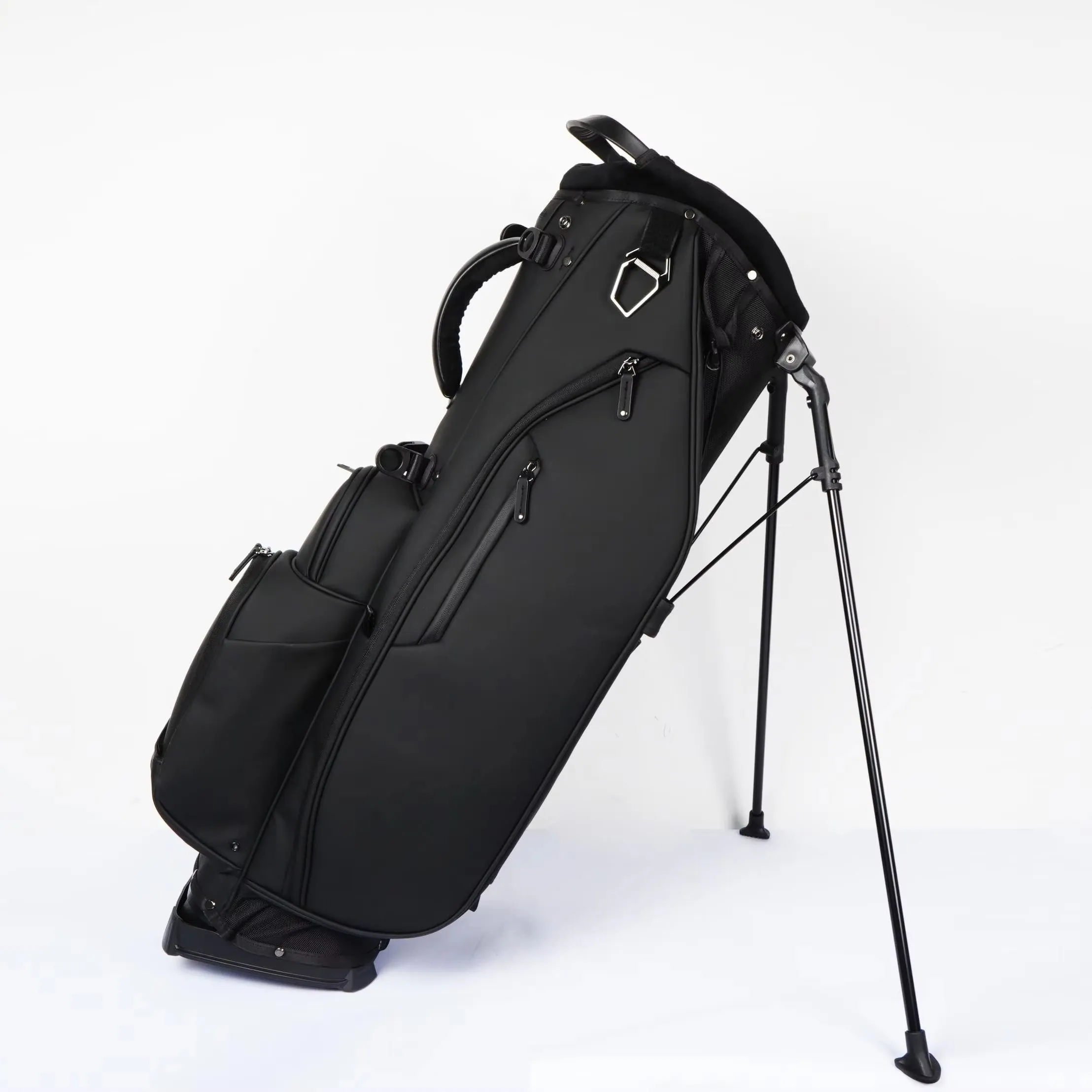
Never go straight to bulk from a drawing. Budget sampling time of 10 to 20 days and insist on a pre-production sample (PPS) made on the actual production fabric, with the approved hardware and stand. A PPS, not a concept mock, is what locks the technical file so bulk can scale without surprises. For a complex spec, plan two rounds: one to validate the look and one PPS to lock the build.
During sampling, confirm the sample is on production-grade material, because a sample sewn from a higher-grade fabric can pass visual review and then fail on the cheaper production fabric. Weigh the sample and check it against the tolerance, deploy the stand and feel the hinge, and zip every pocket. Photograph the sample in your brand context so your team and your retailers approve the real look before the factory cuts panels by the thousand.
Hold the approved sample as a frozen master — the reference each future run and reorder gets checked against. This single discipline is what makes a reorder identical to the first run instead of drifting. Between sampling and the bulk run, confirm the materials are on hand or reserved, because a 45-60 day bulk lead time assumes material availability and the factory's slot is real.
QC Checkpoints and the AQL Inspection on Bulk
For a bulk lot, quality is decided across the production flow, not at the dock. Ask the factory for QC checkpoints at cutting, sewing, sub-assembly (the stand), and final inspection, and request an inline inspection during production rather than relying only on a final random check. Catching a stitching or stand defect mid-run is far cheaper than discovering it in a full container at your dock.
The final inspection itself should follow a defined AQL sampling plan and record accept/reject numbers per lot. The inspection form captures the PO and lot size, the sample size and method, defect counts by critical/major/minor class, and functional results: stand deployment feel, leg alignment, zipper smoothness, strap anchor stitching, divider alignment, labeling and pack-out, and accessories like the rain hood. A plant that returns a filled inspection record for every bulk lot is running the process control a serious brand needs.
Define the AQL levels and defect classifications in advance — typically a critical/major/minor structure with agreed targets. Agreeing on what counts as a defect before bulk, and how the accept/reject decision is made, prevents the single most common bulk dispute. Our plant returns this record with every shipment, so the acceptance criteria you set at sampling are the same ones applied at the dock.
Payment, Incoterms, and Risk Allocation for Bulk
A bulk order pairs the payment term with the incoterm. A common structure is a 30% deposit with the balance due against the shipping documents, or an irrevocable L/C at sight for larger or recurring programs, where the bank releases payment against a compliant B/L, invoice, packing list, and insurance certificate. Confirm the incoterm — FOB, CIF, or DDP — so you and the factory agree exactly where risk and freight cost transfer.
For a bulk golf stand bag order, remember the landed cost is the number that protects your margin. Add freight, insurance, import duty, port handling, and inland delivery to the quoted unit price to see the true delivered cost. A bulk order is when freight and duty really bite, because the volume multiplies every per-unit line. Comparing FOB and CIF on one landed-cost table before committing keeps the freight decision transparent rather than bundled into a price you cannot audit.
Allocate the risk in writing: who handles which part of the journey, who inspects where, and what the remedies are if a lot fails AQL. A factory that ships against a clear inspection record and a clear incoterm gives you a clean path to a reorder, while a factory that resists written risk allocation often signals friction further down the road. Pick the term and the inspection point that match your forwarder relationship and your own comfort.
Bulk Order Spec and Payment Worksheet
| Requirement | Typical Target | Buyer Notes |
|---|---|---|
| Regular bulk MOQ | ~200 pcs per model | Reduced first test order ~100 pcs for a new brand |
| Sampling lead time | 10-20 days | Plan two rounds on a complex spec |
| Bulk lead time | 45-60 days | From sample approval; confirm calendar at order |
| Divider config | 4/5/6/14-way | Confirm full-length tube option |
| Weight target | 4.2-6.2 lbs range + tolerance | Weigh the actual sample |
| Payment | 30% deposit + balance vs documents, or L/C at sight | Pair with the chosen incoterm |
| Incoterm | FOB / CIF / DDP | State the named port or place |
| Inspection | AQL general level II, inline + final | Record accept/reject numbers per lot |
Plan for Reorders Before the First Bulk Ships
The highest-value move is to build for the reorder while the first bulk is still running. Lock the approved sample, the material, the hardware, and the QC checklist in writing, and keep a sealed master unit the line checks against. Standardize the inspection record for every lot. When your first sell-through proves the model, a reorder becomes a routine re-run rather than a fresh negotiation — and the per-unit cost drops as volume grows.
Set a reorder cadence with the factory: how far ahead you notify, how material is reserved, and how capacity is held. A brand that shares a seasonal calendar and realistic volumes lets the factory load-balance, so a reorder in your busy season does not collide with other clients' programs. This is the difference between an order-based relationship and a true supply partnership.
Finally, keep the spec stable across a season even if you test minor variations. If you trial a new pocket or colorway, do it as a separate small validation before folding it into the main reorder. Our Stand Bag Architectures, our OEM/ODM Service, and the Buying Guide map these decisions to proven models, and the procurement team at service@junyuanbags.com can start your bulk quote today.
Managing Multiple SKUs and Models in One Bulk Program
Once a first bulk order is proven, most brands scale into a multi-model program, and that changes how you work with the factory. The discipline that keeps it manageable is to treat each model-colorway as its own run with its own MOQ, sample, and QC record. A factory running 7 lines can parallelize different models, but the scheduling works cleanly only when each SKU is specified, sampled, and documented independently rather than blended into one ambiguous order.
Plan the mix deliberately around your demand, not around what is easy to order. A catalog that needs 4 models in 3 colorways is 12 SKUs, and each carries a per-SKU MOQ; starting that wide multiplies risk. The mature path is to build a strong hero model first, prove sell-through, and add SKUs as the demand justifies them. Keep full-length dividers, waterproof options, and heavier shells as intentional variations with their own spec lines rather than bolting them onto a base model.
For a multi-model bulk program, hold the line on standardization that does not hurt differentiation. Branding, hardware, and QC standards can stay consistent across models, which lets the factory batch-purchase material and hold pricing, while the models differ only in the features customers feel. Aligning what can be aligned keeps the per-model economics, the lead time, and the reorder path stable as your range grows.
The Reorder Economics and Seasonal Planning
Bulk ordering rewards a relationship view of cost. The first order carries the sampling and pre-production investment; reorders run on proven specs and a locked master, so the per-unit cost typically drops and the lead time tightens as volume and trust grow. A brand that shares a seasonal calendar and realistic volumes lets the factory reserve materials and hold capacity, turning each reorder from a fresh negotiation into a routine production slot.
Seasonal planning is where bulk buyers either protect their margin or lose it. Because bulk runs 45-60 days after a 10-20 day sample, a brand targeting a spring or fall retail window must place bulk comfortably ahead, accounting for ocean transit and inspection time on top. The buyers who hold the date are the ones who book capacity early and confirm the calendar in writing, not the ones who assume a factory can compress a two-month production window.
Set explicit reorder trigger points with the factory: at what sell-through you reorder, how far ahead you notify, and how material is reserved for the repeat run. Agree how a colorway that sells out is either remade from the locked master or replaced with a new validated colorway. This structured reorder workflow is what converts a series of bulk orders into a durable supply partnership where both sides plan together rather than react.
Bulk Ordering Mistakes and How to Avoid Them
The first bulk order mistake is skipping the pre-production sample. Going straight from a drawing to a full container risks an entire run built on an unvalidated spec. The second is over-fragmenting the first order into too many SKUs, which multiplies the MOQ commitment and the risk. The third is comparing suppliers on quoted price alone, ignoring freight, duty, and inspection — which turns a cheap-per-unit quote into an expensive landed cost.
A fourth common error is under-specifying QC. A buyer who does not write the AQL plan, the functional tests, and the accept/reject record into the order gives the factory no defined target to build to, and the final inspection becomes a dispute instead of a check. And a fifth is treating the lead time as flexible: because bulk runs 45-60 days, a buyer who orders late and expects compression undermines the whole calendar and usually pays rush or air-freight premiums.
Each of these mistakes is preventable with the same tools this guide has laid out: a precise tech pack, a reduced-volume pilot order, a landed-cost table, a written QC plan, and a confirmed calendar. A bulk golf stand bag order is a highly repeatable process when the buyer and factory agree on the spec and the evidence in advance. Get those five controls right and bulk becomes the most dependable, most profitable part of your golf line.
Recommended Internal Links
- Products (Stand Bag Architectures)
- OEM/ODM Service
- Factory & QC
- Golf Stand Bag Buying Guide
- Custom Stand Bag Lead Time
- Incoterms for Stand Bag Orders
FAQ
What is the typical MOQ for a bulk golf stand bag order?
A regular bulk MOQ is commonly 200 pieces per model, with a smaller test order of about 100 pieces often accepted for a new brand to validate before scaling. Confirm the MOQ per model and per colorway before you commit.
How long does bulk production take after sampling?
Sampling typically runs 10-20 days, and bulk production for a 200-piece or larger order runs 45-60 days from sample approval, depending on standby materials and current line load. Confirm the lead time on the actual calendar at order time.
What should a bulk order tech pack include?
A clean tech pack should define the material and denier, the divider configuration (4/5/6/14-way and full-length tubes), the pocket list, the weight target with tolerance, hardware and zipper standards, the stand spec, and the QC test plan with AQL levels.
What payment terms are typical for bulk golf stand bag orders?
A common structure is a 30% deposit with the balance due against the shipping documents, or an L/C at sight for larger or recurring programs. Payment terms pair with the incoterm (FOB, CIF, or DDP) you choose.
Do I need a pre-production sample before a bulk run?
Yes. Approve a pre-production sample made on the actual production fabric before bulk, and ideally run an inline inspection during production rather than only a final random check. This locks the spec so a reorder matches the first run.
What QC checks should I ask for on a bulk lot?
Ask for an AQL-based inspection covering stand deployment cycles, zipper smoothness and cycle test, strap anchor load, base stability, divider alignment, packed drop test, and labeling/pack-out verification, with accept/reject numbers recorded per lot.
How do I keep reorder quality consistent in bulk?
Lock the approved sample, the materials, the hardware, and the QC checklist in writing, and keep a sealed master unit the line checks against. Standardize the inspection record for every lot so a reorder reproduces the original spec.
Request a B2B quote for golf stand bags
Send your target market, expected MOQ, and reference photos. We respond within 24 hours with a sampling plan.