Practice golfers can also browse our range and simulator golf bags — For a tournament-grade custom stand bag program, the calendar is the boss: with 10-20 days for sampling and 45-60 days for bulk production, a large player and staff set should start around 90-100 days before the first tee so there is buffer for one design revision — and a single-colour logo typically moves unit cost just 3-5%, while a multi-sponsor lockup can push it to 6-8%. This guide covers architecture choice, event branding, sponsor placement, QC, and the shipping plan that keeps a tournament order on time.
Custom stand bags are one of the most visible assets of a tournament, carried by players and staff across the course and photographed all week. Done right, they turn the event logo into a walking billboard; done wrong, they miss the date or arrive with a sponsor logo out of registration. The factories serving QUANZHOU JUNYUAN BAGS run tournament programs on an SGS-verified affiliated plant, and the teams that succeed treat the event date as a fixed deadline around which every design decision bends.
Key Takeaways
- Start production around 90-100 days before the tournament for a large order.
- Sampling 10-20 days; bulk production 45-60 days.
- Single-colour logo adds 3-5%; multi-sponsor lockup can reach 6-8%.
- Match architecture to segment: lightweight carry, 14-way prize, hybrid corporate.
- Regular MOQ 200 pieces with 100-piece test orders.
Plan the Calendar Backwards From the First Tee
The single biggest difference between a tournament program that ships and one that is crushed by the date is planning the calendar backwards from the event. Every custom stand bag order has two fixed windows — about 10-20 days for sampling and approval, and 45-60 days for bulk production. Add the design lead time on your side and a safety margin for one sample revision, and a serious player-and-staff order realistically needs 90-100 days before the first tee. Starting later means paying for rush freight or accepting a smaller, less custom run.
Build the timeline as a simple backward count: event date, minus two weeks for delivery and buffer, minus the 45-60 day bulk window, minus 10-20 days for sampling, minus the internal design and approval time on your side. That yields the date you must send your first brief. Put that date on every contract and tell the factory it is fixed. Because bulk production follows a scheduled line, committing to the event date early lets the factory reserve material and capacity, which almost always prices better and de-risks the timeline far more than a last-minute rush.
Choose the Right Architecture Per Tournament Segment
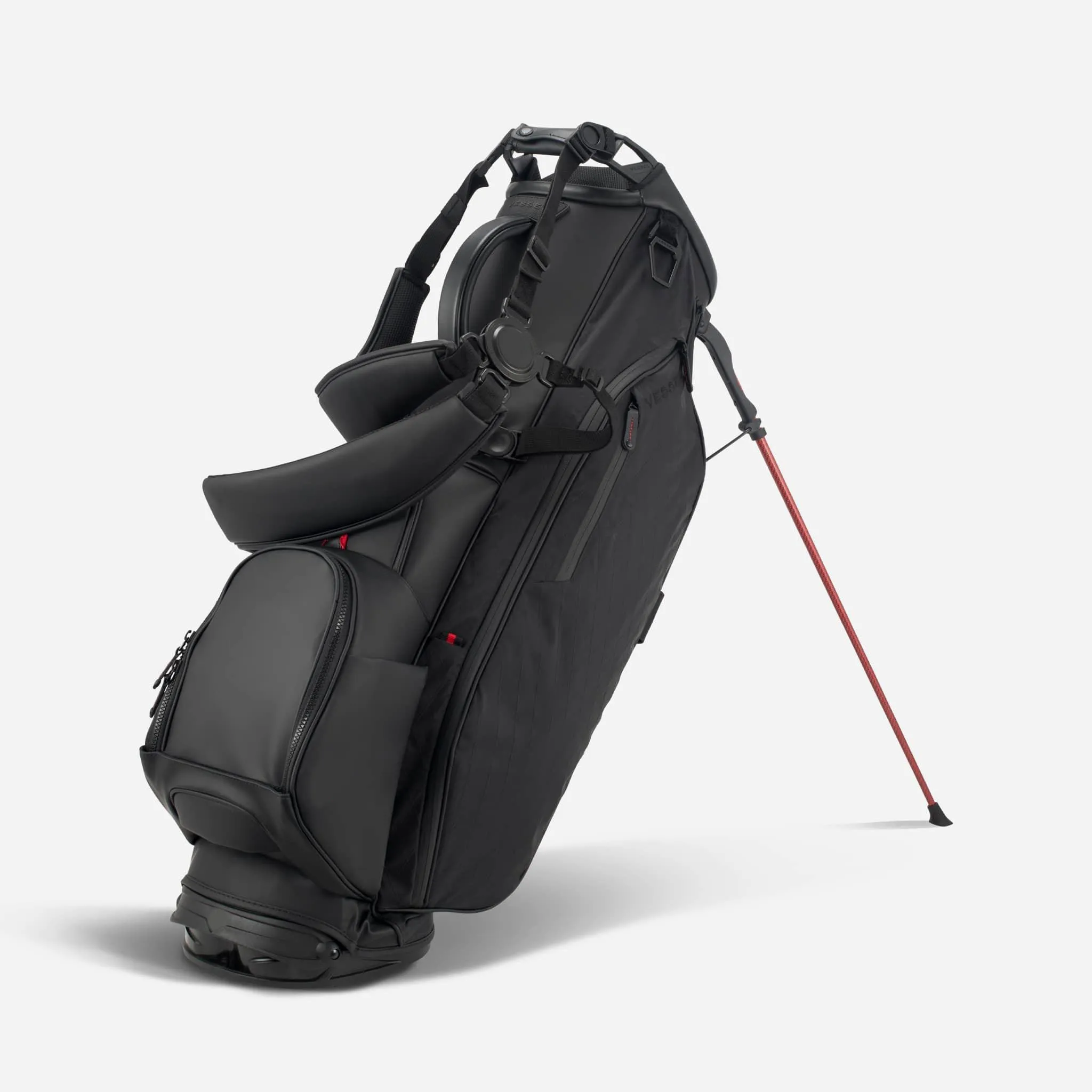
A tournament typically serves several audiences, and one architecture rarely fits all of them. For player give-aways, a lightweight 4-way or 6-way carry bag keeps the weight low and the cost manageable, so the brand carries the value. For prize tiers, staff, or a higher perceived value, a 14-way full-length bag signals a premium conclusion and protects clubs — useful for a winner's bag or a VIP package. For corporate days, resort clinics, or mixed walk-and-cart use, a lighter hybrid stand bag balances carry comfort with structural durability.
The architecture decision sets the divider, the weight, and the material direction before any branding happens. Decide the audience for each bag batch, then confirm the divider count, whether dividers run full length, the shell denier (a 400D shell keeps light weights down; a 600D shell suits heavier use), and the stand and strap expectations. If a tournament runs multiple bag tiers, plan them as separate architectures on the same colourway so the brand reads consistently across the event while each segment gets the right build. Lock this before sampling so both cost and weight stay honest.
Designing the Hero Event Lockup and Colourway
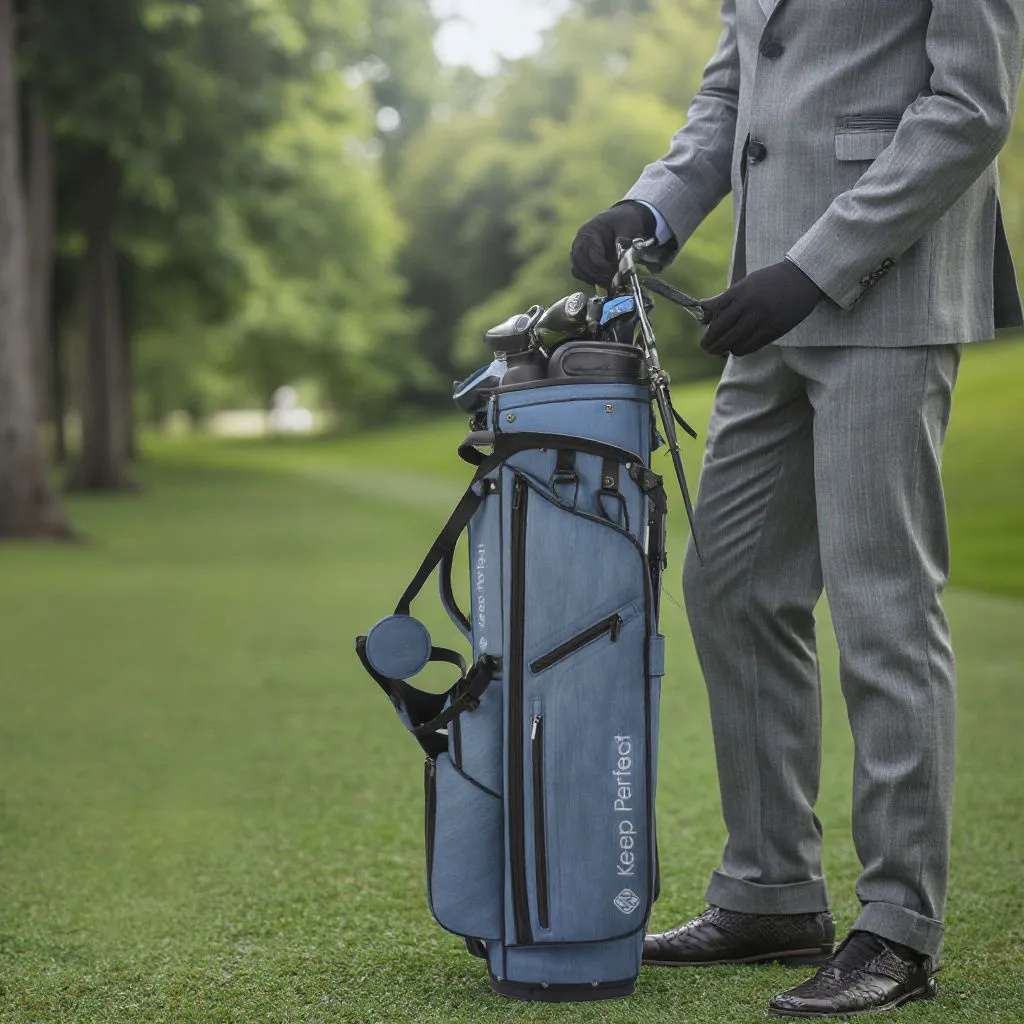
The event identity is what makes a tournament bag memorable, and it starts with a hero lockup on the two highest-visibility zones — the front lower panel and the top lid. Design that lockup to work at the size and method you choose: an embroidered mark reads sharply on nylon; a molded patch gives a raised premium lockup; heat transfer suits gradient artwork and short runs; and sublimation delivers full-panel colour with no thread for a lightweight bag. Provide vector AI or EPS artwork with fonts outlined and colours separated by Pantone reference.
The colourway should be tied to the tournament brand and tested against the production fabric, because a logo that looks strong in a digital artwork can vanish against a dark shell. Choose the base colour before the logo colour, and request a small trim-down or colour chip pack before bulk. On a course, visibility matters: a contrasting panel, a tonal logo, or a small reflective strip helps the event brand read at distance and in tournament photography. This is where a tournament bag stops being generic and becomes the event's visual signature.
Mapping Sponsor and Partner Logos With a Placement Hierarchy
Most tournament programs carry more than the event logo — they carry sponsors, which means a placement hierarchy is essential to keep the bag from becoming visual noise. Define which marks are hero, which are co-sponsor, and which are small accent marks. The hero event lockup owns the front lower panel and lid; sponsor logos take defined positions on the side panels and pocket facets; and a woven interior label can carry a full partner list without cluttering the outside. Each placement gets a method, thread or film colour, and an exact size.
Sponsor artwork is the most common source of a sample round, because sponsors deliver logos late or in the wrong format. Require vector AI or EPS from every sponsor up front, set a hard artwork deadline that sits before the sampling window, and lock a per-sponsor Pantone reference if colours differ from the event palette. Because each extra logo adds cost — a single-colour logo is roughly 3-5% of unit cost and a multi-colour embroidery or a two-panel patch can reach 6-8% — the placement map also serves as a budget tool. Agree the sponsor page before sampling so nobody is retrofitted onto the finished bag.
Functional Signature Features That Elevate a Player Bag
Beyond branding, a tournament bag carries a subtle functional promise, and adding one signature feature makes the bag feel considered rather than generic. Options include a magnetic rangefinder pocket for fast access, a cooler pocket for hot-climate events, a valuables pouch with a soft lining, or a lightweight structure that keeps the bag under a weight ceiling for walking. Choose one or two that match the tournament's climate and audience, and integrate them with the pocket access logic rather than stacking features for the sake of the list.
Each signature feature has a real cost and weight contribution, so decide it against the bag's target. A cooler pocket adds material and insulation; a magnetic closure adds hardware and a design detail; a valuables liner adds a soft fabric. Because tournament bags are carried and photographed all week, a functional signature also gives the media a reason to feature the bag. The strongest programs pair a memorable event lockup with one signature function, keeping the rest of the build clean so the bag stays light and the QC list stays short.
Cost Control: Tiers, MOQ, and Sample Discipline
Tournament budgets are often fixed long before the bag is designed, so control cost with the same discipline as the calendar. Use a tiered approach: a base tier (6-way half-length, single-colour embroidery), a value tier (600D shell, rangefinder pocket), and a premium tier (14-way full-length, TPU package, multi-sponsor lockup). Pick one tier per segment so pricing stays predictable and the SKU count stays low. Our affiliated facility runs a regular MOQ of 200 pieces per model with test orders from 100 pieces, so a tournament can validate with a real photographed unit before committing to a full order.
Sample discipline protects both budget and the date. Keep the brief specific so the program lands in one to two sample rounds instead of three or four — every unplanned round adds 10-20 days and sampling cost. Lock materials, hardware, and the sponsor artwork before bulk. Because bulk production is 45-60 days, any rework caused by an unfinished spec pushes the ship date and can force expensive air freight. The teams that freeze the spec at the approved pre-production sample are the ones whose tournament bags arrive on time and on budget.
QC for an On-Time Tournament Shipment
A tournament order cannot be late and cannot arrive with a systematic defect, because there is no second chance after the event. So the QC plan must protect both timing and quality. Run in-line QC checkpoints at cutting, sewing, assembly, and final inspection, plus a first-article check on the first unit of the run so a defect is caught before it travels. Tie functional tests to the actual run: a stand deployment cycle test at a 3,000-10,000 cycle target, a base stability check, a zipper cycle test, a strap anchor load test, and a packed drop test from roughly 0.76-1.0 m.
Set AQL-based inspection with critical, major, and minor defect classes and a sampling plan by carton, and record acceptance numbers per lot so each carton is traceable. Because tournament branding is front and center, add a branding checkpoint that verifies logo registration, thread colour against the approved chip, and placement coordinates against the placement map. Reserve two weeks of buffer for shipping and delivery. With this plan, the "on-time" promise is backed by documented workflows rather than hope.
Shipping, Pack-out, and the Delivery Buffer
The final stretch of a tournament program is packing and freight, where bags are bulky relative to their weight and every kilograme affects air versus sea. Plan the pack-out — carton count per carton, packed dimensions, and carton strength against the drop-test target — and verify labeling with the correct SKU and barcode. For an urgent event, air freight is the safety valve, but it is expensive; building the 90-100 day calendar up front usually lets a tournament ship by sea with a two-week buffer, which saves materially on cost.
Run a pilot of a few cartons before the full shipment, photograph the pack-out as the shipping reference, and agree Incoterms (EXW, FOB, CIF, or DDP) early so risk and freight cost sit where you expect. If bags split across player and staff tiers, confirm the packing segregates the tiers with clear labels so distribution at the event is simple. With the event date fixed, this closing step links the factory floor to the first tee, ending the program with a saleable, on-time delivery that reflects the brand you spent three months building.
Specification Table (Whitepaper View)
Use this table to structure your tournament brief and to align every segment with the factory.
| Parameter | Player Give-Away | Value/Premium Tier | Event Plan Detail |
|---|---|---|---|
| Architecture | 4/6-way lightweight | 14-way full-length | Match to audience segment. |
| Shell material | Nylon 400D | 600D or TPU-coated | Name denier and finish. |
| Branding | Single-colour embroidery | Multi-colour / patch / sublimation | Provide vector AI/EPS per lockup. |
| Sponsor logos | Side panels | Side panels + interior label | Lock placement, method, colour. |
| Cost impact | +3-5% for single-colour | +6-8% for multi-place | Use placement map as budget tool. |
| MOQ | Start 200 pcs / test 100 | Per model per colourway | One architecture, small colour set. |
| Timeline | Sampling 10-20 d, bulk 45-60 d | Add safety buffer | Work back from event date. |
Recommended Internal Links
- Products (Stand Bag Architectures)
- OEM/ODM Service
- Factory & QC
- Golf Stand Bag Buying Guide
- Creative Custom Logo Ideas
- How to Choose Customization Features
A Tournament Programming & QC Checklist
Use this list to keep an event program on time and on-brand.
- A backward calendar from the event date with a two-week buffer
- Architecture per segment chosen before branding
- A placement map for hero and sponsor logos
- Vector artwork and Pantone chips from every sponsor
- PPS approved on production fabric; sealed master kept
- AQL inspection + stand/zipper/strap/drop tests
- Pack-out pilot, labels, Incoterms, freight buffer
Sustainability and Brand Angle for a Modern Tournament
Tournament committees increasingly brief a sustainability angle, and a custom stand bag can carry it credibly without compromising the build. Recycled polyester shells, water-free or reduced-water dyeing for the colourway, and responsibly sourced labels and packaging give the event a defensible story that resonates with sponsors, players, and the press. Because a tournament bag is photographed heavily, a visible sustainability note — a woven "recycled materials" label or a clearly designed colourway tied to a green initiative — becomes part of the brand narrative rather than a footnote in the programme.
When you brief a sustainability feature, be specific so it survives production: name the recycled-content fabric, define the dyeing method, and confirm the packaging is recyclable. Verify the claim on the pre-production sample with the actual materials, not a verbal assurance, so the sustainability message is true. A genuine sustainability angle also steers the feature budget usefully — a recycled shell added at the base tier costs less than a stack of trims, and it gives sponsors a reason to partner. The tournaments that pair a clean event lockup with an honest sustainability message are the ones that earn the coverage and the goodwill the committee is after.
Pantone, Labels, and Colourway Consistency for the Whole Fleet
A tournament fleet may run several colourways across player, staff, and sponsor tiers, and colourway consistency is what makes the fleet read as one event. Whenever the design moves across tiers, hold it to a single Pantone reference per colour and confirm it against a physical chip on the actual shell fabric, because the same number reads differently on different materials. Keep a sealed colour master and a Pantone chip list for every tier so the player bag, the staff bag, and the sponsor bag match each other at the first tee rather than drifting apart under daylight.
Label compliance matters more on a tournament program because the bags often ship to several parties — the event office, sponsors, and possibly retail. Confirm the interior label, care label, material composition label, and any country-of-origin or fibre-content labels each market requires, and verify them on the pre-production sample before bulk. A bag that misses a mandatory label can be held at customs or rejected by a sponsor, jeopardising the on-time delivery the whole program is built on. Locking Pantone and label control into the design and QC plan keeps the tournament fleet visually unified and legally shippable, protecting both the brand and the date.
Distribution, Packing, and On-Site Handover
A tournament program ends on site, so the distribution plan is part of the design. If the bags split across player, staff, and sponsor tiers, confirm the packing segregates each tier with clear carton labels so the on-site team (or a sponsor) can hand out the right bag to the right person without opening every carton. Provide a packing list that ties cartons to tiers and quantities, and photograph a sample pack-out as the distribution reference so nothing is ambiguous on the day. A clean handover turns the months of production into a smooth first-tee moment.
Protect the on-site moment with the same discipline as production: reserve a two-week buffer for freight, agree the Incoterms so accountability is clear, and verify the labelling carries the correct SKU and barcode for any retail or event registration flow. If sponsor-branded bags are distributed by the sponsors themselves, confirm the sponsor cartons are separately packed and clearly marked. The final deliverable of a tournament program is not boxes in a warehouse but a bag on every shoulder — so planning the handover is what converts a well-made product into a well-executed event. This is the closing detail that sponsors and guests remember.
FAQ
When should I start producing custom golf stand bags for a tournament?
Work backwards from the event date: allow 10-20 days for sampling and approval plus 45-60 days for bulk production. For a large player and staff set, start at least 90-100 days before the first ball so there is buffer for a design revision.
What customization makes tournament bags stand out?
A strong event lockup on the front lower panel and lid, a cohesive colourway tied to the tournament brand, and one functional signature such as a rangefinder pocket or cooler pocket. Reflective or contrast-panel branding adds visual depth without much cost.
How do I choose the right bag architecture for tournament give-aways?
Match the architecture to the segment: a lightweight 4-6 way carry bag for player give-aways, a 14-way full-length bag for staff or prize tiers, and a lighter hybrid for resort or corporate days. Divider and weight follow the audience.
What MOQ do I need for a tournament bag order?
Our affiliated facility runs a regular MOQ of 200 pieces per model with test orders from 100 pieces. Colourways inside one model share the run, so one architecture and a small colour set keeps committed units manageable.
What does the logo cost on a tournament stand bag?
A single-colour logo typically adds 3-5% to unit cost, while a multi-colour embroidery or a molded patch can add 6-8%. An event with several sponsor logos or a two-panel patch will be at the higher end of the range.
How should QC cover a tournament order that must arrive on time?
Add a stand deployment cycle test, base stability check, zipper cycle test, strap anchor load test, and a packed drop test, and run a first-article check on the first unit. In-line QC at cutting, sewing, and assembly catches defects before the shipping date.
How do sponsors and partners get their branding onto tournament bags?
Define a placement hierarchy: the hero event lockup on the front lower panel and lid, then a placement map for sponsor logos on side panels, pocket facets, and a woven interior label. Lock each logo's method, colour, and size before sampling.
Request a B2B quote for golf stand bags
Send your target market, expected MOQ, and reference photos. We respond within 24 hours with a sampling plan.