Customizing golf stand bags for a team turns a squad of individual players into one recognizable unit, and for a 12-player roster the added branding cost is usually 3-5% per bag while the shared colorway, logo, and fit produce measurable gains in visual consistency, morale, and sponsor visibility. This B2B guide explains the five real benefits a team program delivers, how we engineer them at our affiliated Quanzhou plant (SGS-verified March 2026, 4,950 sqm, 7 lines, 149 machines, 137 staff), and the spec decisions that keep a 100-200 piece team order repeatable season after season for QUANZHOU JUNYUAN BAGS. For brands that want a fully customized silhouette — structure, dividers, pockets and hardware — our custom golf bag factory team specializes in OEM/ODM programs.
Key Takeaways
- Team customization builds one visual identity from 12 different players at a 3-5% branding uplift
- Per-player name panels are a per-piece variable cost, not a new bag build
- Matching shells, dividers, and hardware stop gear from breaking squad unity on camera
- Dye-lot control keeps a whole team shipment in one identical colorway
- A sealed team master lets a 2027 reorder match the 2026 run exactly
Benefit 1: One visual identity that reads instantly on the course
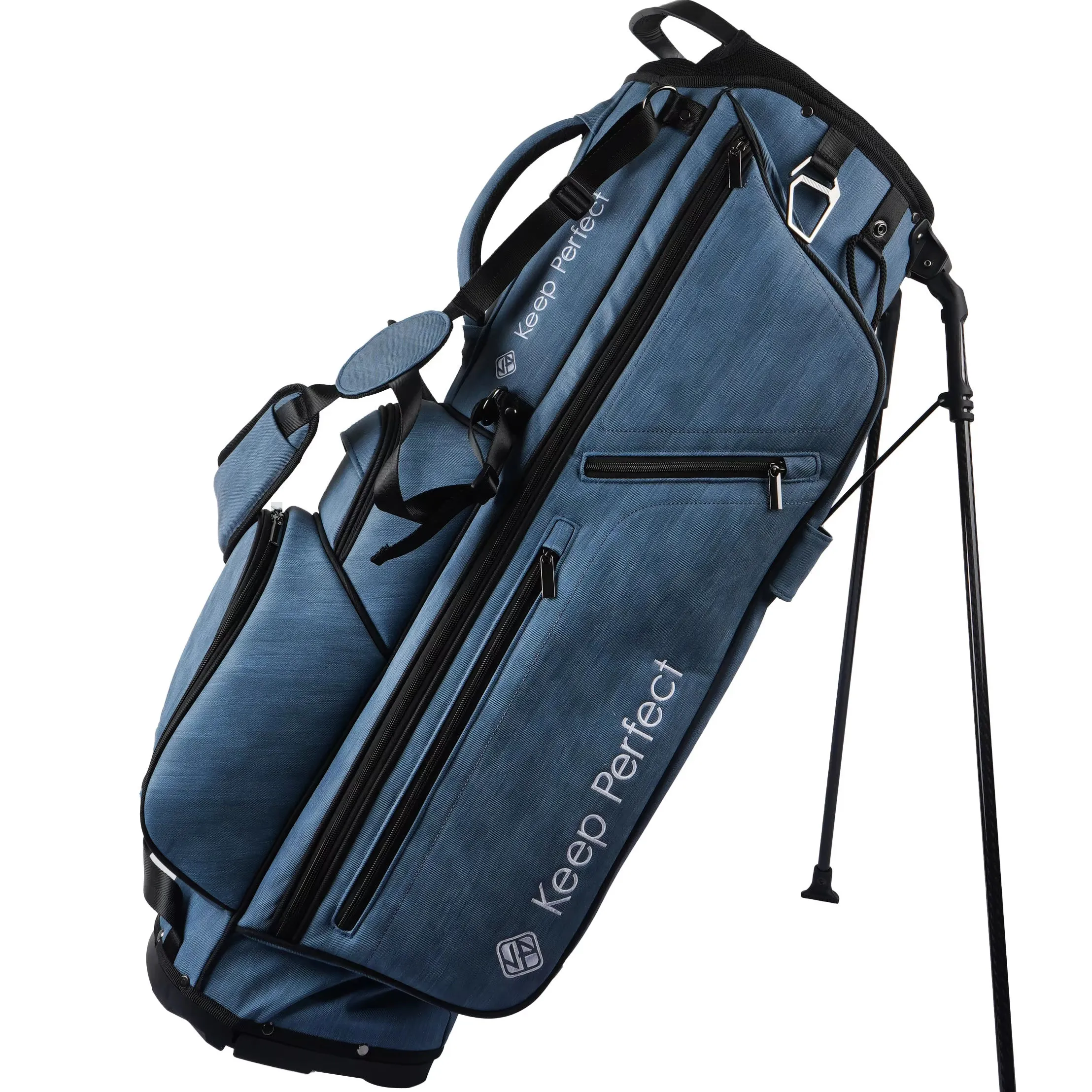
The first and most obvious benefit is identity. When a team carries bags with a shared shell color, a consistent logo lockup, and a uniform strap treatment, the squad is recognizable from the parking lot before a club is drawn. Broadcast and social photographers shoot the lineup, not just the leader, and a matching bag wall reads as professionalism. This is why college programs, corporate teams, and member squads invest in a full set rather than handing out off-the-shelf bags.
Identity is engineered, not accidental. We lock the hero colorway in one dye lot so the shell tone does not drift between the twelfth and the first bag on the rack. The logo is placed in the same chest or front-lower-panel zone on every unit, and the accent trim — zipper pulls, piping, and strap overlay — is drawn from the same Pantone reference. The result is a squad where the eye groups every bag as one product family, which is exactly the effect sponsor logos and club crests are bought to deliver.
The identity works beyond the bag itself. Team bags become the backdrop for the clubhouse photo wall, the team van, and the trophy presentation. A distinct colorway paired with a clean logo is the difference between a group that looks sponsored and a group that looks like a collection of individuals. For a coach or team manager, that subtle difference is the entire point of a custom program.
Benefit 2: Sponsorship and brand exposure you can quantify
A customized team bag is a rolling billboard. Each player carries the bag for hours of practice and multiple rounds per season, and every photo, livestream, and post-round interview puts the logo in frame. For a sponsor paying for exposure, a bag front panel is one of the highest-visibility placements a team can offer because it faces the camera whenever the player stands at address or walks with the bag on the shoulder.
The numbers support the argument. A 12-player team carrying bag fronts for a 30-round season generates hundreds of hours of logo-facing exposure. Multiply by the reach of tournament coverage and social reposts and the sponsor value far exceeds the 3-5% branding uplift on each unit. We help teams make this sellable by offering a front hero logo slot plus a smaller tonal logo placement, so you can separate the title sponsor from a secondary partner without visual clutter.
Because the bag is a working athlete product rather than a one-off banner, the exposure is authentic. Sponsors value branding that appears in normal use, not staged. We recommend a placement plan that puts the primary logo where the bag is always visible — front lower panel or chest — and reserves the lid or a woven interior label for secondary marks, so every sponsorship dollar has a clear, repeatable position in the frame.
Benefit 3: Player morale and team ownership
Gear that feels custom builds belonging. A player who carries a bag with their own name on the panel alongside the team crest treats it as their equipment, which changes how the gear is handled and how seriously the player takes the season. Customization signals that the program invested in the player, and that psychological effect is real even if it is hard to put a percentage on it.
We engineer this with per-player name panels in the same embroidery program. The shell, logo, and pocket layout are one master; the name is a per-piece variable. This means a 12-player roster gets 12 distinct bags that still read as one team set, without paying for 12 separate bag developments. The name panel placement — typically the side panel or the top lid — is consistent bag to bag so the squad looks tidy even close-up.
Ownership also extends the life of the gear. Players who feel pride in their bag tend to maintain it, which matters for a coach managing equipment budgets across seasons. A standard bag that no one owns gets treated like inventory; a personalized team bag gets zippers cleaned, straps tucked, and the logo checked before events. The small cost of the name panel pays back in how the set is cared for.
Benefit 4: Consistent performance specs across the whole squad
Customization is not only about looks — it is about every player carrying an identical, spec'd architecture. When a team buys off-the-shelf bags from different lots or suppliers, dividers, weights, and stand behavior vary, and that variation shows up in how players set up and the pace of play. A custom team order lets you lock one divider config, one target weight, and one stand system for the entire squad.
At our plant we build the team run to one technical spec: divider configuration, material denier, pocket layout, and hardware finish are identical across all units. This matters for a squad that walks together, because a 5.5 lb bag and a 4.8 lb bag feel completely different on the shoulder over a hilly back nine. Uniform weight and a stable hinge keep the whole team on the same physical standard, which coaches and trainers notice immediately.
The consistency also simplifies maintenance and spare parts. One zipper type, one leg mechanism, and one strap system across the squad means a broken part is a single SKU to reorder rather than an assortment. For a team administrator planning a multi-year outfit cycle, that standardization is a genuine operational saving that compounds the identity benefit.
Benefit 5: Cost efficiency and reorder repeatability
The final benefit is the economic one. A custom team run concentrates spend into one negotiated program with one approved master, so the per-unit branding cost is far lower than buying a name-brand bag per player. At our factory, a one-color team logo adds roughly 3-5% to unit cost, and a two-color logo plus a name panel moves toward 6-8% — still well under the retail markup on a branded bag, especially at the 100-200 piece team scale.
Reorder repeatability is where teams save the most. Because we freeze a sealed master unit, a color-sealed chip per thread, and a placement diagram with coordinates, next season's reorder matches this season's run within the locked tolerance. A team that changes three players does not rebuild the program; it reorders the shells and adds the three new name panels. This keeps the squad consistent year after year without re-paying development costs.
Lead times are predictable for the same reason. Sampling runs 10-20 days and bulk 45-60 days from approval, so a team manager can schedule the order against the season calendar. We publish the same parameters across each stand bag architecture so a team can pick a lightweight carry build or a 14-way organizer and know the cost and timeline behavior in advance.
Team bag specification table
Use this table as your internal team-program spec. Confirm each row on the pre-production sample and lock the values before the run so the squad's bags are identical.
| Parameter | Typical Team Spec | Buyer Notes |
|---|---|---|
| Roster size target | 8-24 pieces with name panels | Name panel is a per-piece variable, not a new build. |
| Shared colorway | One hero shell + one accent trim | Lock both in one dye lot for matching tone. |
| Logo method | Embroidery hero + toner secondary | Embroidery survives a full season of course use. |
| Per-player variable | Name panel on side or lid | Consistent placement bag to bag. |
| Branding uplift | +3-5% one color; +6-8% two color + name | Well under retail branded-bag markup. |
| Divider config | One config for the whole squad | Keep weight and stand feel uniform. |
| Reorder tolerance | +/-3% logo position; sealed master | Do not rely on screenshots for color. |
Designing the team appearance: colorway and logo lockup
Start the design with the base colorway before you finalize the logo color, because a logo that looks strong in a tech-pack image can vanish against the production fabric. A black logo on a black lower panel disappears unless the thread is a contrasting grey, or the patch edge is tonal. We recommend choosing the shell colorway first, then drawing the logo and trim from the same palette so the whole bag feels designed rather than assembled.
The logo lockup for a team is usually simpler than a consumer brand: a crest, a short name, and a year. Size the hero to the front lower panel or chest and keep a smaller mark for the lid. If the program carries a sponsor, separate the sponsor slot from the team crest so neither competes for the eye. We advise teams to send a placement diagram with exact measurements instead of the word "left chest," because a measured spec reproduces identically on every unit.
Color governance is the detail that separates a premium team set from a mismatched one. Set a dye-lot and tonal tolerance, approve a physical color chip rather than a screenshot, and specify the Pantone reference for shell, thread, and trim. The same discipline applies to hardware: zipper pulls and closure plates should be color-banded so they do not fight the logo. This is the layer of care our OEM/ODM service team flags before sampling so a team does not pay for a color mistake twice.
Functional choices that keep the squad playing well
The logo sits on a working product, and the functional choices — the stand system, pocket layout, and strap design — decide how the bag is used and photographed. A bag that plays well gets carried, posted, and reposted by your players, which multiplies the identity benefit. Treat branding and function as one spec, not two conversations.
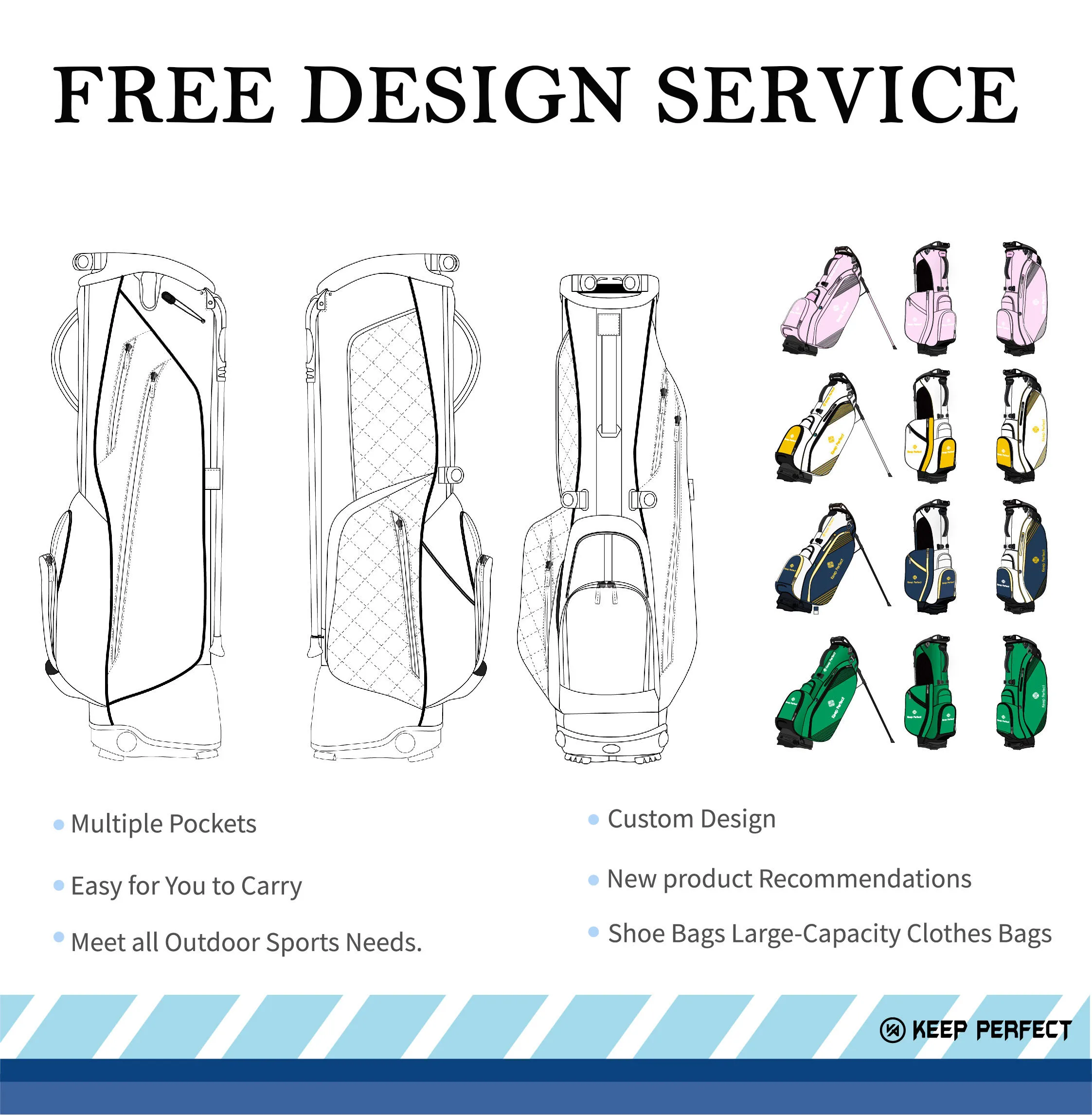
For a team that walks, lightweight matters. A carry-focused stand bag in the 4.2-5.0 lb range with a stable hinge is the standard choice, while a squad that rides carts or carries full organizers may prefer a 14-way divider bag. Ornament pockets, a valuables pocket, and a padded dual strap are the functional signatures teams pick most. We can color-match a removable cooling pocket or a magnetic rangefinder closure to the team palette, giving the design a functional reason to be photographed in use.
Planning the team outfit cycle across seasons
A team program pays off most when it is planned as a cycle, not a one-off purchase. Decide from the start whether the colorway and logo will carry into next season and how many new players the roster may add. This drives two production decisions: whether to reorder shells with only the name panels changed, and whether the dye lot can be reproduced when the season rolls over.
We advise teams to treat the first run as the master. Photograph the approved sample, keep the sealed color chips, and file the placement diagram with the embosser's contact. On reorder, a team adds three new name panels and reuses the whole master, which keeps development cost off the second season entirely. The shell, threading, and hardware all reference the first-approved records, so a 2027 squad looks as if it bought three years of bags in one deliberate program.
Timing is the other half of the plan. Because sampling runs 10-20 days and bulk 45-60 days, a team that orders in September for a spring debut stays comfortable. We recommend scheduling the RFQ about four months before the first tournament and confirming the inline inspection window during bulk, so any per-player name correction is caught before the set ships. A predictable cycle keeps the camera-ready look consistent without a scramble.
Budgeting a team program versus name-brand retail
Teams often assume a custom bag costs more than buying retail. The reverse is usually true at scale. A retail branded stand bag carries retail markup, distribution, and season discounting; a custom team order at 100-200 pieces is bought at wholesale with one negotiation and one master. The 3-5% branding uplift applies to the factory cost, not to a retail price, which is why custom team sets routinely undercut name-brand procurement while delivering a better match to team colors.
Budget allocation also matters internally. The per-player name panel and the sponsor logo are separate line items, so a program can split funding between a booster sponsor and the squad budget. This makes the investment easier to justify to a club committee or athletic department, because the sponsor slot is a self-funding component rather than a line on the equipment bill.
Finally, compare total cost of ownership, not just unit price. Identical specs across the squad simplify spares, one zipper and one leg mechanism to stock, and a single reorder to manage. A mismatched retail assortment forces the team to juggle several SKUs and reorder channels. Over a three-year cycle, the standardization and the sealed master usually make the custom program the cheaper path, while the uniforms-backed look drives a higher perceived value for the program.
Test plan and acceptance criteria for a team run
Add test methods with pass/fail criteria so the team set stays consistent and disputes stay low. Stand deployment cycles, base stability, zipper smoothness, and strap anchor load are the functional tests that protect the squad's equipment across a season.
- Stand deployment cycle test with a target cycle count and failure criteria
- Base stability check: angle, slipping resistance, and leg spread consistency
- Zipper smoothness and cycle test measuring pull force and jam rate
- Strap anchor load test against a static load and stitch failure limit
- Color repeatability check against the sealed master on the first-article unit
Sampling and QC checklist for the team order
Sampling is where a team program is won or lost. Order a pre-production sample on the exact production fabric and the approved thread, and budget for a second round if the logo crosses multiple panels. We encourage an inline inspection during bulk rather than only a final random check, so a drift in a single player's name panel is caught before the whole set ships.
- Approve a visual and dimensional sample on the actual fabric with the team colors
- Lock thread and trim color with a physical chip pack, not a screenshot
- Define placement coordinates with a tolerance for the logo and the name panel
- Run an adhesion and fade check on the logo panel
- Record a first-article inspection on run #1 across the whole set
- Keep a sealed team master unit for reorders with roster changes
Quoting a team program
To get an accurate team quote, send a short spec: roster size, bag type, divider config, material direction, pocket list, logo method, the hero and accent colors, the per-player name requirement, target MOQ, timeline, and reference photos or a vector artwork file. The clearer the brief, the faster we return a sampling plan at 10-20 days and a bulk window at 45-60 days.
Because a team run reuses one architecture and one master, the quote is more stable than a first-time custom build. Tell us the season date and the number of players, and we will flag any placement conflict or color risk before sampling so the set is right the first time. Reach us at service@junyuanbags.com or +86 17750020688 to start your team program.
Recommended internal links
- Products (Stand Bag Architectures)
- OEM/ODM Service
- Factory & QC
- Golf Stand Bag Buying Guide
- Personalized Name Tags Guide
FAQ
How much does a custom team run add to the cost of each stand bag?
A single-color team logo in one placement typically adds 3-5% to unit cost; a two-color logo plus a player name panel can push that to 6-8%. At a team MOQ of 100 pieces, our factory holds the standard pricing structure for repeatable runs.
What is the minimum order for a custom golf team stand bag?
Our conventional MOQ is 200 pieces, but we open test orders at 100 pieces so a team can validate colors, fit, and logo placement before scaling. For a roster of 12 players you can still authorize a pilot sample before committing to the full squad complement.
Can every player have a different name on the same team bag?
Yes. We produce a shared team colorway and logo master, then add per-player name panels in the same embroidery program. This is a per-piece variable cost, not a new bag build, so it stays economical across the full roster.
Which logo method survives course use for a season of team play?
Embroidery is the most durable for team bags on nylon and polyester panels, with molded TPU patches a close second. We avoid heat transfer across the stand hinge and dual-strap anchors, which flex hardest and cause edge peel.
How long does a team stand bag customization take from sample to delivery?
Sampling runs 10-20 days and bulk production 45-60 days from approval. For a season launch, we recommend starting the RFQ 4 months out so the PPS, inline inspection, and any rework fit before the first tournament.
Do you ship an entire team set in matching colorways even in small quantities?
Yes. We keep dye-lot control across the whole run so all bags in the team shipment match, and we can split per-player names within one dye lot. Matching shells and a shared tonal pocket mean the squad reads as one unit on the course.
Request a B2B quote for golf stand bags
Send your target market, expected MOQ, and reference photos. We respond within 24 hours with a sampling plan.