Personalized name tags on custom golf stand bags add roughly 3-6% to unit cost depending on method, and the reliable route is a woven or vinyl tag applied to a low-flex panel so the name stays legible across a full multi-unit order. This step-by-step guide takes a B2B buyer through artwork, tag method, placement, sampling, and bulk QC at our affiliated Quanzhou factory (SGS-verified, 4,950 sqm, 7 lines, 149 machines, 137 staff). For brands that want a fully customized silhouette — structure, dividers, pockets and hardware — our custom golf bag factory team specializes in OEM/ODM programs.
Why Personalize a Stand Bag With a Name
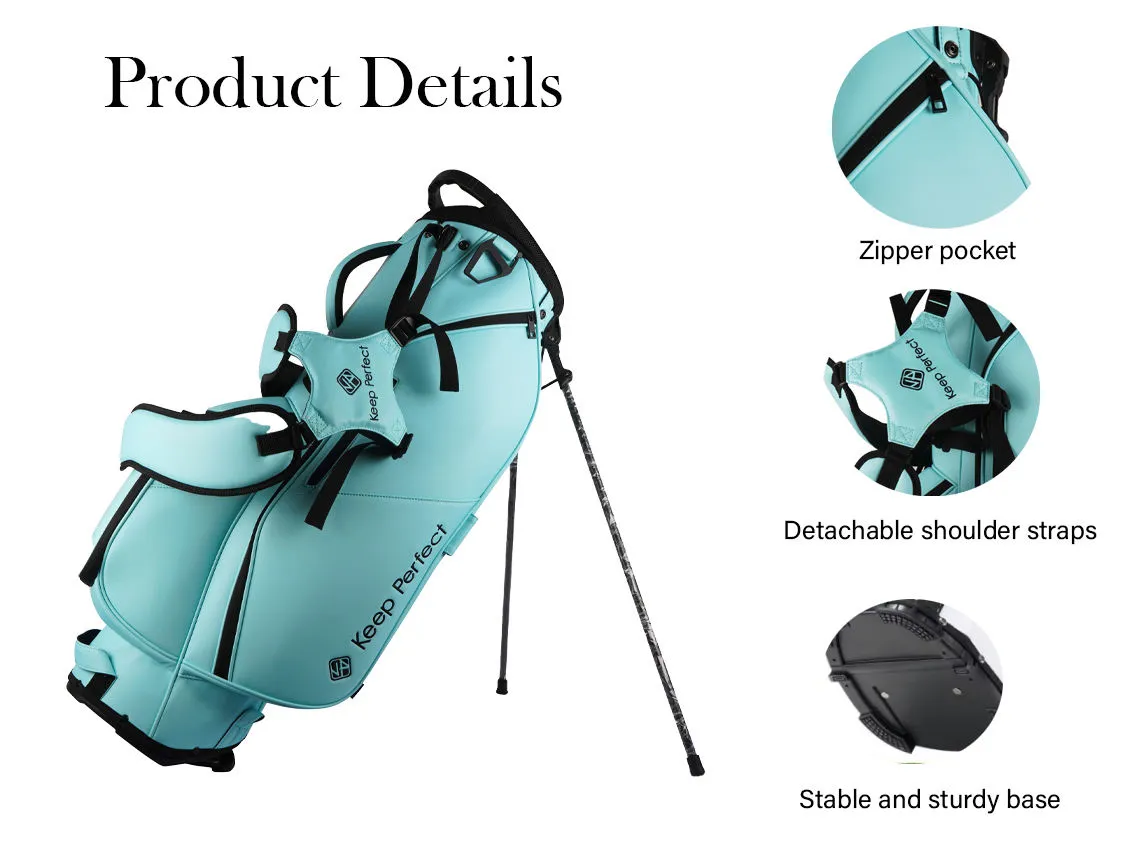
A personalized name tag does two jobs at once: it identifies the bag's owner at a crowded rack, and it makes the product feel bespoke in the hand. For a corporate-gift or charity program, an individual name on each bag signals that the buyer invested in that specific recipient, which raises the perceived value of the gift and makes the brand moment memorable. On a retail line, personalization is a differentiator that justifies a premium and drives loyalty — a golfer who owns a bag with their name is far less likely to switch brands next season. And for a pro shop, event, or academy, name tags turn a standard bag into identifiable equipment on the range and in tournament photos.
The engineering reality is that a name tag is text, and text has legibility and durability requirements a logo mark does not. A name must stay readable at the size it is seen, survive folding and abrasion, and repeat identically across every unit in an order. That combination — legibility plus repeatability at quantity — is exactly why a name tag benefits from a defined production method and a locked placement, rather than ad hoc printing. Get those two right and personalization becomes a reliable, repeatable part of the program; miss them and names blur, peel, or drift off-centre across the run.
Step 1 — Choose the Tag Method
Four methods dominate personalized name tags on stand bags, and the choice follows durability, cost, and where the name sits. Woven labels thread the name directly into a fabric label, giving a clean, durable result at low cost — ideal for a tonal name on the front panel or lid. Vinyl (PVC) tags are flexible and readable, and they layer onto the panel without puncturing a waterproof face. Embroidered names are the most premium and most durable, but they cost more per name because each is digitized and stitched, so they suit lower volumes or hero placements. Heat-transferred lettering is the fastest and lowest-cost option for high-volume personalization, though it wears fastest on high-flex zones. Match the method to the volume: a 50-unit gift run can absorb embroidery; a 500-unit retail run usually needs woven or heat transfer to hold cost.
For a program where names differ for every unit, speed of change-over matters. Woven and heat-transfer methods turn around between names quickly, while embroidery needs a new digitizing pass per name variety, which adds machine time. If the order mixes many different names, we schedule tags by name batch to keep the line efficient and the per-unit cost predictable. Mention the number of unique names and the total quantity in your RFQ so the method and cost are quoted correctly — that single figure drives most of the pricing.
Step 2 — Artwork, Font, and Name Length
Supply names in a clean spreadsheet or list, and give the factory the font and size so every name aligns. A legible name on a stand bag typically uses a bold, clean sans-serif at 10-14 mm letter height on a woven or vinyl tag; a hero embroidered name can run larger. Avoid thin or script fonts below the legibility threshold, because thread and film cannot reproduce fine strokes cleanly at small sizes, and a name with a long run of letters needs a wider tag panel. Confirm the character set can handle accents or special characters your program uses, and check that the font you license covers them, so you are not surprised by a missing glyph in bulk.
The file hygiene matters more than it seems. Send names with correct spelling and capitalization exactly as the recipient should see them, and request the factory to produce a digital or physical proof of a sample name before the full run. A single misspelling on one unit in a 300-unit order is a real cost to correct after production, so a proof checkpoint on the tag layout is cheap insurance. We review the name list, the font, and the tag size together at the sample stage and lock the approved layout as the reference for every unit.
Step 3 — Placement and Fixing the Tag
Where the name tag sits keeps it visible and keeps it intact. The most common placements are the front lower panel, the top lid, or just below the main brand logo, so the name reads alongside the mark. A valuables pocket or a side panel suits a smaller tonal tag. The tag itself is fixed by stitching its perimeter (for woven and embroidered) or by heat-activated adhesive bonding (for vinyl and heat transfer), and either way it needs a flat panel to sit cleanly. Avoid the stand hinge block, the leg-deployment zone, and the bottom wear plate, where a tag flexes and abrades and the stitching or adhesive fails fastest.
Define the placement with coordinates in the tech pack so the name aligns on every unit. A tag set 85 mm from the side seam and 95 mm from the hem reads and repeats consistently, and it lets the QC line check position in seconds. If the bag carries a logo and a custom name, plan both in the same placement diagram so they read as one clean lockup rather than two drifting elements. Send a marked photo or a simple diagram with the name list and we will finalise the layout on the sample before the run.
Step 4 — Sampling and Approving the First Unit
Sampling is where a name-tag program is won. Produce the first unit with the approved tag method, the approved name, and the approved placement, and check it on the actual production panel so what you see is what ships. On that sample, confirm the tag's legibility from the distances a bag is actually viewed at, the tag's colour against the shell, and the placement's alignment against the drawing. Budget for a sample round on a complex method like embroidery; a single sample round usually settles a woven or vinyl program. At our affiliated plant, sampling runs inside the standard 10-20 day window, and we issue a sealed master with the approved tag, thread, and placement so the full run matches it.
Because the name appears on every unit, the sample also locks the repeatability plan: the tag dimensions, the placement tolerance, the thread or film colour, and the QC checkpoints. We hold a first-article inspection on the run's first unit and spot-check names against the approved list throughout production, so a misspelling, an off-set tag, or a wrong colour is caught on the line rather than after shipment. That discipline is what keeps a 300-unit personalized order looking as consistent as a 3-unit gift set.
Personalized Name Tag Specification Table
Lock these rows on the pre-production sample before bulk production, following the standards at QUANZHOU JUNYUAN BAGS.
| Parameter | Typical Spec | Buyer Notes |
|---|---|---|
| Tag method | Woven / vinyl / embroidery / heat transfer | Choose by volume, budget, and panel. |
| Letter height | 10-14 mm tag, up to larger hero embroidered | Keep legible at real viewing distance. |
| Name list | Spreadsheet with correct spelling | Add font and size for consistent layout. |
| Cost impact | +3-6% per personalized unit | Embroidery costs most; woven/heat transfer less. |
| Placement tolerance | +/-2 mm on the panel | Align with the logo lockup if both present. |
| Fix method | Stitched perimeter or heat-adhesive bond | Match to a flat, low-flex panel. |
| Sampling / bulk | 10-20 days sample; 45-60 days bulk | MOQ 200 pcs, test order 100 pcs. |
Materials That Make a Name Tag Last
The performance of a name tag depends as much on the surrounding materials as on the tag itself. A woven label on a dense 600D nylon panel holds its weave and stays flat season after season; on a lighter 200D or 400D panel the fabric moves more under the stitch, so we use a stabilizing backing and lower the stitch density to stop puckering around the name. A polyester shell gives thread a flatter, glossier read, so the tag color may shift from what it looks like on nylon — always check the tone on the actual fabric. On a PU-coated or vinyl panel, a stitched tag punctures the surface finish, so a bonded vinyl name or heat transfer is the better pairing, placed away from where the panel folds. Writing the shell material into the tech pack is what lets the factory pick the right tag and fixation for that specific bag.
Think about abrasion and laundering too. A name tag that sits where the bag rubs a cart or the ground over a season needs a tougher weave or bonding than one on a protected panel. If the bag may be spot-cleaned or rained on repeatedly, confirm the tag and its bond tolerate moisture without peeling or fading. And a name below a reinforced strap anchor takes more flex than one on a flat front panel, so we place and spec accordingly. Matching the tag to the material and the stress zone is the difference between a name that reads like new a year out and one that blurs, lifts, or voids by mid-season.
Designing the Tag Around Your Logo and Graphics
A personalized name tag should sit inside the bag's overall graphics as a designed element, not compete with them. When the bag already carries a logo, a set of dividers, and a color scheme, plan the name so it reads as part of the same system: match the tag's font family to the logo's typography, use a consistent color from the shell palette, and place the name in a clear zone so it never collides with a graphic or seams. A common clean look is the logo on the front lower panel and the name either directly beneath it or tonally repeated on the lid, aligned on a shared centerline so the bag reads as one controlled lockup. Set the name smaller than the logo so identity stays primary and personalization stays secondary.
Color and finish choices carry the look. A tonal name — thread or film in the same family as the shell — reads understated and premium, while a contrast color pops for visibility at a rack or event. A woven tag with a stitched edge adds a tailored feel that suits a corporate-gift run; a clean vinyl name reads modern on a technical bag. Because the name shows on every unit, a small design review of the tag's font, color, and position against the bag's graphics, done at the sample stage, prevents a personalized run from looking like a sticker was dropped onto an otherwise designed product.
When to Use a Monogram Instead of a Full Name
A monogram — typically the recipient's initials — is a smart alternative to a full name for certain programs, and the choice affects cost, placement, and durability. A three-initial monogram carries far fewer characters, so it fits smaller panels, costs less in embroidery or film, and stays legible at smaller sizes than a full surname. For a corporate-gift bag that carries the company logo, a discreet monogram beneath it reads tailored and premium, while a full name can feel busy. For an individual retail purchase, a full name delivers the personalization emotional value the buyer pays for. And for a program where many recipients share a surname or where privacy matters, a monogram is the more practical and tasteful choice.
Because a monogram shortens the character set, it also lowers the legibility and layout risk: fewer letters mean fewer chances for a filled counter, a pulled stitch, or a sizing mismatch, and a well-formed three-letter lockup reads cleanly on a small panel or a lid. If the program may later expand to a full name, design the monogram placement so it can move to the same tagged zone without re-engineering the bag. Mention in the RFQ whether each unit carries a monogram, a full name, or a mix, because exactly that mix drives the digitizing setup and the per-unit cost — and it is the detail that turns a personalization line from a cost into a premium feature.
Step 5 — Managing Many Custom Names in Bulk
The operational challenge of personalization is not the individual name; it is keeping hundreds of different names accurate and aligned in one production run. The cleanest approach is a controlled name list that is the single source of truth: every unit in every carton must trace to a row in that list, with the tag method, size, and placement applied consistently. We batch names to run woven or film efficiently, verify spelling against the list before production, and use the sealed master to keep each name's placement identical. For programs with dozens or hundreds of unique names, this turns a potentially error-prone task into an audited process.
Packaging and documentation carry special weight when names are involved. Each unit should be traceable to its recipient, and any variation — a corrected spelling, an added monogram, a second name — must move back through the name list so the boxed unit matches its label. We recommend a final check that pairs each finished bag to its name file before packing, because a personalized order with one wrong label undermines trust that a plain order would tolerate. Ask for this reconciliation step in your QC plan if you are running a large personalized program; it pays for itself in avoided rework.
Working With OEM vs ODM on Personalization
Whether you buy a proven architecture or co-develop a new one changes how personalization is handled. In an OEM program you supply the bag structure and the name-tag plan, and the factory produces your proven design with your personalization applied; this is the fastest path because the tooling and techniques already exist, so sampling is shorter and risk lower. In an ODM program the factory co-develops the bag and the personalization together, which helps when the name placement needs a custom panel, a rebated tag zone, or a new gusset so the name sits flat. Either way the name-tag requirements — method, font, placement, tolerance — belong in the tech pack from the first sample.
Collaborating at the factory even for a simple tag yields a better result than specifying it remotely from a photo. We can advise on the exact fabric-to-tag pairing, show you how the tag looks against the production shell before you commit, and flag a placement that will flex or abrade before any bulk is spent. For a co-branded program — your logo plus a client's name — we reconcile both lockups so they read as one controlled design, and we keep a sealed master so runs match. That combination of proven OEM speed and co-developed ODM polish is why a personalization line works best when the method, materials, and placement are decided together with the factory before the run.
Key Takeaways
- Personalized name tags add 3-6% to unit cost; choose the method by volume and panel.
- Keep names legible at 10-14 mm letter height with a clean sans-serif font.
- Place the tag on a flat, low-flex panel and lock a +/-2 mm position tolerance.
- Control the name list and reconcile each unit in bulk to avoid misspellings.
- Sampling 10-20 days, bulk 45-60 days, MOQ 200 pcs / test 100 pcs.
Test Plan & Acceptance Criteria
Add measurable pass/fail criteria to keep a personalized order accurate and durable.
- Spelling and layout check of every name against the approved list.
- Tag placement check within +/-2 mm on each unit.
- Legibility check at normal viewing distance and thumbnail size.
- Peel/adhesion or stitch-integrity test on the tag panel.
- Flex-cycle test on the tag zone, no de-bonding or thread pull.
- First-article inspection and final unit-to-name reconciliation.
Recommended Internal Links
- Products (Stand Bag Architectures)
- OEM/ODM Service
- Factory & QC
- Golf Stand Bag Buying Guide
- Molded Logo Patch Guide
- Corporate Gift Stand Bags
FAQ
How much does a personalized name tag add to a golf stand bag?
Personalization typically adds 3-6% to unit cost depending on method. Woven and heat-transfer tags are the lowest cost, embroidered names cost most, and the volume of unique names and total quantity drive the pricing.
Which is the most durable method for a name tag?
Embroidered and woven names are the most durable on nylon and polyester panels. Vinyl tags are flexible and read well on waterproof panels without puncturing; heat transfer is fastest and cheapest but wears fastest on high-flex zones.
What information do you need to personalize a bag?
A clean name list with correct spelling, plus a font and size if you have a preference, and the placement zone. We produce a proof on a sample name before the full run so layout and spelling are confirmed.
Where should a personalized name tag go on a stand bag?
The front lower panel, top lid, or just below the main logo are common placements. A valuables pocket or side panel suits a small tonal tag. Avoid the hinge block, leg zone, and bottom wear plate.
Can you produce many different names in one order?
Yes. We batch names for efficient woven or heat-transfer production, verify spelling against a controlled name list, and reconcile each finished unit to its name file so every bag matches its recipient.
Can a name tag go on a waterproof stand bag?
Yes. A vinyl tag or heat transfer layers onto a sealed waterproof panel without puncturing the film. Confirm the bond on the production laminate and place it off the flex zones to keep it intact.
What is the MOQ and lead time for personalized stand bags?
Standard MOQ is 200 pcs with a 100 pcs test order. Sampling runs 10-20 days and bulk production 45-60 days. Share the name list and font early to fit into the sample window.
Request a B2B quote for golf stand bags
Send your target market, expected MOQ, and reference photos. We respond within 24 hours with a sampling plan.