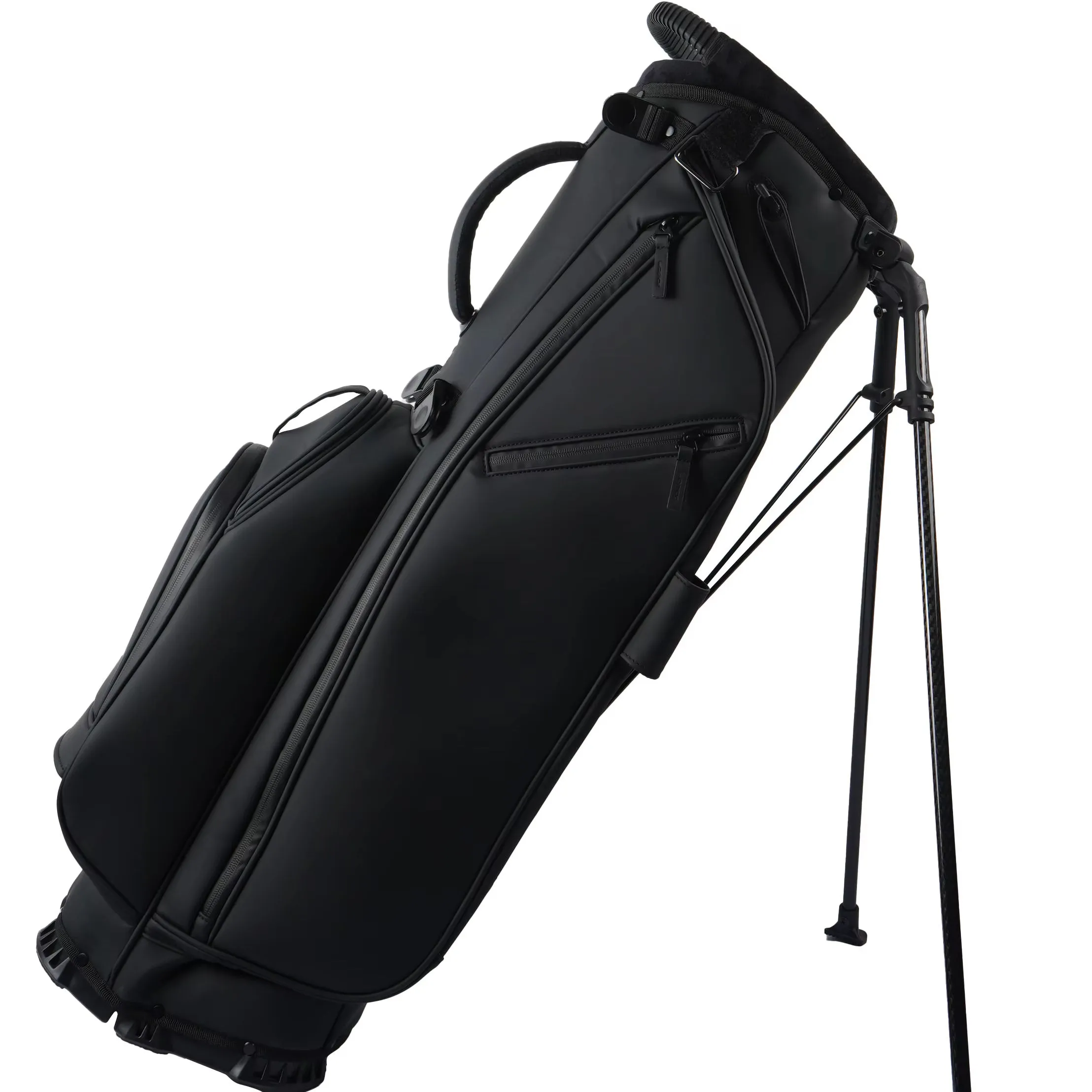
For a versatile two-in-one build, review our hybrid golf bags — For a small business, a branded golf stand bag is one of the highest-visibility, lowest-cost marketing assets it will own: a single-color logo in one placement adds only 3-5% to unit cost, yet every round puts the brand in front of the course, and at our affiliated Quanzhou facility even a starter line fits a conventional MOQ of 200 pieces (or 100 for a test order). This B2B guide explains the branding benefits small firms actually capture — credibility, mobile exposure, and a repeatable reorder — and how to realize them at an SGS-verified plant (4,950 sqm, 7 lines, 149 machines, 137 staff) with minimal risk for QUANZHOU JUNYUAN BAGS.
Key Takeaways
- A single-color logo adds only 3-5% to unit cost yet changes how the brand reads
- A branded bag is carried mobile exposure — hours of logo-facing time per round
- One architecture brand can serve both your flagship and a gift program
- A woven label plus one hero embroidery is the lowest-cost durable brand stack
- A sealed master makes reorders identical, protecting your equity
Why a small business should brand its own stand bag
For a small business, owning a branded product is different from selling someone else's. A custom stand bag puts your name, colors, and promise directly in the hands of the customer, and it turns every round — practice, league play, and tournaments — into exposure you did not have to buy. That is why golf-adjacent firms, pro-shop brands, and community businesses take the step from reselling to owning the bag.
The economics are friendlier than small firms expect. Because a branded bag reuses one architecture and one master, the branding uplift is a small fraction of the unit cost rather than a new product development. At 200 pieces a single-color logo keeps the build affordable, and at 100 pieces on a test order a firm can pilot a colorway before committing. This makes branding a low-risk entry point into a product line.
The credibility effect is real. A logo on a well-built bag signals that the business committed to a product, not that it grabbed something off a shelf. Retailers and gift recipients notice the difference, and it supports the price position a small brand wants to hold. Branding, done as a repeatable spec, turns a commodity bag into an owned asset that carries the business name wherever it goes.
Benefit 1: Carried mobile branding every round
The most tangible benefit is the moving billboard. A golfer carries a stand bag for hours across a round and many rounds a season, and the front panel faces the camera, the cart, and every player they pass. For an auto dealership, a wealth advisory, or a club brand, that is branded exposure in a trusted, in-context setting that a billboard cannot buy.
We engineer the exposure to be repeatable. The hero logo goes on the front lower panel or chest, the highest-visibility zone, and a small mark rides the lid for the second camera angle. Because the placement is measured and the logo is embroidered or patched, the brand reads cleanly in photos rather than being cropped out. This is the "professional" impression small businesses often struggle to manufacture with print collateral.
The math on exposure works in a small firm's favor. A single 18-hole round carries the logo through hours of visibility, and a customer who keeps the bag for two seasons multiplies that by dozens of rounds. Compared with the cost of a single billboard or a season of radio, the one-time 3-5% branding uplift on a modest order is an exceptional return on the asset that keeps working.
Benefit 2: Credibility and premium positioning
A branded bag lets a small business command the price its quality deserves. When the bag carries the firm's own name and a considered colorway, it reads as a deliberate product, and golfers — a demographic that notices finish — respond to that intent. This is how a small brand avoids the commodity discount that follows from reselling an unbranded generic.
Consistency is what makes credibility stick. A brand is a promise repeated, and a bag that matches the company palette, logo lockup, and promised quality in run after run builds trust. We lock the colorway, the placement, and the QC tolerance so the second wave of bags matches the first, which lets a growing business scale its product line without diluting the impression it worked to create.
The credibility also transfers to partners. A pro shop that stocks a well-branded bag is easier to place, a corporate gifter looks more generous with a quality branded item, and a course that carries your bag associates your name with a positive experience. Each placements compounds the brand, which is why small firms treat the first branded run as the foundation of a repeatable identity rather than a one-off promotion.
Benefit 3: A multi-purpose asset for flagships and gifts
A branded bag is not a single-use item. The same architecture with a reworked logo lockup can serve a flagship retail line, a client gift program, a pro-shop placement, and a fundraising prize. Because the shell, divider, and material are constant, each application is a placement and master change rather than a new development, which keeps every extension affordable.
For a client gift, the bag becomes a memorable item that carries the logo into the client's office and their rounds for years. For a flagship line it is the hero SKU that photographs well and supports a price point. The ability to run the same bag under different lockups with the same QC discipline lets a small business multiply the asset without restarting development each time.
We help small firms sequence these applications. Start with one clean hero lockup for the retail SKU, then reuse the architecture for a separate gift lockup or a co-brand with a partner. Each reuses the sealed master, so the colorway and construction stay consistent across all the ways the business puts its name on the bag.
Benefit 4: Self-funding promotion through customization
Customization lets a small business build promotion into the product instead of spending on separate advertising. The logo, the colorway, and the interior detail do the marketing inside the cost of the bag, and the exposure is self-perpetuating because customers carry and photograph it in use. Every round, each post, and every trophy photo is free promotion the firm did not have to budget.
The deliberate choices amplify this. A distinctive colorway and a clean logo make the bag recognizable at a glance, which is what prompts "where did you get that?" moments that become leads. A small fun accent — a tonal pocket, a color-matched strap — gives the bag a detail worth sharing, and shared photos move the brand without an ad spend.
This is why we advise small firms to invest the small uplift in customization rather than in a generic budget bag and a separate print campaign. Embedding the brand into the product the customer already pays to carry is a more durable promotion than any one-off collateral, and it compounds with every season the bag is in use.
Branding specification table for a small business line
Use this table as the branding section of your tech pack. Lock these rows before bulk so the small line is repeatable.
| Parameter | Typical Small-Business Spec | Buyer Notes |
|---|---|---|
| Product entry | OEM on a proven carry architecture | Lowest-risk route for a first branded line. |
| Hero branding | Single-color embroidery on front panel | About +3-5% unit cost, most durable. |
| Secondary mark | Woven label on the lid or strap | Cheapest way to add model or since-year line. |
| Colorway | One hero shell + one accent trim | Keep matching risk and cost low. |
| Multi-purpose | Same architecture, per-program lockup | Reuse for retail, gifts, and co-brand. |
| Repeatability | Sealed master + approved chip | Reorders match the first run exactly. |
| MOQ & lead time | 200 pieces (100 test); 10-20 day sample | Fit development before a season launch. |
Choosing the cheapest durable brand stack
For a small business on a budget, the most cost-effective durable combination is a single-color embroidery on the front lower panel plus a woven label on the lid. Embroidery is the most durable method on nylon and polyester panels and reads cleanly in photography; a woven label adds a second brand impression for a few cents. This stack stays well under a multi-color embroidery or molded-patch program.
Heat transfer is tempting because it is cheapest for short runs and handles gradients, but it wears fastest on high-flex zones like the stand hinge and the dual-strap anchors. For a bag meant to be carried for years, we prefer the small extra cost of embroidery on stable panels over the risk of edge peel. A molded TPU patch is the step up if the firm wants a raised, premium lockup and layers onto waterproof panels cleanly.
We also advise a small firm to hold back the multi-color logo for later. Start a one-color hero and one label; when the line grows and the volume justifies it, add the second color or the patch. Each upgrade reuses the same architecture and master, so the firm builds a richer brand stack without re-paying development — a deliberate path for a business that wants to grow the product gradually.
Positioning the brand across placements
Where the logo sits shapes how the brand reads. On a lightweight carry stand bag, the front lower panel is the primary camera zone, the lid the secondary. For a retail line, put the strongest mark where the thumbnail shows; for a gift or course program, balance the hero with a small, tonal detail that does not clutter. We measure the placement in the tech pack with exact coordinates and a tolerance.
The color framing matters as much as the mark. A black logo on a black lower panel disappears unless the thread pulls to a contrasting grey or the patch edge is tonal, so set the base colorway before the logo color. This is the small step that separates a designed brand from a slapped-on logo, and it costs nothing extra.
Since a small business often wears several hats, treat the bag placements as one system. The hero logo, the woven label, and any functional accent should all draw from the same palette and lockup, so the retail shell, the gift unit, and the co-brand all look like the same family even though their roles differ.
QC and repeatability that protect the equity
A small business invests its name in the bag, so repeatability is non-negotiable. Keep a sealed master unit, the approved color chip, and the placement diagram on file. Every reorder is matched to those records within the locked tolerance, so the second run looks identical to the first — the definition of brand equity that compounds.
Beyond the logo, the whole bag should hold the same standard. We run stand deployment, zipper smoothness, strap anchor, and color checks on the factory QC line, because a branded bag that fails in the field damages the name it carries. Adding a first-article inspection and a delta-E color limit to the plan protects the small firm from a drift that would read as an inconsistency to customers.
For a growing business, record the way you build the spec. Each season's reorder references the same master, so the brand does not subtly change as new players, new buyers, or new colors enter the mix. This is the discipline that lets a small firm keep a professional, repeatable identity as demand scales.
Applying one architecture to multiple uses
The OEM/ODM service model is ideal for a small business because it separates "what the bag is" from "whose name is on it." Choose a proven carry, hybrid, or organizer architecture, lock the material and divider, and then swap the logo lockup per program. This keeps every application affordable and consistent.
For a firm that cannot design its own bag, ODM lets us co-develop the pockets, straps, materials, and hardware around a clear brief. Tell us your market and quantity and we recommend the lower-risk entry path — usually OEM for a first line, with ODM reserved for a signature feature once the brand has traction. Both paths keep the branding discipline that protects the small company's investment.
Because a small business often has limited inventory budget, the multi-use approach also reduces stocking risk. One architecture variations under a few lockups is easier to manage than several one-off builds. This operational benefit, on top of the branding value, is why a single considered architecture is the smart foundation for a small firm's entry into custom bags.
Choosing the right starting architecture
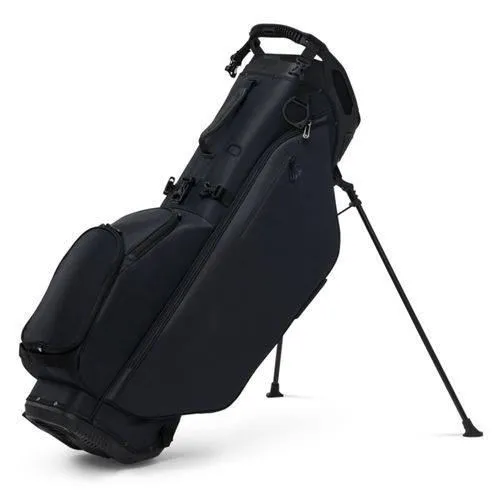
A small business should start on a proven, lower-risk architecture rather than a fully bespoke build, because it controls cost and lead time while still delivering a credible branded product. The carry-focused lightweight stand bag is the most common entry, balancing walkability and shelf appeal at a competitive wholesale point, while a firm serving a riding or organizer-focused customer may start on a 14-way or hybrid architecture instead.
The choice should track the market the business already serves. A pro shop with a walk-heavy clientele buys the lightweight carry build; a club brand serving cart riders prefers the organizer. Because the architecture is proven, the firm quotes faster, samples cleaner, and reorders predictably, all of which protect a small budget from development surprises. We publish the same stand bag architectures with their sizing and divider options so the selection is transparent.
Once the architecture is chosen, keep the spec deliberately small on the first order. One hero colorway, one logo method, and a modest pocket set beat a sprawling line that spreads the budget thin. A tight first SKU that sells justifies the next variation, and the disciplined start is exactly what lets a small firm scale the line without over-committing inventory.
Launching the first run around a season
Timing turns a branded line into a sellable line. Because sampling runs 10-20 days and bulk 45-60 days from approval, a small business should start the RFQ about four months before the season or launch date it wants to hit. This leaves room for the pre-production sample, an inline inspection, and shipping so the bags arrive when the demand is real rather than after it peaks.
Few small firms budget this cushion, and it is the most common cause of a rushed first run. We recommend confirming the inline inspection window during bulk so any drift in the logo or colorway is caught before the whole set ships. A one-week slippage in sampling early can be absorbed if the RFQ started on time; it cannot be absorbed in the week before a tournament client needs the bags.
Planning also lets the firm photograph the real approved sample for buyers. Ordering a small run-down of 20-30 units before a full container gives the business actual images of the production lockup, which is far more effective for selling than a tech-pack render. This "show the real thing" step is low cost and turns the branded line into a demonstrable product from the very first season.
Test plan and acceptance criteria
For the branded line, add tests with pass/fail criteria so the customer experience is consistent in every run. Stand deployment, base stability, zipper, strap anchor, and color repeatability are the checks that keep a real product behind the small firm's name.
- Logo adhesion and fade test on the hero panel
- Placement position check against the measured diagram
- Stand deployment cycle test with a defined cycle count
- Color repeatability against the sealed chip on first article
- Functional tests on zippers and strap anchors
Procurement checklist for the first branded run
Collect the key inputs before the RFQ so the first run is clean: target market and price, bag type, divider and material direction, the brand stack method, the hero and accent colors, an approved logo file, target MOQ, and timeline. Clarity here cuts the sampling loop and protects the brand budget.
- Approved vector logo file with fonts outlined and colors referenced
- Target market, price level, and expected quantity
- Bag type, divider config, material, and pocket list
- Hero and accent colorway reference
- Timeline against a season or launch date
Recommended internal links
- Products (Stand Bag Architectures)
- OEM/ODM Service
- Factory & QC
- Golf Stand Bag Buying Guide
- Designing Brand Identity
FAQ
What is the minimum order for a small business custom golf stand bag line?
Our conventional MOQ is 200 pieces, with test orders open at 100 pieces. This lets a small business launch a starter SKU or a pilot colorway before scaling, while keeping the per-unit cost of the branded build predictable.
How much does branding a small business golf stand bag add to cost?
A single-color logo in one placement typically adds 3-5% to unit cost; a two-color logo across two panels can reach 6-8%. A woven label or a second small mark is the cheapest way to add brand presence.
Can a small business use the same bag for its own brand and for client gifts?
Yes. You can order a branded run for your flagship naming and switch the logo lockup for a gift program, because each is a placement and master change rather than a new bag build. We keep the architecture and material spec constant to control cost.
Which branding method is best for a small business on a budget?
A single-color embroidery on the front lower panel plus a woven brand label on the lid is the most cost-effective, durable combination. Heat transfer is cheaper for short runs but wears faster on high-flex zones.
How does a small business protect its brand identity across reorders?
Keep a sealed master unit, the approved color chip, and the placement diagram on file. Every reorder is then matched to those records within the locked tolerance, so the second and third runs look identical to the first.
Do you offer OEM and ODM for a small business that cannot design its own bag?
Yes. OEM brands an existing proven architecture with your logo; ODM co-develops structure, pockets, materials, and hardware with you. Provide your market and quantity and we will recommend the lower-risk entry path.
Request a B2B quote for golf stand bags
Send your target market, expected MOQ, and reference photos. We respond within 24 hours with a sampling plan.