Practice golfers can also browse our range and simulator golf bags — For a golf retailer building a branded line, customization is a system — branding, structure, colorways, and manufacturing consistency — rather than a single logo, and a partner able to run a conventional MOQ of about 200 pieces per style/colorway with a 100-piece test order, lock a delta-E color tolerance near 1.5, and hold its QC at General Level II can turn a commodity bag into a differentiated product that lifts margin and repeat purchases. This guide turns the custom-range search intent into production-ready choices across branding, structure, and consistency.
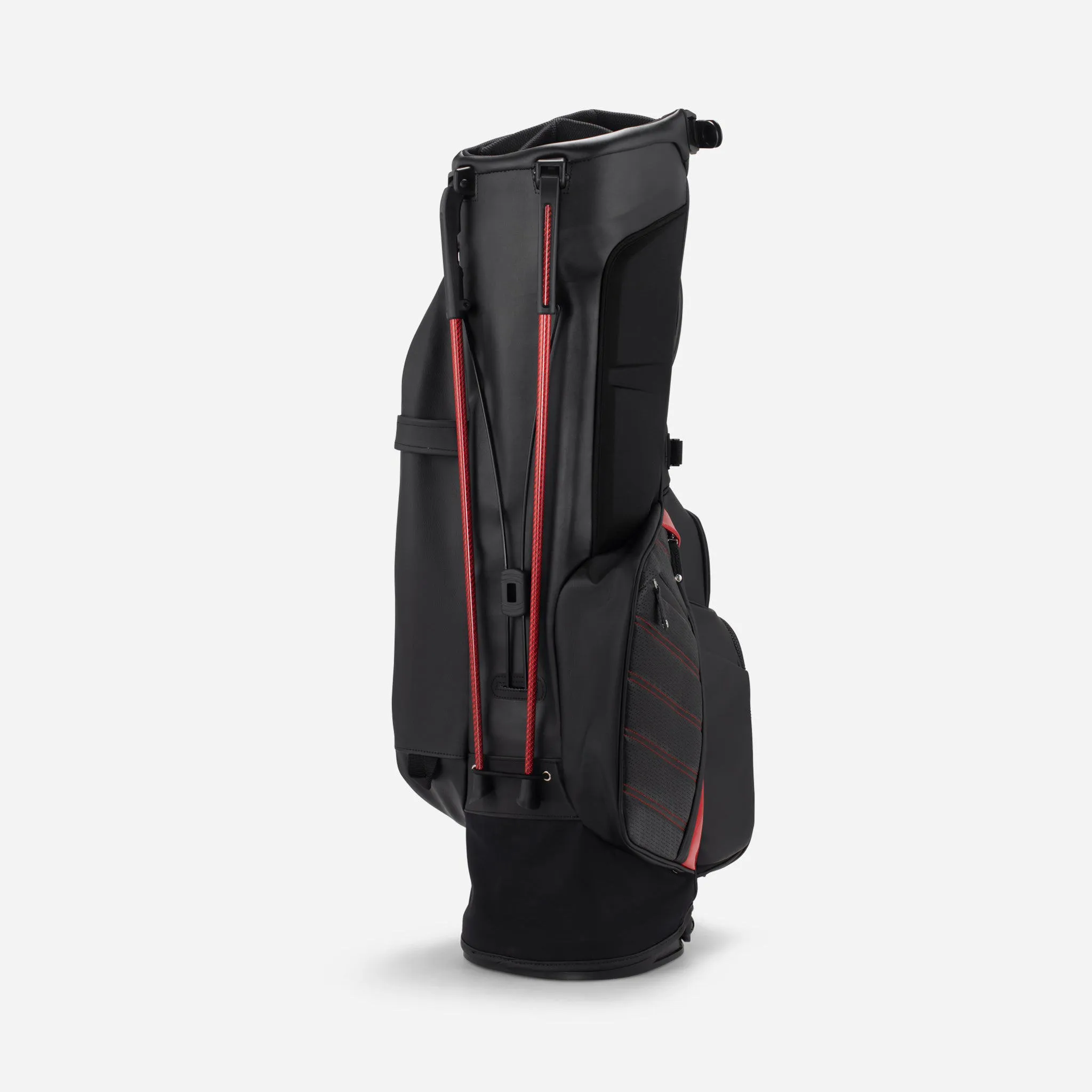
Why customization is a system, not just a logo
Many retailers approach customization as if it were a sticker: pick a logo, put it on a stock bag, done. But in a B2B custom program the logo is only one layer of a decision system that includes the structure of the bag, the colorways and trims, the functional elements, the labeling and packaging, and the manufacturing controls that keep all of it consistent across thousands of units. Treating customization as a system means every choice is made deliberately, and every choice is written down so the factory can reproduce it, reorder after reorder.
This system view also protects the retailer from the most common customization failure: a range that looks different in a sample, on a showroom floor, and in a carton that arrives three months later. That drift is rarely caused by a single mistake. It is the accumulated result of vague branding placement, an unsealed colorway, a silent material substitution, or a QC gate that nobody wrote down. When customization is treated as a system with sealed references and named standards, those drift points are closed before they can appear.
Finally, a system mindset is what earns a retailer a differentiated line rather than a slightly tinted copy of a competitor. Structure choices — the divider feel, the pocket logic, the strap system, the stand deployment — are the durable differentiators a logo alone cannot deliver. A retailer who thinks only in logos will be undercut on the floor; a retailer who thinks in systems builds a line that customers can feel is different, which is exactly the basis for stable pricing and loyalty.
Branding methods and placement strategy
Branding is the layer customers see first, so get the method and placement right before anything else. The durable options are embroidery, molded patches, and heat transfer. Embroidery is tough and premium-feeling and works well on the main exterior panels, but it adds weight, takes up sewing time, and should not be placed over padding or stress points where the needle could weaken the construction. Molded patches give a raised, tactile logo that survives heavy use and look great on the front panel or the pocket face. Heat transfer is lighter and faster to apply, ideal for large areas, all-over patterns, and the caddie-style graphics on massive side panels, though it is less tactile than embroidery.
There is a critical exception for waterproof or sealed panels: a needle passing through a taped or coated seam can compromise the seal, so on waterproof construction prefer heat transfer or patches rather than stitching a logo into the sealing zone. Matching the method to the panel is the rule, not choosing one method for the whole bag. For a multi-logoprogram, decide the placements too — the front panel, the hood or sleeve, the baseball strap anchor area — and lock the sizing and the exact lockup with the factory so the logo never drifts between jobs.
Seal the artwork early. Provide the vector file, the exact placement coordinates, and the finished lockup at the sampling stage, and require that the pre-production sample carries the final logo so you approve the real artwork rather than a placeholder. A logo approved only as a flat file and never seen stitched on the actual product is one of the most common rework triggers in custom programs. Getting branding sealed at sampling prevents the surprise that shows up one container later.
Colorways, trims, and consistency in bulk
Colorway is where a custom range either shines or drifts, and the control is a sealed physical reference, not a photograph. For each colorway, seal a physical color chip with the factory, lock a delta-E tolerance so the production color cannot drift more than about 1.5 units from the chip, and use a single consistent dye source and dye lot for the main panel color. Trims — the zipper tapes, the piping, the binding, the labels — have their own chips too, and they must be matched to the panel within the same tolerance so the range looks curated rather than mismatched.
The practical enemy of colorway consistency is unannounced substitution. When a dye lot or a trim is out of stock, an unmanaged factory simply swaps in a close match and ships it, and the retailer only notices when the bags arrive slightly off. The fix is a written component-substitution rule: any fabric, zipper, or trim change must be proposed and approved before production. Combined with the sealed chips and the delta-E gate, that rule is what keeps a reorder colorway identical to the one that sold the first time.
For a first branded range, be disciplined about the palette. Too many colors multiply the MOQ and the dye-management burden, and they scatter the QC effort across a wide set of references. Start with a small, dye-friendly palette — a few hero colors that hold well in nylon and polyester — drive them to scale to stabilize price, then broaden once the baseline is proven. A confident small palette consistently done beats an ambitious wide palette that arrives uneven, and it gives the retailer a cleaner shelf story anyway.
Functional customizations: pockets, straps, and dividers
The functional layer is what makes a custom bag genuinely different and worth a stronger price. Pockets are the first lever: a retailer can specify the pocket set, the size, and the access logic. A reinforced valuables pocket to keep phones and rangefinders protected, a cooler pocket with insulation for a measured bottle, a magnetic or zippered rangefinder pocket up top, an integrated apparel pocket for layers, and a logical ball-and-tee layout all change how the bag is used and which customer it suits. The access logic matters as much as the count — a pocket that is hard to reach while walking or carrying reads as poorly designed even if it is technically present.
The divider system is the second lever. A top divider of 4, 5, or 6-way, with or without full-length dividers, changes both the organization feel and the weight balance. Full-length dividers keep clubs from tangling down the length of the bag, which is a premium feature for a tour-level customer, while a simpler 4-way keeps weight down for the lightweight walker. Because the divider affects the stand geometry and the center of gravity, define it as a system with the stand rather than as an isolated hole count. The stand itself is a customization point: the deployment feel, the stability angle, and the leg spread can be tuned to a firmer or lighter action, which is a real point of differentiation on the sales floor.
The strap system is the third lever. A dual, self-balancing strap with defined padding thickness and a removable option lets a retailer cover both the walker and the traveler. Where the strap anchors are placed, how much reinforcement is sewn at the attachment points, and the strap's static-load performance all belong in the functional spec, because the strap is the part that carries the entire bag on the shoulder. Customizing these functional elements moves a retailer's line beyond branding into a construction story that customers can actually feel when they pick up the bag in the shop.
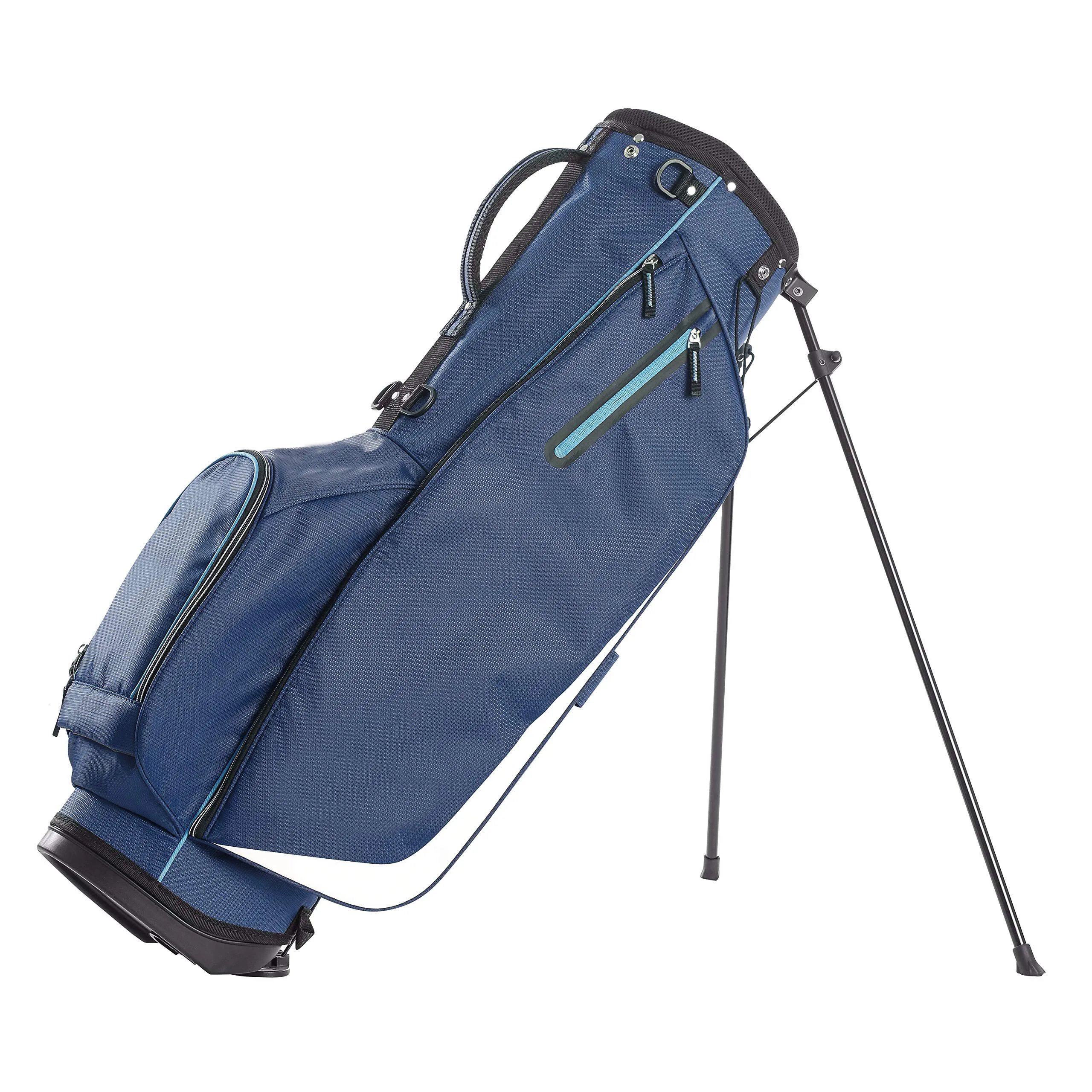
Packaging, labeling, and export-readiness
A custom range only earns its margin if it ships clean and traceable, so packaging and labeling are part of the customization system rather than an afterthought. Define the polybag, the carton spec, and any internal inserts and cardboards that hold the bag's shape in transit, then agree the labeling and barcode: the SKU labeling, the barcode format for the retailer's own inventory system, the size and feature hang tags, and the carton marks for each SKU. Verifying the labeling at the final QC gate — that the SKU, barcode, and carton marks all match the pack-out for that lot — prevents the most expensive packaging failure of all, which is goods that arrive looking wrong or trace wrong in a warehouse.
Export-readiness is compliance as well as packaging. Confirm that the dyes, coatings, and metal hardware meet the rules of the destination market — a nickel-leaching limit on metal, restricted-substance limits on dyes and coatings, and the labeling or flammability rules that apply. Request the material certifications and testing reports, and agree which market's rules govern the program. A retailer who does not check compliance risk faces a container that cannot clear or a product pulled from the floor, which is a far more expensive failure than the price of the test.
Specify the packed drop-test target so transit damage has a standard to test against, and set the delivery terms — the incoterm, the destination port or door, and the lead time — before production rather than after. Plan roughly 10-20 days for sampling and 45-60 days for bulk production once the master is approved, then add transit. Freezing the design at sampling and booking the production slot early are what actually hold the launch window, because every post-approval change moves the ship date and the shelf date that the retailer depends on.
Quality control and the retention that protects a branded line
A custom range under brand name carries more reputation risk than a stock purchase, so the QC system deserves the same care as the shell. Agree the inspection plan — for example General Inspection Level II with Major AQL 2.5 and zero critical defects — and add the functional gates that matter for golf stand bags: a stand deployment-cycle test in the 3,000-10,000 range with defined failure criteria, a zipper cycle test with a jamming threshold, a strap-anchor static-load test, and a packed drop test across corner, edge, and face. These functional gates are what tell customers the branded bag survives a season, not just that it looks good in the sample.
Retention is the mechanism that makes a branded line reproducible. The factory holds a sealed master unit and a color-sealed chip per program, archives the QC records and defect photographs by lot, and requires written approval before any substitution of fabric, zipper, or trim. On the same basis, the first-article check runs on unit #1 of each line before the line continues, and the inline checks run across cutting, sewing, and assembly. A retailer who insists on these retention and gate mechanisms is protecting the brand from the silent drift that quietly turns a beautiful line into an inconsistent one.
Finally, feed the after-sales back into the QC. Ask the factory to carry roughly 1-2 percent of spares — stand hinges, legs, zippers, strap hardware — and to support a documented warranty window with root-cause replies on claims. Use the claim data to catch a weakening component or a silent substitution early. A retailer who reads its after-sales metrics and feeds them back into the next gate treats the custom line as a living product, which is the difference between a one-season launch and a durable, reorderable range.
The retail customization scorecard
Use this scorecard to make the full set of custom decisions on one page and keep every choice traceable.
| Custom Decision | Recommended Approach | Key Control |
|---|---|---|
| Branding method | Embroidery / patch / heat transfer by panel | Match method to sealed vs standard panels |
| Logo placement | Lock placement + size + lockup | Approve real logo on pre-production sample |
| Colorway | Seal chip per colorway | Delta-E <= 1.5, single dye lot for main panel |
| Trims | Match zipper/piping/binding to panel | Chip per trim, same tolerance |
| Divider | 4/5/6/14-way, full-length option | Define as system with stand geometry |
| Stand feel | Tuned deployment + stability angle | Deployment-cycle test 3,000-10,000 |
| Strap | Dual self-balancing, padding + anchors | Static-load test, reinforcement scope |
| Pockets | Specified set + access logic | Reinforced valuables, cooler, rangefinder |
| QC plan | General Level II, Major AQL 2.5 | Record Ac/Re per lot, first-article check |
| Packaging/labeling | Polybag, carton, barcode, hang tags | Verify SKU/barcode/carton marks at final QC |
Fill this scorecard in with your product team before the RFQ goes out, then hand it to the factory so the custom choices are explicit and the controls are named. When every layer of the customization system is decided and sealed, the range is reproducible, improvable, and protectable.
Common mistakes to avoid with a custom range
The failures in custom programs are repeatable, and naming them is half the correction. Treating customization as a logo on a stock bag ignores the structure and consistency layers that actually differentiate the line and protect the brand. Choosing the cheapest supplier without verifying the QC, retention, and substitution rules invites the silent drift that turns a carefully chosen palette into an uneven arrival. Over-rotating the first program across too many architectures, colors, and features multiplies the MOQ, scatters the QC effort, and makes the range impossible to reproduce on a schedule.
Approving a logo from a flat file rather than from the stitched pre-production sample is another common rework trigger, because a flat approval never proves the real application. Failing to seal a physical color chip means every reorder is a guess at color. Neglecting the destination's compliance rules risks a container that cannot clear or a product pulled from the floor. And skipping the substitution rule invites unannounced fabric or hardware swaps that quietly change the feel and durability of the branded bag between orders. Each of these is a system break, not a single mistake, which is why the system view matters.
The correction is consistent across all of them: decide deliberately, seal the references, and gate the process. Decide the branding, structure, colorways, and packaging as a system before the RFQ. Seal the artwork, the color chips, and the master at sampling. Gate the production with a first-article check, inline inspections, the AQL plan, and the final packaging verification, and require written approval before any substitution. A retailer who runs those three steps turns a custom line from a gamble into a controlled, reorderable product — and that is the entire difference between a prettier stock bag and a genuinely differentiated brand.
How to brief the factory for a first custom range
The accuracy of the first quote and sample is set before you send anything, so build a complete brief. Include your target market and price positioning, the bag type and use case, the divider configuration with any full-length requirement, the material direction with denier and finish, the pocket list with access logic, the branding method and placement with the vector file, the colorway direction with any reference, the MOQ structure and timeline, the packaging and labeling requirements, and the QC and inspection standard. Handing the factory a complete brief means it can quote accurately and schedule properly on the first round, instead of running a multi-message guessing match that eats the lead time you need.
Send your reference. If you have a baseline or an image of a similar bag, include it with the brief so the factory anchors on the actual silhouette rather than your description. If you want a functional differentiator — a specific divider feel, a signature pocket, a refined strap — describe the intent so the engineering team can propose toward it. The better the factory understands your entire customization system, the more useful the first sample and the more accurate the first price.
Finally, state your decision criteria and timeline so the factory responds accordingly, and be explicit that you will run the documented QC gates with sealed references. A factory that knows it will be measured by delta-E chips, AQL numbers, first-article checks, and packaging verification responds with its discipline instead of its salesmanship. That is the brief that produces a custom range you can build a retail line around — exactly the outcome a retailer should expect from a system-driven customization program.
Recommended Internal Links
- Products (Stand Bag Architectures)
- OEM/ODM Service
- Factory & QC
- Golf Stand Bag Buying Guide
- How to Plan Colorways for Bulk Production
FAQ
What customization options are available for my golf stand bag line?
You can customize branding, colorways and trims with a locked delta-E tolerance, functional elements such as pockets, straps, dividers, and stand feel, labeling and hang tags, and even full ODM structures, all sitting on proven architectures so the baseline quality and durability stay intact.
Which logo method is most durable for a golf stand bag?
Embroidery and molded patches are the most durable for standard fabric panels. For waterproof or sealed panels, heat transfer or patches are preferred to avoid needle holes that could compromise the seal. Match the method to the panel.
How do I keep colorways consistent across production and reorders?
Seal a physical color chip per colorway, lock a delta-E tolerance (for example Delta-E <= 1.5), and use a single consistent dye source and dye lot for the main panel color. Reorders then match against the sealed chip rather than a photograph.
What MOQ should I expect for a custom golf stand bag program?
Expect a conventional MOQ near 200 pieces per style/colorway, with a test order of about 100 pieces to validate construction and colorway first. Plan the first program around fewer SKUs to reach scale and control MOQ friction.
Can I build functional differentiators into my custom bags, not just branding?
Yes. Beyond logos you can customize the pocket layout and access logic, add full-length dividers, specify the strap system, refine the stand deployment feel, and choose materials and weight targets, moving the line from branded to differentiated.
How long does a custom golf stand bag range take to produce?
Plan roughly 10-20 days for sampling and 45-60 days for bulk production once the master is approved, plus transit. Freeze the design at sampling and book the production slot early to hold the launch window.
What should my procurement brief include for a custom range?
Include your target market and price positioning, bag type, divider configuration, material direction, pocket list, branding method and placement, MOQ structure and timeline, and the QC and inspection standard, plus reference photos or a tech pack.
Request a B2B quote for golf stand bags
Send your target market, expected MOQ, and reference photos. We respond within 24 hours with a sampling plan.