For a golf stand bag that must survive heavy, daily use, the construction choice comes down to ballistic or high-denier nylon over standard polyester: a 1680D ballistic nylon shell can double the abrasion life of a 600D standard panel, and the premium fabric adds roughly 15-25% to fabric cost while protecting a set for multiple seasons. For a B2B buyer, durability is a material, a reinforcement, and a test plan — our SGS-verified Quanzhou affiliated plant (4,950 sqm, 7 lines, 149 machines, 137 staff) matches the fabric to the true use case and locks it with a tested spec. For the wider golf bag category — cart bags, staff bags and more — our affiliated golf bag factory is the one-stop reference.
Key Takeaways
- High-denier ballistic or Codura-class nylon outlasts standard polyester under heavy use, though at a 15-25% fabric-cost premium.
- Denier and weaving tell the story — 1680D ballistic wears far longer than a thin 600D at the same silhouette.
- Heavy use concentrates wear at the base, strap anchors, and stand hinge, so durability is reinforced there regardless of the main fabric at QUANZHOU JUNYUAN BAGS.
- A durable build is validated by abrasion, tear, and load tests, not by a dense weave alone.
Specification Table (Whitepaper View)
Use this table as your internal durability spec. Confirm each material and reinforcement on the pre-production sample and lock the values before bulk so heavy-use bags ship to one standard.
| Parameter | Typical Spec | Buyer Notes |
|---|---|---|
| Shell fabric | 1680D ballistic or 840D nylon vs 600D | Higher denier with a tight weave wears longer. |
| Abrasion life | 20,000-50,000 cycles (method-defined) | Durable shell survives years of turf and cart contact. |
| Tear strength | Reinforced at stress points | Anchors and base get pad-backed reinforcement. |
| Fabric-cost premium | +15-25% over standard polyester | The price of materially longer life. |
| Wear zones | Base, strap anchors, hinge, lower body | Reinforced or laminated panels even on a standard bag. |
| Water resistance | Optional DWR or TPU layer | Protects the shell in a heavy-use, wet context. |
Why durability is a material decision
A bag that "feels tough" in the hand is often doing that with padding and a dense weave, but real heavy-use durability lives in the fabric construction and the stress-zone reinforcement. The fabric is the first line of defense against abrasion, moisture and tears; the reinforcement decides whether the wear happens everywhere evenly or concentrates into a quick failure at a strap anchor. A buyer who sources for daily walkers, caddies, or resort fleets must treat durability as a spec with test numbers, not a marketing adjective.
The denier and the weave are the honest measures. A 1680D ballistic nylon with a tight ripstop or plain weave packs more material depth per area than a thin 600D, and that extra depth is what survives years of turf drag, cart rail, and trunk handling. For the same silhouette, the higher-denier shell will outlast the lighter one by a wide margin under the same use — the reason a premium heavy-use bag uses ballistic fabric where a fashion carry bag is fine with a lighter polyester.
Fabric families: ballistic, ripstop, and the cost trade
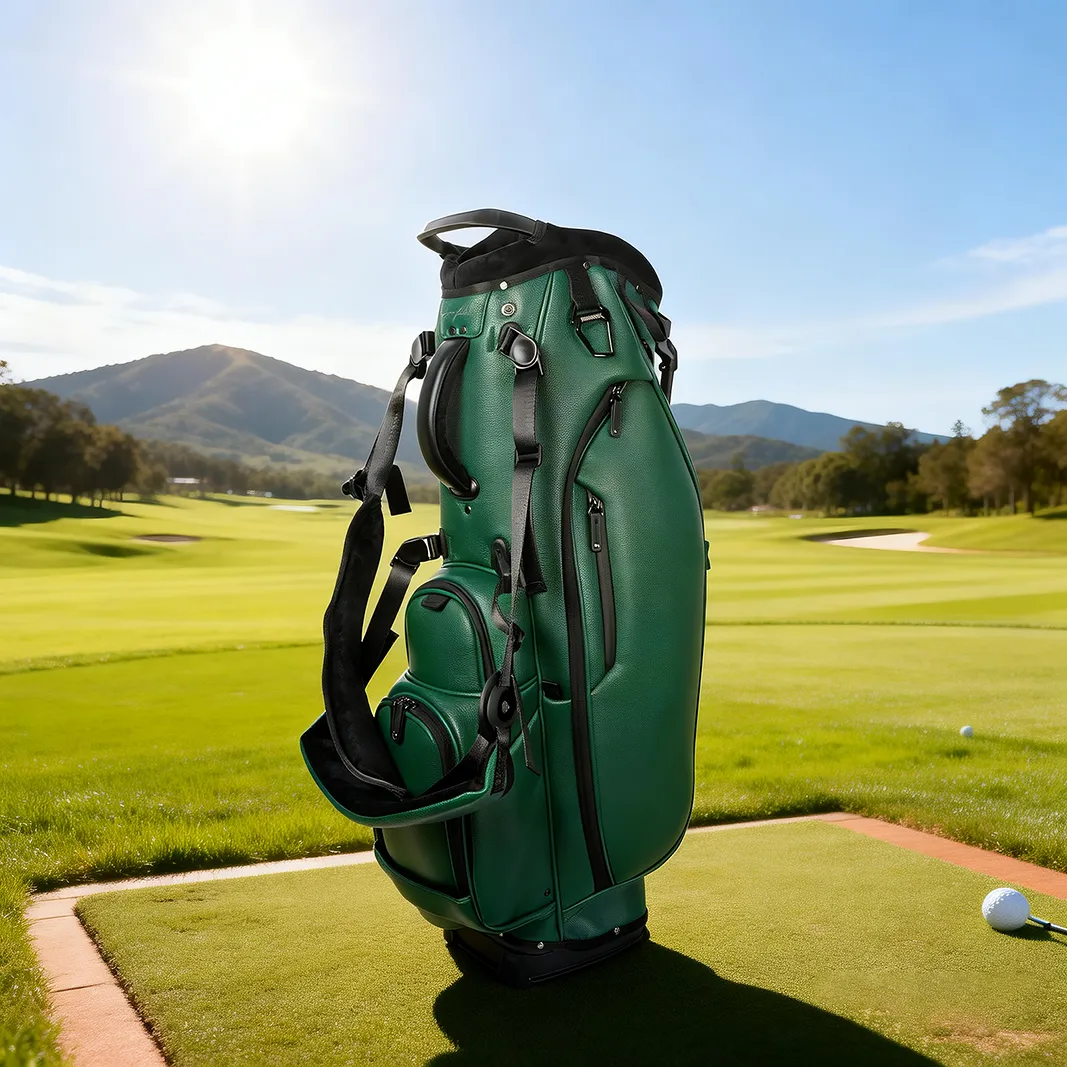
Three fabric families cover the durability spectrum. Ballistic or Codura-class nylon in the 1000-1680D range is the top of the durability curve — thick, tight, extremely abrasion-resistant, often carrying a water-repellent finish. Ripstop nylon in the 400-840D range offers good tear resistance with a lighter weight, made by the cross-hatch reinforcement threads that stop a tear propagating. Standard 600D or lighter polyester is the cost-optimized choice for fashion and value lines where extreme durability is not the selling story.
The cost trade is real: moving from a 600D standard to a 1680D ballistic can add 15-25% to the fabric line, which shows up as a meaningful part of the total unit price at volume. The buyer must decide where durability sits in the value proposition. A tour or heavy-use line earns the premium because the buyer markets a multi-season bag; a fast-fashion carry line should not pay ballistic prices it cannot recover. We help buyers pick the fabric that matches the retail story, not just the strongest one in the catalog.
Where heavy use actually wears
Even a ballistic shell wears first at predictable zones, and those zones get targeted reinforcement on a durable build. The base drags on cart rails and meets turf and trunks, so it gets a replaceable wear plate and a reinforced, stiffer floor. The strap anchors carry the full bag weight every round, so they get dense pad-backed stitching. The stand hinge cycles thousands of times and transfers stress to the surrounding panel, so it is reinforced with an internal stiffener. The lower body rubs the body and the cart, so it may take a laminated or extra-layer panel.
Reinforcing these zones does more for a durable bag than upgrading the whole shell to a slightly heavier fabric. A strategic approach reinforces the four or five hot spots and uses a solid, proven shell fabric everywhere else, which gets 85-90% of the durability benefit at a fraction of the cost of an all-ballistic build. This is the engineering-led way to build durable — spend where the wear concentrates, not uniformly.
Testing durability: abrasion, tear, and load
Durability is only credible with test numbers. The standard measures are abrasion cycles (Taber or a defined method) on the shell and wear zones, tear strength at the stress points, and a loaded structural test of the stand and plate. A durable shell should pass 20,000-50,000 abrasion cycles, and the anchor and base reinforcement should survive the loaded pull and drop tests without failure. We run these on the pre-production sample and record them per batch so the buyer can see the number, not take the claim.
The loaded structural test matters because a bag can have great fabric and still fail at the seam or hinge under daily load. We test the loaded bag on its stand, over repeated deploys, and with the anchor under an 8-9 kg load, confirming the fabric around the reinforcement does not stretch or tear. A buyer who asks for the abrasion cycle count and the loaded test result on the sample is verifying durability as a number, which is the only honest way to compare suppliers.
Moisture and weather resistance in a heavy-use context
A heavy-use bag often encounters rain, wet grass, and damp storage, so moisture protection is part of durability — a bag that mildews or rots the shell is not durable even if it resists abrasion. A DWR (durable water repellent) finish sheds light rain and runs, while a laminated or TPU layer gives full waterproofing at more cost and stiffness. The moisture strategy should match the climate of the market and the promise of the line, not default to one option.
Moisture durability also extends to the underside the buyer never sees: the base plate and the internal seams. We treat the base to survive wet turf without delaminating and ensure the internal seams and linings drain and dry, because a durably built bag that holds water internally rots from the inside. A heavy-use line sold in a wet market should specify both the shell finish and the internal moisture handling, so "durable" means durable in the rain, not just on the cart.
Recommend a durable build by use case
Let the use case drive the spec. For a daily-walker or caddie bag, recommend a 1000D-plus ballistic shell, reinforced anchors and base, and a tested stand. For a resort fleet that sees many players, a mid-high denier with heavy-zone reinforcement balances cost and longevity. For a premium tour line, an all-ballistic build with full reinforcement and a validated test certificate supports the price and the story. Matching the material to the real use is what turns "durable" from a claim into the right product.
Balancing durability and carry weight
Heavy durability has a price beyond cash: weight. A ballistic shell, reinforcement pads, and a stiffer plate all add grams, and an over-built bag can drift past the 4.2-4.5 lb carry promise that sells walk-first buyers. The engineering task is to spend durability where it prevents failure and trim it where it only adds weight. A 1680D panel on the base and lower body combined with a lighter upper shell, or a reinforced seam instead of another full layer, buys durability without doubling the bag's carry load.
The weight-vs-durability trade is settled on a target scale, not by feel. Set the carry-weight ceiling first, then allocate the weight budget to the shell, lining, padding, hardware, and reinforcements. If the budget is tight, favor zone reinforcement over a uniform heavier fabric, and a stiff base plate over extra padding that does not add structural life. A durable bag that nobody wants to carry for 18 holes has missed the point, so the two goals are managed as one budget.
Hardware and manufacturing durability
Durability is not only fabric. The zippers, buckles, clips, and leg springs are moving and plated parts whose life limits the whole bag, and a cheap component fails long before good fabric wears. On a durable build, upgrade the zipper brand and grade, use metal or heavy-duty plastic buckles and clips, and specify a leg spring that holds its tension across thousands of deploys. Selecting hardware of the same intended life as the shell is what makes the whole bag durable rather than a tough fabric bag strung together with cheap hardware.
We test the moving parts for their expected life and use plated or anodized hardware that resists corrosion in a coastal or high-humidity market. A durable bag sold by the sea should not show a rusty buckle by season two. Locking the hardware grade and the plating in the tech pack — rather than letting the factory default to a cheaper pull — is the hidden part of a durable spec that keeps the bag performing when the fabric still looks new.
Durability through stitching and seam finishes
A bag is only as durable as its seams, and a machine stitching quality separates a durable build from a strong-fabric failure. High thread density (per the stitch-density article, a higher stitches-per-3cm at the seams), a quality bonded or abrasion-resistant thread, reinforced stress seams, and a clean seam finish all prevent the classic seam failure under heavy load. The seam is where daily abuse concentrates, so a durable spec specifies the seam on the tech pack, not a stitching standard the factory assumes.
For a heavy-use line, bound or double-stitched stress seams and a locked bartack at the end of each sewn section prevent the seam from unraveling at the anchor and zipper terminals. A seam that pulls at the strap base is the single most common "premature failure" a heavy-use bag sees, and it is fully preventable by specifying the seam density and finish. Durability planning therefore includes the seam construction, not just the fabric weight.
Field feedback loops that improve durability
The best durability data comes from actual use, and a buyer should build a field-feedback loop into the product. Start with a small field trial — a few hundred units with daily-walker or caddie users — and collect where the wear appears, then feed that into the next spec. The first field season on a heavy-use bag almost always reveals one or two unforeseen hot spots that the lab stress map missed, and correcting those on the second batch is exactly how a durable line gets properly durable over time.
A durable supplier welcomes this loop because it builds a better product and a longer partnership. We record field feedback per market and revise the reinforcement and the QC sheet accordingly, so season-two of a line ships tougher than season-one. For a buyer, this turns durability from a one-time material choice into a continuously improving asset, and it is the difference between a bag that gets better with each batch and one that repeats the same weak spot forever.
Certifications and test evidence for durable materials
For a serious heavy-use line, ask for third-party test evidence on the materials: a fabric test report covering abrasion, tear, and strength, and a lab report on any moisture finish. A supplier that can provide the certificate on the material lot — and match the certificate to the actual production batch — is verifying durability rather than asserting it. We keep the dye-lot and material certificates for every program and share them with the buyer, so the durable claim rests on a verifiable number.
Recording the certificate per batch also protects a reorder: the second batch uses the same locked material and test standard as the first, so a reorder does not drift to a cheaper fabric that fails the durability test. This is the audit-ready discipline that makes a durable line reliable across a year. A buyer who asks for per-batch material certificates from the start avoids the surprise of a "durable" bag that changed material between seasons.
Recommend a cost-effective durable build
The cost-effective durable build spends money in the right places. Use a proven mid-to-high denier shell rather than over-speccing everywhere, reinforce the base, anchors, hinge, and lower body, specify quality hardware and seam density, and validate with abrasion and loaded tests. This delivers most of the benefit of an all-ballistic bag at a fraction of the cost. For a line that genuinely trades on multi-season durability, step up to a ballistic-class shell where the retail story can justify the premium. Either way, the spec decides the outcome, not the price.
Final note on heavy-use durability
A durable golf stand bag is engineered, measured, and reinforced in the zones that actually fail. Choose a high-denier nylon for the shell, reinforce the base, anchors, and hinge, pick hardware that matches the shell's life, spec the seam density, and verify with abrasion and loaded tests on each batch. Balanced against the carry weight and the retail price, durability becomes a competitive advantage rather than a cost to apologize for. Reach us at service@junyuanbags.com or +86 17750020688, and we will engineer the durability your market needs.
Warranty implications of a durable spec
A durable build directly shapes the warranty you can honestly offer. With a high-denier shell, reinforced zones, quality hardware, and a tested seam, a heavy-use line can carry a longer and more credible warranty than a fashion-tier bag, because the failure rates are genuinely lower. A warranty is a legal and reputational commitment, so it should only promise what the spec can support; over-promising on an under-specified bag converts a marketing claim into future claims.
We help buyers cost the warranty against the expected defect rate from the QC and field data, so the promised terms and the actual quality are aligned. A durable bag that ships with records and a per-batch test certificate gives the after-sales team the evidence to resolve a genuine claim quickly and to decline a misuse claim fairly. The durable spec is therefore not just a manufacturing choice — it is the backbone of a defensible after-sales plan.
Communicating durability as a selling claim
Durability is only worth something if the customer believes it. "Heavy-duty" and "tough" are on every budget bag, but a credible claim is backed by specifics: a fabric type and denier, an abrasion-cycle or test number, a reinforcement description, and a warranty term. A listing that says "1680D ballistic shell, reinforced base and anchors, 30,000-cycle abrasion rating" gives the buyer a reason to trust and pay a premium; a generic adjective gives them nothing to believe.
For a B2B buyer, this translates into retail copy and training. Give your retailers the durable details and a one-line story — "built for daily walkers, backed by our heavy-use warranty" — and they can sell the durable tier on substance rather than price. The material spec you lock in the factory becomes the marketing truth you put on the box, so engineering and selling belong to the same durability plan.
For a resort or fleet buyer, durability also lowers total cost per use: a bag that survives three seasons instead of one reduces the replacement spend and the admin cost of rotating stock, so a durably engineered shell can be the more economical choice even at a higher first price. Keep that life-cycle math in your RFQ.
Keep one sealed durable master — the exact shell fabric, the reinforcement, and the hardware — so every heavy-use reorder reproduces the same tested build, and request a per-lot fabric certificate to confirm each batch meets the locked standard.
Recommended Internal Links
- Golf Stand Bag Materials Guide
- Products (Stand Bag Architectures)
- Factory & QC
- OEM/ODM Service
- Golf Stand Bag Buying Guide
FAQ
What is the most durable material for a golf stand bag?
Ballistic or Codura-class nylon in the 1000-1680D range is the most durable standard shell, resisting abrasion for years. It carries a 15-25% fabric-cost premium over standard 600D polyester.
How much more does a durable shell cost?
Moving from a 600D standard to a 1680D ballistic can add 15-25% to the fabric cost, a meaningful share of unit price at volume. Match the fabric to the retail story so the premium is recoverable.
Where does a golf bag wear out first?
The base, strap anchors, stand hinge, and lower body. Durability is best bought by reinforcing these zones with pads and layers even on a standard shell, rather than upgrading the whole bag to ballistic.
How do I test fabric durability?
Use an abrasion-cycle test (20,000-50,000 cycles), a tear test at stress points, and a loaded structural test of the stand and anchor under an 8-9 kg load. Record the numbers per batch rather than trusting the weave.
Is a durable bag automatically waterproof?
No. Abrasion resistance and waterproofing are separate. A DWR finish sheds light rain while a TPU or laminated layer gives full waterproofing, and both should be chosen to match the market's climate.
Should I spend on ballistic for a whole line?
Only on the lines that sell durability. For a value or fashion line, a solid mid-denier shell with heavy-zone reinforcement gets most of the benefit at lower cost. Reserve all-ballistic for tour and heavy-use tiers.
Request a B2B quote for golf stand bags
Send your target market, expected MOQ, and reference photos. We respond within 24 hours with a sampling plan.