For the most compact small carry, see our pencil bags — Embroidery remains the most durable logo method on nylon and polyester golf stand bags, but on a waterproof program those same needle holes can pierce a sealed TPU film and nullify the water resistance — which is why we use embroidery on unsealed and air-mesh panels while switching to molded patches or heat-sealed labels on the sealed waterproof zones. This B2B guide explains the backing, placement, and waterproof rules our engineers apply at the SGS-verified Quanzhou facility (4,950 sqm, 7 lines, 149 machines, 137 staff), so a buyer of QUANZHOU JUNYUAN BAGS gets durable branding that does not compromise the bag's construction.
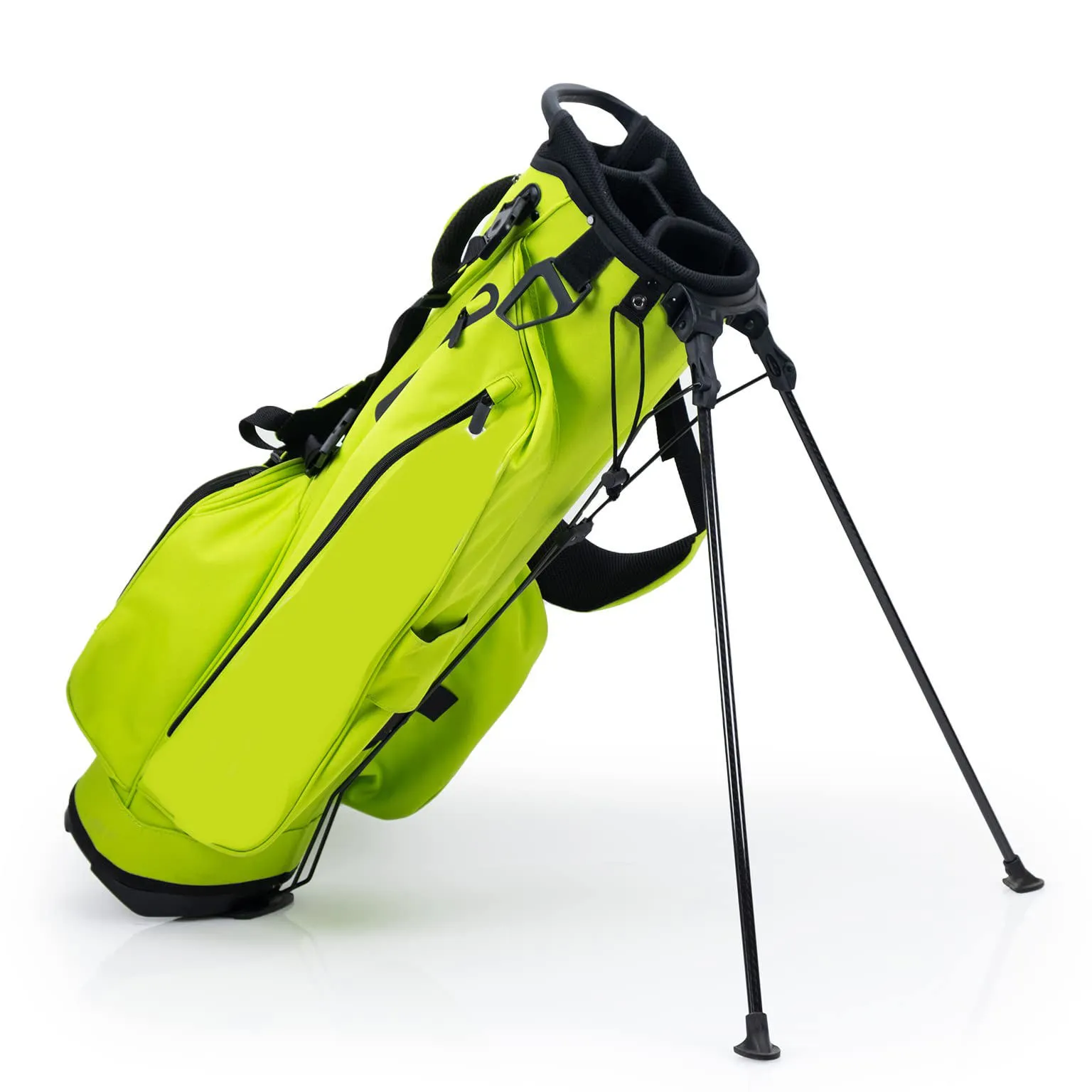
From a factory build standpoint, our dedicated waterproof stand bags page walks through the materials, hardware, and quality checks in detail.
Key Takeaways
- Embroidery pierces fabric, so it belongs on unsealed or air-mesh panels
- Backing choice (cutaway/tear-away/fusible) prevents puckering and stiffness
- Stitch density around 1.2-1.4 protects dense fills on 600D nylon
- Safe zones are the lid and front lower panel; avoid hinge and strap anchors
- On sealed waterproof panels use a patch or heat-sealed label instead
The core trade-off: durability against water resistance
Embroidery is the default logo method for a reason: it is the most durable and readable mark on fabric, surviving abrasion, folding, and a full season of course use. But the needle that forms the stitches creates holes through the fabric, and on a waterproof bag those holes can open a path for water if they sit on a sealed panel. This is the single most important point to understand before specifying embroidery on a waterproof program.
The fix is not to abandon embroidery — it is to choose the panel intelligently. On a waterproof stand bag, only the critical sealed panels carry the hydrostatic-head claim. Embroidery belongs on the unsealed structural panels, the air-mesh back, or a non-waterproof pocket where no waterproofing is promised. That way the durable logo survives and the waterproof claim stays intact where it matters.
This is why our engineers review the panel map with the buyer at the spec stage rather than after sampling. By placing embroidery on the unsealed zones and switching to a molded patch or heat-sealed label on the sealed film, a single program gets both the durable fabric logo the brand wants and the water resistance the product promises, without either compromising the other.
Backing types and when to use each
The backing is the fabric or film pressed behind the embroidery area that supports the stitches and prevents the fabric from puckering or distorting. On a standard 600D nylon or polyester panel, a lightweight cutaway or tear-away backing at a stitch density around 1.2-1.4 gives a clean, stable result. The backing type is chosen with the panel, not as a fixed default.
For softer, stretchier, or thinner panels a fusible or no-show mesh backing is better, because it holds the embroidery flat without adding the board-like stiffness that a heavy backing leaves behind. On a lightweight carry stand bag where every gram and every flex point matters, the right backing keeps the thin panel from distorting or feeling stiff around the logo.
Backing also protects the waterproof structure indirectly. When embroidery is allowed on an unsealed panel, a clean backing prevents bunching and seam stress that could otherwise pull on adjacent sealed seams. We trail-test the backing on the exact production fabric and approve a physical sample, because the correct backing on the sample is what keeps bulk embroidery consistent.
Placement rules that keep embroidery alive
Where the logo sits decides whether embroidery looks crisp for a season or wears into a frayed mark. The top lid and the front lower panel are the safest stable zones because they do not flex during stand deployment or rub against the course. These are the placements we recommend for a hero embroidered logo on any 14-way or 6-way stand bag.
The zones to avoid are the stand hinge block, the bottom wear plate, and the dual-strap anchors, because those flex and abrade most during a round. Embroidery there distorts, wears, or snags, and the dense thread speeds the damage. We advise a measured placement diagram with coordinates, not the word "left chest," so the logo lands on the stable panel identically on every unit.
On a 14-way divider bag the divider rails flex the top, so embroidery on the lid must bridge the rails without puckering and the backing must handle the panel geometry. We test the logo on the actual divider panel before bulk because a logo that looks fine on a flat pouch can distort on the contoured lid.
How embroidery interacts with a waterproof construction
A waterproof stand bag is built from TPU-coated or laminated fabrics whose sealed film creates the hydrostatic-head rating. Every needle that passes through that film is a potential leak point, which is why embroidery is not the right choice on the main sealed panels. The customer bought the bag for water protection, and a needle-sewn logo on the sealed chest would undermine that promise.
On sealed panels we pivot to methods that do not pierce the film. A molded TPU patch is applied as a separate component and layers onto the panel without tearing the sealed area; a heat-sealed or welded label bonds to the surface the same safe way. On a polyester waterproof panel, sublimation prints into the fabric without needle holes and keeps the hydrostatic head intact.
The engineering rule is a panel map: identify which panels carry the waterproof claim, keep those sealed and stitch-free, and place embroidery where waterproofing is not required or where the fabric is naturally breathable. This lets a buyer keep a durable embroidered identity while the bag still meets its water-resistance spec, verified by a hydrostatic-head test on the broadcast panel.
Embroidery specification table
Use this table as the embroidery section of your tech pack. Lock each row on the pre-production sample before bulk.
| Parameter | Typical Spec | Buyer Notes |
|---|---|---|
| Panel type | Unsealed nylon/polyester or air-mesh | Keep embroidery off sealed waterproof film. |
| Backing | Cutaway/tear-away on 600D; fusible on soft fabrics | Match backing to the actual panel. |
| Stitch density | 1.2-1.4 fill ceiling | Dense fills pucker; stay within the ceiling. |
| Stitch range | 40,000-60,000 stitches typical | Defines coverage and durability. |
| Placement | Lid or front lower panel, measured | Avoid hinge, wear plate, and strap anchors. |
| Waterproof panel | Use molded patch or heat-sealed label | Preserves the hydrostatic-head rating. |
| Cost impact | +3-5% one color; +6-8% multi-color | Method and color count drive the uplift. |
Cost and the embroidery method decision
The cost of embroidery is driven by digitizing, color count, and placement — not just the badge size. A single-color logo on the front lower panel is about +3-5% to unit cost; a 5-color logo across two panels with a tonal backdrop can approach +6-8%. The digitizing fee is paid once per design and reused on reorders, so a reorder costs less per unit than the first run.
Color count is the lever buyers control. Trimming a logo from five colors to two, or simplifying a tonal backdrop, cuts density and cost while often reading cleaner at a distance. We advise buyers to keep the hero embroidered logo tight and layered over the cheap open spaces, because a dense, high-color mark costs more and asks more of the backing and the panel.
On a waterproof program the method choice matters more than the cost. Even a free embroidery slot is wrong if it lands on a sealed panel and voids the water claim. The smart spend is embroidery on the unsealed zones plus a molded patch or label on the sealed hero, which may cost a little more per unit but protects the product's core promise and the brand's reputation.
We also encourage buyers to revisit the panel map whenever the bag architecture changes. A buyer who shifts from a standard carry bag to a fully sealed waterproof build must move the embroidered hero to an unsealed panel, or switch the method, even if the logo artwork is unchanged. Keeping the panel map current is what stops an otherwise-repeatable program from accidentally compromising water resistance in a later version.
Testing embroidery and the waterproof claim
Embroidery and waterproofing each need a test with pass/fail criteria. The logo is checked for adhesion, fade, and pucker; the waterproof panel for hydrostatic head and seam integrity after branding. We run both on the white/actual fabric so the branded and the sealed zones are each proven before bulk.
- Adhesion and fade test on the embroidered panel
- Pucker check for stitch density and backing fit
- Hydrostatic-head verification on the sealed waterproof panel
- Flex and abrasion check on the logo placement
- Placement coordinate check against the diagram
Sampling and the QC checklist
Sampling is where embroidery and waterproofing are reconciled. Produce the pre-production sample on the exact production fabric, with the approved backing and thread, and verify the logo sits on the unsealed panel while the sealed film stays intact. Budget for a second round on a multi-panel or 14-way logo.
- Approve the embroidered visual and dimensional sample
- Confirm backing type on the actual production panel
- Verify the panel map kept embroidery off sealed zones
- Run the hydrostatic-head test on the sealed panel
- Keep a sealed master for reorder repeatability
Alternatives to embroidery on sealed panels
When a buyer wants a full-color or premium mark on the main waterproof panel, the best alternatives are a molded TPU patch, whose raised 3D lockup layers on without piercing the film, or a heat-sealed/welded label. On a polyester waterproof panel, sublimation carries the logo and even a full-panel pattern into the fabric with no needle holes.
Each alternative changes the feel and the cost. A molded patch adds a premium raised texture and holds its edge well but needs a tolerance of +/-2 mm on registration. Sublimation is lightweight and flexible, ideal for a lightweight build, but is limited on nylon and narrows the color gamut on some performance fabrics. Heat-sealed labels are the cost-efficient option for a clean, flat mark.
Planning a durable brand across panels
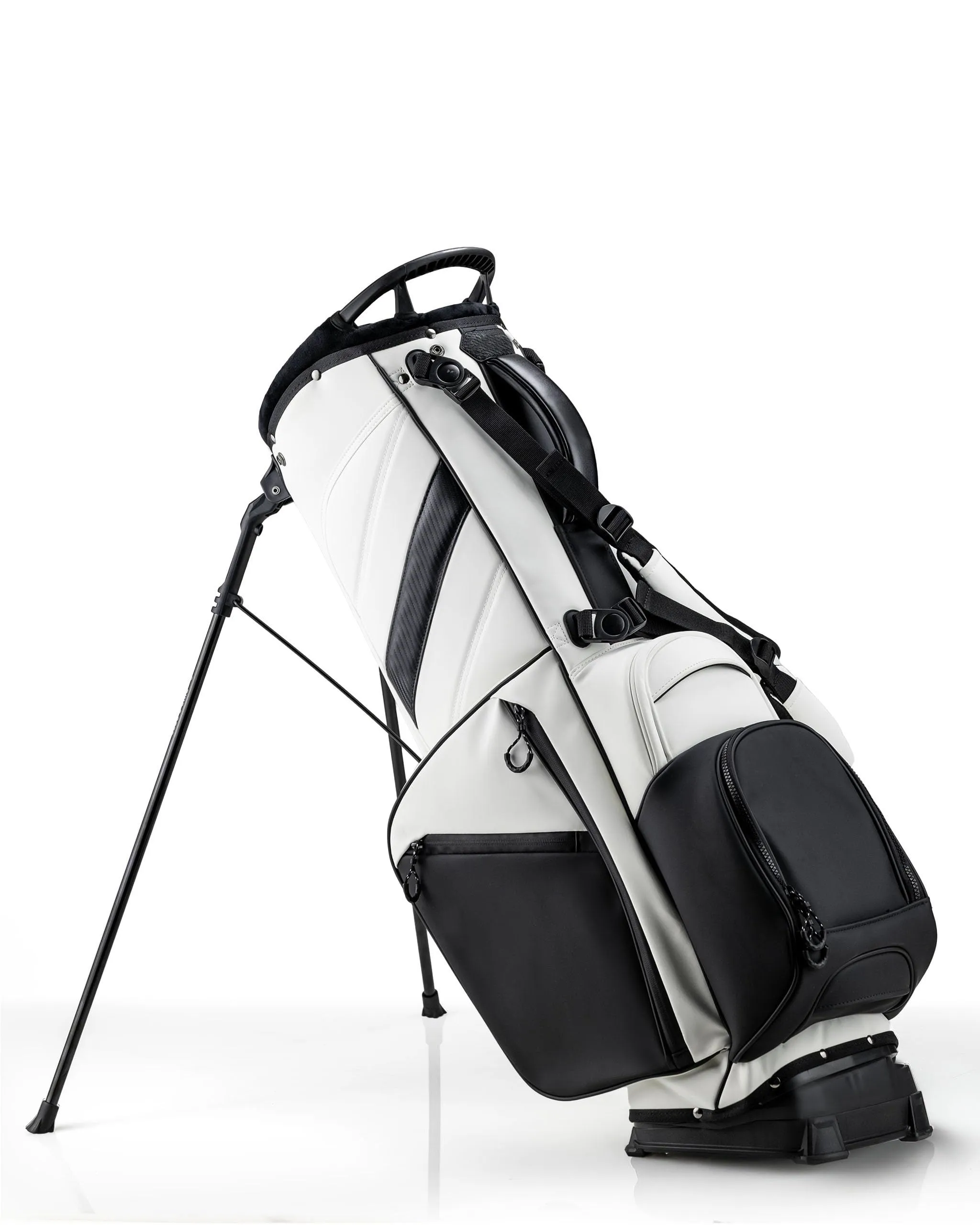
A brand is strongest when the logo methods are chosen per panel rather than one method for everything. On a waterproof carry bag, use embroidery on the unsealed front or the air-mesh back, a molded patch or label on the sealed heel, and a woven interior label for a discreet second mark. This mix respects the construction while giving the brand several impressions.
The placement plan should think about how the bag is photographed and carried. The front, the lid, and a pocket that faces the camera in use are the zones that earn the repeatable impressions. We define these with the buyer at the spec stage and lock coordinates with a tolerance, so the brand reads consistently in retail photography and on the course.
Respecting the panel constraints also protects the reorder. Because the panel map, backing, and thread chip are filed with the master, a later-season reorder reproduces both the logo and the waterproof claim exactly. That is the discipline that turns a technically correct first run into a reliable, repeatable brand — one that stays as tight in the second season as it was in the first, without any compromise to the bag's construction.
Digitizing and thread decisions that control quality
Digitizing turns a logo into stitch instructions, and it is where embroidery quality is really made or broken. A well-digitized mark programs the stitch direction, density, and underlay so the thread lays cleanly and the logo keeps its shape. Vector AI or EPS artwork with outlined fonts is mandatory, and we digitize for the actual panel — a logo digitized for a flat pouch distorts on a contoured stand bag lid.
Thread selection is the color governance of embroidery. Set the color by Pantone reference and lock it with a physical chip, because the shade on screen is not the shade on fabric and thread lots can shift tone. On a tonal or contrast panel we check the thread against the shell to make sure the logo does not vanish — a black logo on a black lower panel needs a contrasting grey or white thread to read.
Underlay and density are the invisible specifications. A good underlay stabilizes the motif before the visible thread goes down, and the stitch density ceiling around 1.2-1.4 prevents dense fills from puckering the panel. We trail these on the production fabric and approve a physical sample, so the bulk run reproduces the crisp, dimensionally correct logo the buyer approved rather than a looser approximation.
Long-term durability and reorder repeatability
Embroidery earns its reputation through durability, but that durability has to be locked in the spec. Thread brand, color, backing, and stitch density must all be recorded, because a change in any one shifts how the logo wears. On the course, abrasion, UV, and folding attack the thread; a high-quality bonded thread with the right backing survives seasons where a cheaper build frays.
We hold a sealed master unit and a color-sealed thread chip per program, so a reorder matches the approved lockup within the locked tolerance. Without those records a reorder can drift in density or tone, and on a fleet of identical bags that drift shows immediately. The master is kept for the life of the program, which lets a brand relaunch a design years later exactly as it shipped the first time.
For a program that runs many seasons, add an abrasion and fade target with a defined method and pass/fail. This gives a dispute an objective reference and stabilizes reorders. Because the embroidery method, panel map, and master are all filed together, the durability claim itself becomes repeatable — the second batch is held to the same standard as the first, on the same construction.
Combining methods for a mixed waterproof bag
The strongest waterproof bag programs rarely use one logo method — they combine. A single-color embroidered hero on the unsealed front or the air-mesh back holds the durable identity, a molded TPU patch carries the premium mark on the sealed heel, and a woven interior label adds a discreet brand line. Each method handles the panel it sits on, and together they build a rich, repeatable identity.
The cost of combining is manageable because the expensive piece — the molded patch tooling or the embroidery digitizing — is paid once and reused. The buyer gets the embroidery's longevity where seams allow it, the patch's premium texture where the film must stay sealed, and the label's cheap brand presence everywhere in between. This is the panel-driven strategy we recommend on any waterproof stand bag.
Combining also protects the QC story. Each method is tested on its own panel and the whole bag still meets its hydrostatic-head and functional targets. The buyer presents one coherent product with several brand impressions, each engineered for where it sits. This is how a technically constrained waterproof build becomes a showcase of considered branding rather than a compromise.
Briefing the factory for an accurate embroidery quote
To get an accurate quote, brief the panel and the method together. State the bag architecture, the divider and material direction, which panels are sealed waterproof and which are not, the embroidery placement with a diagram, the thread color reference, and the target MOQ and timeline. A clear brief lets us pull the correct backing, density, and method without a guessing round.
The panel map is the part buyers most often forget, yet it drives everything. If the planned embroidery sits on a sealed waterproof panel, we will flag it and recommend the alternative method before sampling rather than after, which saves a re-work round on a one-off build. Telling us "this pocket must stay waterproof" in the brief prevents the most expensive mistake in the program.
Finally, confirm the acceptance criteria — the fade and pucker limits, the hydrostatic-head target, and the placement tolerance. With those stated up front, sampling runs 10-20 days and bulk 45-60 days from approval, and the quote stays accurate. Reach us at service@junyuanbags.com or +86 17750020688 and we will return a panel-specific embroidery and waterproofing plan.
Recommended internal links
- Products (Stand Bag Architectures)
- OEM/ODM Service
- Factory & QC
- Golf Stand Bag Buying Guide
- Adding Unique Embroidery
FAQ
Does embroidery ruin the waterproofing of a golf stand bag?
Embroidery pierces the fabric with needle holes, which can compromise a sealed waterproof film if placed on the main waterproof panels. On a TPU-coated bag we prefer a molded patch or heat-sealed label on sealed zones, and reserve embroidery for unsealed or air-mesh panels where waterproofing is not required.
What backing should I use for embroidery on a golf bag?
For a 600D nylon or polyester panel a lightweight cutaway or tear-away backing at a stitch density around 1.2-1.4 prevents puckering. For softer or stretchy fabrics a fusible or no-show mesh backing is better. We match the backing to the panel to avoid distortion and board stiffness.
Where should embroidery go on a stand bag to avoid wear?
The top lid and the front lower panel are the safest stable zones. Avoid the stand hinge block, the bottom wear plate, and the dual-strap anchors, which flex and abrade most and will wear or distort embroidery over a season.
Can a 14-way divider bag be embroidered cleanly?
Yes if placed correctly. On a 14-way bag the divider rails flex the top, so embroidery on the lid must bridge the rails without puckering and the backing must handle the panel geometry. We test the logo on the actual divider panel before bulk.
How much does embroidery add to a waterproof bag program?
A single-color logo adds roughly 3-5% to unit cost; multi-color or a tonal backdrop can reach 6-8%. On a waterproof program the method choice matters more than the cost, because a needle hole on a sealed panel can nullify the waterproof claim.
What is the best alternative to embroidery on a waterproof panel?
A molded TPU patch or a heat-sealed/welded label layers onto the panel without piercing the sealed film, preserving the hydrostatic head. Sublimation or a printed film also avoids needle holes on polyester waterproof panels.
Request a B2B quote for golf stand bags
Send your target market, expected MOQ, and reference photos. We respond within 24 hours with a sampling plan.