For a versatile two-in-one build, review our hybrid golf bags — Practice golfers can also browse our range and simulator golf bags — For a golfer who wants to keep playing with back pain, the supportive stand bag build pairs a comfortably fitted empty weight of roughly 3-4 lb with well-padded dual straps, a cross-chest stabilization strap, low pick-up handles, and a stable breathable base — because fit and lifting ergonomics do more for back comfort than any single material. This guide details each ergonomic feature in turn and gives the B2B buyer the parameters to spec a back-friendly stand bag that reduces slam, sway, and bending during the round.
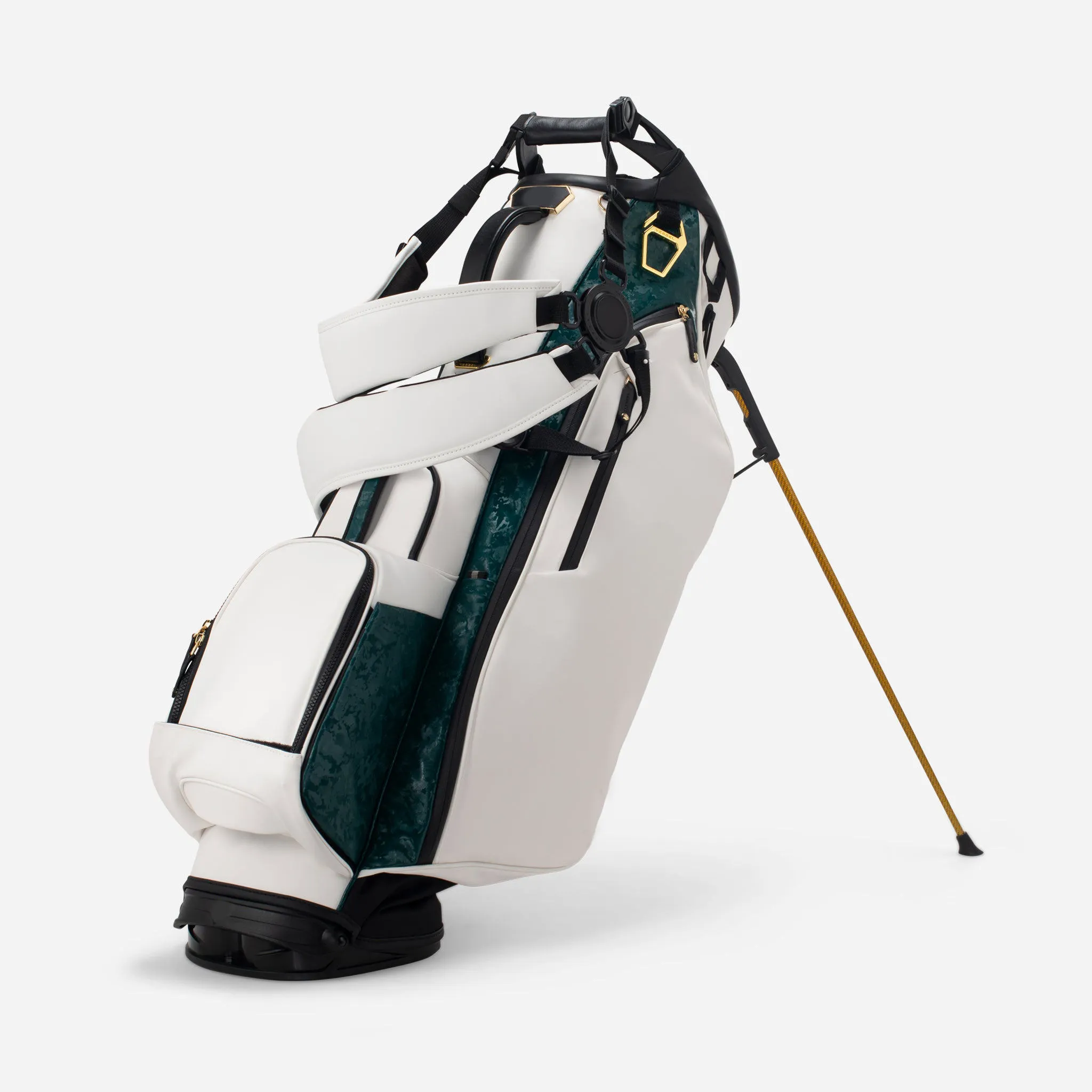
Key takeaways for back-conscious bags
Back pain in golf is common, and much of it is aggravated by how the bag is carried and handled. The ergonomics come from a few deliberate choices in the strap, base, handles, divider, and weight distribution — each of which can be specified on an OEM build without a bespoke platform.
- Comfortably fitted ~3-4 lb empty starting point
- Well-padded dual straps + cross-chest stabilization strap
- Low pick-up handles to avoid deep bending
- Stable, breathable base that reduces sway on slopes
- Top-down full-length divider to reduce look-down and reach
Why back pain changes the bag design
The bag sits on the golfer's back for an entire round, and the mechanics of swinging with a loaded, unevenly balanced bag strain the same muscles and vertebrae that a poor lift does. The three big aggravators are: a heavy bag that pulls on the shoulders, a bag that swings or sways off-balance during the walk, and repeated deep bending to pick up a bag or pull a club. Each feature below directly targets one of these.
This is why 'lighter is better' is incomplete: a very light bag that rides high and sways can be as tiring as a heavier bag that sits close to the back. The goal is a bag that holds its balance, keeps the weight close to the body, and lifts without a deep bend. For the B2B buyer, ergonomics should be a specified feature set, not a marketing claim.
Strap system: the first line of defense
A well-designed strapset is the single most impactful ergonomic feature. We recommend padded dual straps that distribute the load across both shoulders and the upper back rather than one side, plus a cross-chest stabilization strap that keeps the bag from swinging side to side and lets the golfer center it. Sufficient shoulder foam, without adding real weight, spreads the pressure and reduces points of high tension.
Strap pad geometry matters: enough width to spread the load, but not so wide it traps heat. We use breathable backing so the shoulder does not overheat across the round. A self-adjusting or easy-adjust dual strap lets the carrier center the bag quickly on the body, and we test the strap anchors to a static load to confirm the stitches hold at the heaviest moment of use.
Weight distribution and how the bag rides
Where the weight sits matters more than how heavy the bag is. A bag that stays close to the back and balances front-to-back reduces the strain of a heavy end swinging away. We advise a balanced layout where the heaviest items (balls, accessories) sit low and centered, and the shell holds a straight, fitted profile rather than a bulky one that pushes away from the spine.
The low load line also reduces strain on the shoulders and upper back. Keeping the empty shell at roughly 3-4 lb and coaching golfers to carry less than they think they need (drop the rangefinder case, extra balls, the full glove drawer) keeps the working load closer to the fitted target. The bag should be spec'd so that a reasonable carry stays balanced and close-fitting.
Handles and the mechanics of lifting
Deep bending to lift a bag off the ground is a known aggravator of back pain. The ergonomic fix is low pick-up handles — a padded top handle and a stable side grab positioned so the golfer can lift with a slight bend rather than a deep stoop, and can grab the bag without reaching awkwardly. A padded top handle also makes the carry-in-and-out easier and safer.
Where trolleys and carts are allowed, a cart-friendly or lightweight stand bag is often the better choice because the golfer lifts it less during the round. On walking courses where you must carry, a light stand bag with a stable base and low handles is the practical middle ground. Recommend the right carry-vs-cart decision for the course and the golfer's limitation, rather than one bag for everyone.
Base and stability on slopes
A bag that sways or tips while the golfer bends to the ball strains the back more than a stable one. A stable stand system with a correct base geometry holds the bag level on modest slopes, and a padded base with good grip keeps it from sliding when it is rested. On uneven ground, a light but stable base reduces the constant micro-adjustments that add up over a round.
| Feature | Ergonomic Target | Benefit for Back Pain |
|---|---|---|
| Empty weight | ~3-4 lb starting point | Less total load on shoulders and spine |
| Dual straps | Padded, easy-adjust | Even load, less one-sided strain |
| Stabilization strap | Cross-chest | Stops sway, keeps bag centered |
| Pick-up handles | Low, padded | Avoids deep bending to lift |
| Base | Stable + padded | Holds level, reduces micro-adjustments |
| Divider | Top-down full-length | Less bending to find the right club |
Divider layout to reduce reaching and bending
Reaching deep into a bag or bending to see the club face adds strain. A top-down, full-length divider with a well-laid-out layout reduces look-down time and keeps clubs in place, so the golfer can pull the right club with less bending. Organize high-use clubs at the front and put seldom-used ones toward the back, and keep grips low so they are easy to see and reach.
A 4-way or 5-way divider is a good balance for visibility and club separation without heavy weight, while a full 14-way system offers maximum organization at cost of some weight. For the back-conscious buyer, the lighter full-length 4-6 way is the recommendation: it keeps clubs separated, cuts look-down, and holds a fit closer to the ergonomic target.
Breathability and comfort over a full round
Comfort is not just about weight — a breathable back system keeps the golfer cooler and reduces the fatigue and tension that tighten the back late in the round. A padded, breathable lower-back section adds support where the bag meets the spine and lets air circulate. This reduces the trapped heat and pressure points that make a long carry feel heavier than it is.
For a B2B buyer, spec the back panel padding and breathable mesh as part of the ergonomic feature set. Sufficient but not excessive foam protects the spine and spreads the load, while the mesh lets the rider stay dry. It is a small cost in the build and a large one in everyday comfort, especially for a golfer already managing back discomfort.
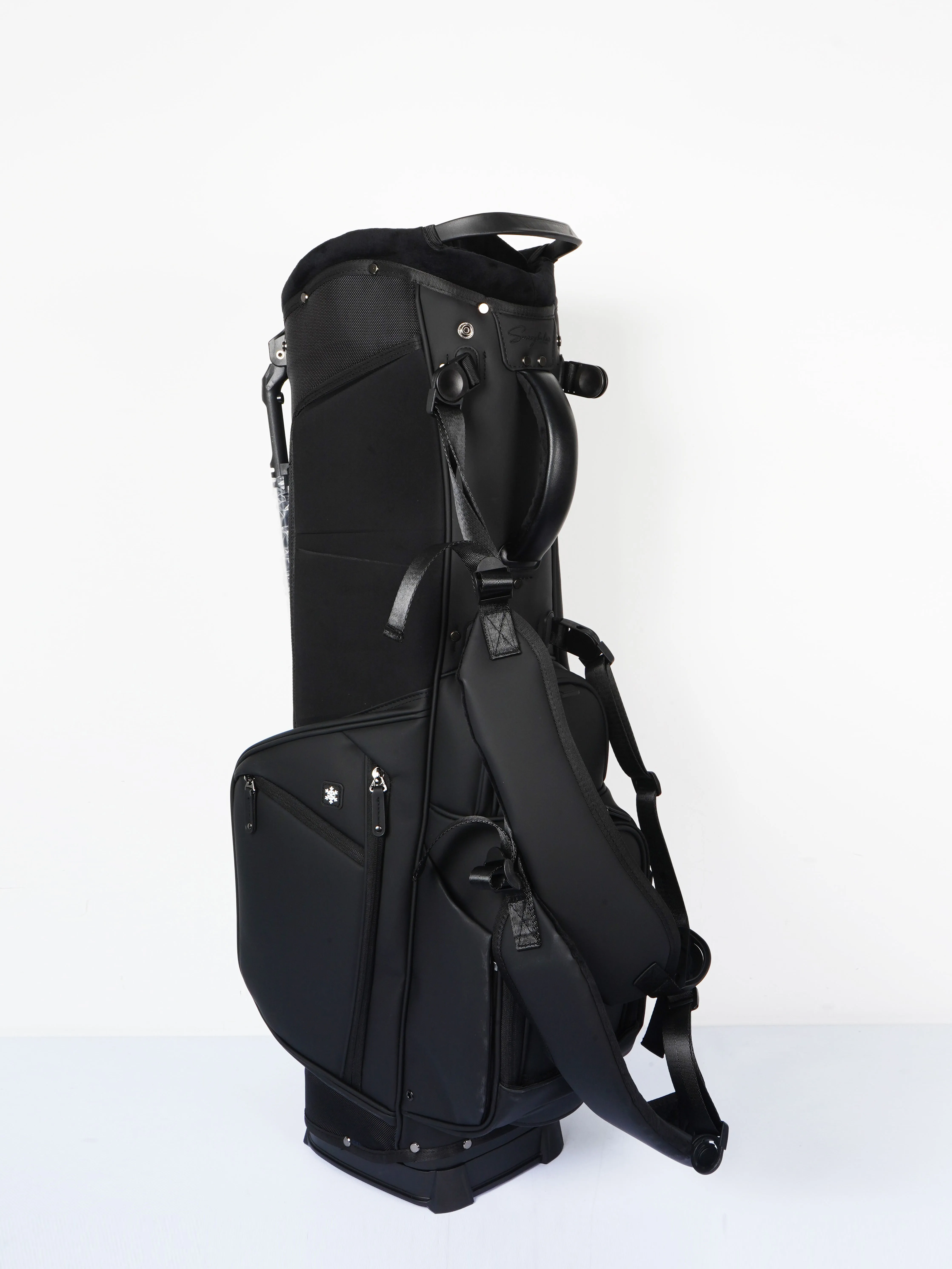
Choosing carry vs cart for back-friendly play
The biggest single decision is whether the golfer carries at all. Where a push cart or trolley is permitted and the course is flat enough, a cart-friendly or lightweight stand bag lets the golfer lift less and walk without the load — the gentlest option for the back. On multi-terrain walking courses a light, stable stand bag is a reasonable middle ground.
Match the recommendation to the golfer's condition and the course rules. A golfer with acute pain may be better served by a trolley bag or a light bag on a cart, while a golfer managing mild strain with good technique can play course after course with a well-fitted ergonomic stand bag. Our role is to give the buyer the options and the parameters so the right fit is easy to pick.
Ergonomic considerations for the ripstop and shell layering
Ergonomics are not only in the straps; the shell also shapes how the bag rides. A flat, close-fitting profile keeps the load near the spine and reduces the forward pull of a bulky bag, so the construction avoids unnecessary stiff boards behind the pockets that push the bag away. A mid-weight ripstop shell with a soft but supportive lower-back layer absorbs the swing motion without being rigid, cutting the slamming that travels to the lower back on every step.
For the buyer, the practical control is the shell's fit profile and the back-panel construction. A bag that holds its shape yet flexes with the stride, keeps the heaviest accessories low and centered, and has a smooth padded rear face is the one that rides gently. These are detectable in a physical sample, which is why we always recommend approving the fit on the production fabric before bulk rather than relying on a thin folder of renderings.
How fit interacts with a golfer's height and swing
The 'right' ergonomic bag changes with height and build. A taller golfer wants straps long enough to center the bag without pinching; a shorter golfer wants the bag not to ride too high on the shoulders. Shoulder-to-hip strap alignment and the position of the back panel relative to the lower back are the fit variables that matter most, and they must be adjustable enough to suit the individual rather than one locked geometry.
We build strap lengths and anchor positions with a useful range of adjustment and recommend sizing the bag to the golfer, not only to the bag's own look. When a buyer sources a bag for a retail line aimed at golfers who manage back pain, offering two fit ranges or a widely adjustable strapset broadens the audience. The geometry of the carry — where the load sits on the shoulders and how it angles against the back — is the hidden spec that turns a standard bag into a genuinely easier carry.
Ergonomic OEM builds without a bespoke platform
Back-friendly features can be added to a proven stand-bag architecture rather than requiring a custom platform, which keeps cost and lead time controlled. Padded straps, a stabilization strap, low handles, a breathable base, and a light top-down divider are all standard build options on our OEM line. This means a buyer can source an ergonomic bag at the base-bag cost structure plus focused add-ons.
We support OEM (branding and ergonomic options on proven architectures) and ODM (co-designing the flat-profile fit, strap system, and base). Because the fit matters as much as the features, we recommend approving a physical sample on your target fabric before bulk so the ergonomics land on your body and your price. Provide your weight and fit intentions and we will lock the spec for sampling.
Testing and acceptance for ergonomic builds
An ergonomic bag should pass the same durability tests as any build, with extra attention to the strap anchors, the base stability, and the fit check on a live person. We test dual-strap anchors to a static load, verify the cross-chest strap holds a centered carry, and check the base holds level on a slope. The fit is validated on the production sample (not a spec sheet).
- Dual-strap anchor static-load test with defined pass/fail
- Cross-chest strap stabilization and centered-fit check
- Base slope-stability and low-handle usability check
- Empty-weight and balance verification on the sample
- Side-by-side ergonomic fit comparison before bulk
Procurement worksheet for a back-friendly RFQ
| Requirement | Your Target | Notes / Questions |
|---|---|---|
| Carry style | Carry, trolley, or mixed? Determines the base recommendation. | |
| Empty weight target | ~3-4 lb starting point; state ceiling and tolerance. | |
| Strap system | Dual padded + cross-chest stabilization? | |
| Handles | Low pick-up handles to avoid deep bending? | |
| Base / stability | Stable, padded, breathable for slopes? | |
| Divider | Top-down full-length, 4-6 way light? | |
| MOQ & lead time | 200 standard, 100 test; sampling 10-20 days |
Sampling and QC checklist
- Fit and balance check on a live person (production sample)
- Weight and balance verification vs the ergonomic target
- Strap-anchor and stabilization-strap durability test
- Base slope-stability and low-handle usability check
- Seal the master and keep a fit and weight record
Cost drivers and where to invest for back-friendly builds
The ergonomic add-ons — padded strapset, stabilization strap, low handles, breathable base, and a full-length light divider — are modest per-unit costs within a proven architecture. The biggest cost line is usually the strapset and the base if they are upgraded; the divider and panel changes are smaller. Spending on the strap, handles, and base gives the most back-comfort return per dollar.
Keep the shell and divider to the standard light spec so the cost stays near base-bag level, and put the ergonomic budget into the parts that reach the body: the straps, the handles, and the base. For a buyer, that usually yields a back-friendly bag at 5-15% above a plain build rather than a premium bespoke price, while delivering the features that matter on the course.
One more trap is ignoring the golfer's own lifting and swing technique. No bag fixes a poor lift or a violent swing, so a responsible brief pairs the ergonomic build with guidance on lifting with the legs and setting the bag down gently. The bag removes the avoidable strain; the technique removes the rest. We do not promise that a bag cures an injury, only that it stops adding avoidable load, sway, and bending to the round, letting the golfer spend energy on the swing rather than on managing the gear.
Common mistakes when sourcing back-friendly bags
The most common mistake is assuming lighter always means better for the back, ignoring fit and balance; a light bag that sways can be as tiring as a heavier fitted one. A second is skipping the stabilization strap and low handles, which are the exact features that reduce swing and deep bending. A third is treating a back-friendly bag as a bespoke luxury platform and paying for it, when focused OEM options deliver the ergonomics at base cost.
Avoid these by specifying a balanced ~3-4 lb fitted build with padded straps, a cross-chest strap, low handles, and a stable base — then validating the fit on a real sample rather than trusting a brochure. The right combination reduces strain in exactly the three ways that matter: less load, less sway, less bending.
How to brief the factory for a back-friendly bag
Open the brief with the golfer profile (height, build, typical carry length, and the specific back limitation), the carry vs cart preference, and the target weight. Then add the strap, handles, base, and divider requirements, close with the colorway, logo method, and expected MOQ and timeline, and we will lock the spec and deliver an ergonomic sampling plan.
Because ergonomics hinge on fit, our team works through the weight profile and strap system with you before sampling and flags any conflict between a very aggressive weight ask and the support the back needs. Reach us at service@junyuanbags.com or +86 17750020688 with your fit goals and we will help you build a bag that is kind to the back and ready to play.
Putting the back-friendly bag plan together
Assemble the plan as: set the carry style (carry, trolley, or mixed), fix a comfortably fitted weight near 3-4 lb, and lock the padded dual straps plus the cross-chest stabilization strap. Add the low pick-up handles, the stable padded breathable base, and a top-down full-length 4-6 way divider, then match everything to the golfer's height and the course's rules. Approve the fit on a physical sample and keep the weight and balance record for reorders.
We support OEM (ergonomic options on proven architectures) and ODM (co-designing the fit profile, strap system, and base), and we work the fit and weight with you before sampling. Bring us the golfer profile and your carry-vs-cart rule and we will lock the ergonomic spec, validate it on sample, and ship a bag that is genuinely kind to the back.
Recommended internal links
- Ergonomic & Back-Friendly Stand Bags
- OEM/ODM Service
- Lightweight Hiking-Course Bags
- Stand Bag Materials Guide
- Factory & QC
The practical bottom line for a B2B buyer: a back-friendly stand bag pairs a comfortably fitted ~3-4 lb build with padded dual straps, a cross-chest stabilization strap, low pick-up handles, and a stable breathable base, matched to the golfer's condition and the carry-vs-cart rule. Our team at QUANZHOU JUNYUAN BAGS builds these ergonomic features onto proven architectures — reach us at service@junyuanbags.com or +86 17750020688 with your fit goals and we will lock the spec for sampling.
FAQ
What bag weight helps most to reduce back strain on a walking course?
A lighter bag reduces total load, but the fit matters as much as the weight. A bag that rides close to the back with well-padded, correctly adjusted straps at roughly 3-4 lb empty is the practical starting point for many golfers managing back pain.
Do straps or a carry handle matter more for golfers with back pain?
Both matter. Well-padded dual straps, a cross-chest stabilization strap, and good lower-back padding reduce slam and sway; low pick-up handles avoid bending. No feature replaces the right fit and lifting technique.
Should a golfer with back pain choose a cart bag instead of a stand bag?
Where a push cart or trolley is allowed, a cart-friendly or lightweight stand bag often beats carrying, because you lift it less. On walking courses with mixed terrain, a light stand bag with a stable base can still be a good middle ground.
What divider helps reduce bending and reaching when clubs are in the bag?
A top-down, full-length divider with a well-laid-out layout reduces look-down and reach. Keeping the clubs' grips low and using a divider that holds clubs in place means less bending to find and pull a club.
Can the bag be built with extra ergonomic features for back-conscious golfers?
Yes. We offer OEM builds with reinforced low pick-up handles, a cross-chest stabilization strap, breathable padding, and a balanced straight-fitted weight distribution as ODM options.
What is a realistic timeline and MOQ for an ergonomic build?
Standard MOQ is 200 (or 100 for a test order), sampling 10-20 days and bulk 45-60 days. We flag the fit and weight profile before sampling so the ergonomics land where you need them.
Request a B2B quote for golf stand bags
Send your target market, expected MOQ, and reference photos. We respond within 24 hours with a sampling plan.