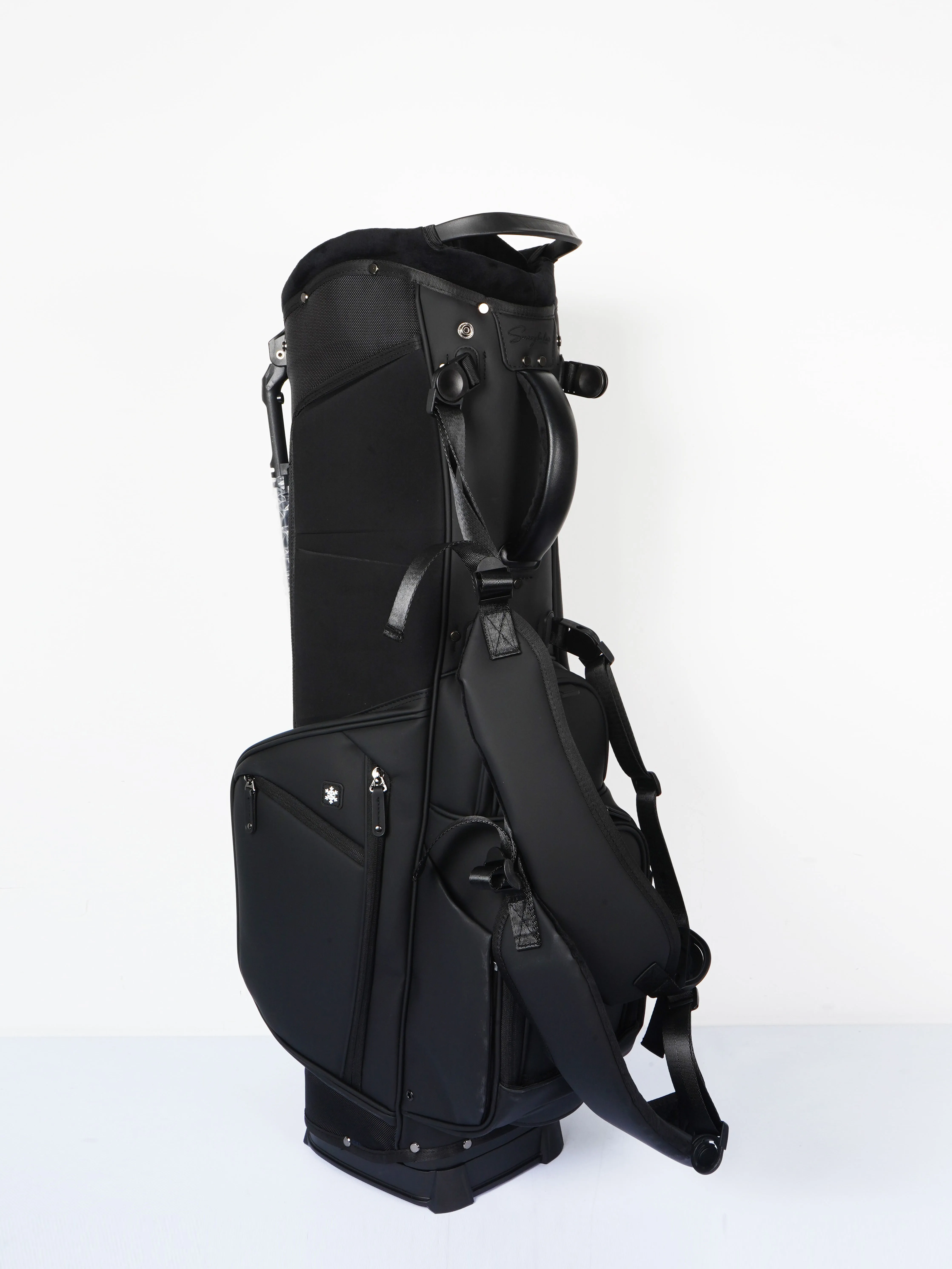
For a featherweight minimal carry, explore our Sunday bags — For a B2B buyer, the landed unit price of a golf stand bag with a two-way packaged retail between 10 and 15 days depends far more on its specification stack than on the ordering quantity — upgrading from a standard 600D shell and 5-way top to a 14-way organizer with a cooler and waterproof package typically moves wholesale cost by 15 to 25%, while the choice of zipper brand and pocket count can shift cost by another 5 to 10%. This guide gives brand teams and distributors a realistic budget map — what each spec costs, where margin hides, and how to price tiers without cutting the durability that drives returns.
Key Takeaways
- Unit price is set by the spec stack — material, divider, pockets, waterproofing, hardware, and branding — not by quantity alone.
- A 14-way organizer, cooler, and waterproof package can add 15–25% over a basic 5-way build.
- Zipper brand, hardware grade, and pocket count shift cost by another 5–10%.
- Cheaper low-denier fabric or thinner straps cut cost today but raise returns tomorrow.
- Plan three tiers — entry, mid, premium/waterproof — sharing one chassis to control tooling cost.
Why the spec stack decides your price
The single biggest misconception in stand bag sourcing is that price follows quantity. In practice, quantity changes the per-unit cost by a few percent through economies of scale, but the specification stack dominates — often by 15 to 25% or more between a simple and a loaded bag. A basic 5-way entry bag made from standard 600D polyester with four pockets, a basic zipper, and a single-strap system sits at the low end. The same chassis built as a 14-way organizer with full-length tubes, eight pockets, a cooler, a magnetic rangefinder pocket, a water-resistant zipper set, and a dual self-balancing strap sits much higher, regardless of whether you order 500 or 5,000 units.
Understanding this is the fastest way to keep your budget honest. Buyers who chase a "low price per bag" without fixing the spec often discover that the factory simply downgraded materials, and the resulting returns and refunds erase any savings. The correct approach is to fix the spec first, then negotiate quantity and terms against that fixed spec. Every cost driver below has a measurable footprint, so you can trade off features deliberately rather than reactively.
Entry tier: the value walking bag
An entry-tier stand bag is the affordable volume SKU that gets a beginner walking. Its spec stack is deliberately lean: a 4/5/6-way top, a standard 400D or 600D polyester or nylon shell, four to six pockets including a valuables pocket and a basic apparel pocket, a standard zipper, and a simple padded single or dual strap. The bag typically weighs 4.2 to 5.0 lbs and targets a lower retail bracket, with wholesale pricing set to support thin margins and high unit velocity.
Because the entry tier competes hard on price, the risk is that the buyer squeezes too hard and gets a bag that fails. The two non-negotiables even at this tier are a decent zipper and a reinforced stand system, because those are the parts that fail first and generate returns. We recommend keeping the entry tier simple — do not add a cooler, magnets, or premium hardware — and spending the saved cost on a durable zipper and a stable stand instead. A simple, reliable entry bag outsells a fancy one that falls apart.
Mid tier: the comfort walking bag
The mid-tier is where most brands find the sweet spot between price and perceived value. This stand bag adds the features players research and feel: a 5/6-way or optional 14-way top, a bit better fabric (nylon 400D/600D or a coated polyester), more pockets including a small cooler or bottle pocket, a magnetic rangefinder pocket, and a padded dual strap, often with a self-balancing swivel. Weight lands around 4.6 to 5.4 lbs, and the bag supports a mid-level retail with healthy margin.
The mid-tier price increase over entry is driven almost entirely by added pockets, the dual/swivel strap, and better hardware. It is the tier where a magnetic rangefinder pocket and a quality zipper set pay for themselves in perceived quality and review scores. For a B2B buyer, the mid-tier is also the model you want to lead retail e-commerce with, because it offers the features that appear in review headlines while staying within a price that converts casual browsers.
Premium tier: the 14-way organizer
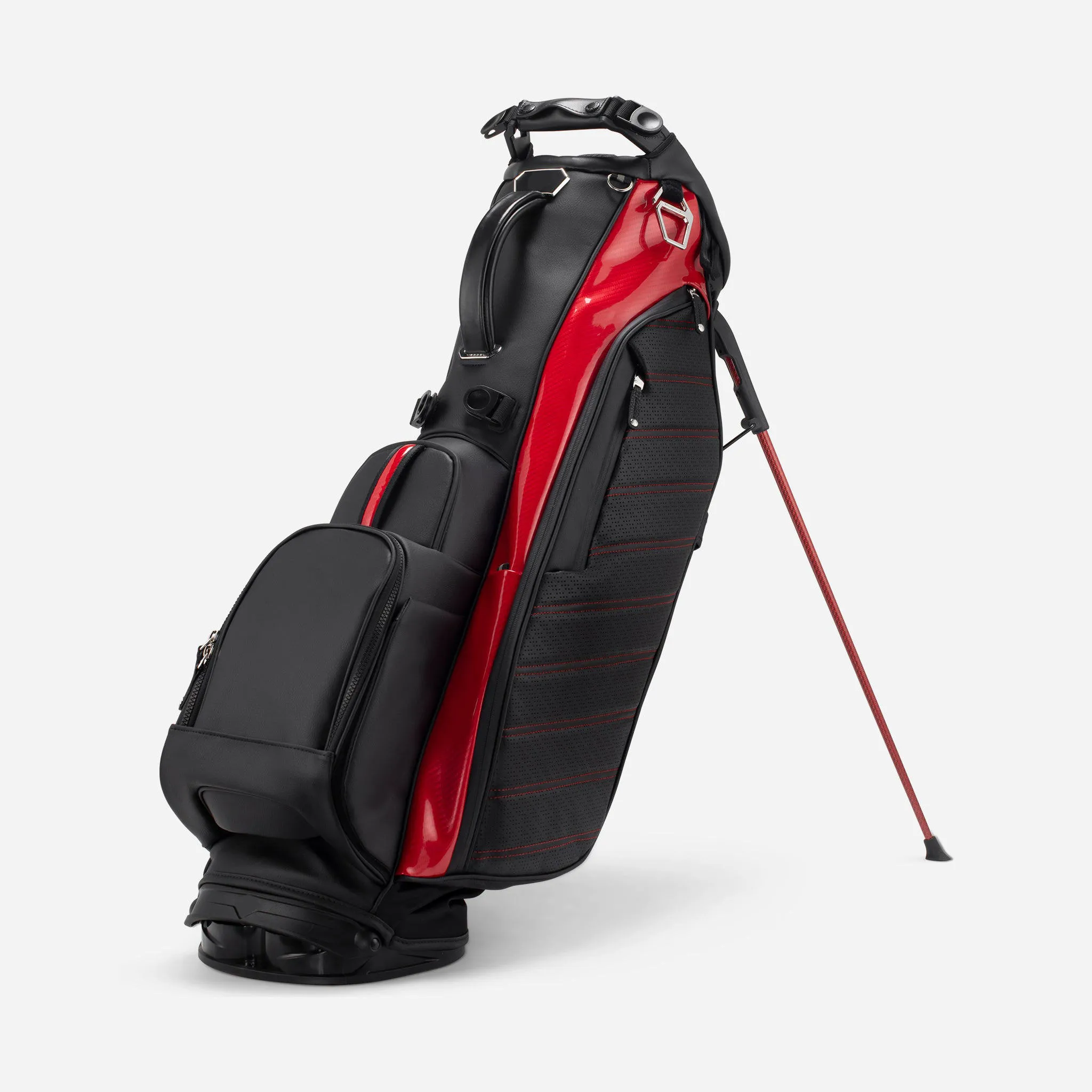
The premium tier is the 14-way organizer: a full-length-tube divider top, 8 or more pockets, a full cooler, a magnetic rangefinder pocket, premium hardware, and a high-end dual self-balancing strap. This bag weighs 5.4 to 6.5 lbs and carries the brand's best-in-class claim. It also carries the highest spec-induced cost — the 14-way top with tubes, the pocket count, and the premium closures together push unit cost well above the entry and mid tiers, often by the largest single step in the lineup.
The premium buyer expects durability to match the price, so the QC burden is highest here: tube material, divider alignment, zipper cycle life, and hardware finish all need verifying at a higher standard. If a premium bag fails, the brand risk is disproportionate because the customer paid the most. We advise locking a comprehensive test plan on the premium tier — zipper cycle tests, divider alignment, cooler water checks, strap load tests, and a drop test — so the flagship never underwhelms its price point.
All-weather / waterproof premium
A waterproof or all-weather stand bag is a horizontal premium option rather than a separate architecture. It takes a proven tier and adds a TPU or PU-laminated shell, water-resistant zippers with storm flaps or covered tracks, and taped or sealed seams. The waterproof package is one of the most expensive add-ons — typically adding 10 to 18% to unit cost — because the materials, the seam taping labor, and the QC testing all carry a premium. It is the right SKU for markets with heavy rain seasons or players who walk in all conditions.
For a B2B buyer, waterproof is a market-dependent decision, not a default. If your target market is dry or your volume is low, the extra cost may not be justified. But if your customers play through rain — common in the UK, the Pacific Northwest, Japan, and parts of Europe — a waterproof tier is a strong differentiator. The critical rule is to match the waterproof claim to the actual build: a rain-resistant sealed bag is different from a fully submersible one, and the price and marketing claim must align or you will face claims.
The hidden cost drivers: zippers, hardware, and trims
Beyond the headline features, several small spec decisions quietly move the price. The zipper is the biggest silent driver: a basic coil zipper is inexpensive, while a branded, water-resistant, or heavy-duty zipper costs materially more and can shift unit cost by 3 to 5% across the full bag when every pocket uses it. Hardware — buckles, D-rings, swivel plates, and logo plates — similarly varies with material and finish grade. And trims like cording, piping, and accent colors add a little each but accumulate.
Trims and branding also interact: embroidery, a molded patch, or a heat-transfer logo each adds to the price, and the combined effect of logo method plus trims can push several percent onto the unit cost. The lesson is to price the whole spec stack together rather than item by item, because a bag that looks like it should be mid-tier can quietly price like a premium one once every pocket, closure, and trim are counted. Use a full spec worksheet before you ask for a quote so nothing is left to the factory's default.
How quantity and terms shape the price
While spec dominates, quantity still matters at the margin. Larger orders spread the fixed costs — tooling, sampling, setup — across more units, which is why a move from a test order of 100 pieces to a full container often yields a slightly better per-unit price. Buyers should also know that clean terms — clear tech pack, approved artwork, stable volume — are worth money to a factory, because they reduce the back-and-forth and keep the line running. A well-prepared buyer frequently secures a better effective price than an equal-volume buyer with a vague spec.
Our standard terms support this: a regular MOQ of 200 pieces and a test order of 100 pieces, with sampling at 10 to 20 days and bulk production at 45 to 60 days. If you plan a multi-model catalog on a shared chassis, leverage that continuity in negotiation, because the factory prices stability more favorably than one-off bespoke builds. Be transparent about your volume forecast and target price; a factory that knows your goal can help you reach it by suggesting spec alternatives that cut cost without cutting durability.
Where the money goes: a cost map
The table below maps the major spec decisions to their typical cost impact, so buyers can budget each tier honestly. These are realistic ranges from our affiliated factory in Quanzhou (SGS-verified 2026, 4,950 sqm, 7 lines, 149 machines, 137 staff) and typical Xiamen/Quanzhou OEM practice; lock your own numbers with samples. Use the ranges as planning anchors, not fixed quotes.
| Spec Decision | Low-End Choice | High-End Choice | Typical Cost Delta |
|---|---|---|---|
| Divider top | 4/5/6-way | 14-way + full tubes | +8–15% |
| Shell fabric | Standard 600D polyester | Nylon 400D/600D or PU-coated | +5–10% |
| Zipper | Basic coil | Branded / water-resistant / heavy-duty | +3–5% |
| Pocket count | 4–6 pockets | 8+ pockets + cooler | +7–12% |
| Strap system | Single strap | Self-balancing dual swivel | +5–8% |
| Waterproof package | Standard shell | TPU/PU + taped seams + storm zips | +10–18% |
| Logo method | Single-color heat transfer | Multi-color embroidery / molded patch | +3–8% |
How to get an accurate quote fast
The fastest route to an accurate quote is to send a complete, specific brief in the first email. The buyers we move fastest with send a one-line summary of the bag type and target market, a numbered spec (divider, material, pocket list, strap, branding method, target MOQ), and one or two reference photos or a simple tech pack. That specificity lets the factory quote on the real product instead of a guess, and it cuts the sampling loop dramatically.
If you are unsure of a spec, say so and ask for a recommendation — a factory that builds stand bags daily can suggest the cost-effective option. The key is to lock the spec stack in one pass, because changing zippers or adding pockets mid-project ripples through every downstream quote and delay. Come prepared, and you avoid both a vague placeholder quote and a surprise when the final sample arrives.
How fabric and lining choices move price
Fabric is the most visible spec, and it is also one of the clearest price indicators a buyer can read. Standard 600D polyester is the low-cost default: durable enough, widely available, and inexpensive to source. Moving up to 400D or 600D nylon buys a tighter weave, better abrasion resistance, and a more premium hand-feel, at a measurable cost step. A PU-coated or laminated shell adds weather resistance at still more cost, and a fully waterproof TPU shell sits at the top of the fabric price ladder. The lining inside pockets and the bag interior follows a similar curve — brushed or fleece linings cost more than plain ripstop but protect valuables and feel premium.
Fabric choice also affects the sewing and cutting operation, not just the raw material bill. A fabric that frays, stretches, or fights the machine slows the line and raises labor, which is why a slightly more expensive, more stable fabric can be cheaper to manufacture overall. When a buyer is torn between cost options, we advise pricing the fabric as delivered-and-sewn, not as raw material alone. This is the kind of total-cost view that separates a source-optimized brand from one that saves a dollar on material and loses two on waste and rework.
Branding and packaging: the quiet price layers
Two cost layers that buyers often undersell are branding and packaging. Branding — embroidery, a molded patch, heat transfer, a woven label — carries its own material, setup, and QC cost, and factors such as color count and placement push it higher. Packaging also quietly adds up: a simple polybag and carton is cheap, but a color gift box, branded hang tag, inner tray, or foam divider for a premium presentation can add meaningfully to the delivered cost. None of these should be an afterthought in your budget, because the difference between a polybagged budget bag and a boxed premium bag is a real dollar figure per unit.
The good news is both layers are fully controllable. You can choose a single-color heat-transfer logo for the entry tier and reserve multi-color embroidery for the premium tier. You can box only the premium line and polybag the entry line. The discipline is to specify branding and packaging on the same worksheet as the bag itself, so the $/unit quote reflects the full picture and there is no surprise on the final invoice. A complete brief that includes branding and packaging gets you an accurate quote in one pass instead of three.
A sample budget: three tiers to price
To make this concrete, let a fictional three-SKU line illustrate the trade-offs. An entry 5-way bag with a 600D shell, four pockets, and a basic single strap prices at the low end with thin, high-velocity margin. A mid-tier 6-way with better fabric, a magnetic rangefinder pocket, a small cooler, and a dual strap prices higher and supports the comfortable retail lead SKU. A premium 14-way organizer with full tubes, a full cooler, premium hardware, and a self-balancing swivel prices at the top as the flagship. A waterproof option can be applied on top of any of these where the market demands it.
Planning this way lets you cover lightweight, organizer, and all-weather demand with three shared-chassis models, which controls tooling cost while giving retailers a coherent story. The mid tier typically earns the best margin-to-effort ratio, so most brands lead with it and use the entry and premium tiers to bracket the price range. Price the full stack for each tier before you source, and you will negotiate from strength instead of chasing a single low number.
Protecting durability while you cut cost
The temptation at every budget is to shave cost by downgrading something invisible. Our consistent advice is to cut features you can remove, not durability you cannot fake. Drop the cooler on the entry tier instead of fitting a cheap zipper. Use a simpler single strap on the Sunday bag instead of a thin-padded dual strap that fails on the shoulder. Go without magnetic pockets on the entry model instead of cheap magnets that fall out. Durability is the spec you cannot see tested quickly, and it is the one that drives returns.
Every cost cut should be made against a fixed durability floor: a proven zipper cycle, a stand deployment cycle target, a strap anchor load spec, and a divider alignment standard. Keep those same across all tiers and you protect your brand while still hitting each price point. At QUANZHOU JUNYUAN BAGS we help buyers make exactly this trade — send us your budget range and target market and we will propose the spec stack that delivers the most value per dollar at each price point. Reach us at service@junyuanbags.com or +86 17750020688.
Recommended Internal Links
- Products (Stand Bag Architectures)
- OEM/ODM Service
- Factory & QC
- Golf Stand Bag Buying Guide
- Stand Bag Materials Guide
FAQ
How much does a 14-way organizer add over a 5-way bag?
A 14-way top with full-length tubes typically adds 8–15% to unit cost over a 5-way, chiefly from structural panels, tube material, and added fabrication. It also adds roughly 0.5–1.0 lb of weight.
Is a waterproof stand bag worth the extra cost?
It depends on your market. A waterproof package adds about 10–18% to unit cost. If your buyers play through rain (UK, Pacific Northwest, Japan, parts of Europe), it is a strong differentiator; in dry markets the cost may not be justified.
Why does one bag cost 20% more than another that looks similar?
The price difference comes from the spec stack: divider type, fabric denier and finish, zipper brand, pocket count, strap system, waterproofing, and branding. Two visually similar bags can differ by 15–25% once every spec is priced.
What is the fastest way to get an accurate quote?
Send a complete brief: bag type, target market, numbered spec (divider, material, pockets, strap, branding), target MOQ, and a reference photo or tech pack. Specificity lets the factory quote on the real product instead of guessing.
Does ordering a higher quantity always lower the unit price?
Higher quantity lowers unit price modestly by spreading fixed costs, but the spec stack dominates. A downgraded spec saves far more than a volume increase, which is why price should follow a fixed spec, not drive it.
How do I protect durability while meeting a low price?
Cut removable features (cooler, magnetic pockets, premium trims) rather than durability (zipper cycle, stand deployment, strap anchors, divider alignment). Fix a durability floor across all tiers and cut features above it.
What are your MOQ and lead time for a stand bag line?
Regular MOQ is 200 pieces, with test orders of 100 pieces. Sampling runs 10–20 days and bulk production 45–60 days at our affiliated Quanzhou plant.
Request a B2B quote for golf stand bags
Send your target market, expected MOQ, and reference photos. We respond within 24 hours with a sampling plan.