For the most compact small carry, see our pencil bags — For a B2B buyer sourcing golf stand bags, the storage architecture decides how much a player can actually carry — the average 14-way bag carries 14 clubs plus 6 to 8 pockets, and the layout of those pockets accounts for roughly 30 to 40% of the total manufacturing labor on a standard 5-way build, so getting the pocket spec right is the fastest lever on both cost and perceived value. This guide breaks down every storage feature a buyer should define before sampling — valuables pockets, cooler pockets, magnetic rangefinder pouches, ball and tee storage, apparel pockets, and the divider system that protects the clubs — and pairs each one with the real-world QC checks and cost drivers we hold at our SGS-verified affiliated plant in Quanzhou (4,950 sqm, 7 lines, 149 machines, 137 staff).
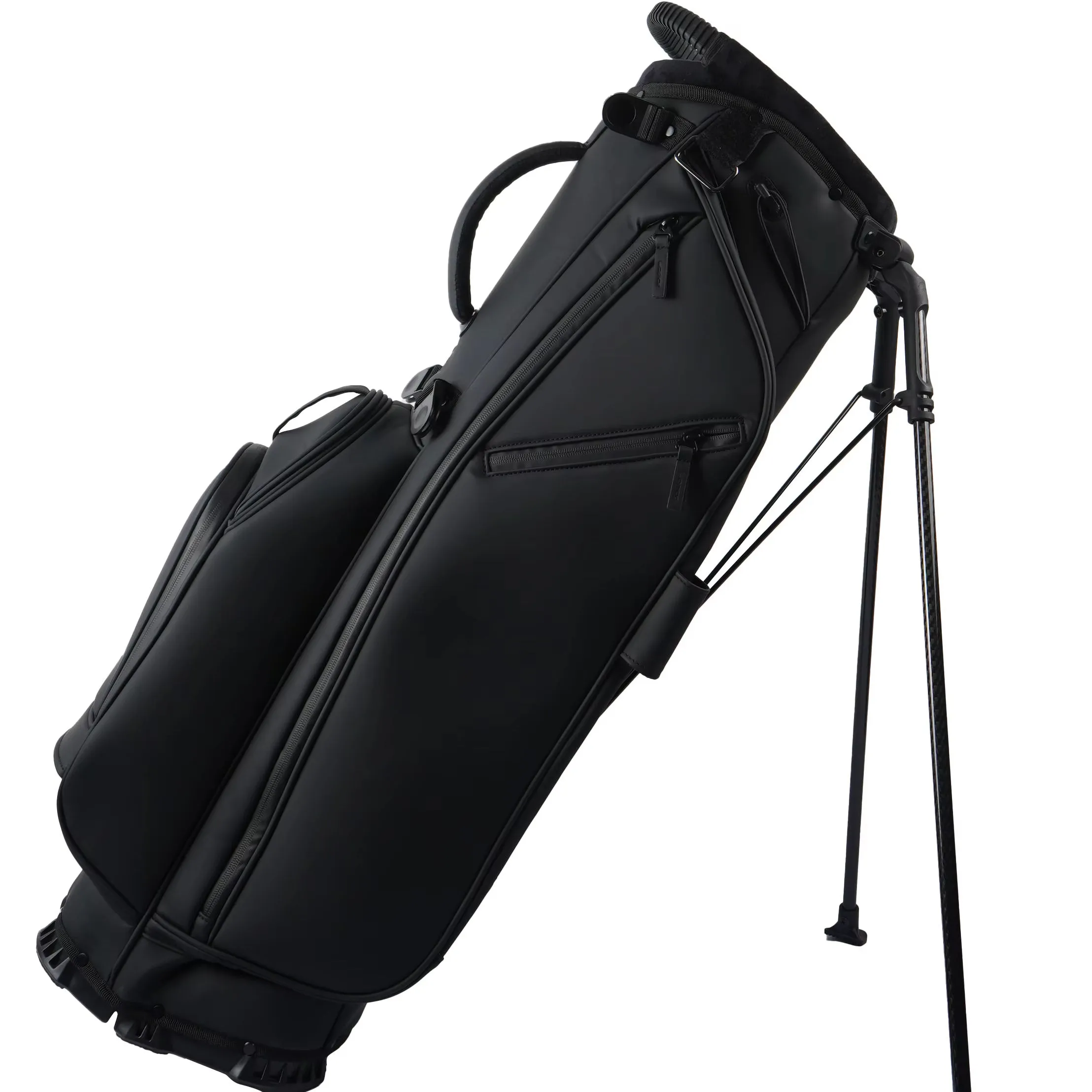
Key Takeaways
- Storage is a system of dividers + pockets + closures, and each element shifts both labor and cost by a measurable margin.
- Full-length dividers (14-way) typically add weight and cost versus a 4/5/6-way top, so match the divider to the player's walking vs cart use.
- Valuables, cooler, and magnetic rangefinder pockets are the three highest-intent features driving retail and B2B demand today.
- Waterproof storage pockets need sealed zippers and taped seams, not just a coated fabric, to hold up in rain.
- Lock pocket layout, lining, and closure type on the pre-production sample so reorders stay identical to the approved master.
Why storage architecture matters more than your shell fabric
Most buyers start a stand bag project by picking the outer fabric, yet the largest share of labor, cost variance, and after-sales returns is buried in the storage architecture. Every pocket means cut panels, lining, a zipper or closure, stitching, and a QC step. On an average 5-way stand bag with 7 pockets, the sewing operation on pockets can account for 30 to 40% of total labor minutes. That is why two bags built from the identical nylon can differ by 15 to 20% in unit cost purely because one carries more pocket complexity than the other.
Storage also decides how the bag feels when carried. Pockets filled with balls, a rangefinder, tees, and a rain jacket sit against the player's back and hips during an 18-hole walk. If the pocket layout places hard closures or bulky contents against the carry straps, comfort collapses no matter how good the shell fabric is. A bag that does not carry comfortably gets returned, which is why pocket distribution must be designed in parallel with the strap system rather than bolted on afterward.
Divider configuration: the first storage decision
The top divider is the entry point for every club, and its configuration defines the whole storage feel. A 4/5/6-way top uses a single or partially divided opening that keeps weight down, typically holding the bag to around 4.2 to 5.2 lbs, which suits walkers who want a light carry. A 14-way top divides every club into its own full-length slot, protecting shafts from rattling and head clashes, but it adds structural panels, extra fabric, and reinforcement that push a build toward 5.5 to 6.5 lbs and raise unit cost by roughly 8 to 15%.
For a B2B catalog, we usually recommend a tiered approach: one lightweight 5-way core model for the walking segment, one 14-way organizer for the cart-and-tour segment, and one waterproof 5-way for wet markets. Each uses the same base shell and stand system, which keeps tooling and CAM cost down while covering different search intent. Full-length dividers are strongly recommended on the 14-way option, because without tubes the dividers collapse at the base and the "organizer" promise is not kept.
Valuables pocket: the security feature buyers check first
The valuables pocket is the single most searched storage feature on a golf stand bag. It protects a phone, wallet, keys, and rangefinder from both theft on the course and rain on the first tee. Functionally it is a pocket with a closure that sits against the player's lower back, wedged between the bag and the body, so it cannot be opened without lifting the bag. The two most common designs are a horizontal zip pocket across the lower back and a dedicated valuables pouch with a soft microfiber or fleece lining.
For a feature that carries electronics, the lining and closure matter as much as the pocket itself. A fleece or brushed lining prevents screen scratches, and a water-resistant zipper adds a degree of rain protection. When we engineer this pocket at the factory, we specify the lining by gram weight, the zipper by type and cycle count, and the stitch pattern so the pocket stays sealed after 5,000+ open-close cycles. Buyers who want a premium claim should request a delamination and water-penetration test on this pocket specifically, because it is the one that holds fragile electronics.
Cooler pocket: cold chain that survives a round
A dedicated cooler pocket, usually insulated with a foam or PE backing, keeps drinks cold for the round and is a strong retail draw. The engineering challenge is that insulation adds bulk and weight, and a poorly sewn cooler leaks condensation into the rest of the bag. When we build cooler pockets, the key spec is the lining: a waterproof PEVA or TPU-coated liner that is removable or seamless enough to not trap moisture, plus sufficient insulation thickness to hold temperature for roughly 2 to 3 hours in moderate heat.
Two cooler formats dominate: a full-size side cooler that fits six drinks and a slim reusable-bottle pocket. The full-size cooler is popular on hybrid cart bags, while the slim bottle pocket suits lightweight carry models. For either, we recommend a drainable or wipeable interior and a zipper or flap with a water-resistant edge. Buyers should specify capacity in can count, not vague terms, and confirm the insulation density in grams per square meter so the cold-holding claim is verifiable on a sample.
Magnetic rangefinder pocket: the quiet differentiator
The magnetic rangefinder pocket is one of the fastest-growing storage features on stand bags. It uses a magnet sewn into the pocket opening so a rangefinder clips in magnetically and releases with one hand, instead of fighting a zipper mid-shot. Players love the one-touch access, and the feature signals a modern, tech-forward bag on the retail shelf. The engineering requirement is straightforward: a neodymium magnet strong enough to hold a rangefinder (typically 300 to 800 gram pull) but mounted in a way that does not interfere with the other pockets or add a snag risk.
Because the pocket is a magnet, QC needs a magnet-retention test and a placement check so the magnet stays fixed through the production run. We also verify the magnet does not weaken the two-way stitching of the opening. For a B2B program, adding a magnetic rangefinder pocket is a low-cost, high-intent feature that reliably lifts perceived quality — it is often the detail a buyer's product team mentions last but that reviewers and retail copy lead with.
Ball and tee storage: carrying the essentials
Ball storage on a stand bag typically means a large exterior apparel or ball pocket that holds a sleeve or two, plus a grab pocket for loose balls and tees. Many stand bags dedicate a slim pocket or a reinforced grab slot at the front for quick ball access, so a player can reach a ball without unzipping the big pocket. Tees are often stored in a small mesh or pencil-type pocket on the side, sometimes combined with a pencil holder and a loop for a towel or glove.
For buyers, the practical spec is simple: define how many balls the bag should hold (a full pocket for a dozen is a common target), how the tee holder is finished (elastic band vs zipped sleeve), and whether a glove/towel loop is included. These small features are where a bag feels either thoughtfully designed or cheaply thrown together. They are also among the cheapest to add, so a well-specified grab pocket and tee holder cost little but move the retail "feature list" a lot.
Apparel and rain-gear storage: volume you cannot fake
Stand bags need enough open volume for a jacket, a quarter zip, and a wind vest, because those garments are always in play. The apparel pocket is usually the largest pocket on the bag, and its real capacity depends on the bag's base diameter and how the pocket is gusseted. A gusseted pocket (one with an expandable bottom or side panel) holds more than a flat pocket of the same footprint. We spec apparel volume in liters where possible — a typical stand bag apparel pocket is 8 to 12 liters — so the buyer can verify capacity on a sample with a folded garment rather than guessing.
A rain jacket worth carrying needs a pocket that seals well; if you ship waterproof bags, the apparel pocket should use a water-resistant closure too. We also recommend a lashed or elastic compression point so the pocket can hold either a full jacket or compress flat when empty. This is a genuine engineering trade-off — a bigger apparel pocket eats into the space and silhouette that consumers think of as "light" — so testing with real garments during sampling is essential before you lock the pattern.
The divider and pocket system together: how storage protects clubs
Storage is not only pockets; it is also how the bag protects the clubs while they sit inside. The divider system — whether 4/5/6-way or 14-way with full-length tubes — separates heads and shafts so they do not rattle, clash, or entangle when the bag is carried, dropped, or loaded onto a cart. A 14-way system with individual tubes is the premium answer, but a well-built 5-way with a rigid top ring and a full-length center panel is perfectly adequate for walkers and costs far less.
When we build the top, the critical QC points are the divider alignment (each slot must line up so a club slides clean), the adhesion of the top collar to the bag body, and the rigidity of the divider rails. A misaligned top is a top source of returns because clubs either jam or the dividers flop at the base. Buyers should ask for a divider-alignment check and confirm full-length tube material (commonly a rigid PE or foam-lined sleeve) to protect shafts through a full season.
Pocket closures: zippers, magnets, and flaps compared
The closure type on each pocket defines its durability and cost. A standard coil zipper is the default; a YKK-style or branded water-repellent zipper costs more but survives rain and repeated use. Magnetic closures are fast and modern but add a magnet component and a QC check. Flap-and-hook, snap, and drawstring closures are options on specific pockets like the cooler or tee holder. A practical spec is to use a water-resistant zipper on valuables and apparel pockets, a magnetic closure on the rangefinder pocket, and a simple flap or elastic on low-stress pockets like the tee sleeve.
Every closure is a potential failure point, so a cycle test on each closure type is a valuable addition to your QC plan. We run zipper cycle tests, magnet-pull tests, and flap-tear checks. A cheap zipper that jams after 1,000 uses will kill a retail brand faster than a slightly higher unit price, which is why we recommend buyers fix a zipper standard (brand or cycle threshold) in the tech pack rather than leaving it to the factory's default.
Waterproof storage: seal everything that could get wet
If your line includes a waterproof or all-weather stand bag, storage becomes a sealing problem, not just a pocket-count problem. Every opening that can let water in — zippers, pipe openings at the top, and seams — needs a mitigation. A waterproof bag typically uses a TPU or PU-laminated shell, water-resistant zippers (often with a storm flap or covered track), and taped or sealed seams on the interior. The valuables and apparel pockets deserve the highest sealing priority because they hold electronics and garments.
Because waterproof construction is expensive and hard to repair, the QC burden is also higher. We recommend a water-penetration test on the sealed pockets, a delamination check on the laminate after flexing, and a confirmation that the top of the bag drains so standing water does not pool inside the divider. Buyers should decide early whether they need full submersible water-resistance or simply a "rain-covered" bag, because the price gap between the two is significant and the performance claim must match the build.
How storage choices drive weight and cost
Every storage feature has a measurable weight and cost footprint. Dividers add structural mass; each pocket adds fabric, lining, closure, and stitching; insulation and magnets add material and QC. As a rough planning rule, moving from a minimal 5-way bag with 4 pockets to a 14-way organizer with 8 pockets and a cooler typically adds 0.8 to 1.5 lbs of weight and 12 to 18% to unit cost, before any waterproof package. These deltas are real and consistent enough to plan a catalog around.
The table below summarizes the typical spec ranges we build to at the factory, so buyers can cross-reference their own targets.
| Storage Feature | Typical Spec | Weight / Cost Impact | Buyer QC Note |
|---|---|---|---|
| Divider (4/5/6-way) | Rigid top ring + full-length center panel | Baseline; lightest option | Divider alignment check |
| Divider (14-way, full tubes) | Individual rigid/foam tubes | +0.5–1.0 lb · +8–15% | Tube material + shaft-fit test |
| Valuables pocket | Fleece lining · water-repellent zip | +3–6% | Delamination + water-penetration |
| Cooler pocket | PEVA liner · insulation density spec | +0.3–0.5 lb · +5–8% | Cold-holding + condensation test |
| Magnetic rangefinder | Neodymium magnet, 300–800 g pull | +2–4% | Magnet-retention + pull test |
| Ball/grab pocket | Large exterior + tee sleeve + glove loop | +2–5% | Capacity (dozen) check |
| Apparel pocket | 8–12 liter gusseted · sealed closure | +3–6% | Real-garment fit test |
| Waterproof package | TPU/PU shell · taped seams · storm zips | +10–18% | Water-penetration + delamination |
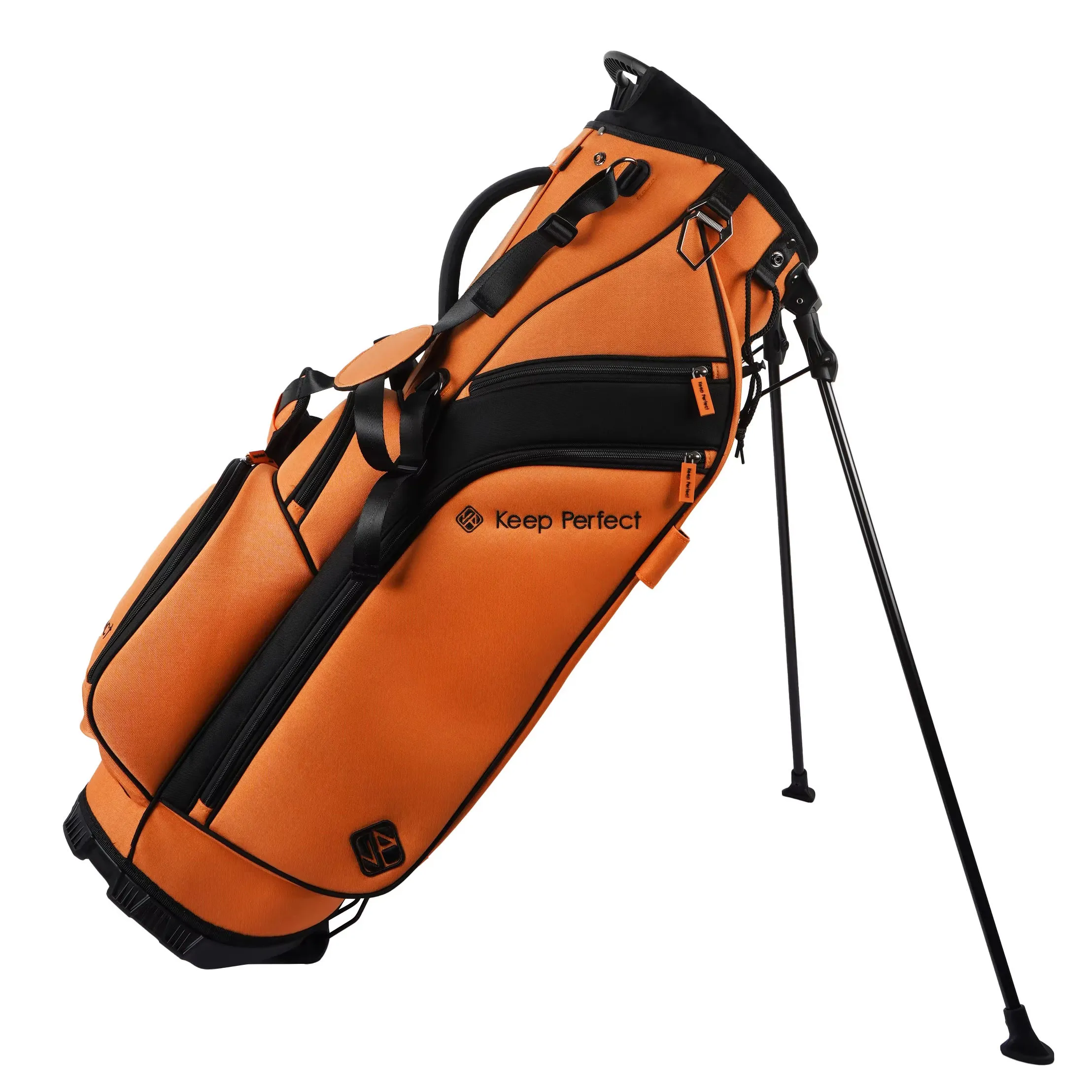
Test Plan for storage features at our affiliated plant
To keep storage features reliable across a full production run, we anchor the build with a focused test plan. On the divider, we check alignment and shaft fit. On each pocket, we run closure cycle tests and, for the valuables and cooler pockets, water and condensation checks. On straps, we run a static load test on the anchors, and on the full bag we run a drop test and a stand-deployment cycle test. These same methods give a B2B buyer a defensible QC standard to put in their own inspection contract.
- Divider alignment + shaft-fit check on every top configuration
- Zipper cycle test: 3,000–10,000 cycles, track jam rate and pull force
- Valuables & cooler pocket: delamination and water-penetration test
- Strap anchor static load test + stitch failure criteria
- Drop test on packed carton (corner/edge/face) before shipping
- Stand deployment cycle test: 3,000–10,000 cycles, no crack or wobble
Common storage mistakes we see in bulk
The most common storage mistakes are not design flaws but spec gaps. Buyers who say only "add a valuables pocket" without defining lining, zipper, and placement often get a pocket that differs from the sample. Buyers who demand 14-way dividers but do not specify full-length tubes get dividers that flop and generate returns. And buyers who claim waterproof storage without specifying taped seams and storm zippers ship bags that leak on the first rainy round.
The fix is to convert every feature into a numbered spec in the tech pack: pocket count, pocket purpose, lining, closure type, placement coordinates, and a pass/fail test for each. At the factory we support OEM (branding on proven architectures) and ODM (co-developing structure, pockets, and hardware), so send your storage feature list and target market and we will map it onto a build that is both manufacturable and repeatable. Reach us at service@junyuanbags.com or +86 17750020688 to start.
Storage features for a catalog, tiered
For a B2B catalog, plan storage tiers rather than bespoke one-offs to control SKU count and cost. An entry lightweight model can carry a 5-way top, a valuables pocket, one apparel pocket, and a grab pocket. A mid-tier walking bag adds a small cooler or bottle pocket, a magnetic rangefinder pocket, and a better liner. A premium 14-way organizer adds full-length tubes, a full cooler, and a premium closure set. Waterproof is a horizontal option applied to the relevant tier rather than a separate architecture.
This tiering keeps the base shell and stand system shared across SKUs, which lowers tooling and CAM cost while still covering lightweight, organizer, and all-weather demand. Each tier should still be validated with a physical sample before bulk, because the pocket-to-silhouette balance is where most sourcing errors happen. Our affiliated plant supports these tiered builds at regular MOQ of 200 pieces and test orders of 100 pieces, with sampling at 10 to 20 days and bulk production at 45 to 60 days.
Recommended Internal Links
- Products (Stand Bag Architectures)
- OEM/ODM Service
- Factory & QC
- Golf Stand Bag Buying Guide
- Stand Bag Materials Guide
FAQ
Do full-length dividers matter more than pocket count?
For a 14-way organizer, yes — full-length tubes keep dividers from collapsing at the base, which is what actually protects shafts. On a lightweight 5-way, a rigid top ring and a full-length center panel give adequate protection at lower cost and weight.
How do I spec a cooler pocket that does not leak condensation?
Specify a waterproof PEVA or TPU-coated liner, sufficient insulation density (in g/sqm), and a drainable or wipeable interior. Confirm the cold-holding target (typically 2–3 hours) on the actual sample rather than relying on a description.
Which storage features add the most retail value per dollar?
The magnetic rangefinder pocket, valuables pocket, and cooler pocket are the three highest-intent features. They are relatively low cost to add and reliably lift perceived quality and review appeal compared to their unit cost.
What is the weight penalty for a 14-way top vs a 5-way top?
A 14-way top with full-length tubes typically adds 0.5 to 1.0 lb and 8 to 15% to unit cost versus a 5-way. If the bag must stay light for walking, a well-built 5-way is the better trade-off.
How do I make the valuables pocket genuinely waterproof?
Use a water-resistant zipper with a covered track or storm flap, a TPU/PU-coated or laminated lining, and taped or sealed seams on that pocket. Confirm with a water-penetration test rather than relying on a coated outer shell alone.
Do you support OEM and ODM for storage customization?
Yes. We support OEM (branding and pocket layouts on proven architectures) and ODM (co-developing dividers, pockets, linings, closures, and hardware). Send your feature list, target market, and quantity to start.
What storage QC should I put in my inspection contract?
Divider alignment and shaft fit, zipper cycle tests, valuables/cooler water and condensation checks, strap anchor load tests, and a drop test on the packed carton. Fix these as pass/fail criteria so reorders stay consistent.
Request a B2B quote for golf stand bags
Send your target market, expected MOQ, and reference photos. We respond within 24 hours with a sampling plan.