For a versatile two-in-one build, review our hybrid golf bags — For a featherweight minimal carry, explore our Sunday bags — For a B2B buyer of golf stand bags, the strap system is the difference between a bag that carries comfortably for 18 holes and one that generates returns — a dual self-balancing strap distributes loads across both shoulders and typically reduces perceived shoulder pressure by 40 to 50% versus a single strap, while adding roughly 5 to 8% to unit cost. This guide explains single vs dual straps, self-balancing swivel mechanisms, padding and adjust range, how strap anchor construction affects durability, and the exact QC tests we run at our SGS-verified affiliated plant in Quanzhou (4,950 sqm, 7 lines, 149 machines, 137 staff) so your strap spec ships repeatable every season.
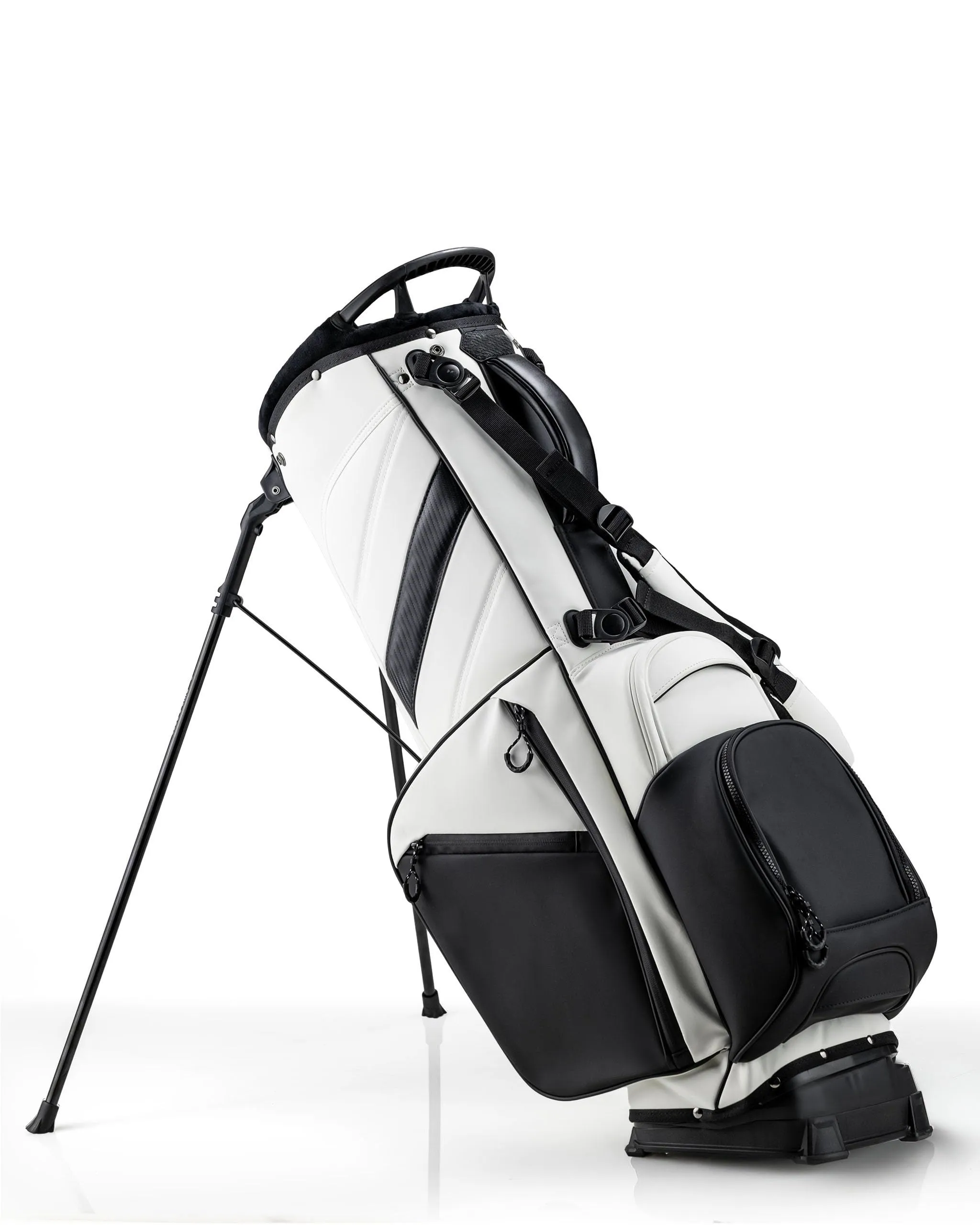
Key Takeaways
- Dual straps beat single straps for comfort, moving load from one shoulder across both and cutting perceived fatigue.
- Self-balancing swivel straps keep the bag level while walking; a static single strap lets it swing on the hip.
- Strap anchor construction — stitching, webbing width, and reinforcement — is the top durability and return risk.
- Padding thickness and adjust range are measurable specs that define the comfort claim on a sample.
- Anchors need a static load test, and straps need a wear/cycle check, to keep reorders consistent.
Single strap vs dual strap: the core decision
A single strap is the classic design: one padded strap that runs diagonally, with the bag balanced on one shoulder and driven against the hip. It is simpler to manufacture, lighter, and slightly cheaper — but every step transfers the entire load to one shoulder, and on an 18-hole walk a 12 to 15 lb loaded bag begins to wear on the neck and shoulder. Single straps are most appropriate for ultra-lightweight Sunday bags, junior bags, and cart-primary buyers who rarely walk a full round.
A dual strap splits the load across both shoulders, and a good dual system uses a swivel at the top so the two straps can be worn as a backpack-style harness. Empirically this reduces the perceived shoulder pressure substantially, often cited at 40 to 50% less per shoulder, and keeps the bag centered on the back for better weight distribution. The trade-offs are added webbing, a second set of anchors, and the swivel mechanism, which push unit cost up by roughly 5 to 8% and add a few hundred grams of weight.
Self-balancing swivel straps: why they earn premium positioning
The self-balancing swivel is the feature that separates a touring stand bag from a basic one. Instead of two fixed straps that hang unevenly, the bag hangs from a central swivel point so it self-levels as you walk, bend, and reach. When you bend to pick up a ball or take a club, the strap mechanism pivots and the bag stays upright rather than swinging and shifting. This is the mechanism players feel instantly, and it is why the swivel is a standard feature on premium and mid-tier walking bags.
From a manufacturing view, the swivel adds two components: a swivel plate or buckle at the top attachment and a sliding or pivoting harness. The QC priority is smoothness — the swivel must rotate freely without jamming, but also hold firm enough not to flop. We test the swivel for free rotation and for lock-up under load, and we check the plastic or metal swivel grade so it does not crack in cold weather or abrade the strap webbing. Request a swivel-cycle test in your own inspection if the feature is core to the brand claim.
Strap padding: thickness, density, and feel
The padding is where a strap either feels premium or digs into the shoulder. The two specs that matter are padding thickness and padding density. Typical stand bag strap padding runs 8 to 15 mm thick, with a higher-density foam holding its shape over a season instead of flattening. Thin, low-density foam looks fine in a catalog photo but packs down under load, transferring pressure straight to the shoulderbone by the tenth hole.
Some premium straps add a contoured, segmented design that follows the shoulder curve, and a few add a breathable mesh top layer to reduce sweat. For a B2B spec, we recommend stating padding thickness, a density range (commonly around 20 to 35 kg/m³ foam), and a cover fabric (nylon or mesh) with the comfort claim anchored to a wear test. A simple "thick padded strap" description is not a spec; a number is. On the sample, have a tester actually carry a loaded bag and report shoulder comfort, because that is the only honest validation of padding.
Adjust range and closure hardware
The strap adjust range decides how many body sizes the bag fits, which is especially important if you sell a one-size line across a broad market. A good spec states the usable strap length range in centimeters or inches — for example, a dual strap whose webbing adjusts from roughly 70 to 110 cm of usable harness. The adjuster hardware is typically a sliding plastic cam buckle or ladder lock that holds position, and its quality matters because a slipping adjuster is a top annoyance complaint.
Closure and connection hardware — buckles, D-rings, and swivel clips — should be color-banded and corrosion-resistant, especially on bags sold in humid or coastal regions. We source hardware that passes a salt-spray or corrosion check when required. The two most common hardware failures are a buckle that cracks under flex and a D-ring that distorts under load, both of which surface in a load test. Define the hardware standard (brand or material grade) so the factory does not substitute a cheaper buckle that fails in the field.
Strap anchors: where durability is really decided
The strap anchors are the single largest structural return risk on a stand bag. The strap connects to the bag at two or more points — typically a top loop near the collar and a lower anchor near the base — and every one of those seams carries the full loaded weight of the bag on every carry. When an anchor fails, the strap pulls loose, the bag drops, and the product is a loss. The failure is almost always a weak stitch pattern, inadequate reinforcement, or fabric tearing at the anchor rather than a broken strap.
To spec reliable anchors, we define the webbing width (commonly 38 to 45 mm for the carrying strap), the stitch pattern (a load-bearing box-and-X or bartack), and a reinforcement patch beneath the anchor where it meets the shell. We also add a static load test that hangs a loaded bag from the anchor and holds it for a set time with a defined load, checking for stitch pull or fabric tear. This one test is the cheapest insurance a buyer can buy, because it directly reproduces the field failure that causes the most warranty claims.
Removable and convertible straps: flexibility for the catalog
Some stand bags offer removable straps so the same bag can be carried by hand or with a strap, or so the strap can be swapped when worn. A removable system uses a buckle or clip that detaches the shoulder harness, and it is popular on hybrid bags that also mount to a cart. The design convenience is real, but each removable joint adds a potential failure or looseness point, so the hardware must be up to the same load-test standard as a fixed strap.
For a B2B catalog, a removable strap is often offered as an option on one mid-tier model rather than on every SKU, because the added hardware raises cost and QC complexity. If you choose a removable design, spec the detach mechanism's lock strength and run a drop test to confirm the strap does not unclip under impact. Fixed dual straps remain the more durable default for lightweight walking models, while removable suits hybrid and cart-driven lines.
Strap construction and stitch quality at the factory
At the factory, strap quality is a sewing discipline. The webbing must be cut clean, edge-sealed to prevent fraying, and assembled with a consistent stitch density so every unit matches the master. The top swivel shoulder seam and the lower anchor need reinforced bartacks, and the transition where the strap meets the padding must be closed so the foam does not poke out and the edge does not fray. These are the details that separate a strap that looks factory-consistent from one that looks made in a hurry.
We run an inline sewing inspection at the strap station rather than only a final audit, because a strap defect found late is expensive to correct. The inspection checks stitch count per inch, bartack presence, webbing width, padding alignment, and anchor reinforcement on each piece. For a buyer, adding a strap-station QC checkpoint to your inspection contract is a smart way to catch the highest-cost defect type before the bags are closed up.
Comfort vs weight: the sizing trade-off
There is no free lunch between strap comfort and bag weight. Deeper padding, wider webbing, a swivel plate, and dual-anchor reinforcement all add grams and weight to a category where every ounce counts. On a lightweight walking bag, a classic trade set is modest 8 to 10 mm padding with a slim single or dual strap to hold the bag near 4.2 to 4.8 lbs; on a touring bag, thicker 12 to 15 mm contoured padding with a full swivel dual system pushes toward 5.0 to 5.6 lbs.
We recommend buyers decide the weight ceiling first, then let the strap budget fill that allowance. If the goal is a "light" claim, do not over-specify padding; if the goal is "comfortable all-day carry," the heaviest bag should carry the best strap system. Testing a loaded prototype across a real 18-hole walk is the only way to confirm you hit the right balance, and it is the single best use of your sample budget.
Strap specifications and the cost impact
Strap systems have a clear, defensible cost footprint that buyers can plan around. Moving from a basic single strap to a padded dual strap is typically a 5 to 7% cost increase; adding a self-balancing swivel and premium contour padding pushes that to 8 to 12% over the base single-strap bag. The cost breaks down into webbing, padding, swivel hardware, anchors, and the additional sewing stations. The table below summarizes typical ranges we engineer to at the factory.
| Strap System | Typical Spec | Weight Impact | Cost vs Single Baseline | Best-Fit Use |
|---|---|---|---|---|
| Basic single strap | 1 padded strap · fixed anchors | Lightest | Baseline | Sunday / junior / cart-first |
| Padded dual strap | 2 straps · 8–12 mm padding | +150–250 g | +5–7% | Core walking SKU |
| Self-balancing swivel dual | Swivel plate · contoured padding | +200–300 g | +8–12% | Premium / touring |
| Removable dual strap | Detach clips with lock strength | +200–280 g | +7–10% | Hybrid cart / stand |
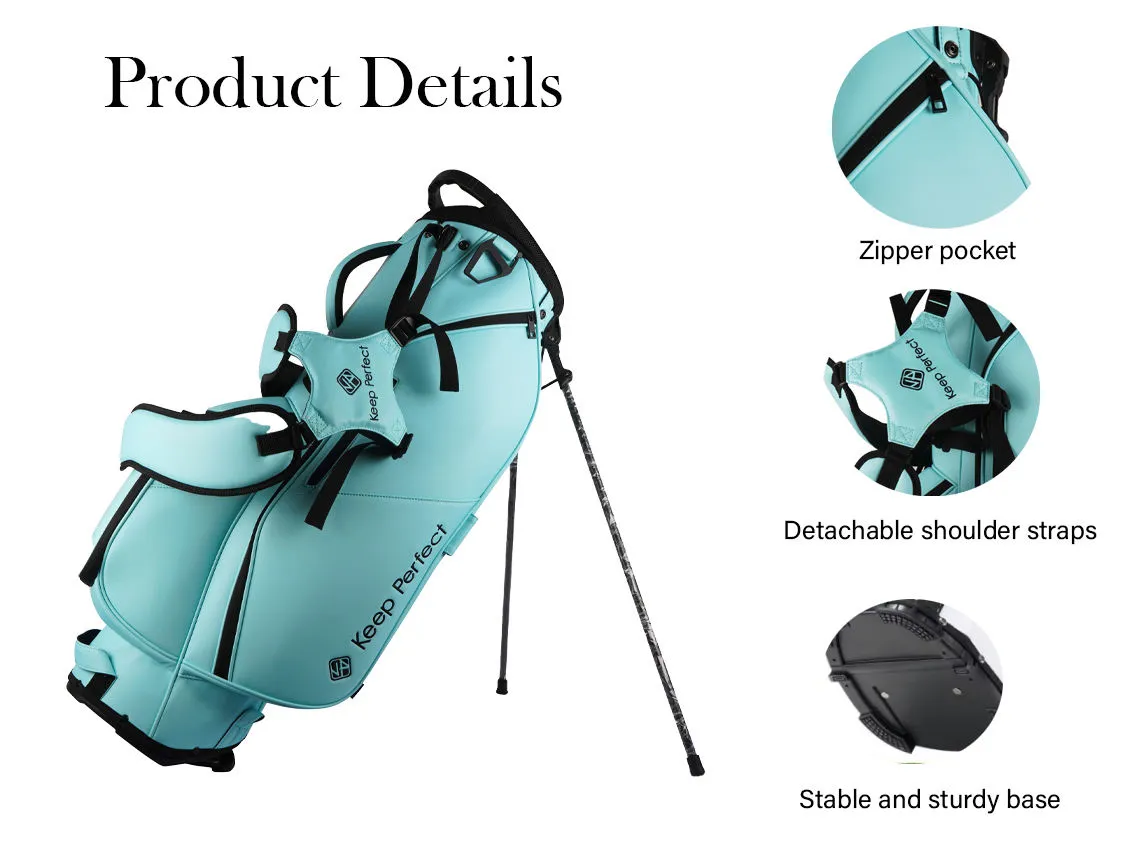
Dual strap ergonomics: how load is distributed
Understanding the ergonomics behind a dual strap helps you spec with evidence rather than opinion. With a single strap, the entire loaded weight of the bag — commonly 12 to 15 lbs once clubs, balls, and gear are packed — is carried on one shoulder and driven toward the opposite hip. That offset load forces the body to constantly resist rotation, which is why a single-strap bag becomes tiring on the neck, shoulder, and lower back over eighteen holes. A dual strap worn backpack-style centers the load on the spine, spreads it across both shoulder muscles, and lets the core carry most of the weight, which is measurably less fatiguing over time.
Some premium dual systems add a chest strap that clips the two harness straps together across the sternum, further stabilizing the load and preventing the bag from swaying with each stride. This is a small, inexpensive addition that many touring players appreciate. For a B2B line, a chest strap can be an optional add-on to the premium SWU, or a standard on the tour model. The ergonomic principle to communicate to your sales team and retailers is simple: centered load with equal shoulder distribution is what makes the dual strap worth the higher price ticket.
Strap hardware materials and finishes
The hardware on a strap — buckles, adjusters, D-rings, hooks, and swivel plates — is made from molded plastic or metal, and the material choice drives both cost and field reliability. Plastic hardware is light and inexpensive and dominates mid-tier bags, but a thin, low-grade plastic buckle can crack under cold-weather flex or repeated load. Metal hardware, usually zinc-alloy or stainless, is heavier and pricier but reads premium and survives harder use. The finish (matte black, gunmetal, polished, or color-matched) must be color-banded to match the rest of the bag's hardware so nothing clashes on the shelf.
For markets with humid, coastal, or tropical conditions, corrosion resistance matters even on the plastic clips' metal springs. We run a salt-spray or corrosion check on metal hardware when a buyer targets those regions, and we advise against exposed bare metal spring clips unless they are coated. Because hardware is visible and touched constantly, buyers should also request a scratch-and-snag check — a sharp molding seam on a buckle can catch on clothing and generate an avoidable complaint. Fixing a hardware brand or material grade in the tech pack removes the factory's incentive to substitute a cheaper buckle that fails in the field.
Test plan for strap systems
A strap program should be validated with functional tests, not just a visual check. On a sample, we run the strap anchor under a static load to confirm the stitch and reinforcement hold, cycle the swivel for smooth rotation, check the adjuster for slip, and do a loaded-carry wear assessment for comfort. In bulk, the same tests run on a sampling basis so every lot meets the same standard. This is the QC loop that keeps your strap spec living up to the retail claim over a full season.
- Strap anchor static load test (fix kg + duration + stitch failure criteria)
- Swivel rotation and lock-up test under load
- Adjuster slip test (ladder lock holds under tension)
- Loaded-carry comfort wear assessment on the sample
- Drop test on the packed bag to confirm no unclip or anchor failure
- Hardware corrosion check (salt spray) where required by market
Common strap mistakes and how to avoid them
The most common strap mistakes in bulk are spec gaps, not design flaws. Buyers who specify only "dual strap" get an anchor or padding that does not match the sample. Buyers who claim "self-balancing" without specifying a swivel mechanism ship straps that jam. And buyers who skip the anchor load test discover a costly return wave only after the first retail season. Every one of these is preventable by converting the strap into numbered specs and test criteria in the tech pack.
The fix is a short one-page strap spec: strap type, padding thickness and density, webbing width, adjust range, hardware standard, anchor stitch pattern, and a load-test target. At QUANZHOU JUNYUAN BAGS we support OEM (branding and strap options on proven architectures) and ODM (co-developing the harness, padding, and swivel design), so send your strap requirement and target market and we will map it to a build that carries well and ships repeatably. Reach us at service@junyuanbags.com or +86 17750020688.
Choosing the right strap for your SKU
Instead of trying to make one strap fit every model, tier your strap systems to match each SKU's positioning. The lightweight walking SKU gets a clean padded dual strap. The premium organizer SKU gets a self-balancing swivel dual with contour padding. The hybrid SKU gets a removable dual strap. The sunday/junior SKU can use a simple single strap. This keeps the comfort story coherent, controls cost at each price point, and avoids a premium strap on a budget bag that would eat the margin.
As always, validate the final choice with a physical sample. Our affiliated plant runs these tiered strap builds at a regular MOQ of 200 pieces and test orders of 100 pieces, with sampling at 10 to 20 days and bulk production at 45 to 60 days. If you are planning a full line, ask about building all your strap variants on one shared chassis to lower tooling cost while keeping every SKU aligned with its market.
Recommended Internal Links
- Products (Stand Bag Architectures)
- OEM/ODM Service
- Factory & QC
- Golf Stand Bag Buying Guide
- Stand Bag Materials Guide
FAQ
Is a dual strap always better than a single strap?
Not always. A dual strap is more comfortable for long walks and splits the load across both shoulders, but it adds weight and cost. For ultra-light Sunday bags, junior bags, or cart-primary buyers, a well-built single strap is the right trade-off.
What makes a self-balancing strap self-balance?
A swivel plate or pivoting harness at the top attachment lets the bag hang from a central point, so it levels itself as you walk and bend instead of swinging on one side. QC checks smooth rotation and lock-up under load.
Why do strap anchors fail and how do I prevent it?
Anchors fail from weak stitching, missing reinforcement, or fabric tearing at the load point. Prevent it with a specific webbing width, a load-bearing stitch pattern, a reinforcement patch, and a static load test that reproduces the field failure.
How much padding do I need for comfort?
Typical stand bag strap padding is 8 to 15 mm. Comfort depends on both thickness and density, so spec a density range (roughly 20–35 kg/m³) and validate with a real loaded-carry test rather than relying on thickness alone.
How much does a dual strap add to the cost of a bag?
A padded dual strap adds about 5–7% over a single-strap bag, and adding a self-balancing swivel plus premium padding pushes that to 8–12%. Weight rises by roughly 150–300 g depending on the configuration.
Should I offer removable straps on my stand bags?
Removable straps suit hybrid cart-and-stand bags and allow strap replacement, but each detach joint adds a potential failure point. Spec the lock strength and run a drop test to confirm the strap does not unclip under impact.
Can you build OEM or ODM strap systems?
Yes. We support OEM (branding and strap options on proven architectures) and ODM (co-developing the harness, padding, swivel, and anchor design). Send your strap requirement, target market, and quantity to start.
Request a B2B quote for golf stand bags
Send your target market, expected MOQ, and reference photos. We respond within 24 hours with a sampling plan.