Ultraviolet light is the number one cause of golf stand bag fading — UV can visibly dull and lighten outer fabric, logos, and trim within a few seasons of regular on-course exposure — but the fade is not inevitable because UV-resistant yarns, color-fast dyes, and protective finishes can slow the process dramatically. This guide explains why bags fade, how to test and specify fade resistance, what finishes and design choices slow sun damage, and how we engineer color stability at our SGS-verified affiliated plant in Quanzhou (4,950 sqm, 7 lines, 149 machines, 137 staff). For the wider golf bag category — cart bags, staff bags and more — our affiliated golf bag factory is the one-stop reference.
Key Takeaways
- UV exposure, not washing, is the leading cause of stand bag fading.
- UV-resistant yarns, color-fast dyes, and protective finishes slow fading measurably.
- Fade tests (lightfastness) let you grade and compare fabric honesty before buying.
- Design choices — placement of dark colors, hidden logos, UV-stable whites—reduce visible fade.
- Proper care and storage extend the life of any color.
Why golf stand bags fade in the first place
Sun fading on a golf stand bag is ultraviolet radiation at work. UVA and UVB light break down the chemical bonds in fabric dyes and, over time, the protective polymer coating of the fabric and the polymers in the yarn itself. The result is that colors appear washed out, whites yellow, dark tones turn chalky, and logos lose contrast. Bags carried on golf carts or ranges sit in full sun for hours across a season, so the exposure is constant and severe. Ultraviolet is the biggest single reason a bag that looks crisp in the spring looks tired by autumn.
Fading is not merely cosmetic; it is a durability and value issue. A bag that fades unevenly looks worn long before it is worn out, which is why buyers and consumers both discount it and why it drives perception problems more than structural failure. For a B2B buyer the practical implication is that fade resistance is a real spec to budget for, not a nice-to-have. Understanding the mechanism — UV breaking dye bonds — reveals exactly which levers slow it: better dyes, UV-stable yarns, protective finishes, and design that hides the damage. Each is a controllable choice, not dumb luck.
The science of fabric and dye stability
All fabrics and dyes are not equal under UV. Solution-dyed yarns have pigment embedded in the fiber itself, which keeps color locked in even as the surface wears — the most fade-resistant option for heavy-sun products. Piece-dyed or yarn-dyed fabrics carry color on the fiber surface and are more vulnerable. Similarly, some dye chemistries, especially certain reactive dyes on cotton and basic dyes, are more light-sensitive than others, while pigment-dyed or solution-dyed options hold up better. The fabric polymer matters too: nylon generally holds color better than some polyesters, while specially engineered UV-stable polyesters perform well with the right additives.
This is why fade resistance is engineered, not discovered by luck. A fabric can be built for the sun by selecting UV-resistant yarns, choosing color-fast dye systems, and adding ultraviolet stabilizers to the polymer melt. There is a real cost to each — solution-dyed yarns and UV stabilizers are more expensive than the cheapest standard poly — so the honest trade-off appears in the price. A buyer who wants a bag that stays bright can have it, but must fund the spec. Meanwhile a bag that is cheaply made with basic dyes will fade, because physics, not marketing, runs the show.
How to grade fade resistance: lightfastness testing
The professional way to compare fade resistance is a lightfastness test, most commonly the AATCC TM16 or ISO 105-B02 methods. These expose a fabric sample to a controlled light source and grade how well the color holds, typically on a 1 to 8 scale. A rating of 4 means the color has held reasonably under a defined exposure; 5 to 6 is noticeably better and appropriate for products that spend long hours in the sun; 7 to 8 is the highest, best-in-class stability. When a supplier quotes "good fade resistance," the only honest proof is a lightfastness rating on the fabric you plan to use.
For a B2B buyer, specify a lightfastness target in the tech pack rather than leaving it vague. If your market is sunny regions or your product is an outdoor premium line, a rating of 5 or above on the outer fabric is a reasonable, defensible target. Ask the factory for the test result on the actual chosen fabric, not a generic claim. Because lightfastness is measured, not guessed, it is one of the few quality attributes you can put a number on — and putting that number in the spec is the difference between a promise and a verified standard.
Which sections of the bag fade fastest
Not every part of a stand bag fades equally. The surfaces that face the sky when the bag stands — the upper hood, the top of the bag, and the shoulder area — take the most direct sunlight and fade fastest. The fabric around the stand legs and the lower sides, which face the sun at an angle or spend time in shade, fade more slowly. Exposed trim, webbing straps, and especially dyed logos and zipper pulls are also vulnerable, because small high-contrast areas lose their pop quickly when they fade. A bag's fade pattern is really a map of its sun exposure.
This unevenness matters to a designer twice over. First, it is the reason to test the actual outer panels, not just the fabric in the sample book — the outer hood fabric is the one that takes the punishment. Second, it is an argument for design that hides inevitable fade. Placing dark, busy patterns over the most-exposed upper panels makes gradual fade far less noticeable than a flat bright color. Using UV-resistant yarns on the hood and top specifically concentrates your fade budget where the sun hits hardest, giving the best visual result for the spend.
Protective finishes and coatings that slow UV damage
Beyond yarn and dye, surface treatments add a second layer of protection. UV-absorbing finishes work at the fiber or coating level to soak up ultraviolet before it reaches the dye, and they are the common practical weapon for polyester and nylon bags. Laminated or PU-coated fabrics add a protective film that both resists weather and shields the color. Certain finishes combine UV absorption with water resistance and stain repellency, giving a multi-function benefit from one treatment. The result is measurably slower fading and a longer-bright appearance, at a modest spec cost.
The honest trade-off is that no finish is permanent. UV absorbers degrade as they do their job, which is why a finish extends the bag's bright life rather than freezing it forever. This should be explained honestly to buyers — a UV-stable bag fades more slowly, not never. Spec'd together — UV-stable yarns, color-fast dyes, and a protective finish — the combined effect can extend a bright appearance for significantly longer than any single layer alone. That compounding protection is what premium, sun-committed lines deliver.
Design choices that hide and reduce fading
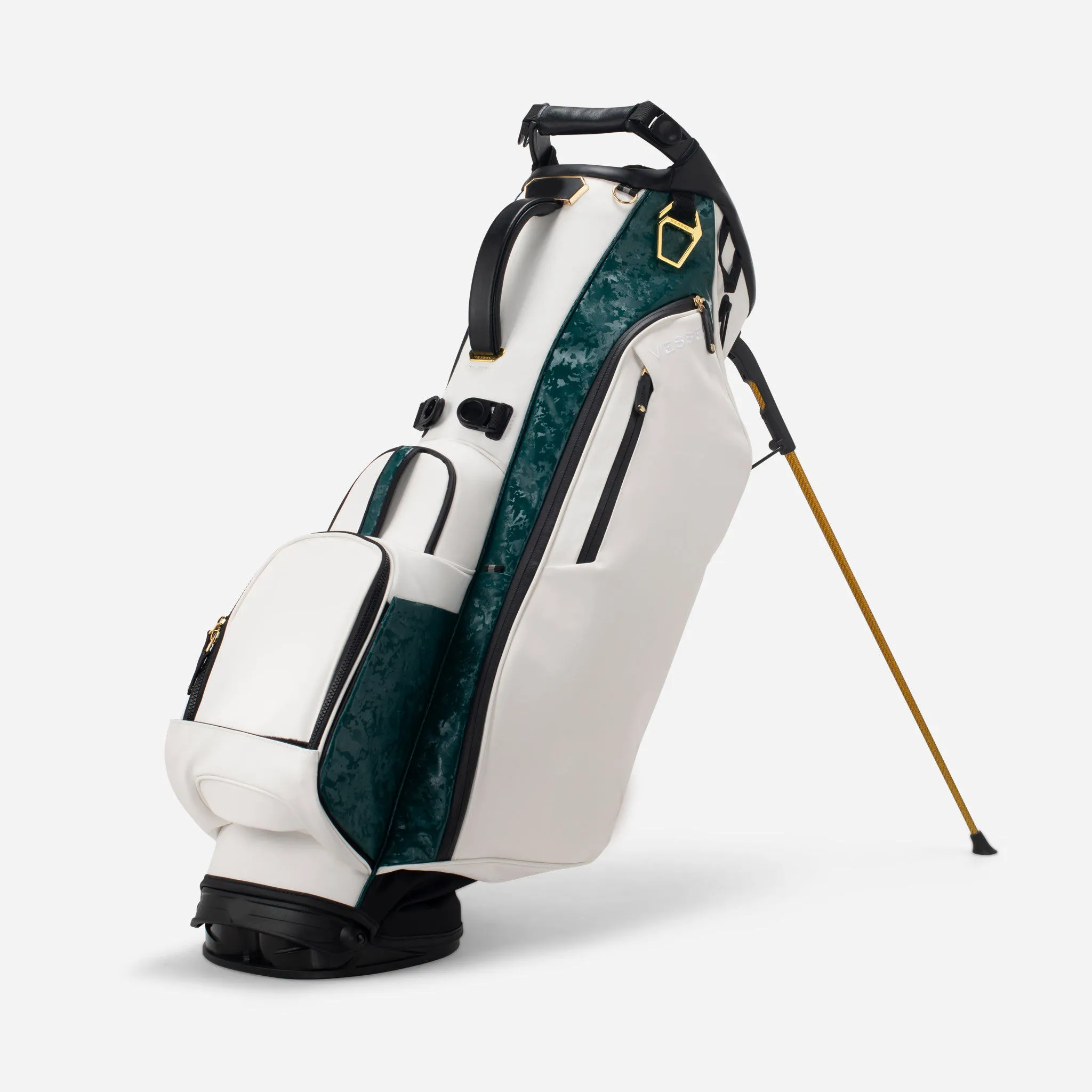
A surprising share of "fading" complaints are really contrast problems: a logo that fades faster than the body, or a light panel that yellows against a dark one. Smart design reduces visible fade without changing material cost. Keep logos smaller and place them in lighter-exposure zones, or print them in a high-fastness ink. Put dark or busy patterns on the most-exposed upper panels and keep bright colors where they get less direct sun. Choose whites and light greys that hold neutral rather than yellowing, and avoid dyes known to be UV-sensitive on high-exposure panels.
Even trim and hardware matter to perceived fading. Choose zipper tapes and webbing in colors matched to a fastness spec, and favor coated or anodized hardware whose finish resists sun dulling. A bag that fades gracefully — losing brightness evenly rather than spotting and yellowing — reads as "broken in" instead of "ruined." The design goal is to control where the sun's damage shows, so the bag keeps its identity through the season. Design is a free lever in the fight against fading, and experienced suppliers do it routinely.
Design strategies compared
The table below compares the main ways to make a golf stand bag resist sun fading, from direct material choices to surface finishes and design tactics. Use it to allocate your fade budget where it matters most for your market.
| Solution | How It Works | Relative Cost | Fade Benefit |
|---|---|---|---|
| Solution-dyed yarn | Pigment locked inside the fiber | Higher | Best-in-class color retention |
| Color-fast dyes | Light-stable dye chemistry | Moderate | Slower wash-out of color |
| UV-absorbing finish | Soaks UV before it hits the dye | Moderate | Extends bright appearance |
| PU/laminated coating | Protective surface film | Moderate | Shields color + weather |
| Smart design placement | Dark/busy panels on hot zones | Low | Hides inevitable fade |
Care, storage, and how the buyer extends color life
Even the most fade-resistant bag benefits from sensible care. Store bags out of direct sun when they are not in play — in the trunk, garage, or a golf bag cover — because UV damage compounds with hours of exposure. Rinse off dust and turf that can trap moisture and accelerate wear, and clean with a mild soap and soft brush rather than harsh chemicals that strip finishes. Avoid leaving the bag in a hot, sun-facing car interior for long stretches, and consider a cover for long-term or transit storage on the course.
For a wholesale buyer, care guidance is part of the product story: print a short care and storage note on the hang tag or product page, because a customer who stores a bag in the shade sees slower fading and fewer complaints. The message should set honest expectations — a bag left in full sun all summer will still fade somewhat, but careful storage extends the bright life of any bag. A buyer who sells care guidance alongside a fade-resistant build reduces returns and raises satisfaction, which is the commercial win behind the whole spec.
Fade resistance as a competitive spec
Fade resistance is a spec that distinguishes a considered bag from a commoditized one, because it appears in real use. Two bags can look identical on a product page, yet one stays bright after a season and the other washes out — and only the buyer who understands lightfastness can tell the difference before purchase. For a brand, advertising an honest lightfastness rating and demonstrating it with the actual test result is a credible differentiator in a market where consumers value both durability and appearance. It also supports a higher price, because a bag that stays new-looking longer is worth more.
For the B2B buyer, fade resistance belongs in the tech pack as a measurable target, verified by a test result on the chosen fabric. It belongs in the QC checklist at the line and at final audit. It belongs in the marketing story as honest proof of quality rather than vague "sun protection" language. Put all together — a spec'd UV-stable fabric, a verified lightfastness result, protective finishes where the sun hits hardest, and smart design that hides wear — a stand bag can stay vibrant for seasons. Engage us at service@junyuanbags.com or +86 17750020688 to spec a fade-tested line.
Sun exposure patterns and buying climate
Where your bags are sold should shape how much fade resistance you spec. A bag sold in Arizona, Spain, Australia, or the Gulf region faces far more intense and prolonged UV than one sold in the Pacific Northwest or northern Europe, so the same fabric can look dramatically different across markets after one season. A north-European buyer might accept a lower lightfastness rating to save cost, while an arid-climate buyer should not. This is a segmentation opportunity: instead of one fabric for the whole catalog, spec a higher fade rating for the sunny-market line and a standard one for the temperate line.
For a B2B buyer, matching fade resistance to the destination climate is both a quality decision and a financial one. Over-spec'ing fade resistance for a mild market spends money the customer does not need. Under-spec'ing for a sunny market guarantees complaints and returns. Ask your factory how the fabric you intend to use performs in the target region's sunlight, and consider a climate-adjusted spec in your line plan. The best fade documentation comes with both an average rating and a note on how it holds in strong sun, so you can buy honestly for the market you serve.
Trim, webbing, and zipper fade: the hidden contrast problem
Stand bags are assemblages, and fading on a single component can ruin the whole impression. Webbing straps, zipper tapes, pull cords, and binding often dye differently than the main body, so a bag whose panels hold color can still look faded because its webbing washed out. Logos and embroidery are high-risk too: a bright logo on a sun-exposed panel fades faster than the body, and the contrast loss reads immediately. Small details carry outsized visual weight, which is why fade-resistance thinking must cover the full BOM, not just the shell fabric.
The professional approach is to spec fade behavior on every dyed component, or at minimum on the visible ones. Ask for matching lightfastness across the body and the webbing, and choose high-fastness inks and threads for logos. Favor coated hardware whose finish resists sun dulling, and webbing dyed with color-fast dye. Because these parts are tested and specified once in the BOM, a supplier can keep the whole bag visually coherent as it ages. A bag that fades evenly across all its components reads as durable and intentional, while one that spots looks broken—so the detail is worth the spec.
Fade testing in your QC workflow
Fade resistance should be verified, not assumed, so build lightfastness into the QC process rather than treating it as a one-time fabric claim. At the material stage, confirm the incoming fabric meets the agreed lightfastness rating. At the line, spot the highest-exposure panels so a production batch does not silently downgrade the dye. At final audit, keep the fabric test record so you can prove the bag shipped at its promised standard. For a premium or sunny-market line, a formal lightfastness test tied to each lot is a strong, defensible record that also protects you in a dispute.
A QC-enforced fade spec does more than reduce claims — it makes your fade-resistance claim real and marketable. You can honestly say, and show, that a line ships with a verified lightfastness rating, which is rare in a market full of vague "sun-safe" tags. In our practice we support running fade standards in the QC checklist and providing the fabric test results that back the claim. When fade resistance moves from marketing language to a measured, documented spec, it becomes a genuine differentiator your wholesale or sales team can sell to.
Setting honest expectations with your customers
The most avoidable fade complaint is the one caused by a misunderstood claim. If a product page promises "sun-proof" or "never fades," the customer will expect a bag that stays identical forever, and no fabric delivers that. The stronger, more honest positioning is "fade-resistant" backed by a real lightfastness standard: the bag holds its color far longer and fade slowly, uniformly, and gracefully. Setting this expectation on the page and in sales materials prevents the over-promise that generates the worst complaints—the kind where a customer feels cheated by a claim rather than merely disappointed by time.
For a B2B buyer, honest fade communication is also a retailer-relations skill. A retailer who understands what your fade-resistance claim means and how to store the product sells it more defensibly and fields fewer disputes. Put the lightfastness rating on the tech sheet, mention storage guidance on the hang tag, and train your sales notes to say "resistant," not "proof." When expectations match physics, the same bag that satisfies a careful customer becomes a repurchase driver instead of a return. Honesty is not just ethical here; it is the cheapest way to protect margin on your fade-resistant line.
Recommended Internal Links
- Products (Stand Bag Architectures)
- OEM/ODM Service
- Factory & QC
- Golf Stand Bag Buying Guide
- Stand Bag Materials Guide
FAQ
What causes a golf stand bag to fade?
Ultraviolet radiation from the sun breaks down dye bonds and the protective coatings in the fabric, washing out colors, yellowing whites, and lowering contrast. Prolonged on-course sun exposure is the leading cause.
Can I prevent my golf stand bag from fading?
Yes, to a degree. UV-resistant yarns, color-fast dyes, and protective finishes slow fading measurably, while careful storage out of direct sun and mild cleaning extend any bag's bright life.
How is fade resistance measured on a stand bag?
Fade resistance is graded with a lightfastness test like AATCC TM16 or ISO 105-B02 on a 1-8 scale. A rating of 5 or above on outer fabric is a reasonable target for a sunny outdoor line.
What fabric resists fading the best?
Solution-dyed yarns, which carry pigment inside the fiber rather than on the surface, hold color best. Nylon and specially engineered UV-stable polyesters also perform well with the right additives.
Does a protective coating stop color loss?
UV-absorbing finishes and PU or laminated coatings shield the dye from ultraviolet and slow fading. They are not permanent and degrade as they work, so they extend bright life rather than freeze it.
Which parts of a stand bag fade the fastest?
The upper hood, top, and shoulder surfaces that face the sun directly fade fastest, along with exposed logos, webbing, and trim. Design can hide this by placing dark or busy patterns on the hot panels.
Do you test fade resistance on your bags?
Yes. We can engineer and verify color stability with lightfastness testing on the chosen fabric, and we support a fade-resistance target in your tech pack and QC checklist for a defensible, sun-durable line.
Request a B2B quote for golf stand bags
Send your target market, expected MOQ, and reference photos. We respond within 24 hours with a sampling plan.