For a company hosting a corporate golf day, a branded stand bag is the highest-visibility leave-behind of the event — a single logo run of 100-200 bags, produced at a test order of 100 units with sampling at 10-20 days and bulk at 45-60 days, typically lands branding in every group photo and keeps the sponsor's name on the cart bag or carry handle for seasons, which is why embroidery at a 3-5% unit-cost add beats a cheap heat transfer your guests will re-gift. This guide shows corporate sponsors, agencies, and tournament organizers how to brief branded golf stand bags — the colorway system, logo methods, functional features worth adding, packaging, and the event-date scheduling we plan at our SGS-verified Quanzhou facility (4,950 sqm, 7 lines, 149 machines, 137 staff). If the brief calls for deeper one-off customization (structure, materials or hardware), the dedicated custom golf bag factory team team at our sister factory can co-develop it.
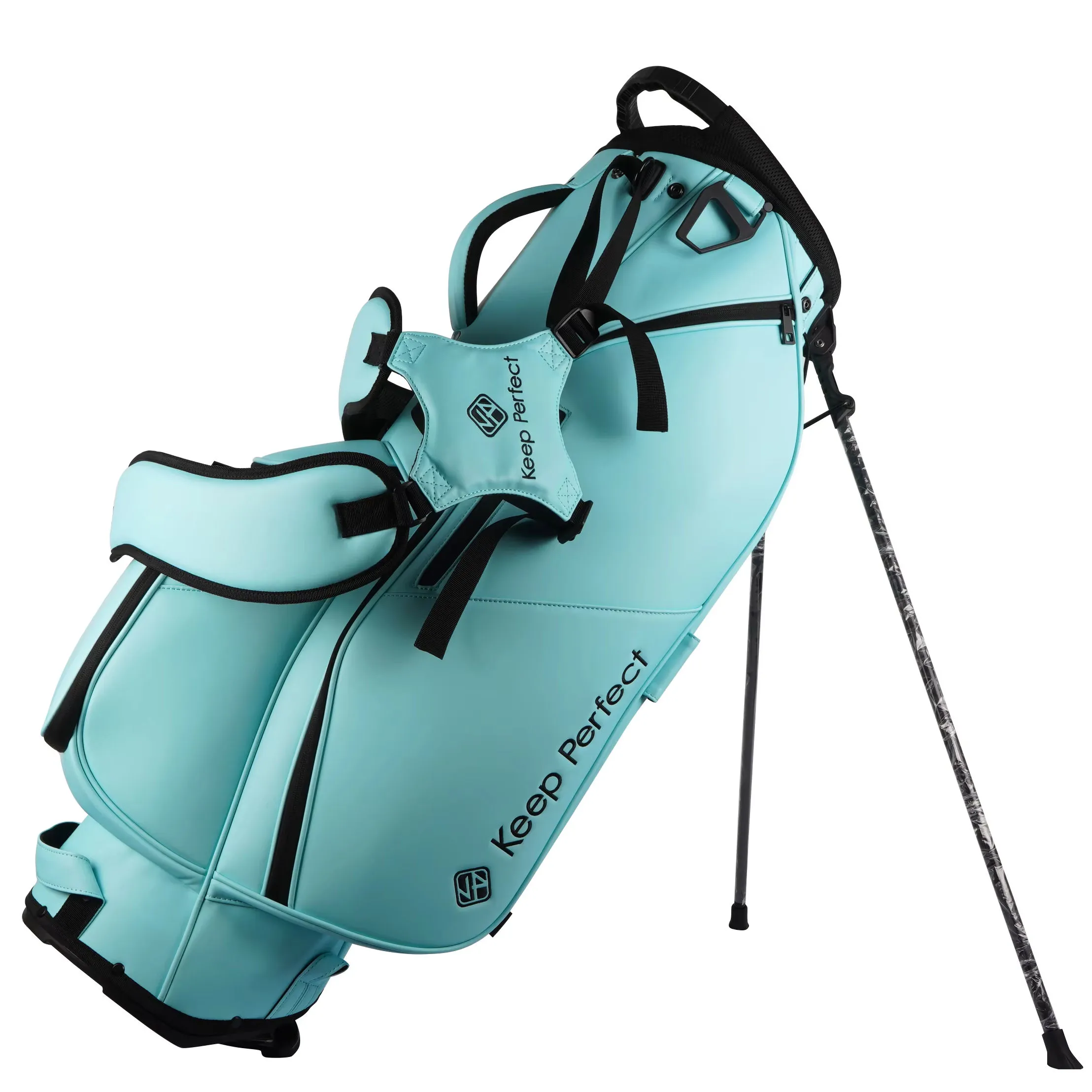
What a corporate golf day bag is actually for
A corporate golf day bag has a different job than a retail catalog bag. Its first job is visibility: it has to carry the sponsor's logo into group photos, onto the cart and the tee box, and into the guest's car on the way home. Its second job is utility: the event typically hands it to a golfer who will use it on the day, so it must hold clubs, balls, and valuables without failure. Its third, quieter job is retention: if the bag is good enough, a guest keeps it, and that keeps the brand in their garage or office for years — an advertising impression that no signage on the day can match.
That changes the design priorities. Corporate buyers often overweight the logo and underweight the construction, but a guest who is handed a bag with a perfect logo and a wobbly stand remembers the wobble, not the logo. The strongest corporate programs pair a strong, durable brand statement with a reliable architecture: a stable leg system, a clean 14-way or 6-way divider, sturdy dual straps, and zips that do not jam. When the bag functions well, the guest carries it and reuses it, which is exactly what turns a one-day sponsorship into a long-term brand placement.
Keep the target player in mind. Corporate golf days host a mix of serious players and occasional golfers, and a single architecture must serve both. A 14-way stand bag organizes the full-set player's clubs and impresses the casual guest with its professional look; a stable low-weight carry setup keeps walking comfortable for the guests who are not athletes. A mid-weight 14-way or hybrid stand architecture is usually the safest corporate choice because it reads premium, organizes everything, and still carries comfortably on a walk.
Key Takeaways before you brief the program
- Book the production slot 12 weeks out; sampling runs 10-20 days, bulk 45-60 days
- Use a 100-unit test order to validate colorway and logo before the main run
- Prefer embroidery for a durable 3-5% cost-add logo over heat transfer
- Lock a delta-E 1.0-1.5 tolerance and keep tonal contrast between logo and shell
- Add one functional signature — magnetic rangefinder pocket, cooler, or 14-way — for perceived value
Planning the production timeline around the event date
The single most predictable failure in corporate golf day sourcing is timeline. The event date is fixed, and the production window is not a negotiation — a bag needs sampling time, bulk time, ocean or air transit time, and buffer. In a region sourcing from Quanzhou, a realistic schedule for a corporate run of 100-200 branded bags is roughly 10-20 days for sampling, 45-60 days for bulk production, plus 2-5 weeks for transit depending on whether you ship by air or sea to your event's region. That puts a safe total at 12-16 weeks from initial brief to bags in hand.
Because corporate days are booked months ahead, the smartest sponsors reserve the production capacity early. Tell the factory your event date and participant count up front, freeze the artwork (the logo vector, the placement, the colorway) no later than the sampling stage, and avoid changing the tech pack after the pre-production sample is approved. Every post-approval change shifts the bulk slot and risks the event. A factory that schedules around your date will hold the line for you, but only if it is not re-engineering the program two weeks before the tee time.
For the tightest deadlines, a lighter shortcut exists: air freight the finished bags to meet a close event date, at a higher cost. But air freight compounds pressure on QC because there is no time for a rework cycle. The decisive habit is to treat the event date as the hard constraint and work backwards: freeze the design first, then the sample, then the bulk, then the transit. Corporate programs that do this land on time; ones that leave design open rarely catch up after the first sample round.
Branding: choose the method by durability and deadline
On a corporate gift bag that will be carried, photographed, and kept, branding durability is the primary screen, and embroidery is the default. A single-color embroidered logo on a nylon or polyester panel reads premium, survives course use, and holds up through repeated folding and compression. It typically adds a modest share to unit cost — roughly 3-5% for a single color — and that premium is worth it because a corporate pack embroidered thread does not peel the way a cheap heat transfer does on the flexing panels of a stand bag.
Molded rubber or TPU patches are the step up when the corporate program wants a raised, 3D, tactile brand lockup. They suit premium sponsor tiers where the bag is a high-value gift rather than a mass handout. The trade-off is process: patches need mold tooling and heat-press registration, so they carry a stricter placement tolerance and a longer lead at the sampling stage — plan for it if you choose them. Heat transfer is the emergency option when the deadline is tightest; it is fastest and handles gradient or photographic artwork, but it wears fastest on high-flex zones like the stand hinge, so it is the least retention-friendly choice for a gift guests will keep.
Placement matters as much as method. On a stand bag the front lower panel is the highest-visibility zone in photos, the top lid is second, and the side panels give a third brand impression. Avoid the stand hinge, the bottom wear plate, and the dual-strap anchor points, which flex and abrade most. If the program carries participant names, add a hero logo on the front plus a smaller woven or embroidered name mark on the lid or strap, and confirm the digitizing supports variable text before cutting. Two impressions — hero mark and name — give the corporate sponsor maximum brand value without visual clutter.
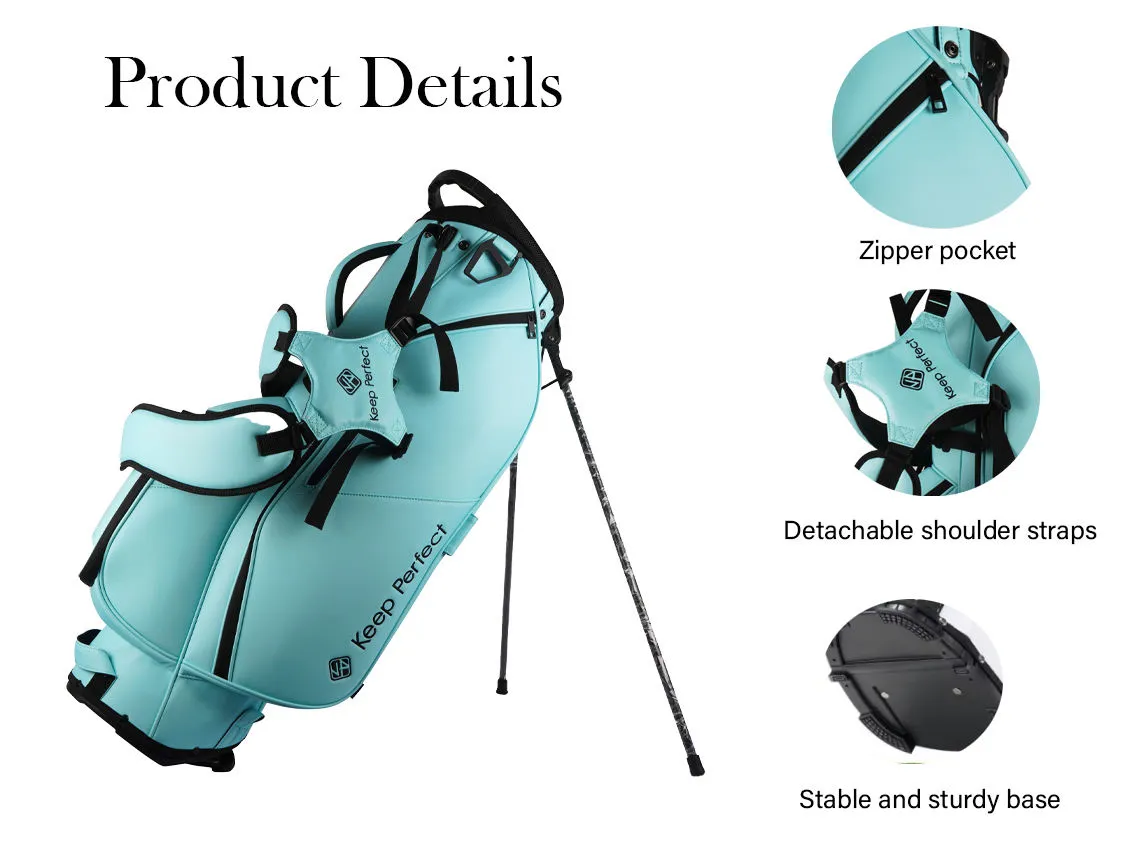
Colorways: keep the brand consistent and the bag photogenic
Corporate colorway planning should start from the brand, not from a mood board. If the corporate identity is navy, black, charcoal, or deep green, those shades are also among the most production-stable, so a corporate bag in brand colors carries low dye risk and reads as professional in event photography. The difficulty arrives when a brand uses a bright, saturated, or pastel accent — those carry higher dye-lot variance and touch-up, so the smart move is to keep the strong accent on the logo, the trim, and the webbing rather than banding the whole shell in it.
Consistency within the run is the real corporate risk. Every guest's bag must match every other guest's bag, because the bags sit side by side in the group photo. Lock a delta-E color tolerance of 1.0-1.5 against an approved color chip before bulk, and approve a lab dip on the actual fabric so the brand color translates from the design file to the production material. Also keep tonal contrast between the logo and the shell: a dark logo on a dark panel disappears in a small event thumbnail, which is how a sponsor's spend on branding gets lost in the photos that matter most.
A practical trick for corporate runs is to request a trim-down sample — a small set of color chips on the actual materials showing the shell, the logo, and the hardware together — and approve it against the corporate brand guidelines before the full production. This catches the mismatch that no single-chip approval catches: how the full colorway works as a whole. Approving once, as a system, means the entire corporate run ships consistent and the event photos all show one clean, on-brand look.
Functional features that add perceived value without bloat
Corporate bags benefit from a small set of functional features that raise perceived value — because the guests judge the gift by how useful it feels, not by its spec sheet. Choose according to how the bag is used on the day. A 14-way divider is the headline organizer feature: it sorts full sets, protects shaft finishes, and photographs well as a premium differentiator, at modest cost and weight. A magnetic rangefinder pocket is a modern favorite that adds genuine utility for the golfers who carry one, and it is cheap to build into a pocket design at the outset.
A cooler pocket or an insulated bottle pocket is popular on hosted rounds and works hard as a talking point at the event, but it adds some weight and structure — add it only if the corporate crowd will walk or carry rather than stay on carts. A valuables pocket and a dedicated ball pocket are the low-cost reliability features every guest expects, so never cut them. The dual-strap carry system with adjustable padding is worth specifying properly because a comfortable strap is the number-one reason a guest keeps and uses a bag rather than relegating it to a closet.
The discipline is restraint. Every added feature adds cost, weight, and a seam that can fail, so tie each feature to a real event use case and resist the temptation to stack everything. The strongest corporate telephone is one hero function the guests actually feel — a 14-way organizer, a magnetic rangefinder pocket, or a cooled pocket — sitting inside a rock-solid base bag. That balance of one memorable function plus reliable construction is what makes a bag worth keeping, and a kept bag is the whole point of the exercise.
Structural reliability: what the corporate bag must get right
Corporate bags face one unique stress: they are used by complete strangers, at different skill levels, on a single day, with no owner to baby them. That makes structural reliability non-negotiable in a way a retail bag does not demand. The stand leg system must deploy and retract consistently for a thousand-odd cycles without cracking; the base must sit stable on uneven ground; the dual-strap anchors must survive repeated loading; and the zippers must run smoothly with clubs leaning against them. These are the failure points a guest notices within minutes.
Specify these at the tech pack level with measurable targets. A typical starting point is 3,000-10,000 stand deployment cycles with no cracking and consistent stability, a zipper cycle test in the same range with a jam rate below your agreed threshold, a strap anchor static-load test with defined stitch-failure criteria, and a packed drop test in the 0.76-1.0 m range across corner, edge, and face. Put these numbers in the purchase order now, not at inspection, so the factory builds to them and the QC line enforces them. A corporate pack that survives its guests' first rounds protects both the sponsor's reputation and the bag's likelihood of being kept.
At our affiliated plant, the seven production lines run inline first-article checks and a final inspection so structural reliability is verified on unit #1 of each line and spot-checked through the run. For a corporate order the expectations should be written the same way — a durable, tested bag is a durable brand impression, and a bag that is kept is the only advertising the sponsor gets after the guests go home.
Packaging, labeling, and the gifting experience
A corporate golf day bag is a gift before it is a product, so the unboxing matters. When the bag arrives at the venue it should present cleanly: a single bag in a polybag, protected against scuffs, with the corporate logo on any hang tag or sleeve and the branding clearly visible the moment the event staff open the carton. Packaging that protects the stand, the straps, and the logo during transit is as important as the bag itself, because a scuffed premium guest gift quietly undermines the sponsor's spend.
Agree the packaging and labeling early: the polybag type, whether a cardboard header or sleeve is included, the placement and content of hang tags, and the carton spec with corner boards or divider inserts so the bags do not shift and rub during shipping. Verify barcode and carton marks per the logistics requirement of the event region. On export, confirm the packaging meets the destination market's labeling rules and that any brand claims on the tags are accurate, so the corporate run clears customs and arrives presentable.
Because corporate runs often ship as loose cartons to a venue rather than a full container, confirm the carton count, weight, and dimensions with the factory so the event's logistics team can plan the unload and staging. A bag that arrives on time, protected, and easy to distribute makes the sponsor and the organizer look good on the day — which is, after all, the entire objective of a corporate golf day package.
Standard corporate golf day spec table
Use this as a starting point for a corporate run, and lock the final values with the factory based on participant count and event date.
| Program Element | Recommended Starting Target | Corporate Buyer Note |
|---|---|---|
| Program quantity | 100-200 bags (test order 100) | Match to participants plus a small reserve for staff/guests. |
| Sampling / bulk lead | 10-20 days / 45-60 days | Book the slot 12+ weeks before the event date. |
| Architecture | 14-way or 6-way mid-weight stand | Organizes full sets; reads premium and carries on a walk. |
| Logo method | Embroidery (durable) / patch (premium) / HTV (tight date) | Embroidery adds 3-5% unit cost; avoid HTV on high-flex zones. |
| Colorway tolerance | Delta-E ≤ 1.0-1.5 vs approved chip | Same-lot consistency at the same event is non-negotiable. |
| Hero function | Magnetic rangefinder pocket / cooler / 14-way | Choose one function guests actually feel; avoid bloat. |
| Stand cycles | 3,000-10,000 cycles | Reliability for stranger-use on event day. |
| Packed drop test | 0.76-1.0 m corner/edge/face | Protect the premium unboxing at the venue. |
Fill these in before the RFQ and the factory can quote accurately and schedule the program to your date. The difference between a corporate run that ships on time and one that misses the event is almost always decided by how early the quantity, artwork, and architecture are locked.
Procurement worksheet for the corporate program
Collect these before you send the request for quotation so the first factory reply is accurate.
| Requirement | Your Target | Notes / Questions |
|---|---|---|
| Event date + participant count | The hard constraint that schedules everything. | |
| Bag architecture | 14-way / 6-way / hybrid; walk or cart use? | |
| Brand colorway + Pantone ref | Shell, accent, logo colors with references. | |
| Logo method + artwork | Embroidery / patch / HTV; vector file ready? | |
| Participant names? | Variable-text branding needs per-unit digitizing. | |
| Functional features | Rangefinder / cooler / valuables / apparel pocket. | |
| Packaging + labeling | Polybag, hang tags, header; destination-market rules. | |
| Shipping + incoterms | Air or sea; EXW/FOB/CIF/DDP to the venue. | |
| QC + AQL | Inspection level and stand/color acceptance gates. |
Handing the factory a complete brief on the first message is the single fastest way to an accurate price and a reliable schedule, and it removes the multi-round back-and-forth that eats the very lead time a corporate program can least afford.
Recommended Internal Links
- Products (Stand Bag Architectures)
- OEM/ODM Service
- Factory & QC
- Golf Stand Bag Buying Guide
- Colorway Matching & Tolerances Guide
FAQ
What is the ideal quantity and timeline for a corporate golf day stand bag order?
For a corporate golf day of 100-200 participants, a branded stand bag run typically needs a test order of 100 units with sampling at 10-20 days and bulk at 45-60 days before the event. Book the slot 12+ weeks out and freeze the artwork at sampling.
Which branding method is best for a corporate logo on a stand bag?
Embroidery is the most durable and premium-looking method on nylon and polyester panels, adding roughly 3-5% to unit cost for a single color. Molded patches give a raised 3D look; heat transfer is fastest but wears more on high-flex zones.
Should corporate golf day bags include functional features or stay simple?
Match the bag to real use. A 14-way divider and magnetic rangefinder pocket add perceived value with minimal cost; a cooler pocket suits hosted rounds that are walked. Avoid features that add weight without serving the event.
What colors are safest for a corporate golf day colorway?
Brand-aligned navy, black, charcoal, and deep green are safest because they carry stable dye lots and look professional in event photos. Keep bright or pastel accents to the logo and trim rather than the full shell.
Can I combine a corporate logo with participant names on each bag?
Yes. The hero logo on the front panel plus a woven or embroidered name mark on the lid or strap is a common setup. Add name-by-name branding to the tech pack and confirm variable-text digitizing before cutting.
How do branded corporate bags protect my brand in photography?
Lock a delta-E color tolerance of 1.0-1.5 against an approved chip and keep tonal contrast between logo and shell so the brand reads in thumbnails and group photos. Approve lab dips on the actual fabric to avoid a vanished-logo failure.
Do you support branded corporate golf day programs end to end?
Yes. At QUANZHOU JUNYUAN BAGS we co-manage architecture, colorway, logo method, functional features, packaging, and event-date scheduling so a corporate run lands ready to gift on the day. Share your date and participant count to start.
Request a B2B quote for golf stand bags
Send your target market, expected MOQ, and reference photos. We respond within 24 hours with a sampling plan.