For the most compact small carry, see our pencil bags — Practice golfers can also browse our range and simulator golf bags — For a resort or resort-adjacent course sourcing guest loaner bags, the deciding numbers are a pool of 80-200 units sized to an 8-15% daily guest participation, a standard shell at 4.2-5.5 lb that suits the majority of leisure travelers, and a durability plan that budgets to replace 5-10% of the pool each year. This guide turns the resort loaner concept into a production-ready spec — quick-identify branding, hard-wearing hardware, and intuitive pockets — and walks through the details we manage at our SGS-verified affiliated plant (2026 audit, 4,950 sqm, 7 lines, 149 machines, 137 staff) so a guest fleet lasts multiple seasons without high repair bills.
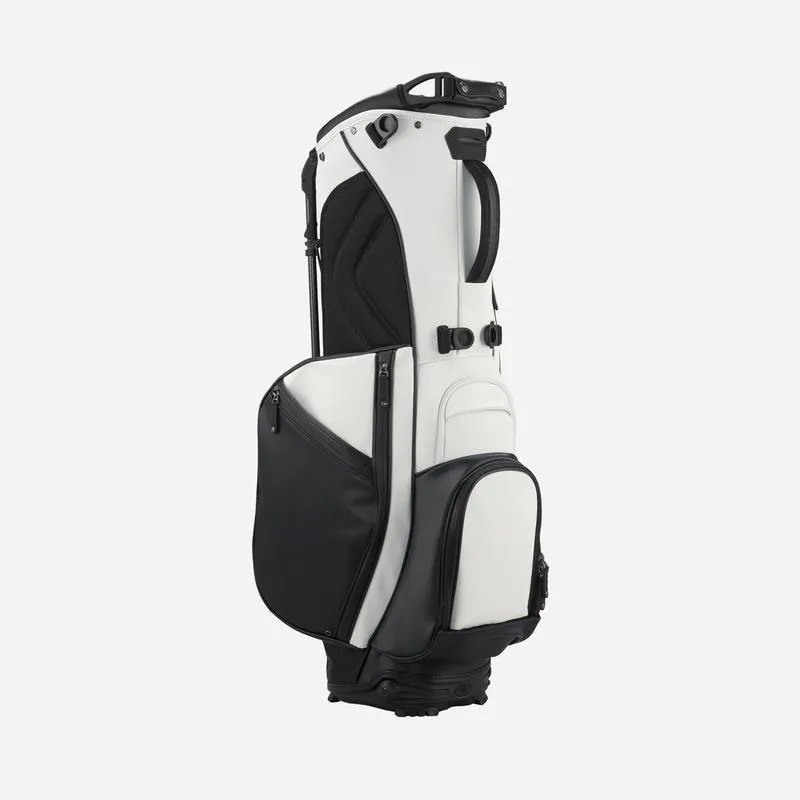
Key takeaways for resort guest bags
Resort bags are loaner assets, so the design goals are different from a retail bag you sell once. The buyer wants a bag that is fast to identify, easy for a first-time guest to use, and durable enough to survive hundreds of borrow-and-return cycles and airport travel. Build the brief around these measurable targets.
- Standard shell at 4.2-5.5 lb fits the majority of leisure-travel guests
- Quick-identify logo + numbering so guests and staff retrieve the right bag fast
- One-touch stand and labeled pockets for a first-time guest
- Reinforced hinges and padded base for 200-500 rounds a year of loaner service
- Durable zippers and bartacked straps with defined cycle targets
Right-sizing the loaner pool
The first planning question is how many bags to buy, and the answer is driven by accommodation, not by the golf capacity. A resort with 200 rooms and an 8-15% daily guest participation rate can see 16-30 guests needing a bag on a busy day. Buffer for weather, repair downtime, and air travelers who arrive without their own bag, and a working pool of 80-200 units is the common range for an 18-hole resort. A larger 36-hole property with 400+ rooms may stretch to 250-400.
Buying in our standard MOQ of 200 pieces, or a test order of 100 for a proof-of-concept season, lets you validate durability on real guest use before committing to a bigger fleet. Keep a small buffer of the top colorway so you are not caught short during peak weeks, and plan the annual replacement math early: a 5-10% annual churn is realistic as hinges, zippers, and base plates wear. Sealed color chips and a frozen master let each reorder match the existing fleet.
Guest-friendly features that reduce staff friction
The best resort bag is one the guest barely thinks about, because every confusing detail becomes a staff task. A one-touch stand that deploys with a single hand keeps a first-time guest moving. A clear divider guide — some resorts color-code or number dividers so a guest knows where driver and wedges go — reduces club clutter and speeds turn-in. Labeled pockets (rangefinder, valuables, ball, apparel) let a guest find things without asking.
Pocket access logic matters at a resort because guests borrow and return daily. A valuables pocket with a smooth zipper and soft lining, a rangefinder slot that is easy to open, and a cooler pocket that drains cleanly are the highest-ROI features. We position pockets so the bag reads logically at a glance, and we add a small tag or loop where a numbered asset tag can be attached for the resort's tracking system. Fewer pockets, laid out clearly, outperform a cluttered layout on a guest fleet.
The fit range that covers most guests
Resort guests are not a homogenous group: they range from seasoned players to families and complete beginners of both sexes and many heights. We recommend a one-size-fits-most standard shell at 4.2-5.5 lb with a 4/5/6-way divider, which suits a wide body range and carries a full set comfortably. For family programs, a small women's and junior run with a shorter shell, a lighter 3.2-4.5 lb build, and a narrower strap set covers the lower end of the range without bloating the SKU count.
Because leisure travelers dominate a resort mix, ease beats peak performance. A dual strap with moderate padding and a wide adjust range lets a taller guest and a shorter guest both carry comfortably. A removable or folding travel-lock stand is a smaller priority at a resort than at an airport commuter program; the hinge reinforcement and padded base matter more because the bag spends so much time on carts and in daily handling. Define the guest mix up front and we set the shell length and strap range to match.
Branding and numbering for quick retrieval
Resort loaner logistics live and die by identification. A memorable property or course logo, placed on a stable panel away from the stand hinge and bottom wear plate, gives the fleet a consistent look and reinforces the resort brand on the course and at the airport. A numbering system on the lid or side lets the bag-return area and storage racks match a guest to the right bag in seconds, cutting both staff time and guest frustration.
| Parameter | Typical Spec | Buyer Notes |
|---|---|---|
| Loaner pool size | 80-200 units (18-hole) | Grow with room count and 8-15% participation |
| Standard shell weight | 4.2-5.5 lb | Suits the majority of leisure-travel guests |
| Divider | 4/5/6-way | Color-coded or numbered guide helps guests and staff |
| Shell material | 400D/600D nylon or polyester | Reinforce hinge block and base plate |
| Stand | One-touch, reinforced hinge | Survives 200-500 rounds a year |
| Identification | Property logo + asset numbering | Fast retrieval and fleet tracking |
| Pocket list | Valuables, rangefinder, ball, apparel, cooler | Labeled and clearly laid out |
| Annual churn plan | 5-10% replacement | Budget hinges, zippers, base plates |
Durability engineering for 200-500 rounds a year
A resort loaner faces a workload no single owner would put a bag through. It is carried by strangers, strapped to carts by different staff, flown as checked luggage, and washed between guests. Reinforced hinge blocks, a padded base plate with a TPU skid, and bartacked dual-strap anchors are non-negotiable. We cycle-test the stand to a 3,000-10,000 deployment target and check for cracking, wobble, and leg-spread consistency, because a wobbly stand is the fastest way to annoy a guest.
Zippers take a beating too. A durable coil zipper with a 3,000-10,000 cycle target and a low jam rate keeps pockets opening smoothly across hundreds of guest sessions. The base wears most against carts and the ground, so a skid plate and corner reinforcement protect the shell. For the buyer, specifying these as measurable targets — not 'durable' — is what lets the factory hold the line in bulk and makes the annual churn forecast accurate instead of optimistic.
Pocket architecture and the cooler question
Resort play is hot-weather play, so cooling and hydration features earn their keep. A cooler pocket with insulation and a drain behaves well in resort climates and is a strong add-on for a resort fleet. We design the cooler with a cleanable lining and a drain grommet so it does not hold water or odor between guests. A magnetic rangefinder closure is a lightweight upgrade that saves plastic hardware and is easy for a guest to open.
Because guests range from beginners to regulars, keep the pocket count deliberate. A valuables pocket, a rangefinder slot, a ball pocket, an apparel pocket, and the optional cooler cover the essentials. Resisting a crowded layout keeps weight down and keeps the bag legible, which both improve guest satisfaction and reduce the cost of a slightly heavier construction on the retained core.
Color, cleaning, and how a resort fleet stays presentable
Presentation is part of the resort experience, so colorways and cleanability matter. Mid-tone and two-color shells hide the light scuffs of daily handling better than a bright solid, and a dark base panel masks ground contact. A coated or laminated finish wipes down easily between guest sessions. We recommend a colorway that matches the resort identity — a contrast panel or accent zipper ties the fleet to the property without making maintenance harder.
For manufacturing consistency, lock each colorway with a lab-dipped or physical chip and keep the trim and hardware color-banded so the fleet looks uniform as reorders arrive. A sealed master and a color reference mean the 50 bags you add next season match the 150 already on the rack. This is the small discipline that keeps a big visible fleet looking intentional rather than like a patchwork of different sources.
Testing and acceptance plan for a guest fleet
Sanction a guest fleet with the same discipline as a retail program, because a failure in a loaner bag repeats across every user and every season.
- Stand deployment + stability cycle test (3,000-10,000 cycles, no cracking or wobble)
- Base-plate and cart-mount wear check with a skid plate
- Zipper smoothness + cycle test with defined jam-rate and pull-force targets
- Dual-strap anchor load test (static load + stitch failure criteria)
- Drop and packed-transit test simulating checked luggage and cart handling
Procurement worksheet for a resort RFP
Gather these before you send the RFP so the factory can quote the loaner pool accurately and on the first round.
| Requirement | Your Target | Notes / Questions |
|---|---|---|
| Loaner units | Room count and expected daily guest participation? | |
| Guest mix | Leisure share, family/junior need, typical heights? | |
| Shell weight | Standard 4.2-5.5 lb; junior 3.2-4.5 lb? | |
| Divider | 4/5/6-way, color-coded or numbered guide? | |
| Shell material | 400D/600D nylon or polyester; reinforced hinge and base? | |
| Pocket list | Valuables, rangefinder, ball, apparel, cooler? | |
| Branding / numbering | Property logo + asset numbering placement? | |
| MOQ & lead time | 200 standard, 100 test; sampling 10-20 days |
Sampling and QC checklist
Align these before sampling so the first loaner batch is right and reorders stay consistent across seasons.
- Approve a physical sample on the production fabric with logo and numbering
- Verify the stand deploys with one hand and passes the cycle target
- Confirm zipper and hardware cycle specifications with defined pass/fail
- Run a packed-transit drop test before bulk
- Lock a sealed master and color chips for the annual reorder
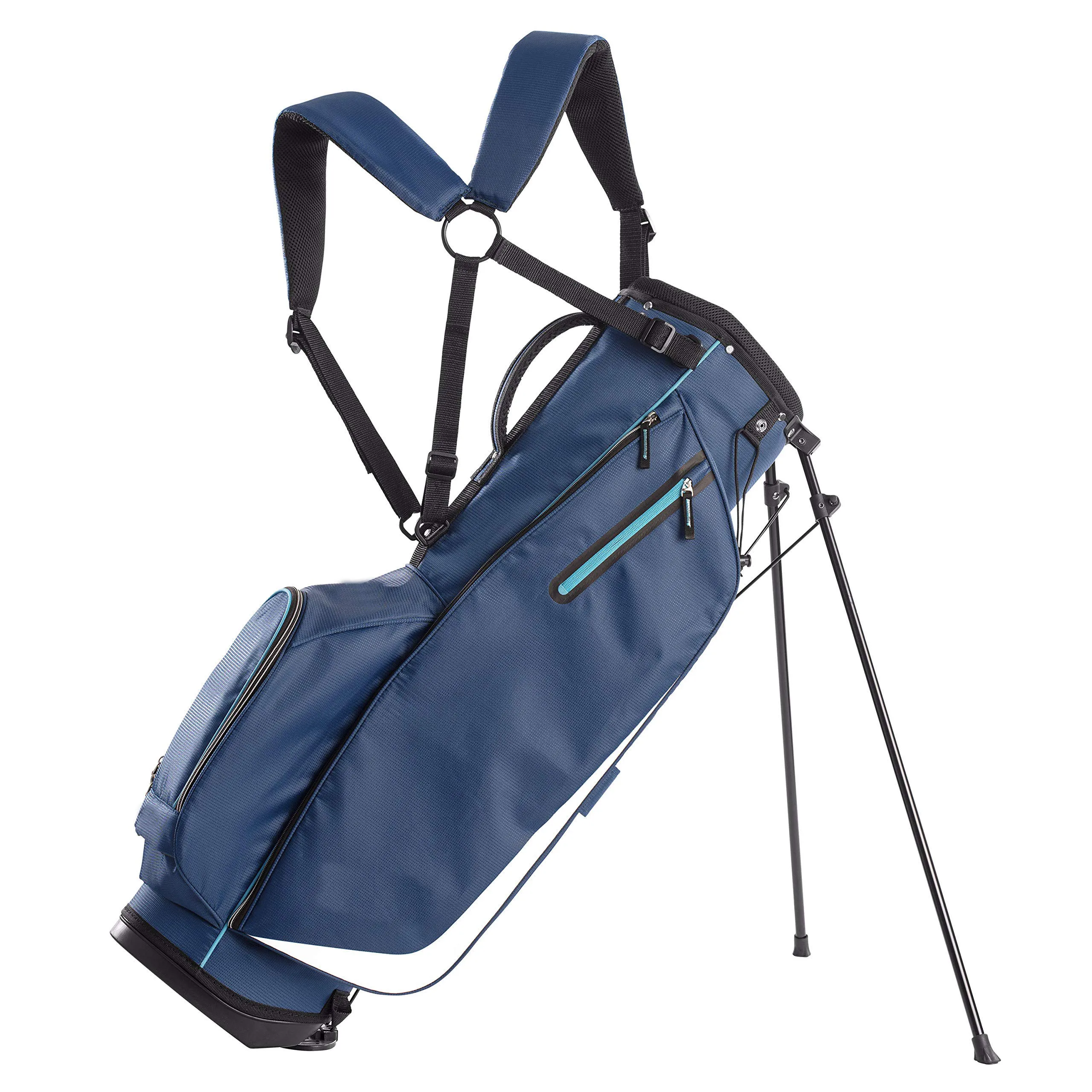
Cost drivers that shape a resort fleet budget
Resort buyers work to a per-unit budget because they buy volume and replace a share each year, so knowing where the cost sits helps you choose the three specs that matter most. The shell material is the largest cost driver: a 400D nylon over a thinned polyester shell can move unit cost several percent, and a heavier 600D ripstop with reinforcement costs more still. The stand mechanism is second: a one-touch system with a reinforced hinge adds a little over a plain hinge, and a folding travel-lock adds more. Full-length dividers, a padded base with a skid plate, and a branded or numbered panel each add a few percent.
When you stack every guest-friendly feature, a resort loaner can land 15-25% above a baseline carry bag. For most resorts the better trade is a solid 400D or 600D shell, a reinforced one-touch stand, a padded base, and clear branding — and to spend the rest of the budget on the pocket set and durable zippers that guests actually touch. Cooling, in particular, is worth a modest premium in warm destinations because it is the feature guests notice most on a hot day.
Seasonality, peak weeks, and the replenishment plan
Resort demand is lumpy: occupancy spikes in holiday weeks, and peak tee times concentrate bag usage on weekends and during high season. A loaner fleet sized for a normal week can be short at peak, so build in a margin and a small reserve of the top colorway. The other side of seasonality is that a bag in the off-season sits idle, which is why the annual 5-10% replacement budget should target the units that saw the most rounds, not rotate the whole fleet on a strict schedule.
Keep the replenishment path simple by reordering the same frozen spec, colorway, and logo scheme each year. Because we hold a sealed master and a color-sealed chip per program, a reorder in the next season matches the existing fleet exactly — no re-approval loop, no drift in tone or trim. That predictability is what lets a resort plan a multi-year budget instead of re-buying reactively when a hinge fails at the wrong time.
Merchandising the guest-landing zone
At a resort, the bag rack and the check-in-to-tee area are visible merchandising real estate. A neat, consistent fleet with a strong property logo signals quality before the first tee shot, and it photographs well in guest content and reviews. A two-color shell in the resort's palette, an accent zipper, and a matching trim package turns a practical fleet into a brand asset. For a course that runs tournaments or corporate days, the same fleet can double as event branding.
Because the fleet repeats across the property, consistency is the merchandising advantage. Even the numbering system — placed identically on every bag — gives the storage area a designed look. We advise approving one production physical sample on the actual fabric with the real logo and numbering before bulk, so the whole fleet matches the prototype and the resort identity reads the same across every unit on the rack.
Common mistakes when sourcing resort loaner bags
The most common mistake is buying one-fits-nobody: a heavyweight organizer bag that no leisure guest wants to carry and that staff struggle to lift on and off carts. A second is undersizing the pool for peak weeks, so the resort is short exactly when it needs the fleet most. A third is skipping the identification system and then losing time every day matching guests to bags at a crowded return rack, or replacing the fleet piecemeal so no two bags on the rack look the same.
These failures all trace back to a thin brief. State the loaner count with a peak buffer, set a weight ceiling a guest will actually carry, and lock one logo-and-number scheme before buying. Approve a single production physical sample before bulk so the whole fleet is uniform, and agree the annual churn policy up front so hinge and zipper wear is a budgeted line item rather than an emergency. A resort fleet that is easy to identify, comfortable to use, and ordered to the real peak demand is the one that survives a busy summer.
Sustainability and the long-service fleet
Resort operators increasingly ask about the environmental footprint of a large recurring asset, and a loaner fleet is a perfect case for durability-as-sustainability: a bag that lasts 3-5 seasons instead of one avoids three rounds of manufacturing energy, fabric, and freight. Choosing a repairable build — replaceable zipper sliders, bartacked anchor points that a repair shop can re-stitch, and a base plate that mounts separately — makes the fleet serviceable rather than disposable. Recycled polyester shells and PVC-free linings are available options for a program that wants a greener story alongside a lower year-over-year replacement cost.
From the factory side this is well within the standard MOQ structure, and it rarely adds more than a few percent because recycled yarns and repairable hardware are now mainstream. If you run a fleet across multiple properties, a standardized repairable shell lets your maintenance team hold a small parts kit rather than a full replacement pool. Ask about our recycled-material and repairable-hardware options when you send the brief, and we will size a fleet that is both more durable and more defensible on sustainability.
How to brief the factory for a resort fleet
A focused brief gets a resort loaner fleet quoted accurately on the first round. Open with the loaner count, the guest mix (leisure share and any junior need), and the property's participation assumption. Then add the shell weight ceiling, divider config, material direction, pocket list, and the branding and numbering placement. Close with the colorway, the logo method, and your expected MOQ and timeline, and we can lock the spec and deliver a sampling plan.
Because guest-facing hardware is where a fleet lives or dies, brief the pocket logic and zipper requirements explicitly — a flagged pocket map and a cycle-tested zipper set buy a long trouble-free life. Our team also flags any conflict between a requested cool feature and durability before sampling, so you do not pay for a re-design. Reach out with your room count and guest mix and we will size the right pool and quote.
Recommended internal links
- Products (Stand Bag Architectures)
- OEM/ODM Service
- Factory & QC
- Golf Stand Bag Buying Guide
- Promotional Fleet Tips
The practical bottom line for a resort buyer: right-size the loaner pool to your room count and participation rate, keep the standard shell around 4.2-5.5 lb with quick-identify branding, and budget a 5-10% annual replacement churn on a reinforced, cycle-tested build. Our team at QUANZHOU JUNYUAN BAGS helps you spec a guest fleet that stays presentable and low-repair season after season — contact us at service@junyuanbags.com or +86 17750020688 with your room count, guest mix, and expected MOQ.
FAQ
How many golf stand bags does a resort typically stock?
A mid-size resort with 18 holes commonly keeps a loaner pool of 80-200 stand bags, sized to a typical 8-15% daily participation from accommodation guests. Buying in a standard MOQ of 200 or a test order of 100 lets you validate durability on real use before a larger commitment.
What makes a stand bag guest-friendly at a resort?
Intuitive one-touch stand deployment, an easy divider guide, clearly labeled pockets, a padded dual strap, and a logo or numbering system that makes retrieval simple. Guests borrow and return bags daily, so quick identification and durable hardware reduce laundry and repair cycles.
Should resort bags be a single size or sized by guest segment?
Most resorts run a one-size-fits-most stand bag in 4/5/6-way config plus a small women's/junior run, because it keeps stock simple. Guest pools skew to 40-70% leisure travelers, so a standard shell at 4.2-5.5 lb serves the majority while a lighter or shorter junior option covers families.
How durable must a resort loaner stand bag be?
A resort loaner absorbs 200-500 rounds a year through airport transfer, cart mounting, and daily cleaning, so reinforced hinges, a padded base, and durable zippers with a 3,000-10,000 cycle target are essential. Budget to replace 5-10% of the pool annually.
Do you brand resort stand bags with a property logo?
Yes. We offer embroidery, molded patches, and heat transfer for a resort or course logo, with placement on stable panels away from the stand hinge and bottom wear plate. Sampling runs 10-20 days and bulk at 45-60 days with a standard MOQ of 200.
What is the fastest route to a resort stand bag quote?
Send the number of loaner units, target guest mix, shell material direction, divider config, pocket list, logo method and placement, and expected MOQ with your timeline. That lets us lock a spec and a sampling plan on the first exchange.
Request a B2B quote for golf stand bags
Send your target market, expected MOQ, and reference photos. We respond within 24 hours with a sampling plan.