Practice golfers can also browse our range and simulator golf bags — Custom golf stand bags for charity events start at around 200 pcs per run and cost a few dollars more per unit for a logo, so a well-planned bag program turns a single tournament into thousands of cause impressions while giving sponsors a durable, premium thank-you piece. This guide shows a non-profit or sponsor how to plan, fund, and produce branded stand bags at our affiliated Quanzhou factory (SGS-verified, 4,950 sqm, 7 lines, 149 machines, 137 staff).
Why a Charity Event Needs a Branded Stand Bag
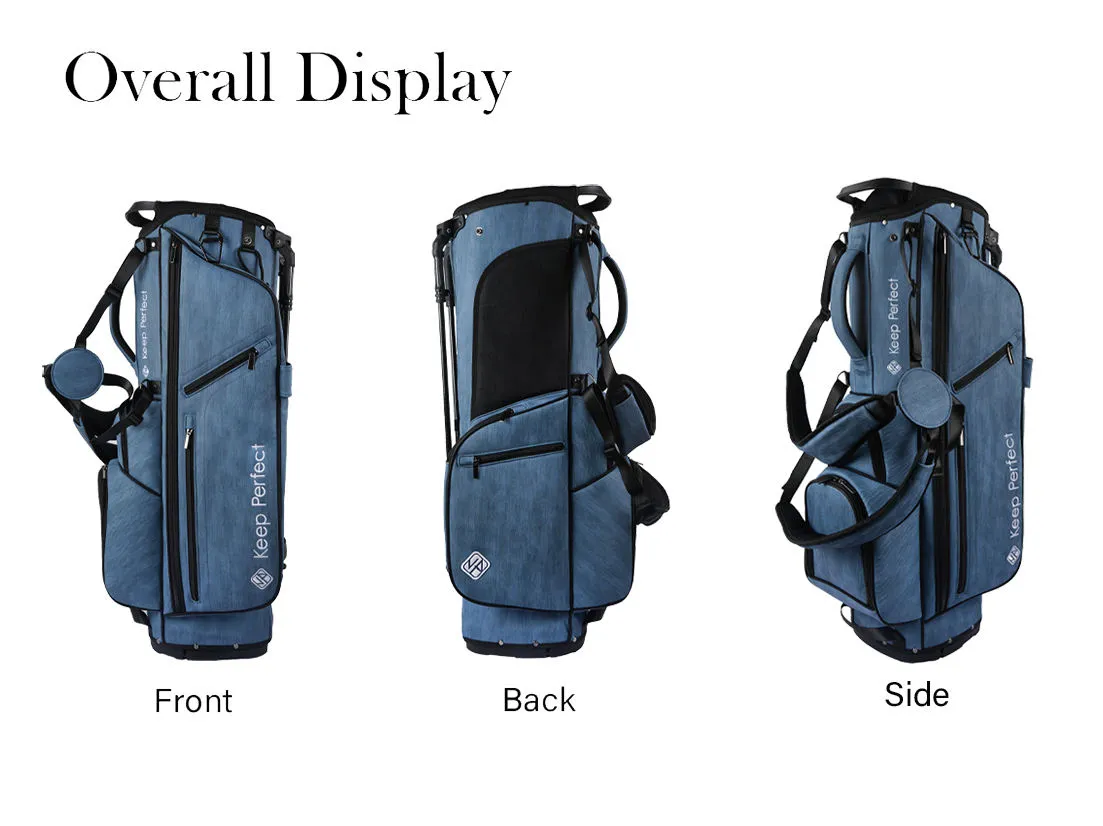
A charity tournament is a concentrated audience moment — golfers gather, linger, and share photos for hours, and the bag travels with them beyond the event. A branded stand bag that each player receives becomes a standing advertisement for the cause that keeps working after the tournament ends, appearing at later rounds, at the club, and on social feeds. Compared with a disposable event kit, a durable premium bag raises the perceived value of participation, which supports ticket pricing and sponsor goodwill, and it gives the charity a lasting artifact that photographs in every frame. For sponsors, the bag is a visible placement that survives the event, which makes it a more attractive sponsorship asset than a banner that comes down after a day.
The branded bag also earns impressions at scale. If a tournament supplies bags to 200 players, and each bag appears in an average of several photos or social posts plus months of course use, the cause gains exposures far beyond the one event — making the bag one of the most efficient cause-promotion purchases in the event budget. Because a stand bag is premium and reusable, recipients keep it rather than discard it, compounding the message. That is why a brand or committee planning a charity golf event should view the bag not as a giveaway line item but as the event's most persistent promotional asset.
Sizing the Program: Quantities, Budget, and Funders
Right-size the program before designing. Start with the expected player count and add buffer: a tournament for 120 players might order 150-200 units to cover staff, prizes, and extras, and a sponsor may want a few branded spares. Because personalization cost is mostly setup plus per-unit production, larger orders lower per-unit cost, but on a fixed donor budget the quantity-per-dollar trade-off matters more. Model both the player-facing quantity and any sponsor or VIP tier quantities, and then decide what personalization each tier receives — a full logo for players, a larger premium lockup for VIPs or winners, and a sponsor logo on the side or a small co-brand panel.
Funding a branded bag program usually means stacking a sponsor contribution, the entry-fee premium, and part of the general event budget. A sponsor can be given the headline placement — logo on the hero front panel or a co-branded lockup — in exchange for covering the bag cost, which makes the bag effectively paid for while promoting both the cause and the sponsor. If sponsorship covers the full program, both parties win: the charity gets premium giveaway at no cost, and the sponsor gets a visible, durable placement. Present the per-unit cost with the MOQ (200 pcs standard, 100 pcs test) and lead time (10-20 days sampling, 45-60 days bulk) to the committee so the budget and the event calendar stay aligned.
Designing a Cause-Inclusive Brand Lockup
A charity bag must promote the cause first and the sponsor second without either cluttering the other. The cleanest system gives the cause the hero placement — its name, logo, and the event date on the front lower panel — and reserves a fixed zone for one or more sponsor logos on the side or a lower panel, so the cause reads primary and the sponsor reads supporting. Keep the total to a clear hierarchy: one cause mark, one event line, and one sponsor zone, with a tonal repeat of the cause on the lid. Crowding several sponsor logos onto the hero panel dilutes the cause message and reads as clutter, so define a sponsor-zone grid in the brief and hold sponsors to it.
Set the tone to match the cause. A premium muted palette reads as an established, respected charity; a bold color pops for a fun or youth-focused event; a tonal understated lockout suits a formal fund-raising gala. Provide vector artwork for every mark with fonts outlined and Pantone references, and approve a production-material sample so the colors and logo placement look right in person. Because multiple organizations contribute marks, agree a single design source of truth so the sample matches the final run — a charity program with many stakeholders suffers the most drift of any bag program, so locking the brief early is essential.
Sponsorship Tiers and How to Layout Multiple Logos
Sponsorship packaging converts a bag program into event revenue, and the layout is what makes different tiers feel different. A common three-tier model: a headline sponsor owns the hero logo or a co-branded front lockup and often covers the bag cost; secondary sponsors share a fixed side or lower sponsor zone; and entry-level sponsors get a smaller mark or are listed on a hang tag or a liner print rather than the shell. Because the number of sponsor logos can grow quickly, define how many can appear before the panel gets crowded and set a minimum logo size so each reads. Tiers create value, and value lets the committee charge meaningfully for placements.
Logistically, more logos mean more setup and more approval points, so keep the sponsor zone measured and the placement consistent. Each sponsor supplies a vector logo and Pantone reference, and we lock the combined sponsor panel on the sample just like the cause lockup. If sponsors join late, a separate promotional piece — a hang tag, a printed liner, a badge — can carry late logos without re-engineering the shell. This lets the committee sell sponsorship up to the event while keeping the bag production on schedule, which is the practical management of a multi-stakeholder charity program.
Charity Stand Bag Program Specification Table
Lock these rows on the pre-production sample, following the standards at QUANZHOU JUNYUAN BAGS.
| Element | Spec | Buyer Notes |
|---|---|---|
| Quantity | Player count + buffer (~150-200 for 120 players) | Include staff, prizes, sponsor spares. |
| Cause placement | Hero front panel + tonal lid repeat | Cause reads primary, sponsor secondary. |
| Sponsor zone | Fixed side/lower grid, logo given min size | Prevents clutter as sponsors join. |
| Artwork | Vector AI/EPS, outlined, PMS per mark | Every cause and sponsor logo supplied in vector. |
| MOQ / test | 200 pcs standard, 100 pcs test | Quoted on the actual quantity and tiers. |
| Sampling / bulk | 10-20 days sample; 45-60 days bulk | Align with the event date. |
Planning the Timeline Around Your Event Date
A charity event has a hard date, so the schedule is the most important constraint. Work backward from the tournament: reserve time for a design brief (1 week), artwork collection from the cause and every sponsor (1-2 weeks), a sample round (10-20 days), sealing the sample, and the bulk lead time (45-60 days), plus shipping and a little buffer. In total a branded stand bag program realistically needs about 3 to 4 months from brief to bags on the course, so start as early as the sponsorship sales begin. A tight window can use a faster route — a test order or a stock architecture with a mature logo — but the full co-branded program should be planned ahead.
Because sponsors join the program at different times, sequence the production to tolerate it: lock the cause mark early, keep the sponsor zone modular, and add late sponsors to a promotional piece rather than re-running the shell. Ask the factory to confirm each milestone — sample approval, production start, mid-line QC, packing — with dates, and request tracking so the committee can communicate the schedule to players. A clear timeline also lets you produce a separate promotional run of smaller items (headcovers, towels, bags) on the same schedule. Managing the calendar as carefully as the design is what gets premium branded bags into players' hands on the event day instead of weeks later.
Promoting the Program Beyond the Bag
The branded bag should be the centrepiece of a broader cause-promotion package, not the only asset. Pair the bag with matching smaller items — headcovers, golf towels, yardage-book holders — so the tournament's giveaways form one consistent branded set that photographs well together. Produce the bag early enough to use its photography in pre-event marketing: announcement posts, ticket-page visuals, and sponsor announcements all perform better when they show the actual product players will receive. Invite players and sponsors to share photos with a dedicated hashtag, turning the bag into the visual anchor of the event's social reach, and consider a "bag reveal" moment at the gala or the first tee.
Because the sample set arrives before bulk, it is a ready-made prop for this whole marketing push. Use the sealed sample for clean product photography, for press kit images, and for the sponsorship-sales deck, so the committee sells against a real product rather than a mockup. At the event, display the bag, film unboxing-style moments, and encourage on-course photos; after the event, the bags continue to appear on courses and feeds, extending the cause's visibility for months. A well-photographed bag is the most self-amplifying element of the whole event, and it costs no extra to plan for.
Choosing the Right Architecture for a Cause Bag
The golf bag you give away should match the tournament profile and the audience it is meant to impress. For a casual or beginner-friendly charity round, a lightweight four-way stand bag keeps the give-away approachable and cost-effective while still carrying the cause well. For a more serious event offering a premium player experience, a fuller six-to-eight-way stand bag signals quality and gives a larger canvas for the cause and sponsor lockups. If the event markets itself as modern or technical, a waterproof or PU-accented bag reinforces that positioning, because an event giveaway should feel consistent with how the event and its sponsors present themselves rather than look like a generic promotional tote.
Because players get to keep the bag and reuse it, a durable, honestly built architecture protects everyone's brand — the cause's, the event's, and each sponsor's. A bag that performs on the course is a positive association that recurs for months; a bag that fails discredits the same group in front of the exact audience the event was meant to impress. We recommend matching the architecture to the budget tier your committee wants to signal, then putting the quality into the details players feel — the stand, the strap, the dividers, the pocket access — so the give-away feels like a real product, not a souvenir. Sending the event profile and target tier with the design brief gets you an architecture recommendation that fits both your message and your budget.
Avoiding Common Charity-Promotion Pitfalls
The most common mistakes in charity bag programs are predictable, and each has a fix. The first is a cluttered shell packed with a dozen sponsor logos that bury the cause — solve it with a fixed hero-and-zone hierarchy and a minimum logo size. The second is drifting logo color or placement across a run, solved by a sealed master and first-article QC. The third is a timeline too tight for the program, solved by working backward from the event and locking milestones. The fourth is multiple stakeholders each changing the artwork late, solved by a single design source of truth and a cut-off date. And the fifth is letting the promotional message be ignored at the event — solved by presenting the bag well and pairing it with a story where the cause is told.
Keep the program manageable by naming one point of contact who gathers every mark, approves the combined lockup, and holds the timeline. Confirm every cause and sponsor mark in vector with fonts outlined and Pantone colors before sampling, and allow a clear approval window so no stakeholder can stall production. When these controls are in place, a multi-stakeholder charity bag program ships accurate and on time, and the cause gets the clean, repeated visibility it was bought for. That discipline, applied once, is what separates a charity giveaway that amplifies its cause for months from one that quietly disappears after the round.
Building the Giveaway Into a Whole Event Experience
The branded bag works hardest when it is woven into the entire event rather than handed over as a takeaway. Open it into the registration experience so the first impression is the product, and display a few samples at the welcome table and on the first tee so the branding is visible in photos before play starts. Use the bag in the awards ceremony and the presentation photos so the winner's shot carries the cause mark, and encourage players to post their bag with a dedicated hashtag during the round. Small staging like this costs little but multiplies the impressions, because it puts the branded product in the event's most-photographed moments.
Carry the same identity past the final hole. Send a post-event social prompt asking players to share where their bag goes next, and let the bags appear at later rounds, charity previews, and sponsor meetings as a persistent reminder of the campaign. Because each bag has already been made and paid for, this after-life cost is close to zero while the visibility continues for months. Planning the bag into the entire arc — announce, reveal, on-course, awards, and after — is what turns a single tournament's giveaway into the long-running cause campaign it was meant to be.
Logistics: Packing, Labelling, and On-Time Delivery
A charity program runs on a date, so packing and logistics are as important as the artwork. Confirm how the bags will be presented: individually boxed for a clean gala or prize table, or bulk-packed for distribution at the first tee or registration. Decide whether players collect them on arrival or after the round, because that affects whether the bag needs a labelled handle, a hang tag with the recipient or pairing, or simply a clean drop-ship to a venue. A branded hang tag or a small liner note telling the story of the cause and its sponsors turns the unboxing into another promotional moment, and it can carry a sponsor who joined late.
Book the sample, production, and shipping milestones against the event date and ask for tracking so the committee can communicate a reliable arrival day. Confirm the delivery destination, whether that is a single venue, a sponsor, or a distributor, and whether the bags split across locations. Because customs and final-mile shipping can consume days, build real buffer; when the event is promoted with a date, the bags must arrive ahead of it. A clear packing plan, an agreed presentation, and a tracked on-time delivery are what make a well-designed charity bag program land successfully on the day players expect it.
Key Takeaways
- A branded stand bag is a durable, reusable cause advertisement that keeps working after the event.
- Size the order to players plus buffer; model tiers and fund via sponsor coverage.
- Give the cause the hero placement and sponsors a fixed zone so nothing clutters.
- Work backward from the event date: about 3-4 months for a co-branded program.
- Use the sample early for marketing so the launch and shipment align.
Test Plan & Acceptance Criteria
Add measurable checks so a multi-stakeholder charity program ships accurate and on time.
- Color and logo check of the cause mark and every sponsor mark against PMS chips.
- Placement check of cause and sponsor zones within +/-2 mm.
- Logo reproduction check on the production fabric.
- Quantity and tier reconciliation against the packing list.
- Durability check on the logo zones before the event.
- First-article inspection and on-time milestone tracking.
Recommended Internal Links
- Products (Stand Bag Architectures)
- OEM/ODM Service
- Factory & QC
- Golf Stand Bag Buying Guide
- Designing for Brand Identity
- Corporate Gift Stand Bags
FAQ
How many charity golf stand bags should I order?
Start with the expected player count and add buffer for staff, prizes, and sponsor spares — for example 150-200 units for a 120-player tournament. Larger orders lower per-unit cost, so model quantity against your budget.
How much do branded charity golf bags cost?
Cost is quoted on quantity, method, and logo complexity, and MOQ is 200 pcs with a 100 pcs test order. Personalization is mostly setup plus per-unit production, so a sponsor covering the program often makes it effectively free for the charity.
How do I layout a cause logo and sponsor logos on one bag?
Give the cause the hero front placement and assign sponsors a fixed side or lower zone with a minimum logo size. Keep one clean hierarchy — cause primary, sponsor secondary — and lock the combined layout on the sample.
How far ahead should I start a charity bag program?
Work backward from the event date. A full co-branded program realistically needs 3-4 months for a design brief, artwork collection, sampling (10-20 days), bulk lead time (45-60 days), and shipping.
Can late sponsors be added without redesigning the bag?
Yes. Keep the sponsor zone modular and lock the cause mark early. Late logos can go on a hang tag, printed liner, or badge rather than re-running the shell, keeping production on schedule.
Can charity bags also include smaller promo items?
Yes. Pair the bag with matching headcovers, towels, or yardage-book holders on the same schedule and brand, so the tournament's giveaways form one consistent set that photographs well.
What artwork do sponsors and the charity need to provide?
Every mark must be supplied as a vector AI/EPS with fonts outlined and colors separated by Pantone. Require this from each sponsor and the cause before sampling to avoid redesign.
Request a B2B quote for golf stand bags
Send your target market, expected MOQ, and reference photos. We respond within 24 hours with a sampling plan.