For a versatile two-in-one build, review our hybrid golf bags — Practice golfers can also browse our range and simulator golf bags — Today's men's stand bag buyer wants a clean, organizer-style bag that walks light: a 5/6-way or 14-way top with 90%+ full-length dividers to stop the tangle, a 4.5-5.5 lb performance carry weight, an insulated cooler for hydration, a magnetic or tethered rangefinder pocket, and a secure valuables slot in a finish that survives cart and trunk abuse. This B2B guide turns those preferences into measurable specs our affiliated Quanzhou factory (SGS-verified, 4,950 sqm, 7 lines, 149 machines, 137 staff) builds, so a buyer can source a men's line with the depth and durability men actually expect.
Key Takeaways
- Organizer preference leads the men's market: full-length dividers and clean club separation are the most-cited reasons to upgrade a bag.
- Performance weight now trends 4.5-5.5 lb even for men, as stand bags adopt the same light 420D/600D shells used across the category.
- Cooler, rangefinder pocket, and zip-closed valuables are now the baseline feature ask on a modern men's stand bag, not optional extras.
- Men reward durability and clean branding; holding the QC bars on hinge, straps, and drop test is what keeps a men's line from returning.
The men's buyer and the organizer shift
The men's stand-bag market has shifted decisively toward organization without sacrificing the walk. Years ago the default men's carry bag was a basic 4/5-way with loose pockets; today the loudest buyer demand is a top that separates clubs cleanly so nothing tangles and nothing dings. That has made the 5/6-way with full-length tubes the workhorse and the 14-way full-length organizer the premium and fastest-growing segment of the men's line.
The reason for the shift is practical. A 14-way top with closed-fist full-length dividers keeps a driver, woods, hybrids, irons, wedges, and putter each in a dedicated tube, which protects club shafts and grips and makes the bag feel more deliberate. The trade-off is weight and a slightly stiffer top, which is why the organizer is balanced against the walk. The buyer therefore picks between a lighter 5/6-way for the walker and a deeper 14-way for the organizer-focused player who often mixes walking with cart use.
For a sourcing team, this means the men's line is rarely one architecture. Planning the catalog with both a light 5/6-way carry model and a 14-way full-length organizer, plus a hybrid cart/stand option, covers the full demand without bloating SKUs. Crucially, the divider depth must be written as a number — full-length tubes at 90%+ of bag depth — and confirmed at first article, because a factory can quietly ship partial tubes that defeat the entire selling point.
Weight: the modern men's bag walks light
The men's bag is no longer heavy by default. The lightest performance models now trend below 4.5 lb, and a comfortable working range for a 14-club men's walker is 4.5-5.5 lb, with the 14-way organizer running at the top of that band. The same weight discipline applies as to any line: a 420D shell on non-wear panels, trimmed lining, and lighter non-structural hardware, with the bottom wear panel, stand hinge, and strap anchors held to full durability.
Weight is verified with a documented tolerance in the tech pack (for example "4.8 lb +/- 0.2") and confirmed at a mid-production weigh-in rather than assumed from the first sample. Because men feel a bag's weight most in the shoulders over a full 18, locking the weight and holding the balance is as important as any feature. A light but balanced bag is a pleasure to walk with; a heavy or tail-heavy one is a reason to switch to a cart.
There is a caution against over-trimming. The cheapest way a factory undercuts a weight target is to thin the wear panel or downgrade the hinge, which ruins durability. The honest discipline is selective trimming with the durability bar held on stress points, and the buyer should see both the weight and the pass/fail tests (hinge cycles, strap load, drop test) on the same build before approving volume.
Dividers: full-length is the feature that sells
Divider design is the heart of the men's bag purchase decision. The 14-way top is the organizer's choice: individual full-length tubes for every club, which stops the shaft-vs-shaft tangle and the jostling that dings grips and heads. The 5/6-way is the walker's compromise: organized enough for a full set while staying lighter and opening wider for quick loading. Both only deliver if the tubes are truly full-length, which we define as 90%+ of the bag's internal depth.
The divider also shapes the pocket plan. On a 14-way organizer, the tubes crowd the footprint, so the cooler, rangefinder, and valuables pockets must be laid out around them without bulging into the stowage. On a 5/6-way, the wider openings give more freedom for a mid-height apparel pocket and a walking-side ball pocket. Confirming the divider-to-pocket interaction at first article avoids an organizer that is technically correct but frustratingly cramped in use.
For a product team, the divider is also the differentiator worth photographing. A closed-fist full-length top is one of the most convincing images in a men's catalog — it instantly communicates organization and premium feel. We recommend a spec that names the divider (5/6-way or 14-way), the full-length requirement (90%+), and the tube lip height, and a QC check that verifies tube depth on a sample rather than trusting the drawing.
The modern feature baseline: cooler, rangefinder, valuables
The feature baseline on a men's stand bag has moved up. An insulated cooler for hydration is now a mainstream ask, positioned low enough to ride stable and with a waterproof, easy-to-clean interior. A rangefinder pocket, ideally magnetic or with a tether, keeps the device secure and quick to grab without opening a bag. And a separate, zip-closed valuables pocket protects phone, keys, and wallet — a must for the player who does not want them loose in an open bucket.
Beyond the essentials, the preference order runs toward convenience: a one-hand magnetic closure on the most-used pocket, an oversized gloved-hand zipper pull, a water-bottle pocket that holds a standard bottle, and a full-length apparel pocket for layers and towels. The additions are low-cost but high-value, and they are why a modern men's bag feels complete rather than basic. We recommend naming each pocket and its closure in the tech pack so the factory builds to the interaction, not just the layout.
For the buyer, the feature set is also a merchandising asset. Even a modest cooler, a rangefinder pocket, and a valuables slot photograph and sell better than a generic pocket plan, and they justify a price step on the premium segment. The rule stays honest: every feature should earn its weight and its pocket space, and the spec should confirm that a full feature set does not tip the bag out of its stated weight band.
Stand system and carrying feel for men
The stand remains the reason men choose a stand bag over a cart bag, so its reliability is a defining quality issue. We hold the hinge to a 950-2,000 cycle deployment test and the stability to a 15-degree incline check, with rubber foot pads that grip grass and hardpan so the bag stays upright on a slope or in a breeze. The deployment should feel smooth, not jerky, because a hinge that slams down is both annoying and a sign of weak engineering.
Carrying feel rides on the strap. A dual, self-balancing strap with a wide adjust range centers a loaded 14-club set across the back and shifts weight naturally as the player bends. Contoured 12-14 mm high-resilience foam on the shoulder zone, a breathable mesh contact face, and a one-hand adjust stop the bag from sliding and keep the harness off the neck. Strap anchors must pass a 25-30 kg static load so the harness never pulls out of the shell under a full set.
Because men's bags now ride on trolleys too, modern hybrids add die-cut cart straps and a flat back so the same bag works on the course and the push cart. Testing the stand for accidental deployment in transit and confirming the straps press cleanly into the cart frame are part of the QC list. The result is a bag that does not force the player to choose between carrying and riding, which is exactly how many men actually play.
Materials and the durability bar
Men's stand bags are used hard: loaded daily, dropped from carts, stuffed in trunks, and bucked by air travel, so the materials and construction must match. A 420D/600D water-repellent shell on non-wear panels trimmed with a higher-denier bottom wear panel and reinforced contact corners handles the abuse while keeping weight in the stated band. Bar-tacked stress seams, color-matched brushed hardware that resists tarnish, and a scuff-resistant bottom keep the bag clean-looking through the season.
Moisture is managed the same way as any line: a DWR coating sheds dew and light rain across the shell, while full TPU waterproofing on the most sensitive pockets protects electronics and valuables. For the buyer who offers a waterproof premium model, the waterproof package (seam-sealed main chambers) is a separate scope worded in the spec, confirmed at sample, and priced accordingly. Vagueness on "waterproof" in a tech pack is the fastest route to a dispute, so we scope it explicitly.
The durability story also protects the commercial outcome. A men's bag that survives a season of real abuse is a bag that stays out of the return box and earns repeat and referral purchases. Because men are strong repeat buyers in golf, protecting the durability bar is not just a quality matter; it is the difference between a men's line that compounds and one that bleeds margin on returns and support calls.
Men's design preference spec table
Use this as the internal baseline for a men's line, then lock final numbers after sampling.
| Preference Block | Men's Target | Sourcing Notes |
|---|---|---|
| Bag type | Stand bag + hybrid cart/stand option | Match the walk-vs-cart split of the market. |
| Divider top | 5/6-way workhorse; 14-way full-length organizer | Full-length tubes at 90%+; confirm at first article. |
| Carry weight | 4.5-5.5 lb (tolerance +/-0.2) | Selective weight trim; hold durability on stress parts. |
| Feature set | Cooler + rangefinder + zip-closed valuables | Name each pocket and closure in the spec. |
| Stand | 950-2,000 cycle hinge; 15° stable; gripping pads | Low-effort, stays upright on slope and breeze. |
| Strap | Dual self-balancing, 12-14 mm foam, 25-30 kg load | Centers a loaded set; harness off the neck. |
| Material | 420D/600D DWR shell; TPU on sensitive pockets | Reinforced bottom wear panel and contact corners. |
| MOQ / lead time | 200 pcs (100 pcs test); sample 10-20d, bulk 45-60d | Validate the divider and feature set before scaling. |
Graphic design and color that hold up in the aisle
Men's color preferences run toward clean and confident rather than loud. Black, navy, gunmetal, and deep composites dominate, with a single accent color — often a bright or tech-tone — reserved for the younger segment and event colorways. A restrained two-tone with a clear break line photographs well and reads premium, and Pantone-driven custom colorways let a buyer differentiate without a fixed palette. Approving a physical color chip per colorway protects tone across bulk reorders.
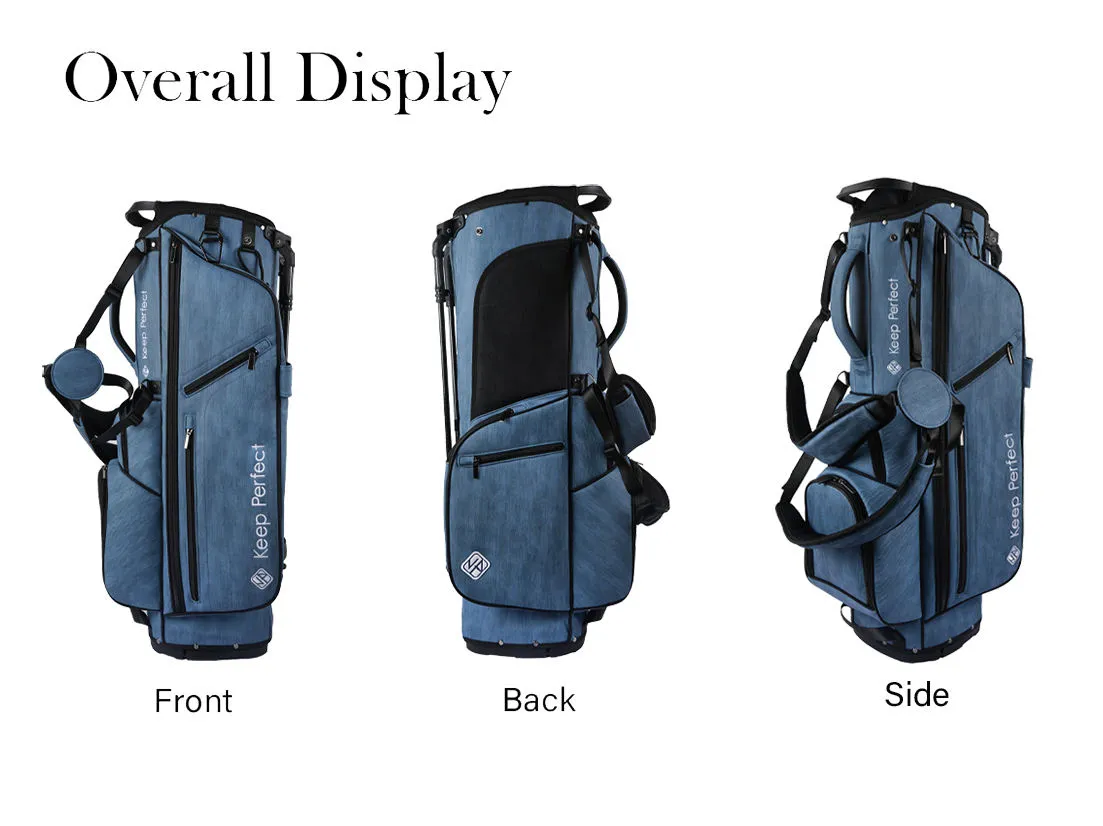
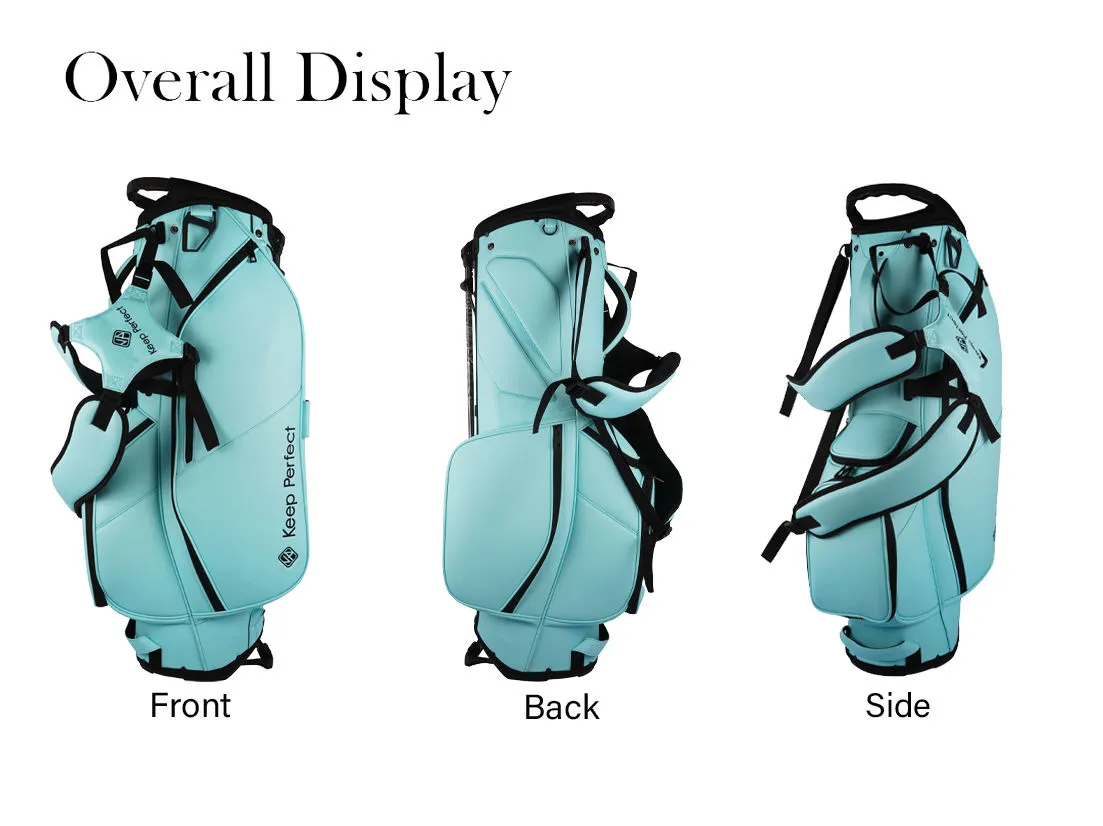
Graphic placement matters at retail: a hero logo or badge on the front lower panel (away from the hinge and strap anchors), a small secondary mark on the lid, and a clean accent on the strap. The merchandising discipline is to photograph the production build on a stand in natural light so the color and finish the buyer sees match what ships. A real bag shot communicates durability and finish better than any render, and it is what pulls a men's line off a white-label shelf.
The commercial follow-through is a tightened launch. Two to three colorways per SKU with a production sample photo per colorway keeps the story clean and the dye-lot risk low, and it lets the strongest colors prove themselves before the range is widened. Pairing a clean graphic direction with the measurable QC and divider story gives the buyer's end customer a tangible reason to pay for the premium of a well-executed men's bag.
QC and briefing the factory for a men's line
A men's bag fails the same per-part way as any line but is used harder, so the QC bar must be solid. Hold the hinge to a 950-2,000 cycle deployment test, the strap anchors to a 25-30 kg static load, the zippers to cycle and jam-rate targets, the bottom and stress seams to bar-tack reinforcement, and the packed product to a drop test. Verify the divider is full-length at first article and confirm weight at mid-production rather than trusting the sample.
Briefing a factory for a men's line means writing preferences as numbers. Send a one-page spec naming the target player and mix of walk, cart, and trolley use, the bag type, the divider with the full-length requirement, the weight with tolerance, the full pocket list and closures, the stand cycle and stability test, the strap load, the colorway and chip requirement, and the MOQ and launch date. At QUANZHOU JUNYUAN BAGS we support OEM and ODM from our affiliated Quanzhou plant and will flag any conflict between feature depth and weight before sampling.
Reach us at service@junyuanbags.com or +86 17750020688. Confirm inline inspection on the divider, stand, and strap subassemblies, and keep a sealed master per colorway so the men's line reproduces exactly season after season. That discipline is what turns a well-intended organizer concept into a dependable, loyal favorite that carries a brand.
One bag for walk, cart, and trolley
The single most useful trend for a men's catalog is the one-bag concept: a stand bag that also rides cleanly on a cart and a push cart, so the player is not forced to buy separate carry and cart bags. The hybrid achieves this with a flat back for the riding cart, die-cut pass-through straps that hold the bag low and stable, and an easy-deploy stand that redisplays the moment it is lifted onto the course. For the man who walks most weekends but rides on away days, this removes a second purchase and a second carrying ritual.
The engineering that makes one-bag versatility work is straightforward but must be verified: the stand must not deploy accidentally in transit, the straps must press into the cart frame without rubbing, and the pockets must stay reachable while the bag is mounted. We test hybrids on a typical riding cart and an upright push-cart frame during development and add these to the QC list, because these are exactly the failures a real round surfaces. A genuinely versatile one-bag is a strong merchandising story and a real customer convenience.
For the buyer, offering the one-bag hybrid alongside the walker model gives the sales team a clean story for each buyer: the walker gets the light 5/6-way, the rider gets the one-bag hybrid, and the organizer enthusiast gets the 14-way. The three share the same colorways and branding so the line reads as one family, and they let a brand capture the full men's market share without a scattered SKU list.
Layering a value and a premium men's tier
Men's lines usually work best as two clear tiers rather than one mid-range blob. The value tier is the honest functional bag: a 5/6-way or 6-way top, a 4.5-5.0 lb build, a cooler and valuables pocket, and clean single-tone or simple two-tone color. The premium tier adds the differentiators that justify the step: a full 14-way with full-length tubes, TPU waterproofing on sensitive chambers, a magnetic rangefinder pocket, brushed hardware, and a richer color-as-accent direction.
Layering the tiers lets the buyer protect margin and ladder customers. The value tier wins the price-driven walker and the range player; the premium tier earns the organizer buyer and the gift/repeated-upgrade market. The key discipline is sharing the same construction standards and QC bars across both tiers so the cheaper bag is honestly cheaper in features, not lower in quality. A value tier built to the same durability standard becomes a trust anchor that lifts the whole line.
For manufacturing, two well-planned tiers are efficient to produce because they share shell patterns, stand hardware, and pocket architecture, differing mainly in the divider, waterproofing, and trims. Communicating both tiers in one clear catalog table lets a buyer order both in one season, control lead time, and let the market's response to the premium tier guide the next ODM iteration.
Seasonality and the men's buying calendar
Timing a men's stand-bag launch matters because the market follows clear seasons. The main retail push runs in the northern spring as players refresh their bags for the season, with a secondary holiday gift peak in the fourth quarter and a smaller set around Father's Day. A buyer that plans sampling in the quiet months and bulk for the spring push captures the strongest demand window and avoids scrambling during factory surcharges.
Time-to-market with our affiliated Quanzhou plant is predictable when the spec is complete: sampling runs 10-20 days, first-article approval is a firm gate, and bulk production runs 45-60 days depending on the tier. Laying that against the buying calendar means starting the ODM conversation roughly four months before the target season, leaving slack for one or two sample rounds and the wear test. A rushed launch, by contrast, usually trades away one of those steps and risks a disappointed first order.
The benefit of planning ahead is a calm, correct launch: the divider and feature set confirmed on a sample worn and played, the tier structure set, and production scheduled so the containers ship in time for the selling season. That is the difference between a men's line that launches strong and one that limps in with unresolved first-article issues, and it is the reason we encourage buyers to start the specification dialogue in the quiet months rather than at the peak.
Related reading
- Organizer and 14-way architectures
- OEM/ODM Service overview
- Factory & QC standards
- Golf Stand Bag Buying Guide
- High-performance features for competitive golfers
FAQ
What divider preference do most men have?
Organizer-focused men prefer a 5/6-way with full-length tubes for daily play, while the 14-way full-length top appeals to buyers who carry a full set and value club separation. Confirm the divider at 90%+ full-length tubes for no-tangle loading.
What weight range suits a men's stand bag?
A performance men's carry bag typically lands at 4.5-5.5 lb; a deeper 14-way organizer runs a bit heavier. The lightest models are now trending below 4.5 lb — our ultralight golf stand bags sit at the very bottom of that band — as men's bags adopt the same weight-saving materials as women's and juniors.
Do men's bags need a cooler or rangefinder pocket?
Yes, they have become mainstream preferences: an insulated cooler for hydration, a magnetic or tethered rangefinder pocket, and a separate zip-closed valuables pocket are the most requested additions on modern men's stand bags.
What colors and graphics work for men's lines?
Black, navy, gunmetal, and clean two-tone combos dominate, with an accent color for the younger segment. Pantone-driven custom colorways and clean logo placement keep the design cohesive across bulk reorders.
Are men's bags mostly cart bags?
No, the stand bag remains core to men who walk. The hybrid cart/stand model covers riders who still want a stand, and modern men's stand bags often include die-cut cart straps so one bag works on both the course and the trolley.
Two closing notes for a buyer launching a men's line. First, make the divider the hero decision — a full-length 5/6-way or a real 14-way organizer at 90%+ tube depth is what sells, so confirm it at first article and photograph it honestly. Second, hold the QC bars and the weight band together, because a men's bag that is light but durable is the foundation of repeat and referral purchases. Reach us at service@junyuanbags.com or +86 17750020688 to begin.
Recommended internal links
Request a B2B quote for golf stand bags
Send your target market, expected MOQ, and reference photos. We respond within 24 hours with a sampling plan.