For a versatile two-in-one build, review our hybrid golf bags — For hot-weather golf, the right stand bag cools the player and protects the gear: breathable mesh panels that let air and sweat escape, UV-stabilized fabrics that resist fading under intense sun, a moisture-wicking strap face that stays comfortable, light colorways that reflect rather than absorb heat, and a low-effort insulated cooler for constant hydration. This B2B guide turns "breathable and UV-protective" into measurable specs our affiliated Quanzhou factory (SGS-verified, 4,950 sqm, 7 lines, 149 machines, 137 staff) builds, so a buyer can source a summer line that keeps its color and its player cooler all season.
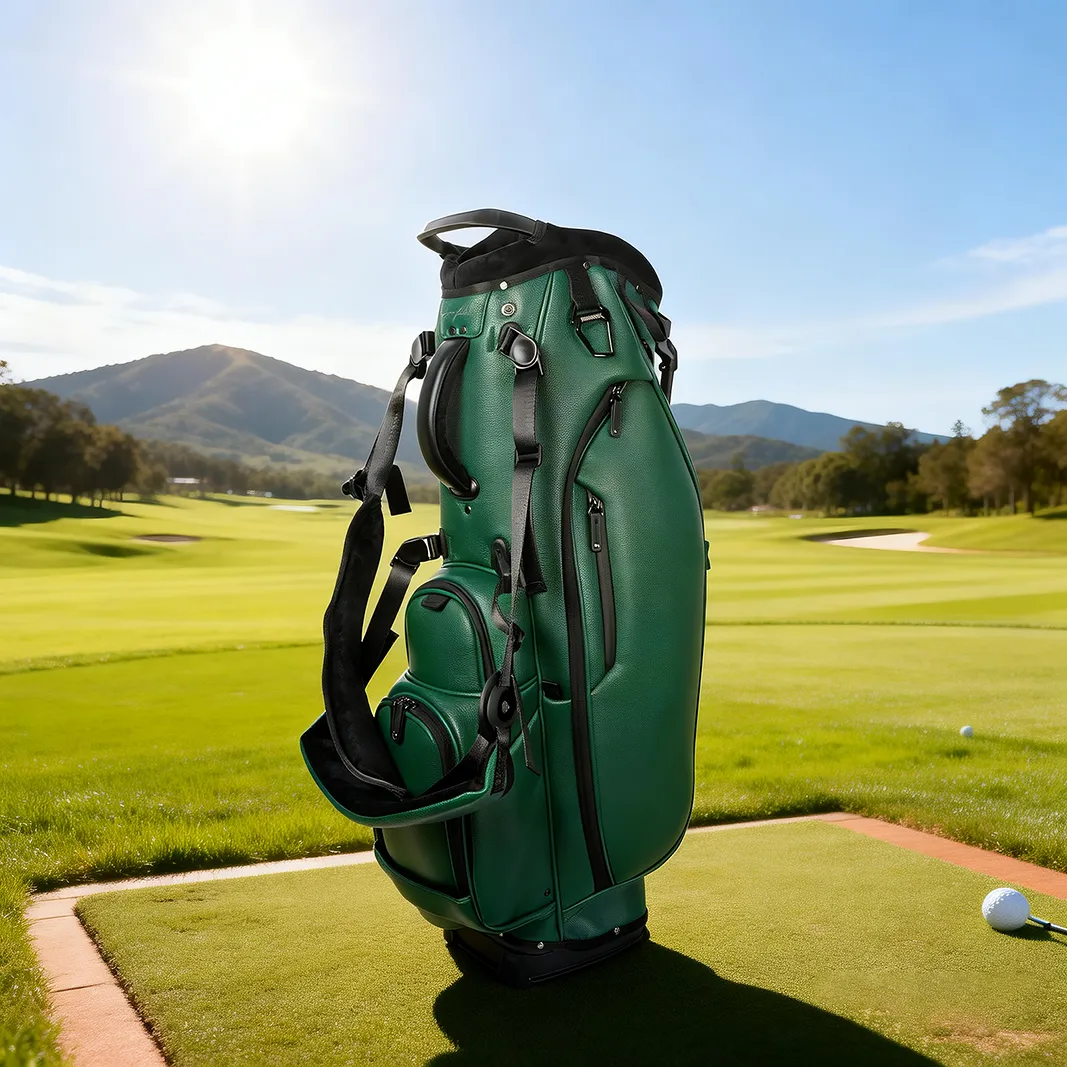
From a factory build standpoint, our dedicated ultralight stand bags page walks through the materials, hardware, and quality checks in detail.
Key Takeaways
- Breathability is engineered, not decorative: mesh panels in the back and pockets move heat and sweat without adding weight.
- UV stabilization is a fabric spec to confirm at first article, so a summer bag does not fade to a washout after a hot season.
- Light colorways measurably reflect solar heat, keeping the bag cooler on the course than an equivalent dark build.
- An insulated, wipe-clean cooler is the most-used summer feature and should be effortless to access and clean.
Breathability as an engineering detail, not a buzzword
On a hot round, the bag against the player's back and the heat trapped around clubs are the two biggest comfort and gear problems the design can fix. Breathability is achieved by placing mesh or ventilated panels where they matter — on the back-facing panel away from the strap contact, in the upper pocket zones, and in the body panels that sit against a riding cart — while keeping the load-bearing fabric dense enough to stay durable. A ventilated panel that lets air move feels cooler and dries faster.
The strap face is the single most skin-consequential surface in summer. A moisture-wicking, breathable mesh contact face on the shoulder zone keeps the harness from becoming a soaked, sticky surface during the round, while the foam underneath stays 12-14 mm of contour-cut, high-resilience padding for comfort. Because the shoulder zone is where the player feels a summer bag most, this one feature earns its weight many times over.
Ventilation must not compromise the durability bar. The mesh is used on non-wear panels, while the bottom wear panel, contact corners, stand hinge, and strap anchors stay the densest, most reinforced material in the build. Confirming where breathability is added and where it is not in the tech pack prevents a factory from thinning the wrong panels — which is the fast way to turn a "light airy" bag into a failed one.
UV resistance: making the color survive the season
Intense summer sun is what fades a golf bag, so a summer-ready line must specify UV resistance as a fabric property rather than hope it lasts. UV stabilizers in the fabric and a fastness target confirmed at first article protect the colorway across the season. Naming a lightfastness or fade standard, and keeping a physical color-master per colorway, gives the buyer a verifiable guarantee that the summer bag the customer buys still looks right after months in the sun.
Color placement also matters. Dark or strong colorways are best used on panels that see less direct sun or on coated/accent surfaces, while lighter panels that take the brunt stay UV-stabilized. The most honest approach is to build the whole shell with a baseline UV-stabilized yarn and reserve the highest-costing specialty treatments for the accent panels. This keeps the fade risk low without inflating the whole bag's cost.
Because fading is invisible until it happens, we recommend a physical card test at sampling: expose a color chip to the agreed UV light source for the agreed time and confirm the delta does not exceed the tolerance, rather than trusting a fabric certificate alone. Combined with the color-master discipline on reorders, this is what lets a buyer sell a summer line that is still vibrant the following spring.
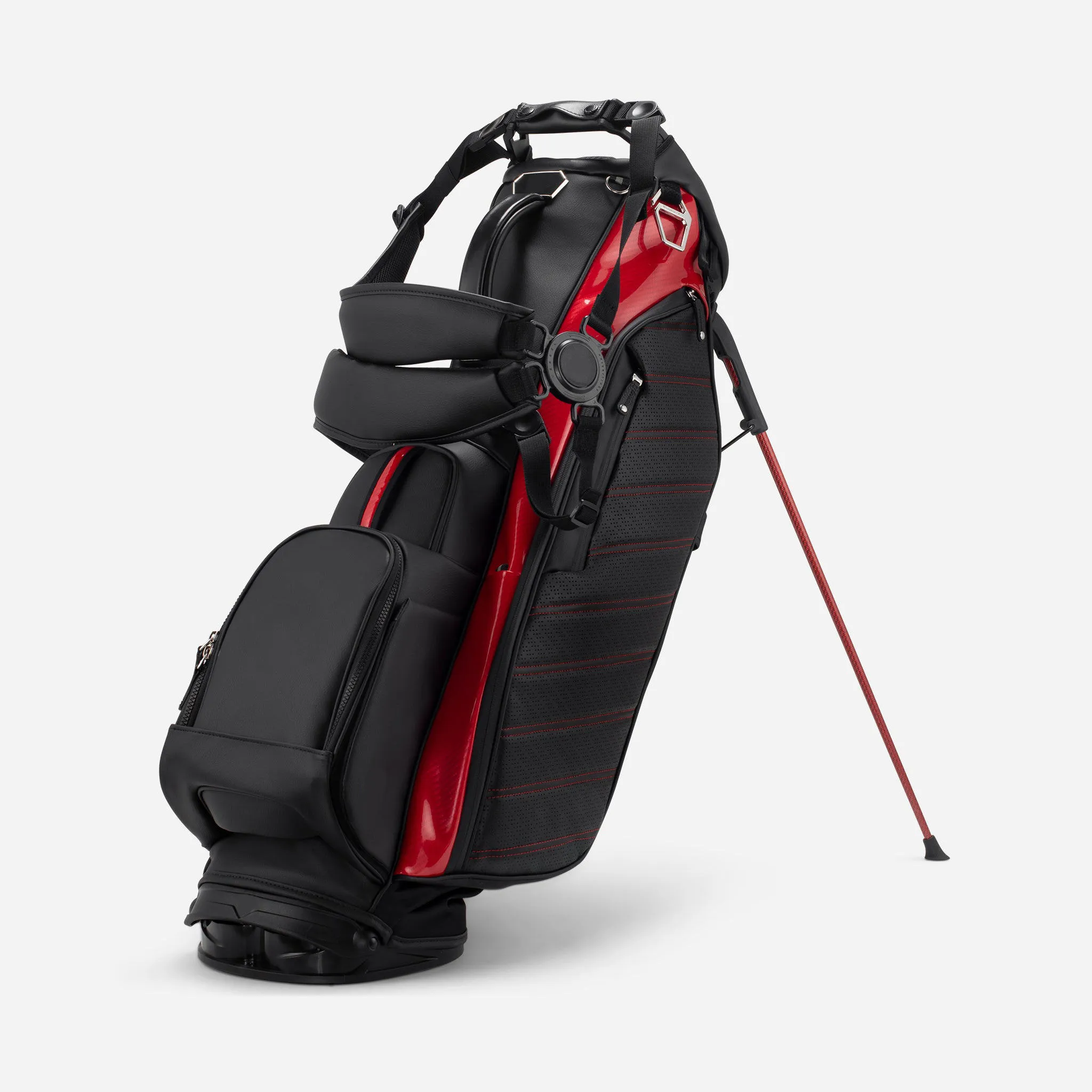
Light colorways and heat reflection
Color is not only style on a summer bag; it is a heat-management tool. A light shell — white, soft grey, light blue, or a clean two-tone with a pale body — reflects more solar energy than a dark shell, so the bag surface and the air around the clubs stay cooler in direct sun. This is measurable, and it is why a light-dominant colorway is the rational choice for a summer-dominant market even before it is the stylish one.
The manufacturing discipline is the same as any colorway: approve a physical color chip per colorway, lock a Pantone reference in the tech pack, and confirm the pale shell still meets the abrasion, tear, and UV fastness standards. Light panels show dirt sooner, so the DWR water-repellent finish that sheds dew and resists staining does double duty, keeping a light bag cleaner through the season and cutting returns from customers who expect a pale bag to stay presentable.
For a buyer, the heat-reflection story is a clean merchandising angle. "Stays cooler in the sun because it reflects it" is a concrete, honest claim a customer understands and a sales team can repeat. Paired with light colorways that are also the on-trend shades of the summer market, the design and the marketing reinforce each other rather than competing, which is exactly the kind of feature-to-story alignment a summer line should aim for.
Moisture, showers, and the summer essentials cooler
Summer brings humidity, sweat, and the sudden afternoon shower, so moisture management is a summer priority. We recommend a water-repellent DWR finish across the shell to shed dew and light rain, plus TPU waterproofing on the most sensitive pockets — the valuables and any electronics chamber — so a shower does not soak the phone and keys. The foam and mesh of the sandwich structure stay breathable rather than laminated across the whole bag, which keeps weight and cost in check.
The inside story matters as much as the outside. A summer-wet bag must dry out and stay mold-free, so breathable linings and quick-drying open-air features help between rounds, and the cooler must be fully cleanable or removable so it does not turn sour with condensation and spills. We specify a wipe-clean cooler interior and confirm the drainage or rinse path at the sample stage, because the cooler is the most-used summer feature and the worst place to hide a cleaning problem.
For the buyer, moisture scope should be written as a named package — "DWR shell + TPU on valuables and electronics" — and confirmed at sample, rather than a vague "weather-ready" claim. That explicitness prevents disputes, keeps the summer bag honest about what it resists, and lets the buyer sell a defensible story to a customer who plays in the sun but occasionally gets caught in a shower.
Weight and the summer balance
A summer bag should be light, but light in the sense of easy to carry, not fragile. A summer carry model typically lands at 4.0-5.5 lb, trimmed by a lighter breathable shell on non-wear panels, a reduced lining, and lighter hardware, with the bottom wear panel, stand hinge, and strap anchors held to full durability. Weight is written with a documented tolerance, verified at mid-production, and confirmed to still pass the hinge, strap, and drop tests on the same build.
The breathable and UV details add a little back, so the summer engineering is a balance specific to the season. A mesh panel that breathes well is lighter than a dense panel, which helps; the UV stabilizer is mostly a chemistry additive and adds negligible weight; the cooler is a fixed, unavoidable addition. The result is a summer bag that feels light and airy without dropping the durability bar where the season's heat and handling test it hardest.
For the buyer this balance protects the commercial outcome. A summer bag that walks light and survives to the following spring is a bag that earns repeat and referral purchase, while a bag that over-trims fails in the season and returns. Writing both the weight target and the durability tests into the same tech pack is what keeps the summer line from being a one-season disappointment.
Summer stand bag spec table
Use this as the internal baseline for a summer line, then lock final numbers after sampling and a fade/moisture check.
| Summer Block | Target Spec | Sourcing Notes |
|---|---|---|
| Breathability | Mesh on back/pockets; strap contact face mesh | Air moves and dries fast; load panels stay dense. |
| UV resistance | UV-stabilized yarn; fade standard at first article | Color survives a hot season; card test at sampling. |
| Colorway | Light-dominant; 2-3 per SKU | Reflects heat; chip approval per colorway. |
| Moisture | DWR shell + TPU on valuables/electronics | Named package; sheds showers; keeps phone dry. |
| Cooler | Low-access insulated, wipe-clean interior | The most-used summer feature; confirm rinse path. |
| Weight | 4.0-5.5 lb (tolerance +/-0.2) | Light; durability held on stand, straps, bottom. |
| Strap | Moisture-wicking mesh face, 12-14 mm foam | No soaked shoulder zone; harness off the neck. |
| MOQ / lead time | 200 pcs (100 pcs test); sample 10-20d, bulk 45-60d | Validate fade and moisture before scaling. |
QC, fade lab checks, and a summer-proof brief
A summer bag carries an added QC load beyond the standard hinge, strap, zipper, and drop tests: the UV/fade check, the moisture/dry-out review, and confirmation that the mesh is in the right panels and the DWR/TPU scope is named. Holding these does the same job for the summer story as any quality claim — it keeps the product honest and stable on reorders, and it directly reduces the returns a faded or water-damaged bag would cause.
Briefing a factory for a summer line means writing the season's features as numbers. Send a one-page spec naming the breathable panel placement, the UV/fade standard, the light-colorway plan, the moisture package (DWR + TPU scope), the cooler spec with the cleanable interior, the weight with tolerance, and the MOQ and launch date setup for the spring selling season. At QUANZHOU JUNYUAN BAGS we support OEM and ODM from our affiliated Quanzhou plant and will confirm the fabric and moisture choices at sampling.
Reach us at service@junyuanbags.com or +86 17750020688. Confirm the lab card test for fade, the inline inspection on the stand and strap subassemblies, and a sealed color master per colorway so the summer line reproduces exactly season after season. A breathable, UV-stable, light-colored summer bag is how a brand keeps players cool and the product vibrant through the hottest months.
Ventilation in the pocket architecture
Heat does not only sit behind the player; it also collects inside the bag and inside pockets, so a summer build thinks about ventilation in the pocket architecture too. The back pockets, apparel pocket, and ball pocket are the natural homes for breathable mesh inserts that let trapped heat escape, while the valuables pocket stays closed and secure with a full zip closure to protect phone and keys. Every pocket then gets a shoulder to the story: an open-mesh bank where air flows, and a sealed chamber where safety wins.
This distinction matters because it is the difference between "breathable" as a real feature and "breathable" as marketing. A factory should be able to point to exactly which pockets breathe and which are sealed, and why. When that is written into the tech pack, the sampling phase confirms the mesh coverage, the zip pulls, the lip tension, and the closure quality, and there is no ambiguity about what the customer is getting on a hot round.
For the buyer, the pocket plan is also where the summer bag differentiates from a standard one. An apparel pocket sized for a light windbreaker, a ball pocket that dumps loose balls quickly, and a cooler that stays cool and clean are the three most-used summer features. Specifying them as named, measured pockets — with mesh placement where it is safe — turns a generic summer bag into the one the player reaches for on the hottest days of the year, and confirms the buyer exactly which pockets earn the placement their spec promises.
Stand and handling in the heat
Heat affects hardware and handling in ways a summer spec should anticipate. The stand hinge gets the most repeated stress of any moving part, so a reinforced hinge block and stability-focused base geometry are non-negotiable even on a light bag, because a wobbly summer bag is returned immediately. The straps must keep their flex and comfort in the heat, so the moisture-wicking mesh face and the 12-14 mm high-resilience padding earn their place; a strap that stiffens or soaks through is a comfort failure on a hot day.
Our affiliated Quanzhou factory runs stand deployment cycle testing and base stability checks as standard, so a light summer bag still opens reliably and stands level on the fairway, and we check that the hinge and leg spread do not loosen in warm conditions. Writing the cycle target and the stability angle into the QC checklist means the summer line stays dependable through the season, not just out of the carton.
Handling in the heat also means the light, balanced feel matters more because the player is already working against the temperature. A bag that centers the load at the shoulders and sits naturally on the harness is less tiring to carry on a hot round, so the dual-strap harness balancing and the low, stable center of gravity are features to confirm at the sample stage. Comfort that lasts the full eighteen helps a hot-day player finish and come back.
All-season carryover and the summer white-base
A hard-won lesson in seasonal merchandising is that a summer line should not be a one-season write-off. Building the shell on a light-neutral, white-accent base that works in summer and carries into spring and autumn keeps the same architecture relevant longer, and the breathable, DWR, UV-stable features that make it summer-friendly are welcome in the shoulder seasons too. Fewer distinct seasonal SKUs, each with a wider usable window, is a more defensive sourcing plan than chasing a single hot month.
From a factory standpoint, a summer-white base is assembled from the same Nylon 400D/600D or polyester bodies, the same reinforced hinge and strap anchors, and the same stand system as the core range, so the summer line does not create parallel tooling demands. The breathable mesh, the DWR/TPU scope, and the UV-stabilized yarn are additive shown in the bill of materials, and a color-master per light colorway keeps the pale shells consistent on reorders.
For the buyer, this carryover logic protects both inventory and margin. A light-accent, breathable, UV-stable line that sells across the hot months and into the shoulder season carries less dead-season risk, and the feature set is honest enough to defend at any price point. The summer story becomes a durable platform rather than a disposable seasonal bet, which is the kind of line a brand can build on year after year and extend into new colorways with minimal new engineering.
Summer merchandising and selling season
The summer line also has a timing story. Because the launch window for summer bags lands in spring, the sample and bulk schedule must be worked backwards from that season: sampling in the prior quarter so the fade and moisture checks pass, bulk production ahead of the hot months, and a color confirmation a full season early. A buyer who only starts asking about summer features in June has already missed the peak merchandising window and is paying for expedite.
The merchandising angle writes itself when the specs are real. "Breathable, UV-stable, stays cool in the sun" is a claim the buyer can carry from the product sheet to the customer conversation because it is backed by named panels, a fade card test, and a verified weight. That same honesty supports a slightly premium price for the summer build, since the player perceives the comfort and color protection they are paying for.
Reach us at service@junyuanbags.com or +86 17750020688 to plan the summer season properly: confirm the MOQ of 200 pcs (100 pcs test order), sampling in 10-20 days, and bulk in 45-60 days, all precisely aligned to the spring launch window. A summer line that is breathable, UV-stable in a light colorway, and moisture-managed is the way to make the hottest months both a comfort story and a dependable product story for the brand.
Summer test plan and acceptance criteria
A summer build earns its claims through a short, named test plan. At a minimum the list is: a UV/fade card test on each colorway against the agreed exposure and delta; a DWR beading and dry-out review on the shell; a TPU seal check on the valuables and electronics chambers; stand deployment cycle and base stability testing; strap anchor load testing on the wicking harness; zipper cycle and closure checks; and a final drop test on the packed product. Naming the method and the pass/fail bar for each turns the summer story into something a QA team can actually enforce.
The fade card test deserves explaining because it is the least familiar and the most summer-specific. You approve a small color chip, expose the live material for the agreed exposure, and confirm the color delta stays inside the agreed tolerance — if it drifts, the yarn or the stabilizer needs adjustment before bulk. Paired with a sealed color master kept at the factory, this discipline is what stops a "UV-resistant" claim from being a guess.
For the buyer, presenting the test list alongside the spec is a confidence signal. A summer line supported by a written fade check, a moisture review, and the standard hinge, strap, and drop passes is a line you can defend to the most skeptical retail buyer or quality team, and it reproduces exactly on reorder because every test is written down and maintained through production.
Related reading
- Breathable materials for hot climates
- UV-resistant materials that protect gear
- OEM/ODM Service overview
- Factory & QC standards
- Golf Stand Bag Buying Guide
FAQ
What makes a golf bag summer-friendly?
Breathable mesh panels, moisture-wicking strap faces, UV-stabilized fabrics that resist fading, light colorways that reflect heat, and an easy-access insulated cooler. Together they keep the player cooler and the bag looking new through the sunniest months.
How do I protect a golf bag from sun fading?
Use UV-stabilized fabrics, confirm lightfastness at first article with a fade standard, and place strong colorways where they are either coated or shaded. When it is not in play, store the bag out of direct sun.
Is a summer bag waterproof?
Not all are. We recommend a water-repellent DWR shell across the bag plus TPU waterproofing on the most sensitive chambers, which sheds morning dew and showers without the weight of a fully laminated build.
Do light colorways really keep a bag cooler?
Yes, measurably. Light shells reflect more solar energy, so a light or white-accent bag absorbs less heat in direct sun than a dark one, which is felt as less retained heat against the clubs and in pockets.
What weight suits a summer line?
A summer carry bag typically lands at 4.0-5.5 lb, built lighter with the durability bar held on the stand hinge, strap anchors, and bottom wear panel. Weight is verified with a documented tolerance.
Two closing notes for a buyer launching a summer line. First, engineer the comfort: put the mesh and the moisture-wicking strap face in the panels that touch the player, and keep the durability bar on the panels that take the stress. Second, protect the color and the cooler as the season's profit drivers — a UV-stable, wipe-clean summer bag that stays its shade all season is exactly what the sunniest markets buy again. Reach us at service@junyuanbags.com or +86 17750020688 to begin.
Recommended internal links
Request a B2B quote for golf stand bags
Send your target market, expected MOQ, and reference photos. We respond within 24 hours with a sampling plan.