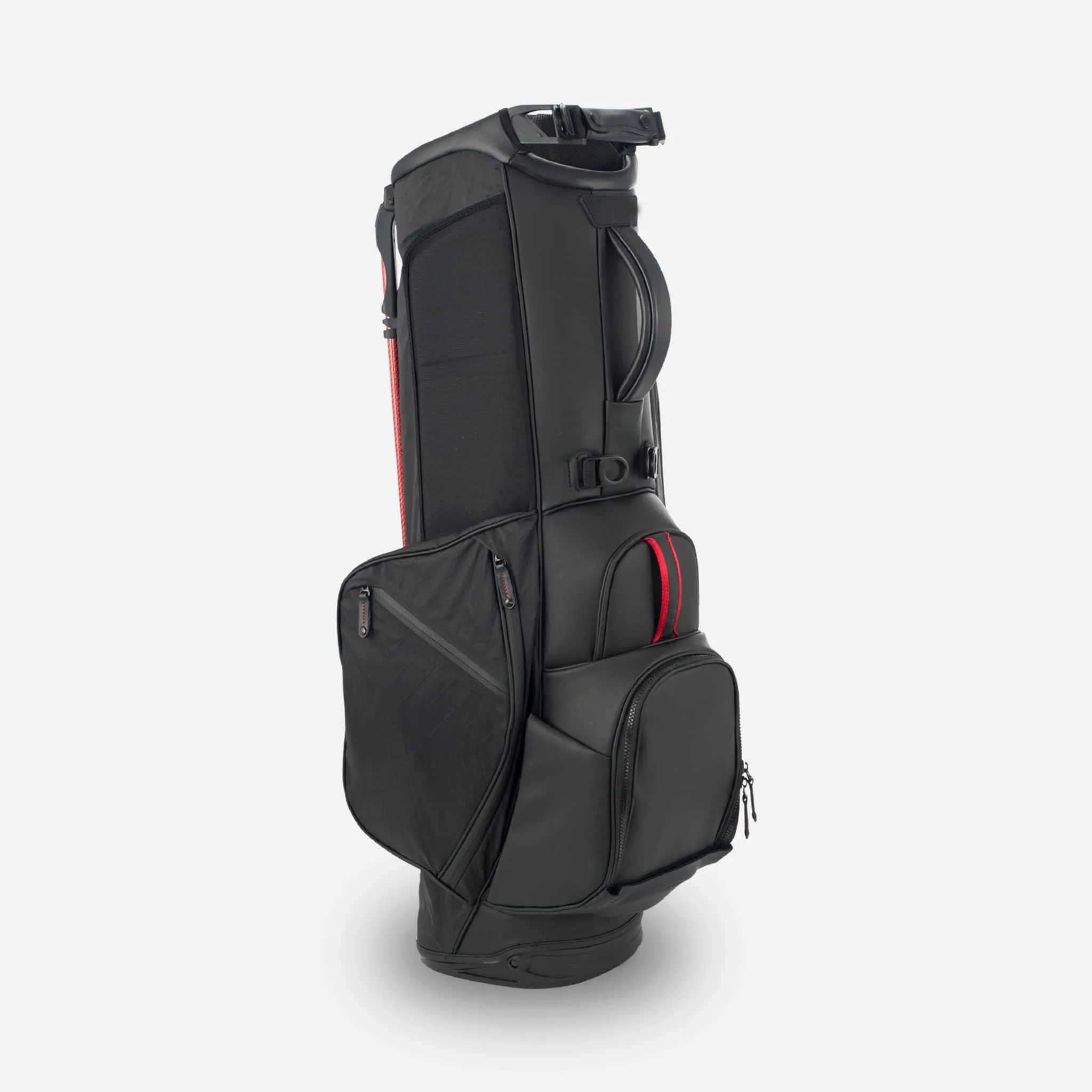
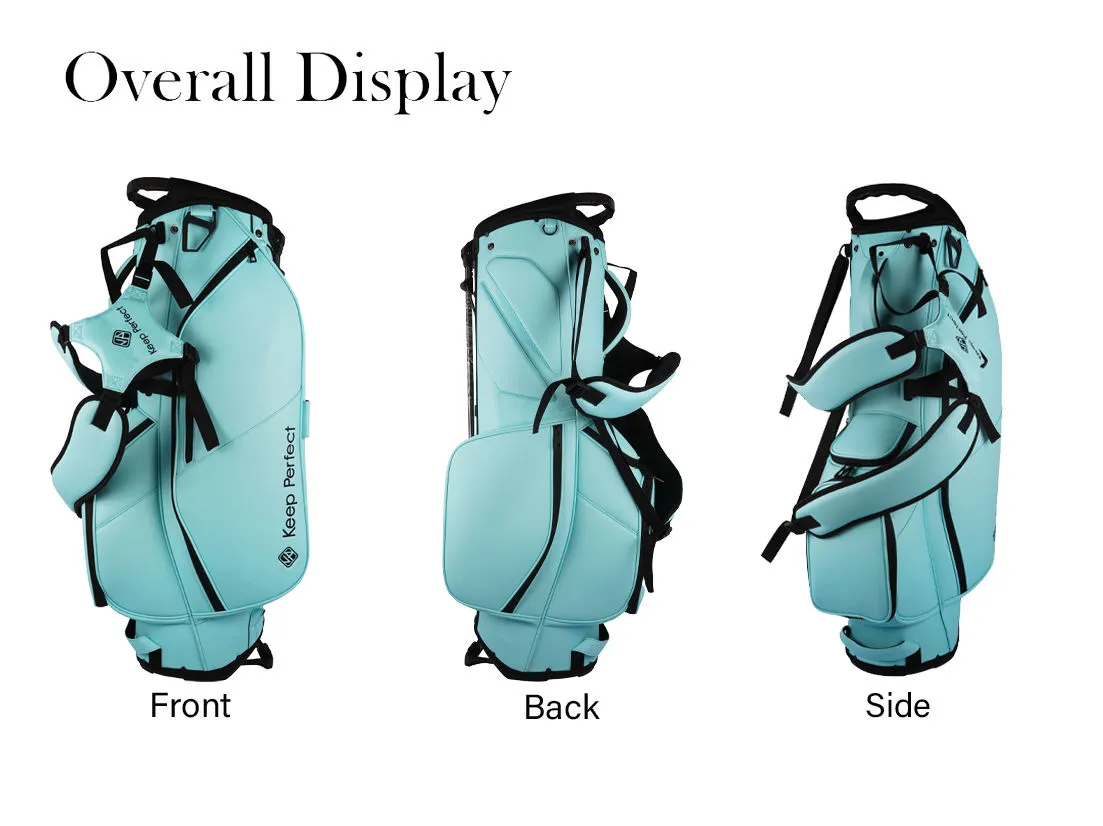
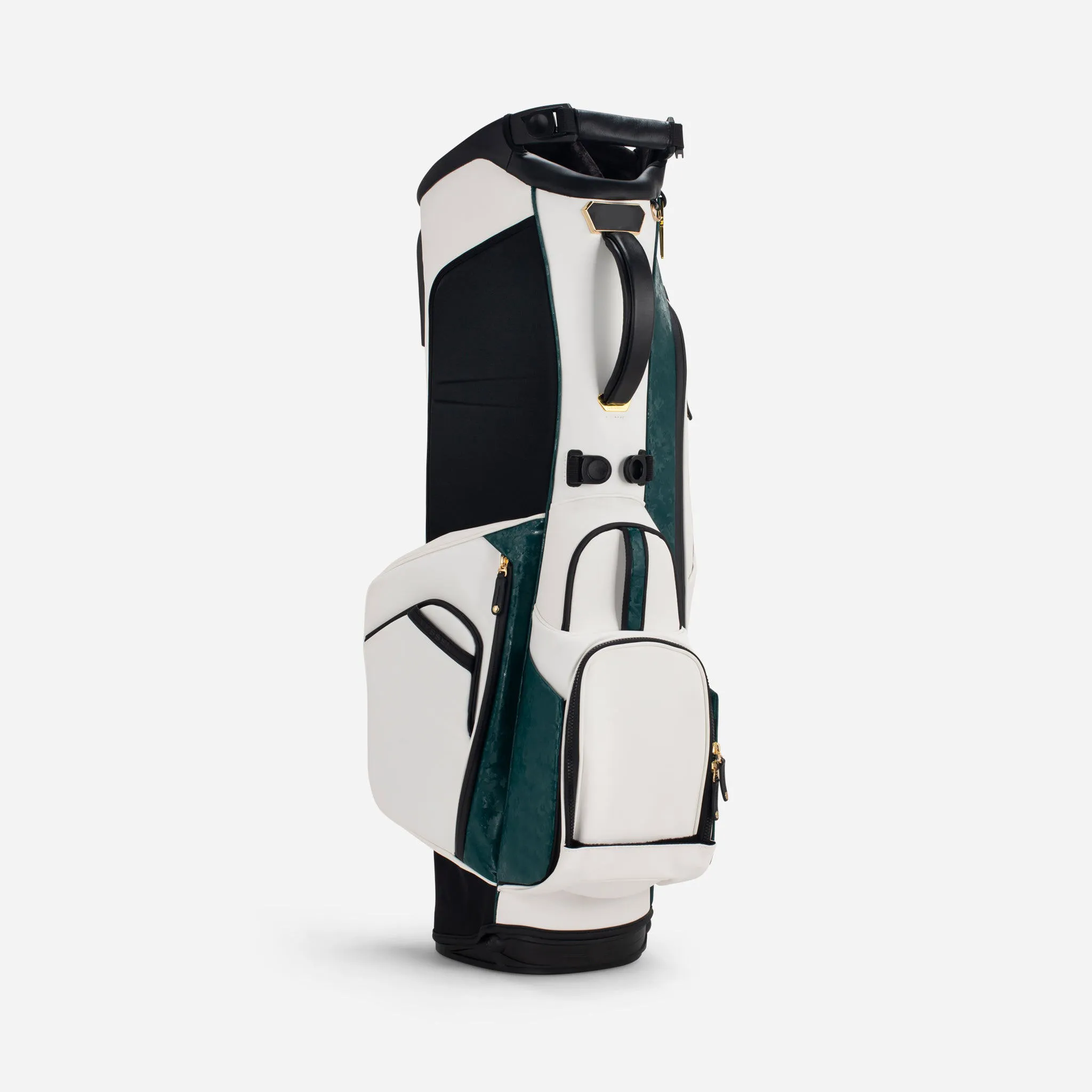
Lightweight Construction, Materials & Customization
For a walking-first catalogue, hitting a 3.0–3.8 lbs weight target is what earns shelf space — but only if the bag survives strap wear, leg deployment, and constant packing. Our SGS-verified Quanzhou facility (4,950 sqm, 7 lines, 149 machines, 137 staff) builds lightweight programmes at custom MOQ 200 pcs and trial orders of 100 pcs. Here is how we make light weight and durability coexist.
Weight Engineering
The bag weight is controlled at the fabric, trim, and pocket level. 400D/600D nylon and lightweight polyester form the usual base; changing from a heavier denier to a lighter one can move a meaningful fraction of the total. Strap padding, webbing width, divider tubes, and pocket count are the top levers, so we lock a weight tolerance in sampling and tune from one proto to the next.
Stand System and Durability Control
The failure points on a lightweight carry bag are the strap anchors, leg channel protection, and hinge block strength. We build a stable base geometry with a reinforced hinge block and cycle-test the leg deployment so the stand opens consistently. Reinforcement mapping lays extra layers only where abuse happens — in the leg channel and high-load seams — instead of adding weight across the whole body.
Straps, Pockets, and Carry Comfort
Self-balancing dual straps with high-density foam are standard, with padding thickness and adjust range defined per market. A typical lightweight line carries 5–7 pockets: velour-lined valuables, ball pocket, apparel pocket, and an optional magnetic pocket. Pockets that are useful without adding bulk keep the bag honest with its weight claim.
Pairing With Other Architectures
A lightweight carry commonly pairs with a 14-way, hybrid, or waterproof model to extend a catalogue across buyer segments. Use the product overview to position the line, define materials and pockets through our OEM/ODM service, and validate durability under our factory & QC process with cycle tests and inspection records. For a broader golf bag factory guide beyond the stand-bag range, explore more golf bag categories at golfbagfactories.com.
Sampling and Weight Tuning
Our affiliated plant tunes weight in small steps during sampling. A first article produced in 10–20 days lets you weigh sack-and-club, walk-test the straps, and check leg deployment; from there we adjust fabric pairing, padding, and pocket trim before committing to bulk. Production then runs in 45–60 days across the 4,950 sqm workshop, 7 lines, and 149 machines with 137 operators. Bulk lots are inspected to an AQL plan with a specific focus on strap anchors, hinge block strength, and the leg channel, and goods ship through QUANZHOU JUNYUAN BAGS with export-ready packaging. Locking the weight tolerance at sampling keeps every reorder on the same 3.0–3.8 lbs target. Pairing lighter fabrics with reinforcement mapping in the leg channel and strap anchors delivers the durability to back the weight claim through a full season of walking.