A winter stand bag is about gloved grip and dry gear: weather-sealed shells that shrug off sleet and mud, glove-friendly zipper pulls and big-mouth dividers you can manage with a gloved hand, pocket setups sized for mittens, hand warmers, and a rain hood, and a reinforced stand that stays level on frost and bare ground. This B2B guide turns the cold-weather brief into measurable specs our affiliated Quanzhou factory (SGS-verified, 4,950 sqm, 7 lines, 149 machines, 137 staff) builds, so a buyer can source a winter line that keeps players moving and their equipment dry through the coldest months. For a broader look across cart bags, staff bags and the full golf bag category from one source, our affiliated golf bag factory runs the complete line.
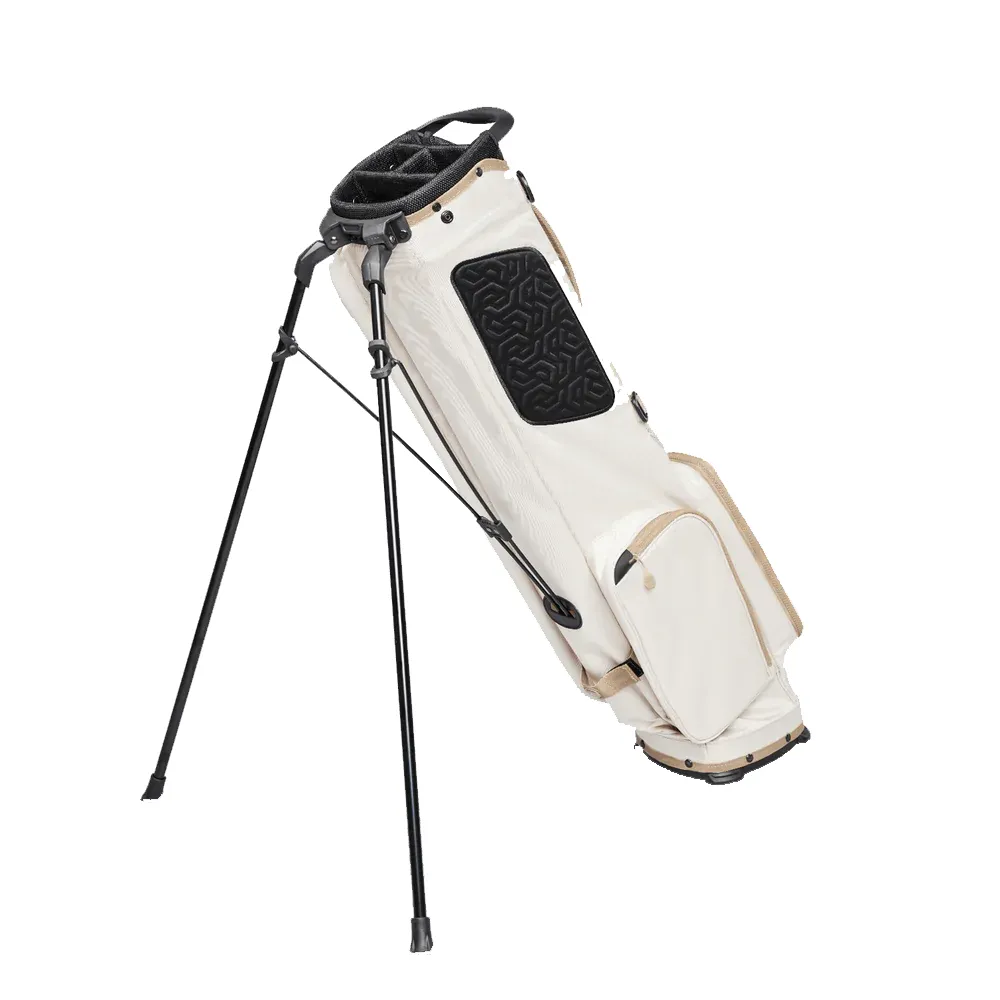
From a factory build standpoint, our dedicated waterproof stand bags page walks through the materials, hardware, and quality checks in detail.
Key Takeaways
- Gloved grip is the winter theme: larger pulls and big-mouth openings keep every access point usable when fingers are covered.
- Weather protection is a named scope — sealed seams and TPU on electronics follow a written package, not a vague claim.
- A rain hood and cold-gear pockets turn a standard bag into a winter-ready one the player reaches for all season.
- Stan stability on frozen ground is confirmed with the same deployment cycle and base-stability tests as the warm-season build.
Gloved hands drive every winter decision
The entire winter spec starts from one fact: the player is wearing gloves, and often thick ones. Every zipper pull, pocket opening, and divider gap has to be usable with a covered hand, or the bag fails on the coldest days no matter how good the fabric is. Larger, textured, or D-ring zipper pulls give a gloved hand something to grip, and zipper heads that move smoothly under load keep the fumbling to a minimum.
The mouth of the bag matters even before grip. A bag built with a wide, even channel layout and a smooth top rim lets a gloved hand get a wedge or a 4-iron out without shaking the stand, and full-length dividers keep the club shaft from binding against neighbors when you grab it in a hurry. The combination is what makes the transition from "glove on, wedge in" fast, which is a real comfort win on a cold round.
The strap harness earns its keep in winter too. A dual-strap, self-balancing harness with a moisture-wicking mesh face and contour-cut 12-14 mm padding spreads the extra weight of winter layers evenly at the shoulders, so the bag rides comfortably under a heavier jacket instead of bunching into one pressure point. All of these are confirmed at sampling by checking gloved-hand access on every closure and the harness balance on a loaded sample.
Weather protection as a named scope
Winter weather is wet, muddy, and unkind, so weather protection cannot be a marketing word; it must be a written package. We recommend a water-resistant shell (a DWR or light weather finish on the body) with sealed or taped seams on the most exposed panels, plus TPU waterproofing on the valuables and electronics chambers and an electronics pocket with a charging port so the phone and batteries stay dry and powered.
The single most useful winter add-on is a rain hood or a dry-carrying cover for the head of the bag. It sheds rain and sleet over the clubs, drains cleanly, and packs away into a dedicated pocket when the weather clears. We confirm the seam-sealing scope and the hood fit at the sample stage, because a hood that does not fit the divider top or drain properly is worse than none when the round turns.
For the buyer this is a pricing and honesty matter. Writing the scope as "water-resistant shell + sealed seams + TPU on electronics + rain hood" protects the buyer at reorder and lets the sales team make a defensible claim to a winter player. A winter bag that simply keeps the fundamentals dry — phone, keys, and the clubs under a straining hood — is a bag worth the premium the season commands.
Big-mouth dividers and pocket access in the cold
A winter weather package also has to stay usable, not just sealed. We keep the most-used pockets from over-sealing by using weather-tight closures that still open smoothly under a gloved pull, and we balance the electronics seal against easy access so the phone and rangefinder come out quickly even in sleet. The whole design goal is that water stays out without the player fighting the closures for every ball and tee.
The top divider is where a winter bag earns or loses its ease. Big-mouth openings with an even club-channel layout let a gloved hand reach in cleanly, and full-length dividers prevent grips from tangling when the player stuffs clubs back in quickly between shots. Wire-frame or rigid-disk designs that create a clean, wide target at each channel are the most gloved-hand-friendly choice.
Pocket placement follows the same logic. The quick-access pocket the player uses most in winter — balls, tees, and a hand warmer — should sit near the top and use a glove-friendly closure, while the apparel pocket is sized for a roll-up mid-layer and a hat, and the ball pocket dumps loose balls fast without a fight. Every pocket should be confirmable at the sample stage with a gloved hand test.
Where gloves are stored matters too. A dedicated side or strap-adjacent pocket that holds a spare pair of dry gloves, plus a small media pocket for warmers and a rangefinder that stays reachable, turns a generic design into the winter workhorse. Confirming the pocket list and the gloved-hand access in the tech pack is what keeps the cold-weather promise honest and the wearer comfortable on the course.
Stand stability on frost and bare ground
Winter also means the bag is handled more from carts and the trunk, so the top handle and the toggle that lets a player grab the bag and go need to be sturdy and gloved-hand friendly. A larger, padded top handle that does not force the fingers into a tight grip is another small winter detail that keeps a loaded, mid-layer-weighted bag easy to lift out of a trunk onto a frosty path.
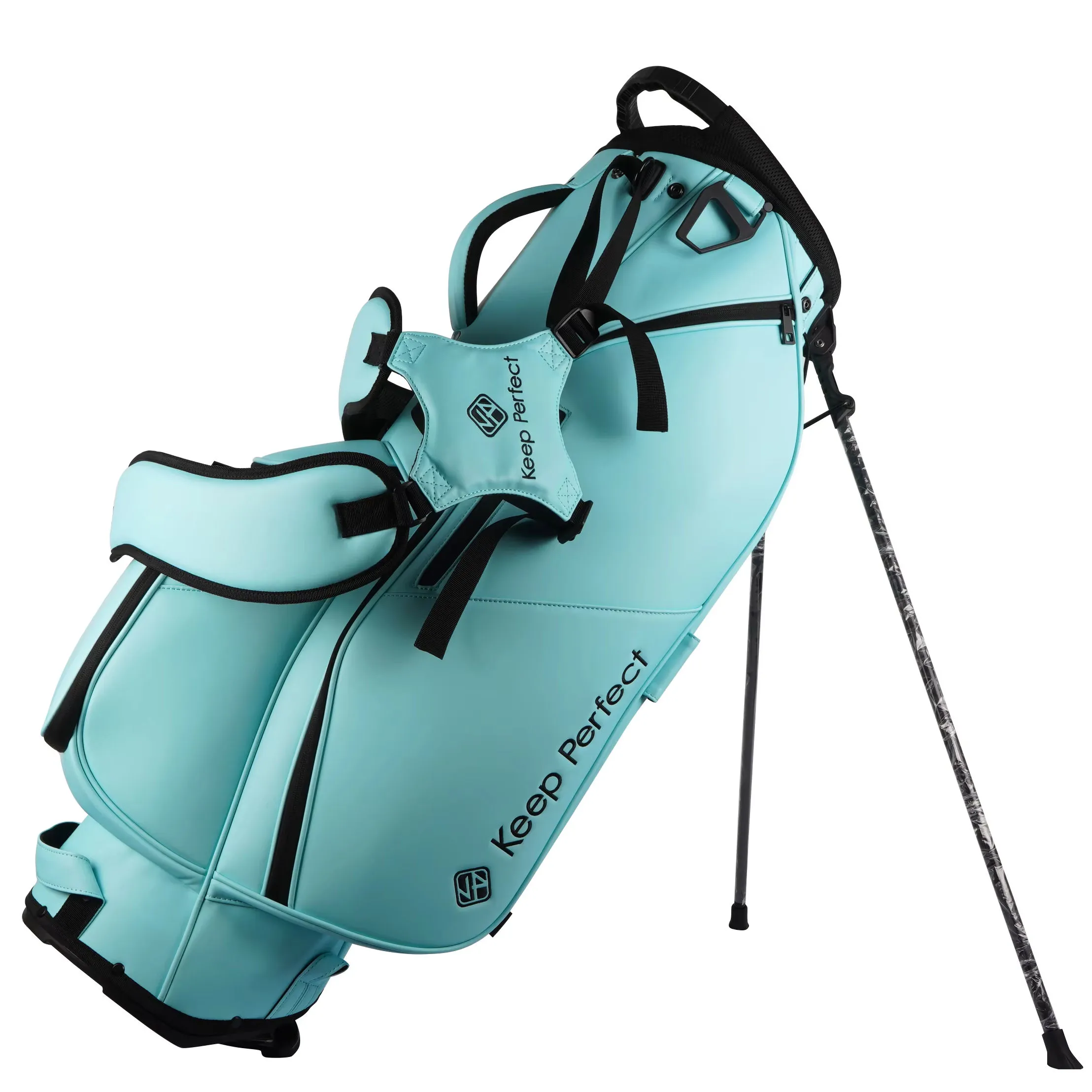
Cold-weather playing surfaces are the least forgiving for a stand bag. Frost, mud, cart-path edges, and firm bare ground all punish a wobbling stand, so the reinforced hinge block, stability-focused base geometry, and consistent leg spread are non-negotiable winter hardware. Our affiliated factory tests stand deployment cycle and base stability as standard, so a winter bag opens reliably and sits level on a frosty fairway.
The legs and feet also need to grip cold, damp, or frozen surfaces. We review the leg-tip/ground contact and base geometry so the bag does not slide or tip on a firm or slightly icy patch next to the path, and we confirm the leg spread stays consistent through the cycle test. A stable bag is also a safe bag — it does not fall into the player's swing on a cold day when the player is already stiff.
For the buyer, naming the deployment-cycle target and the stability angle in the QC checklist does the same job every winter. It protects the product from the "wobbly winter bag" return that is most likely to hurt the season's reputation, and it keeps the winter line as dependable as the core range without building it for the wrong climate.
Weight, comfort, and the winter balance
Winter also asks the stand to survive the rough-and-tumble of a cold season. The legs get knocked on cart rims, tug in mud, and set down on frost, so the leg tubing, the hinge pins, and the base must be sized for hard seasonal use rather than light warm-weather handling. Confirming the leg-spread consistency through the cycle test and checking the deployment feel on a dirty, damp base are the two checks that keep a winter bag dependable past the first month.
Hardware corrosion is a quiet winter killer. Salt, road grit, and constant damp attack the zippers, the hinge pins, and the leg mechanism, so we specify corrosion-appropriate hardware and put the most exposed parts on the QC review. A zipper or hinge that seizes partway through the season is exactly the failure that ends a cold-weather round, and it is fully preventable with the right hardware spec and a mid-season check.
For the buyer, winter durability is where the premium conversation gets real. A winter bag that resists corrosion, holds its stand on frost, and stays clean and stable under mud is a bag a retail buyer can trust and a player can carry through the whole season — and it is the version worth the winter price point, because it does not need replacing by spring.
Winter layering already adds weight to the player, so a winter bag should feel light — but light in the sense of easy to carry, never fragile. A winter build typically lands at 4.5-6.0 lb, trimmed on non-wear panels while the stand hinge, strap anchors, and bottom wear panel hold the full durability bar, because a cold-weather bag that fails on the stand is returned immediately. Weight is written with a tolerance and confirmed at mid-production.
The cold affects materials too. We verify that the shell and zippers do not stiffen unacceptably in the cold, and we keep the strap foam supple enough to stay comfortable through a long, chilly round. Testing a loaded sample in cold conditions — or at least confirming the flex and cycle results against a cold-weather tolerance — is how the winter build avoids the disappointing "stiff bag" complaint.
For the buyer this balance protects the winter outcome. A winter bag that walks light, handles gloves, keeps gear dry, and stands level is a bag that earns a place in the cold-month rotation and returns the next season, while an over-built or under-tested bag fails right when the player needs it. Writing weight, cold-flex, and durability into one signed tech pack is the safest way to brief a winter line.
Winter stand bag spec table
Use this as the internal baseline for a cold-weather line, then lock final numbers after sampling and a cold-flex check.
| Winter Block | Target Spec | Sourcing Notes |
|---|---|---|
| Weather shell | Water-resistant shell; sealed/taped seams | Named scope, not a vague claim; TPU on electronics. |
| Zippers | Glove-friendly textured/D-ring pulls; smooth cycling | Confirm gloved-hand access; cycle test target. |
| Top mouth | Big-mouth openings + full-length dividers | Clean club access with a covered hand. |
| Pockets | Quick-access + cold-gear pocket + rain-hood stash | Mittens, warmers, dry gloves, mid-layer fit. |
| Rain hood | Head cover with clean drain and named fit | Drains and packs; confirm fit at sample. |
| Stand | Reinforced hinge block + stability base geometry | Level on frost/bare ground; cycle + stability test. |
| Weight | 4.5-6.0 lb (tolerance +-0.2) | Light; durability held on stand, straps, bottom. |
| MOQ / lead time | 200 pcs (100 pcs test); sample 10-20d, bulk 45-60d | Validate cold-flex and gloved access before scaling. |
Cold-flex QC, testing, and a winter-proof brief
A winter line carries a short, named test plan: a cold-flex review on the shell and zippers, hardware checks that nothing stiffens to failure in the cold, stand deployment cycle and base stability testing, strap anchor load testing, a zipper cycle and gloved-pull check, seam-seal verification on the weather package, and a drop test on the packed product. Naming each method and pass/fail bar lets QA enforce the winter story instead of relying on it, and gives the buyer a written record that every seasonal claim was tested before bulk, not assumed.
Briefing the factory for a winter build means writing the season into the spec. Send a one-page sheet naming the weather scope (sealed shell, TPU chambers, rain hood), the glove-friendly hardware plan, the big-mouth divider spec, the cold-gear pocket list, the weight with tolerance, and the MOQ and lead time aligned to the early-winter selling season. At QUANZHOU JUNYUAN BAGS we support OEM and ODM from our affiliated Quanzhou plant and confirm the weather and cold-flex choices at sampling.
Reach us at service@junyuanbags.com or +86 17750020688. Validate the gloved-hand test on every zipper and divider, confirm the seam-sealing scope on the weather package, and keep the stand deployment cycle and stability angle in the inline inspection so the winter line reproduces reliably on reorders. A weather-sealed, glove-friendly, frost-stable stand bag is how a brand keeps players moving and gear dry through the coldest months.
Winter layering and the apparel story
Winter golf is a layering sport, and the bag has to carry the parts the player sheds and re-adds through the round. An apparel pocket sized for a rolled mid-layer, a beanie, and dry base-layer gloves keeps the player from leaving warmth behind, and a dedicated glove pocket that stores a spare dry pair protects the hands that keep the round playable. Naming these pockets as measured volumes in the tech pack prevents the common failure of a "big pocket" that will not actually close over folded winter gear.
Layer management also affects the ball and tee story. A quick-access ball pocket that dumps loose balls fast, and a tee and accessories pocket near the top that stays open-mouth under a gloved reach, keep the transition between shots smooth even as the player is wearing more. The cooler still earns a place on a winter line — a warm drink and a hand warmer live there — so it should sit low-access and be wipe-clean like the summer build, just doing a different seasonal job.
For the buyer, the apparel story is where a winter bag differentiates from the core range. Specifying the rolled-layer fit, the dry-glove pocket, and the thermal-drink path turns a generic waterproof shell into the winter workhorse the player actually wants. Confirming the pocket list and the gloved-hand access at the sample stage is what keeps the layering promise real through a long cold round, and it is the fastest way to catch a pocket that looks good in a sketch but cannot actually close over folded winter gear.
Winter color and mud management
Winter courses mean mud, damp, and darker light, and the colorway has to work with that reality. Darker, earth-toned or deep-color colorways hide the inevitable course mud between rain drops and clip-ready wear, while a small bright accent or reflective element helps the bag stay visible in low winter light. A muddy bag that cleans up fast — because of a smooth, treated outer face and a DWR that sheds mud and water — is the practical winter choice that also protects resale and repeat purchase.
From a factory standpoint, the mud tolerance is a finish and color-fastness matter. The shell finish should repel moisture and resist staining so the bag wipes down after a damp round, and the color must stay fast through the season so washing does not wash it out. Confirming the DWR, the stain resistance, and the fastness at first article means the winter colorway survives the mud season and the cleaners the customer reaches for.
For the buyer this is a merchandising honesty point. A winter line in muddy-tolerant, low-light-visible colorways tells a consistent story with the function — the bag looks right on a wet winter day and still presents well in the catalog. Matching the colorway plan to the season's conditions is exactly the kind of feature-to-merchandising alignment that makes a cold-weather line feel designed, not assembled, and it is a detail retail buyers notice on the shelf.
Selling season and cold-climate merchandising
The winter line has a clear timing story because launching it early is what catches the market. Because the cold-weather selling window starts before the leaves turn, the sample and bulk schedule is worked backwards: sampling the prior season so the weather package and cold-flex pass, bulk production ahead of the cold months, and cold-climate validation before the first frost. A buyer who asks for winter features too late is paying expedite to miss the peak window.
The merchandising angle writes itself when the specs are real. "Glove-friendly, weather-sealed, stable on frost" is a claim the buyer can carry from the product sheet to retail because it is backed by named hardware, a written weather scope, and verified stand stability. That same honesty supports a winter-season premium, since the player perceives the gloved grip and dry gear they are paying for on the coldest days.
Reach us at service@junyuanbags.com or +86 17750020688 to plan the winter season properly: confirm the MOQ of 200 pcs (100 pcs test order), sampling in 10-20 days, and bulk in 45-60 days, aligned to the early-winter launch. A winter line that is weather-sealed, glove-friendly, and frost-stable is the way to make the coldest months both a comfort story and a dependable product story for the brand.
Winter QC checklist and reorder discipline
The winter program stands on the same QC discipline as every line, extended with season-specific checks. Keep a physical color master per colorway, hold the seam-sealing scope in writing, run the gloved-access check on every zipper and divider at sampling, and keep the stand deployment cycle and base stability in the inline inspection. Each of these is a repeatable checkpoint that keeps the winter line identical on reorder.
Reorder discipline matters most for a seasonal program because the second season sells the brand's dependability. Lock the weather scope, the hardware specs, and the color masters now; confirm them at each production run so the "winter" promise never slowly drifts into a cheaper or sloppier build. A stable, documented winter line is one a retailer trusts enough to restock season after season.
Reach us at service@junyuanbags.com or +86 17750020688 with your brief. We will send a sampling plan, confirm the gloved-hand and weather-package checks, and hold the winter build to the same measurable standards as every line we ship. A weather-sealed, glove-friendly, frost-stable stand bag is how a brand protects players and their gear through the coldest months, and turns winter from a dead season into a dependable, repeatable commercial opportunity.
Related reading
- Summer breathable & UV-protective line
- Materials that resist the elements
- OEM/ODM Service overview
- Factory & QC standards
- Golf Stand Bag Buying Guide
FAQ
What makes a golf bag winter-friendly?
A weather-sealed shell, glove-friendly zipper pulls, big-mouth dividers you can open with a gloved hand, cold-gear pockets sized for mittens and hand warmers, and a stand that stays stable on frost or bare ground. These keep the round comfortable and the gear dry in the cold.
How do I keep clubs and gear dry in winter golf?
Specify a water-resistant shell with taped or sealed seams, TPU waterproofing on the valuables and electronics chambers, and a rain hood or dry-carrying cover for the head. Confirm the seam-sealing scope at sampling so 'weather-resistant' is not a guess.
Should a winter bag be heavier or lighter?
Lighter is better because winter layers already weigh a player down, but the durability bar stays on the stand hinge, straps, and bottom wear panel. A winter build typically lands at 4.5-6.0 lb with warm-weather comfort held on the harness.
Do I need different zippers for cold gloves?
Glove-friendly pulls make a real difference. Larger, textured, or D-ring pulls that a gloved hand can grip easily reduce fumbling in the cold, and smooth-running zippers with a cycle target keep pockets reliable all winter.
Will the stand work on frozen or bare ground?
A reinforced hinge block and stability-focused base geometry keep the stand level and reliable on turf, frost, and cart-path edges. Confirm stand deployment cycle and base stability as acceptance tests so a cold-weather bag does not wobble.
Two closing notes for a buyer launching a winter line. First, engineer for the hand: glove-friendly pulls, big-mouth dividers, and a harness that rides evenly under winter layers are what keep the round moving. Second, scope the weather honestly — a named water-resistant package, a rain hood that fits, and TPU on the electronics are worth more than a vague claim when the round turns wet. Reach us at service@junyuanbags.com or +86 17750020688 to begin.
Recommended internal links
Request a B2B quote for golf stand bags
Send your target market, expected MOQ, and reference photos. We respond within 24 hours with a sampling plan.