For the most compact small carry, see our pencil bags — Technology is reshaping the golf stand bag in three concrete layers: new materials that cut weight and add waterproofing, factory-side methods such as digital patterning and 3D sampling that shrink development time and assembly variance, and the smart-feature placement — padded rangefinder pockets, magnetic quick-access pockets, and cable management — that meets how modern players actually carry gear. This guide helps brand teams and distributors separate the technology that is real and measurable from the retail hype, so the specifications you write deliver durability and cost control rather than a label.
Materials as the primary technology layer
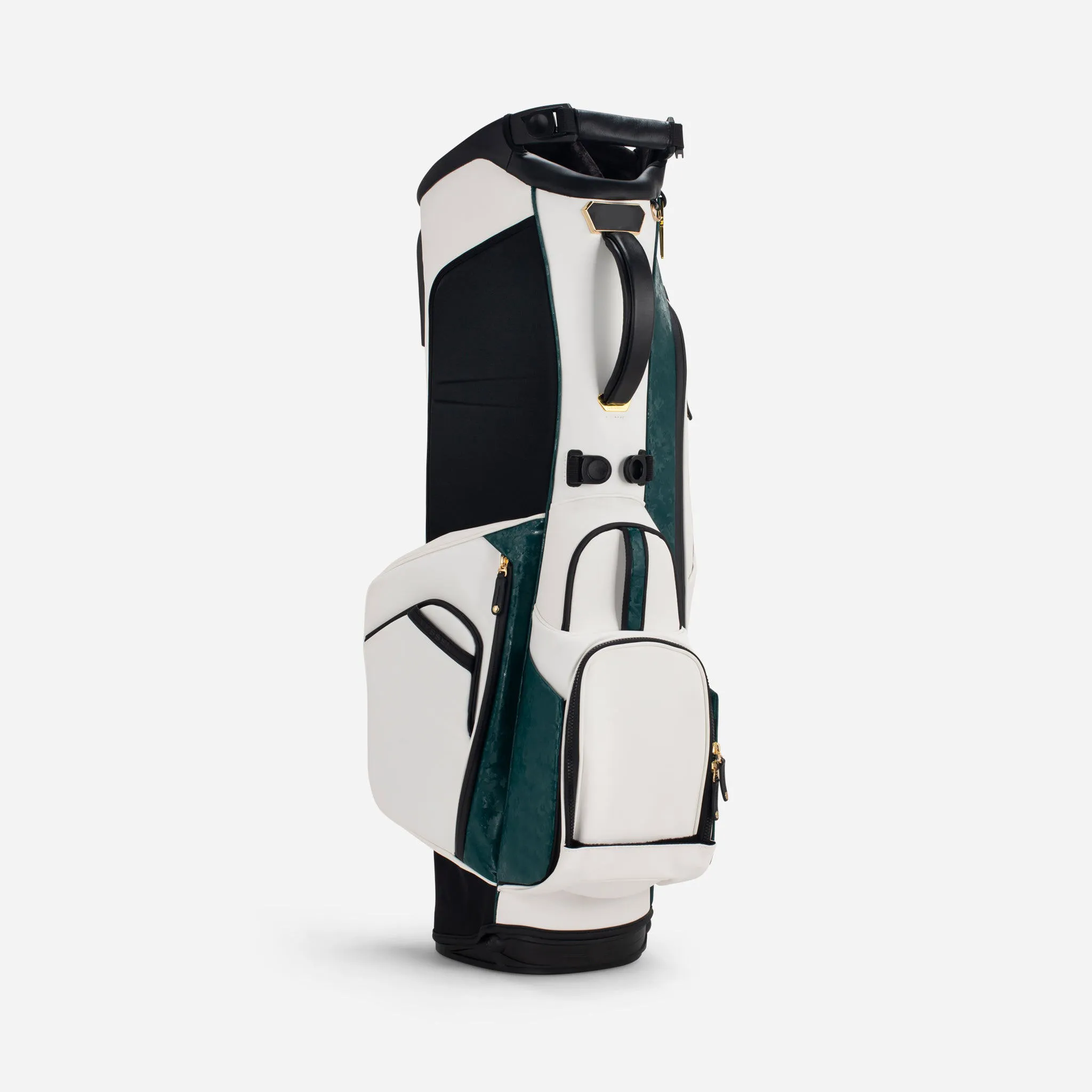
The most consequential technology in a stand bag is not electronic — it is the material science in the fabric and structure. Today's bags use engineered nylons and polyesters in a range of deniers, laminated or coated constructions for weather defense, and lightweight frames that hold their shape while shedding mass. Roughly a decade ago, combining a genuinely waterproof package with a light carry weight would have produced an impractically heavy or stiff bag; laminated materials and high-strength weaves changed that trade-off.
For a buyer, the material decision is where most of the quality and cost is set, which is why the denier, the finish (plain, ripstop, PU coating, or TPU lamination), and the reinforcement specification belong in the RFQ. Two bags that look identical can differ by a large percentage in durability and weight purely through the material grade, and the difference is invisible until the field or the lab. Specify the material as a firm requirement and verify it on a material swatch before approving the sample.
A practical note on thickness and feel: players judge a bag partly by touch, and the sampled material should be the same grade as the bulk order. Suppliers sometimes present a higher-grade swatch than the production unit to win approval, which surfaces later as a durability surprise. Locking the swatch by part number and matching it at inline QC prevents that drift, and it is a control that costs nothing but attention.
Waterproof membranes and the waterproof package
One of the clearest technology advances is the waterproof package. A bag can be made of a coated fabric and still leak at its seams and zippers, so a genuinely waterproof bag layers three technologies: a waterproof or highly water-repellent fabric with a stated hydrostatic head, sealed or taped seams, and water-repellent zippers with protected opening construction. Each layer is testable, and the honest way to claim waterproofing is to test the assembled bag at its seams and openings, not just quote a fabric figure.
This is also a cost signal: the fabric, the seam-taping application, and the zipper grade all add expense, so a waterproof program costs noticeably more than a water-resistant one, and the claim should be calibrated to what the specified package actually delivers. If your market is genuinely rainy, this package earns strong returns in trust; if it is dry, the waterproof technology is unnecessary weight and cost. Our waterproof guide breaks down the testing that makes the claim real.
Lighter structures through frame and hardware technology
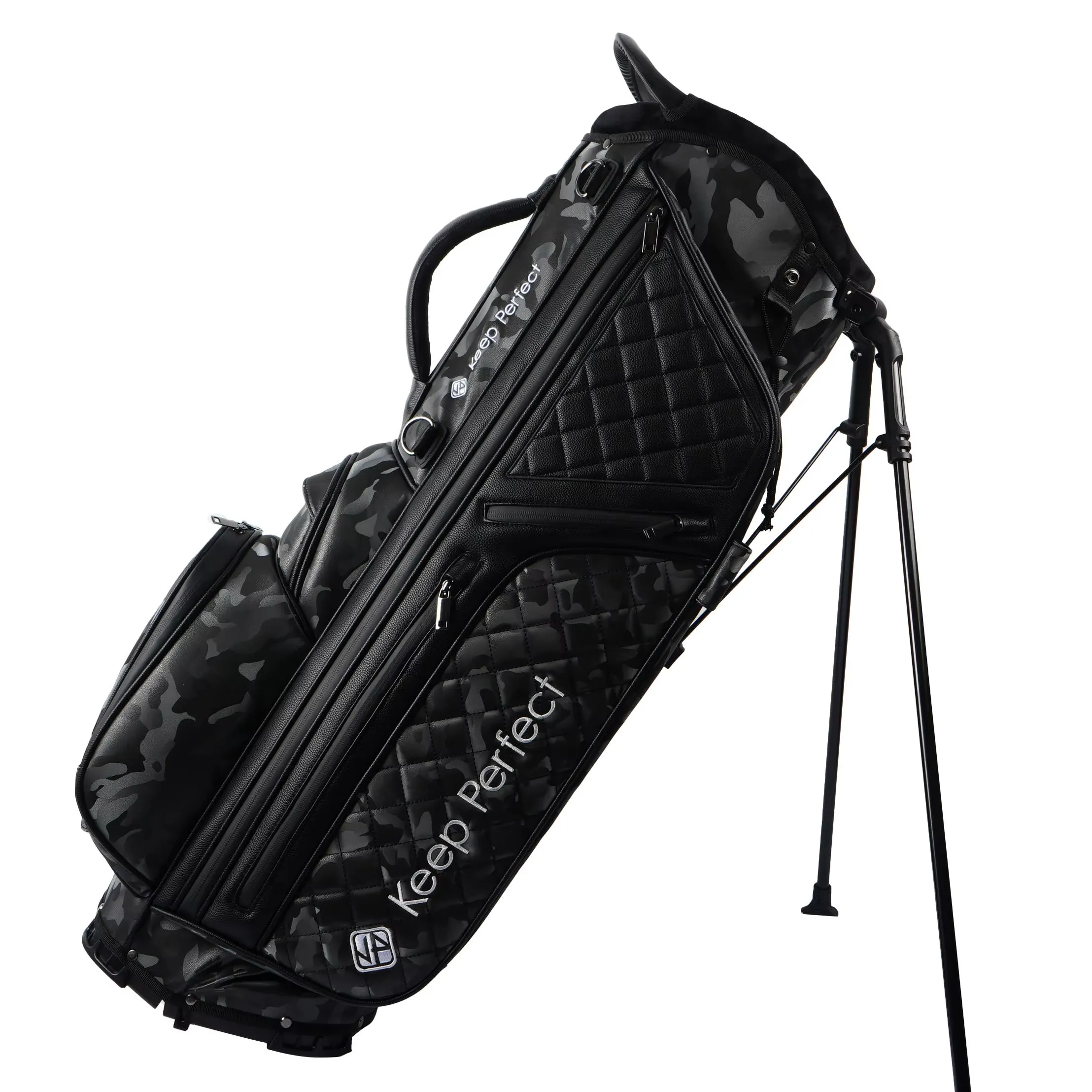
The structural technology is where weight is won without sacrificing strength. Foam-frame or lightweight shell construction replaces heavier linings; aluminum and composite legs replace steel work; and the hardware — buckles, D-rings, sliders — is machined or molded to be lighter at equal or better strength. These choices compound, which is why a carry bag that specifies a lightweight frame and composite legs at the outset reaches a weight that would be unreachable if the structure were chosen last.
The failure to plan weight into the structure is one of the most common sources of a disappointing carrry weight. When a buyer briefs "light" but the structural components are selected conventionally, the grams creep back in and the production sample misses the target. The fix is to set the weight ceiling, choose the structural technology against that budget, and verify the number on the pre-production sample before bulk — a discipline captured in more detail on our factory QC page.
Smart-feature placement, not electronic complexity
The "smart" part of modern stand bags is mostly about placement rather than electronics. A padded, readily accessible rangefinder pocket that protects a laser without slotting it awkwardly, a magnetic quick-access pocket for pace-of-play items, and a cable-lane or grommet so an electronics cable can route cleanly are the features that genuinely change daily use. They are thoughtful geometry and pocket engineering built into the tech pack, not a circuit board in the lining.
Fully electronic smart bags — with built-in GPS, chargers, or automated features — remain a small, material-driven niche and are rarely the right choice for a broad B2B line, because batteries and electronics add weight, cost, and failure modes and tax the already-hard waterproofing task. The pragmatic recommendation is to design a capable classic bag with purposeful tech-feature placement, and to treat a truly electronic SKU as an optional experiment rather than a core commitment.
A useful way to brief tech placement is to list the electronics a player in your market is likely to carry — typically a rangefinder, a phone, and sometimes a speaker or GPS — and then design one clear, padded home for each, with sensible access. A rangefinder pocket placed on the side a player reaches for without twisting, a phone pocket that holds a large modern handset, and a small clip or D-ring for a device that clips to the bag turn an ordinary bag into one that feels purpose-built. This read of user behavior is every bit as much "technology" as any circuit, and it is the part that most reliably improves satisfaction.
Factory technology: digital development and sampling
On the manufacturing side, technology compresses the development cycle and reduces variance. Digital pattern grading lets a design be resized cleanly instead of manually rescaled; virtual or reduced sampling shortens the number of physical iterations; and 2D-to-3D visualization catches proportion problems before fabric is cut. For a B2B buyer, this means a faster path from tech pack to a production-representative sample and fewer surprises between the sample and the bulk (which is exactly what the PPS stage exists to confirm).
Programming and bonding technology also matter at the line level. Seam sealing, ultrasonic welding, and controlled bonding replace or complement stitching in the areas where a seam must hold waterproofing or absorb load, to higher consistency than hand work. None of this replaces final QC, but it raises the floor and repeats more reliably, which is how a factory actually delivers "consistent" rather than merely claiming it.
The practical upshot for a buyer is a shorter, more certain road to the PPS. Digital grading means a requested size or colorway is less likely to introduce a distortion error; reduced sampling means the buyer sees production-representative results sooner; and programmable bonding means the seams that carry the waterproofing or the load are repeatable across the whole run rather than dependent on one operator's consistency. Each reduces the most common source of friction between a brand and its factory: the gap between the approved sample and the delivered bulk.
Data and field feedback as a design technology
One of the least visible technologies is the data itself: the return and warranty analysis, the review mining, and the field-feedback loop that tells a manufacturer which failure class matters most. A factory that systematically records stand-wobble claims, zipper complaints, and strap-anchor pulls is effectively using data to set its QC priorities, because the numbers reveal where the money is being lost and where the engineering effort is best spent. This turns "make it better" into a targeted improvement program.
For a B2B buyer, the practical effect is a more honest conversation at spec time. When a factory can say which failure mode its records show and which test it therefore prioritizes, the buyer can align the RFQ with the real risk profile of the product rather than a generic checklist. It is a small thing that meaningfully reduces surprises between the sample and the after-sales period, and it is one reason a QC-driven factory tends to hold its reorder relationships longer.
Sustainability technology: recycled and lower-impact materials
Technology also drives the sustainability thread of the modern bag. Recycled polyester (rPET) and recycled nylon have advanced to the point where they meet the feel and strength expectations of a carry bag for the majority of programs, and they carry a lower footprint for the embodied material use. Alongside them sit lower-impact dyeing, bluesign-aligned sourcing, PVC-free components, and more efficient packaging, all of which a brand can specify and then verify with documentation rather than trust to a marketing claim.
The technical caution is the same as for any material: the sustainable choice must clear the identical QC bar for durability, waterproofing, and stand reliability, or the bag regresses on the fundamentals. Recycled materials are not inherently weaker — they are a manufacturing and sourcing consideration that should be locked at the swatch stage and confirmed on the sample, exactly like a waterproof package. Brands that pair recycled construction with a recycled-content certification have a concrete claim to make and defend; those that mention it without documents open themselves to scrutiny. More detail lives in our certifications and claims guide.
The development and sampling roadmap
In practice, a tech-enabled stand bag moves through a short, well-defined roadmap. The buyer briefs the segment and the measurable targets; the factory clarifies material and construction options and returns a costing and plan; a pre-production sample is made in roughly 10-20 days and confirmed against the numbers; a production sample (PPS) locks the material, structure, and weight for bulk; and bulk ships in about 45-60 days. Technology shortens and de-risks this roadmap rather than lengthening it.
The sample stages deserve real attention because they are where technology claims meet reality. The concept sample proves the look, but the PPS proves the deliverable — the weight, the stand feel, the zipper smoothness, the waterproof scope. Committing to approve at the PPS stage, on the basis of measured values, is what protects the bulk run and the eventual reorder. It is the single highest-leverage habit a buyer can adopt in any stand bag program, tech-enabled or not.
Evaluating a factory's technology readiness
Because so much of the technology value is delivered by the factory, a buyer should ask a few direct questions before committing: does the factory digitally pattern and offer reduced or virtual sampling? Can it show the seam-sealing or welding capability its material claims rely on? Does it hold the QC equipment and records for the tests in the spec — a stand-cycle fixture, a zipper-cycle test, a strap-load rig, and a hydrostatic-head or seam-integrity setup if waterproof is in scope? Does it keep a sealed master for reorders?
These questions separate a factory that treats technology as marketing from one that uses it operationally, and they parallel how you would evaluate any engineering supplier. A factory that answers them with documented capability and a testing workflow is the one likely to deliver the consistency your spec promises. That is the standard we hold on the factory & QC pages, and it is the standard a technology-forward program should expect.
How the technology translates into measurable spec
The value of all this technology is that it converts soft claims into numbers a buyer can lock. Instead of "light," you specify a gram or pound target with a tolerance; instead of "waterproof," you specify a hydrostatic head and a seam- and zipper-proofing scope; instead of "durable," you specify a zipper cycle target and a strap-anchor load. This is the bridge from a marketing sentence to a testable acceptance criterion, and it is the foundation of a professional RFQ.
| Technology Area | What It Delivers | Measurable Spec / Test |
|---|---|---|
| Engineered fabrics | Strength + lower weight | Denier, fabric weight (g/sqm) |
| Waterproof membranes | Dry gear in rain | Hydrostatic head + seam/zipper test |
| Frame & hardware tech | Lighter, stiffer structure | Weight tolerance on PPS |
| Smart pocket placement | Tech-friendly daily use | Pocket spec + range/access check |
| Digital sampling | Faster, lower-variance dev | PPS match-to-sample check |
| Welding/bonding | Consistent strong seams | Seam-strength / integrity test |
The table is a compact briefing tool: each row names the technology, what it physically delivers, and the spec or test that proves it. Building a tech-enabled program becomes a matter of choosing the rows you want, writing their numbers into the tech pack, and verifying them on the sample — no mystery, no overclaiming.
Common pitfalls to design out
With technology come a few failure-prone choices worth designing out early. The first is over-specifying electronic features that add weight and a failure surface; unless the room for a power bank and cable is genuinely wanted, leave it out. The second is claiming waterproofing from a fabric alone; seal the seams and the openings or drop the claim. The third is choosing materials on looks without a swatch check, since the sampled grade can differ in feel and strength from the marketing photo.
Each pitfall maps to a simple control: define the feature list narrowly, test the whole package rather than a component in isolation, and lock the material on a physical swatch. Getting these right at the spec stage is cheaper and faster than correcting them in the field, and it is the difference between a technology-enabled bag that performs and one that merely generates returns.
It is also worth remembering why the pitfalls cluster where they do: technology adds options, and options add weight and cost unless deliberately constrained. The discipline that keeps a tech-enabled program profitable is saying no to the feature that adds a gram and a failure point without adding a buyer-visible benefit. Every technology in this article earns its place by measurably improving durability, weight, waterproofing, or daily convenience — and any piece that does not should be cut from the spec.
Choosing a technology package tier for your line
Because the technology options add cost and weight in different measures, most successful programs select a single coherent tier rather than mix everything. The tier is chosen by the target market and price point: an entry line invests in a reliable stand and durable zippers; a mid line adds the tech-feature placement and perhaps a water-resistant finish; a premium line adds a full waterproof package, full-length organizer, and lightweight structure together. Mixing a premium waterproof claim onto an entry structure is the most common source of overreach.
| Package Tier | Typical Inclusions | Target Segment | Primary Spec Tests |
|---|---|---|---|
| Standard | Good stand, durable zippers, 4/5/6-way | Entry / value | Stand cycle, zipper cycle, strap load |
| Plus | + tech-pocket placement, water-resistant finish | Mid | Add swatch, seam-strength test |
| Premium | + full waterproof package, full-length organizer, light structure | Premium | Add hydrostatic + seam/zipper waterproof |
The tier framing also keeps the QC plan proportional — you test what the package promises. A standard bag does not need a hydrostatic test; a premium waterproof bag cannot ship without one. Matching the tier to the target market and proving it with the right tests is the disciplined, technology-aware way to build a line that earns trust at each price point.
Making technology customer-visible without overclaiming
Finally, technology only helps a brand if it is communicated credibly. The best honesty rule is to publish the same numbers you manufacture to: the weight with a tolerance, the divider arrangement, the waterproof scope and test, the material, and the QC tests behind the stand and zippers. When the listing matches the sealed master, the customer expectation matches delivery, which is the condition that builds repeat business and ratings.
The phrase to avoid is the vague superlative — "smart," "premium," "waterproof" without any defined scope. Each should be replaceable with a concrete sentence: what feature, what material, what test, what number. Approached that way, technology stops being a label and becomes a set of verifiable claims that give your sales team something concrete to say and give reviewers a real reason to trust the product. That is the end state this evolution is driving toward.
Where to start your tech-enabled program
Starting a technology-ready stand bag program is straightforward if the brief is structured. Collect the target market, the material direction including any waterproof or lightweight scope, the divider configuration, the pocket list including tech-feature placement, the branding method, the weight target, and the QC tests you want (stand cycle, zipper cycle, strap-anchor load, seam integrity). Send it with reference photos to service@junyuanbags.com or +86 17750020688 and we will return a plan, a pre-production sample in 10-20 days, and bulk in 45-60 days.
Technology in stand bags is, in the end, about doing the proven features more reliably at a better weight and a defensible cost. Pair the materials and factory-side methods with a tight, measurable spec and disciplined sampling, and the result is a bag that performs in the field and in the catalog — which is what the technology was always for.
FAQ
How is technology changing golf stand bag materials?
New fabrics, waterproof membranes, and lightweight structural materials let bags shed weight while gaining strength — for example, laminated waterproof packages and high-strength frames that would have added too much mass a decade ago.
What smart or tech features are appearing on modern stand bags?
Dedicated, padded rangefinder pockets, magnetic quick-access pockets, and integration points for GPS or electronics such as cable lanes, while fully electronic smart bags remain a small, material-driven niche.
How does factory technology improve bag quality?
Digital pattern making, 3D sampling, and programmable welding and bonding reduce assembly variance, while inline QC and test methods turn reliability claims into measurable, repeatable results.
Is an electronic smart golf bag worth specifying?
For most B2B programs no, because batteries and electronics add weight, cost, and failure modes; buyers more often want thoughtful power-feature placement, so electronics-focused designs are usually better as a niche option.
What does technology mean for a waterproof claim?
It means the bag is tested at seams and openings, not just on fabric — a hydrostatic head figure plus seam sealing and waterproof zippers must be confirmed in the lab before the claim is made.
What is the fastest way to get a quote for a tech-enabled stand bag?
Send bag type, material and any tech direction, divider, pocket list including tech pockets, logo method, target MOQ, timeline, and reference photos or a tech pack.
Recommended Internal Links
Request a B2B quote for golf stand bags
Send your target market, expected MOQ, and reference photos. We respond within 24 hours with a sampling plan.