For a featherweight minimal carry, explore our Sunday bags — A truly waterproof golf stand bag is not defined by the fabric alone but by the whole package: a coated or laminated waterproof textile with a hydrostatic head of roughly 5,000-10,000 mm tested to ISO 811, sealed or taped critical seams, water-repellent zippers with protected openings, and an explicit seam-sealing scope — because a bag is only as dry as its weakest seam, zipper, or opening. This guide turns those layers into the measurable specifications a B2B buyer needs to compare, source, and approve a waterproof stand bag that genuinely keeps gear dry in a downpour. It is written for brand teams and distributors planning a waterproof SKU, not for retail browsers, so every number is one you can put inside a tech pack and verify on a sample.
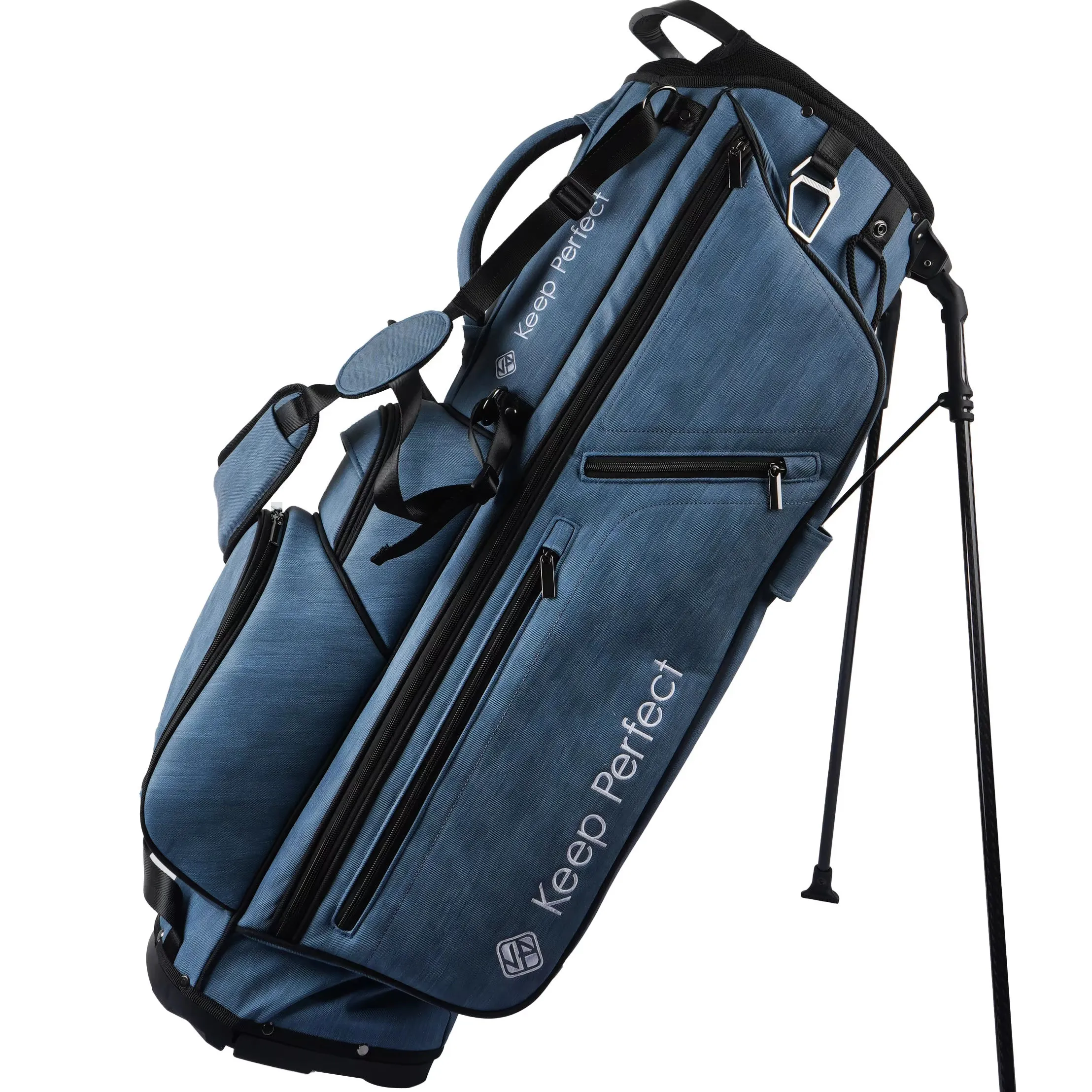
From a factory build standpoint, our dedicated waterproof stand bags page walks through the materials, hardware, and quality checks in detail.
Key takeaway: waterproofing is a package, not a fabric
The single most important idea to carry through this guide is that waterproofing is a coordinated package of four layers, and the claim is only as strong as the weakest layer. A buyer who names a waterproof fabric but leaves the seams and zippers unprotected has not specified a waterproof bag; they have specified a coated shell that will leak in the first serious storm. The difference matters at the sampling stage, at the price point, and at the point a retailer returns a batch because a "waterproof" product soaked a customer's clubs.
On the sourcing side, the package logic also tells you where to spend your engineering and QC effort. Most of the waterproof failure modes we see in production are not on the fabric — they are on the seam tape lift, the zipper tape wicking, and the pocket-openings pooling. So when you build the spec, put the same weight on seams, zippers, and openings as on the hydrostatic head of the shell. The paragraphs below walk each layer, how to measure it, and the acceptance you should require.
- Waterproof vs. water-resistant: a cost and claim decision
- Hydrostatic head to ISO 811, seam tape, and zipper standards
- The weight trade-off on a walking waterproof line
- How branding must change to protect the waterproof seal
- A one-page target table and testing plan you can lock before sampling
Water-resistant does not mean waterproof
The most important distinction in this guide is between water-resistant and waterproof, because the difference is cost, weight, and what the bag will actually survive. A water-resistant bag uses a coated fabric that sheds light rain or morning dew and dries quickly, but it will leak over several hours of sustained rain if the seams and zippers are not protected. A waterproof bag, in contrast, is engineered as a package: fabric, seams, and zippers all defend against ingress, and it is tested as an assembly, not a sheet of material.
For a buyer, the practical rule is to match the claim to the use. If the market is a wet coastal or northern region with frequent rainy rounds, invest in the full waterproof package. If the market is dry or the bag is mostly a cart bag, a water-resistant finish may be the sensible cost-and-weight choice. The failure that damages trust most is overclaiming — selling a coated bag as waterproof and watching it leak in the first storm, which is why the claim must be calibrated to the tested package and never stretched beyond what the assembly has proven in the lab. A defensible catalog therefore states the hydrostatic head, the taping scope, and the zipper standard together, instead of a single word that may not survive a field test.
The four layers of a waterproof package
A defensible waterproof stand bag is built from four coordinated layers. The first is the fabric: a TPU-coated or laminated waterproof textile in a workable weight, with a stated hydrostatic head tested by a defined method such as ISO 811. At the SGS-verified Quanzhou facility we operate (4,950 sqm, 7 lines, 149 machines, 137 staff), the typical waterproof shell moves between 200D and 420D TPU-coated nylon or polyester, chosen so the whole bag stays light enough to carry. The second is the seams: critical seams are seam-taped or otherwise sealed so rain cannot track through the needle holes, and the tape width and coverage are specified rather than assumed. The third is the zippers: water-repellent zippers with protected opening construction, because a standard zipper is a natural leak path. The fourth is the openings and closures: flaps, folded edges, and weather lips that stop water pooling into pockets.
Each layer is testable on its own, but the real test is the whole assembled bag. That is why the acceptance criteria include a spray or rain simulation on pockets and zippers and a water-ingress inspection after deployment cycles — the stand opens and closes hundreds of times, and each motion can stretch a seam zone or loosen a zipper lip. A brand that specifies all four layers and tests the assembly can claim waterproofing honestly; a brand that specifies only the fabric is naming a material, not delivering a dry bag.
Hydrostatic head: reading the number
The hydrostatic head is the familiar waterproofing metric: the water-column height (in millimeters) at which water begins to penetrate the fabric under test. A practical starting target is 5,000-10,000 mm, with the higher end used for heavy-rain claims and premium lines. The number is genuinely useful, but it must not be mistaken for the bag's waterproofing — a fabric with an excellent hydrostatic head still leaks at a bad seam or an unprotected zipper. Use it to qualify the fabric, then test the assembly for the real claim.
Also worth noting is that the hydrostatic head figure depends on the test method and the fabric's construction and finish, so the RFQ should name the method (ISO 811 is the standard reference) and the acceptance level. Do not accept a random millimeter figure without its test reference. Two fabrics can both be labeled "10,000 mm" and behave differently on the course because of coating weight, denier, and how the tape bonds to the back. This is one more place where a disciplined spec and a laboratory result — rather than a supplier's word — decide whether the claim holds in the field and in the catalog.
Seam sealing is where waterproof bags are made or lost
Of all four layers, seam sealing is the one that most separates a genuinely waterproof bag from a coated one. Stitching creates needle holes that wick water, so the critical seams must be covered with waterproof tape on one or both faces, applied cleanly with a controlled peel-strength target and verified to survive temperature cycling. The scope matters too: a buyer should list which seams are taped — the main body seams, the pocket perimeters, the shoulder-strap attachments — and the tape width, so the coverage is explicit rather than assumed. A common starting width is 18-25 mm of hot-melt or PU seam tape depending on the fabric and curvature of the seam.
The QC control for seam sealing is a peel-strength test plus a water-ingress check after cycling, because a tape that looks fine when new can fail after use if the adhesion is marginal. Specify the tape type, the seam coverage, and the re-test after temperature cycling in the product spec, and confirm it on the waterproof sample before bulk. This is the single highest-value detail in a waterproof program, and it is at the heart of the waterproof QC we run on every waterproof sample — a tape that lifts on a curved pocket seam will leak even when the shell hydrostatic head is excellent, which is why we test the assembly and not just the roll of tape.
Zippers and openings: the hidden leak paths
A bag with a superb fabric and perfect seams is still only as dry as its zippers and openings. Standard zippers let water in through the teeth and the zipper tape, so a waterproof package uses water-repellent or water-resistant zippers, often beneath a weather flap or inside a protected lip, on at least the critical pockets and the club compartment. The valuables pocket, in particular, should be treated as a priority because that is where phones and keys live — a soaked wallet or phone is the fastest way to kill a retailer's repeat rate. Many programs specify a PVC-free water-repellent coating on the zipper and a fold-over flap on the valuables pocket.
The test for the openings is a spray or rain simulation aimed directly at the pockets and zippers, plus a zipper smoothness and cycle test that confirms the waterproof zipper still operates reliably after repeated use. Waterproof zippers tend to be stiffer than standard ones, so the cycle test catches a zipper that jams after normal use, which on a 14-way bag being opened and closed every round matters more than on a display sample. Specify the water-protection detail on the critical openings and verify the assembly-level result, because a bag that leaks only through the valuables pocket has failed its core promise even if every panel stays dry.
Weight and the waterproof trade-off
The unavoidable reality is that a waterproof package costs weight. The coated or laminated fabric, the seam tape, and the heavier zippers all add mass, and a genuinely waterproof walking bag sits higher on the scale than its non-waterproof equivalent — typically a 0.2-0.6 lb penalty that the walking market notices. The weight target and the waterproof scope must therefore be set together, and the buyer should decide whether this SKU is a true waterproof walking bag or a waterproof cart-allowed bag, which changes the budget and the fabric denier.
The way to manage the trade-off is to set the weight ceiling, then choose the lightest waterproof package that clears it rather than letting the package drive an uncontrolled final weight. On the production sample, verify the weight tolerance alongside the waterproof tests, because a bag that is waterproof but mislabeled on weight fails a different trust test. Cream the whole package to one target and the SKU holds up under both kinds of scrutiny. For a cart-focused line you can afford the heavier, tougher laminate; for a walking Sunday bag you will usually select a lighter TPU coating and accept a lower but still defensible hydrostatic head to protect the carry weight.
Branding on a waterproof bag: protect the seal
Branding deserves its own note because the method can defeat the waterproofing. Dense embroidery on a sealed front or top panel pierces the fabric with needle holes that wick water, so on critical waterproof panels the preferred methods are heat transfer, a patch, or a woven label applied without penetrating the waterproofing. A non-critical trim panel or a pocket can still carry embroidery safely; the rule is to match the method to the panel and the waterproofing scope.
Confirm the branding method on the waterproof sample and verify the seal around any mark before approving bulk. This is the point where a beautiful logo and a dry interior can conflict, and a disciplined program resolves it by placement and method rather than by losing one or the other. Our corporate branding guide covers the method choices in detail, including which placements survive on a sealed shell. Where a hero logo must sit on a sealed panel, a TPU patch or a heat-transfer film that bonds into the coating is almost always the safer answer than dense threaded embroidery.
Target specs to lock before sampling
Before requesting samples, lock the waterproof target numbers in one short statement: the target segment, the bag type, the weight ceiling, the divider, the fabric and its hydrostatic-head target with method, the seam-sealing scope and tape, the zipper water-protection standard, the branding method, and the QC tests (hydrostatic, spray/rain on pockets and zippers, seam peel, stand cycle, zipper cycle, strap load). This is the contract the sample is judged against, and it turns a supplier conversation from open-ended into auditable.
| Layer | What to Specify | Recommended Starting Target | Test / Evidence |
|---|---|---|---|
| Fabric | TPU-coated / laminated textile, denier | 5,000-10,000 mm (ISO 811) | Hydrostatic head (method-defined) |
| Seams | Seam-taped coverage + tape width | Critical seams taped, 18-25 mm tape | Peel strength, re-test after cycling |
| Zippers | Water-repellent standard, protected openings | Critical pockets + club opening | Spray/rain test, cycle test |
| Openings | Flaps / weather lips on pockets | Critical pockets protected | Rain simulation |
| Assembly | Water-ingress after deployment | No ingress in test | Spray + deployment-cycle check |
The table is your one-page waterproof bargain: name each layer, set the target, and require the evidence. When the factory returns a sample that clears all five rows, you have a defensible waterproof bag; if any row is waved, the whole claim is at risk. Send these targets with your bag type, MOQ, and timeline to service@junyuanbags.com or +86 17750020688 to get a concrete plan, and we will confirm which taping scope and zipper standard fit your weight ceiling before you commit to samples.
How OEM and ODM apply to a waterproof program
For most buyers, the fastest route to a waterproof stand bag is to start from a proven waterproof architecture and adjust the dividers, pockets, and branding to the target market, rather than engineering the waterproof package from a blank slate. Reusing a validated body, stand, and seam-sealing scope shortens development and de-risks the program, leaving the differentiation to the pocket logic and the brand. It is the standard OEM/ODM path, and it usually reaches a production sample in 10-20 days and bulk in 45-60 days.
ODM buyers who want a signature waterproof detail — a specific pocket layout, a removable cooler sleeve, a particular weather-lip design — should flag it in the first brief so the structure can be validated on the sealed shell before bulk. Because waterproofing interacts with every zipper and seam, adding a pocket after the taping scope is locked can force a re-run of the seam tests. Planning the pocket list and the waterproof scope as one decision is the difference between a smooth program and a costly redesign, and it is exactly the kind of cross-check we walk buyers through on the way to a production-ready tech pack.
Test plan and acceptance criteria for a waterproof claim
Professional waterproof programs need test methods and pass/fail criteria, not just a descriptive paragraph. Agree these on the sample and repeat them at bulk inspection so the claim is reproducible run to run. The fabric is verified by hydrostatic head to ISO 811 against the target; the assembly is checked by a spray or rain simulation on pockets and zippers, a seam-tape peel-strength test, and a water-ingress inspection after a defined number of stand-deployment cycles. Around this core, add the mechanical tests that keep the bag functional through the season: stand deployment cycles, base stability, zipper smoothness and cycle, strap anchor load, and a drop test on the packed carton.
- Hydrostatic head to ISO 811 against the locked target (e.g. 5,000-10,000 mm)
- Spray/rain simulation aimed at pockets and zippers, no ingress
- Seam-tape peel-strength test, re-tested after temperature cycling
- Water-ingress inspection after stand-deployment cycles
- Zipper cycle and smoothness check on the waterproof zippers
- Weight tolerance check alongside the waterproof tests
Locking these methods on the pre-production sample means a reorder or a second colorway is judged against the same standard, which stabilizes the program and prevents the drift that happens when a new batch is approved by looks alone. The factory QC page describes how these checkpoints run on the line and at final inspection, so you can see where a waterproof sample is verified before it ships.
Recommended product path
For most buyers, the fastest route to a waterproof stand bag is to start from a proven waterproof architecture and adjust the dividers, pockets, and branding to the target market, rather than engineering the waterproof package from a blank slate. Reusing a validated body, stand, and seam-sealing scope shortens development and de-risks the program, leaving the differentiation to the pocket logic and the brand. It is the standard OEM/ODM path, and it usually reaches a production sample in 10-20 days and bulk in 45-60 days. A buying guide is available if you are still comparing architectures.
The counterproductive shortcut is to assume the only meaningful decision is the fabric. The bag is dry or wet based on all four layers and their tests, so treat the package as the product. Lock the targets, test the assembly, verify the weight and the branding on the sample, and you have a waterproof stand bag that earns its claim in the field and in the catalog. For more on the material and construction side, our companion piece on what makes a stand bag truly water-resistant and the waterproof package specification walk the same ground from the material and the seam-tape angle:
- Tour Waterproof Products
- OEM/ODM Service
- Factory & QC
- Golf Stand Bag Buying Guide
- What Makes Waterproof Stand Bags Truly Water-Resistant
- How to Specify a Waterproof Package
FAQ
What hydrostatic head should a waterproof golf stand bag meet?
A practical starting target is 5,000-10,000 mm on the fabric by a defined test method such as ISO 811; the higher end suits heavy rain and premium claims, but the seams and zippers must be protected for the bag to be truly waterproof.
How does a waterproof bag differ from a water-resistant one?
A water-resistant bag sheds light rain with a coated fabric; a waterproof bag also seals its seams with tape and uses water-repellent zippers with protected openings, so it keeps gear dry in a sustained downpour.
Are waterproof stand bags heavier than standard ones?
Yes, a waterproof package adds roughly 0.2-0.6 lb because of the coated or laminated fabric, seam tape, and heavier water-repellent zippers; the weight should be budgeted when a walking line adds waterproofing.
Which seams should be seam-taped on a waterproof bag?
At minimum the main body seams, the pocket perimeters, and the shoulder-strap attachment zones should be taped, with the tape width (commonly 18-25 mm) and coverage written into the spec rather than assumed.
How should logos be handled on a waterproof bag?
On sealed or critical panels, prefer a non-piercing application such as heat transfer, a patch, or a woven label, because dense embroidery needle holes can weaken the waterproofing.
Do you support OEM/ODM for waterproof golf stand bags?
Yes. We support OEM (branding on proven architectures) and ODM (co-develop structure, pockets, materials, and hardware). Provide your target market and quantity to start.
What is the fastest way to get a waterproof stand bag quote?
Send bag type, target weight, divider, material and waterproof scope, pocket list, logo method, target MOQ, timeline, and reference photos or a tech pack.
Request a B2B quote for waterproof golf stand bags
Send your target market, expected MOQ, and reference photos. We respond within 24 hours with a sampling plan.