Golfers who clean their stand bag on a schedule of every 15-20 rounds and do one deep clean and hardware check each off-season typically get 5-8 seasons of useful life from a 600D nylon carry bag, versus 2-3 seasons for a bag that is only wiped occasionally. This guide walks through the full care system we recommend from our SGS-verified Quanzhou factory (4,950 sqm, 7 lines, 149 machines, 137 staff) — spot cleaning, drying, zipper and strap care, stand inspection, and off-season storage — with the exact tools, frequencies, and numbers so a brand team or distributor can turn this into a printed care card for their own product program. For a broader look across cart bags, staff bags and the full golf bag category from one source, our affiliated golf bag factory runs the complete line.
Why a stand bag needs a different care routine than a cart bag
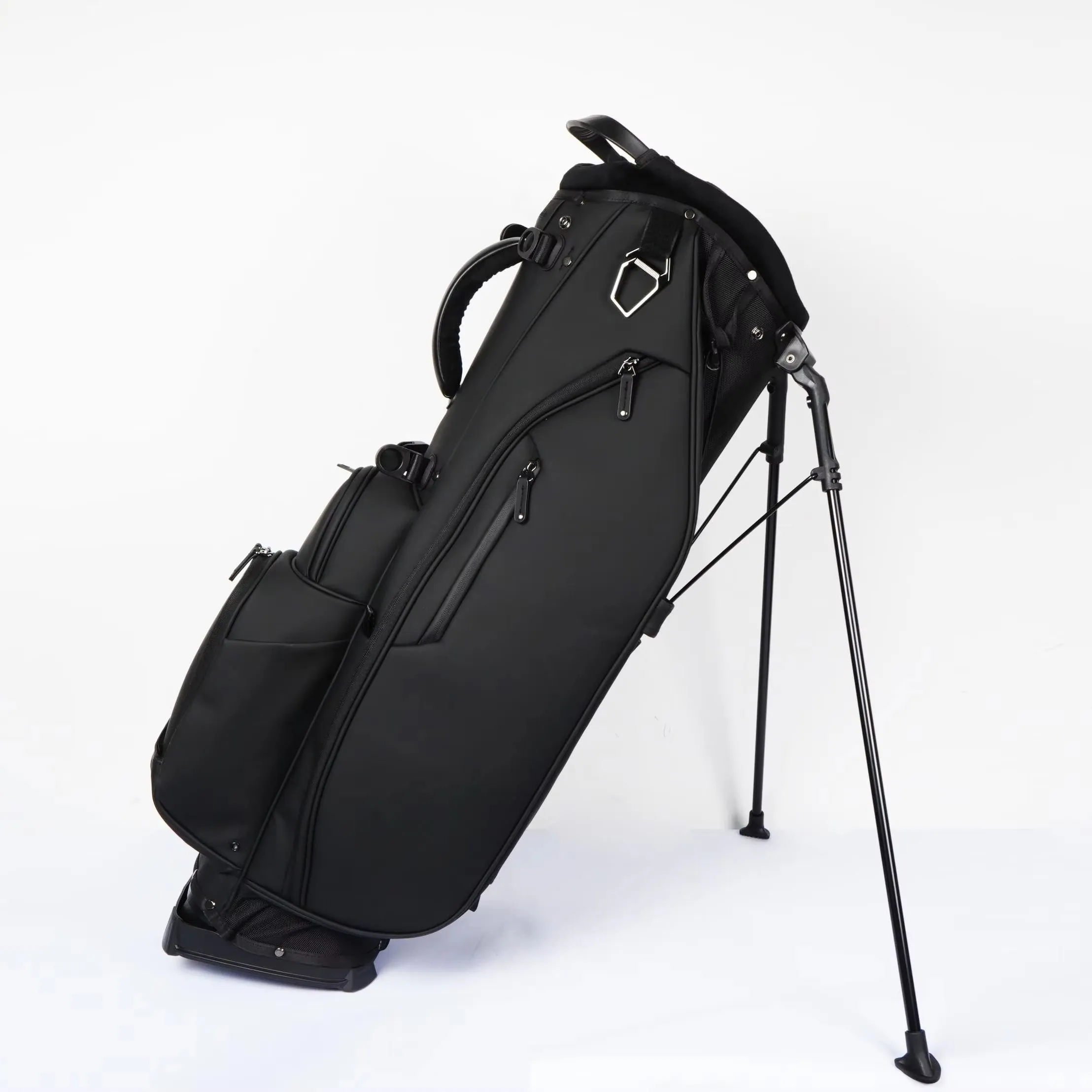
A stand bag does not hang flat on a trolley while it dries; it folds, it deploys legs under load, and it lives in trunks and lockers standing on its own base. That makes four zones wear faster than anywhere on a cart bag: the stand hinge block, the dual-strap anchor points, the base wear plate, and the zipper tracks that run along flexible panels. Each of these zones is a moving or flexing part, and moving parts fail according to how they are cleaned and lubricated, not just how they are built.
The build quality sets the ceiling on how long maintenance buys you. A bag with a reinforced hinge block, a stability-focused base geometry, and durable zippers sustains a disciplined care routine far longer than a lightweight shell with thin stitching. Stringent factory QC on stress points also raises the floor, which is why brand teams should ask their supplier about stitching density at the strap anchors. At QUANZHOU JUNYUAN BAGS our inspection records are part of the same system that keeps 137 staff producing 150,000 units a month from a 149-machine plant, so buyers can request validated cycle data rather than guesses.
Spot cleaning after every wet or dusty round
The single most effective habit is a 60-to-90-second spot wipe after a wet, sandy, or heavily dusty round, before dirt dries into the fibers or ground into the base plate. Use a soft brush to knock loose sand from the base, a damp microfibre cloth for the lower panels, and a wooden or plastic pick to clear the crevice around the zipper track. This short routine removes the abrasive grit that causes micro-tears over hundreds of rounds.
Because most abrasion happens from the bottom up, pay closest attention to the lower third of the bag, the base, and under the stand hinge. Grease from grass, sunscreen, and hand gel concentrates in exactly those places. A light wipe while the bag is still damp from play takes minutes; waiting a week lets the residue bond and turns a quick clean into a deep scrub. We recommend carrying a small sachet of microfibre cloth and a soft brush in the valuables pocket so the habit does not depend on remembering a separate kit.
Full hand-wash: tools, water temperature, and detergent rules
Once every 15-20 rounds, or whenever the shell looks cloudy, do a full hand-wash. Never use a washing machine — the tumbling twists the stand assembly, compresses the foam padding, and can delaminate PU-coated panels. Set up outside with cool water (below 30°C), a mild detergent free of bleach, and a soft sponge or cloth. Work in small circular motions over each panel instead of scrubbing one spot hard, then rinse with a low-pressure spray.
The detergent matters as much as the method. Avoid fabric softeners, which coat the nylon and attract dust, and avoid any bleach that strips colourways and weakens threading. For a stubborn grass or mud patch, let a diluted detergent sit for 5-10 minutes before wiping rather than scrubbing hard. Rinse until the water runs clear, because detergent residue left in a seam turns into that white, stiff crust that snapping zippers and cracked thread later.
The oil, sweat, and sunscreen zone: the touch points
Sunscreen, body oil, and insect repellant are the quiet killers of stand bag panels because they break down PU coatings and weaken nylon over repeated contact. The touch points — the shoulder pad area where the strap rests, the top handle, and the area around the valuables pocket — absorb the most oil. After a hot round, wipe these zones with a mild soap solution even if the rest of the bag looks clean.
For a waterproof or PU-laminated stand bag from our waterproof product line, avoid alcohol-based sprays and solvents, which dissolve the laminate. Use a gentle soap and water wipe only, and re-apply a fabric waterproofing treatment to the affected panel once it is dry if the DWR finish has worn. This keeps the sealed film intact and preserves the bag's rain protection across multiple seasons.
Drying correctly to protect foam, threads, and the stand
How the bag dries is where most long-term damage is either avoided or caused. Never dry a stand bag in a tumble dryer, on a radiator, or in direct sun, because heat warps the foam padding and embrittles the stand springs and threads. Instead, deploy the stand fully, open every pocket, and hang the bag by the top handle with the legs out so air flows through the divider tubes and the base. A well-ventilated indoor space or light shade is ideal; full drying takes 24-48 hours on a nylon bag.
The two mistakes to avoid are storing a damp bag and folding it while wet. A damp bag left closed in a trunk is the fastest route to mildew inside the pockets and rust on the hardware. Make sure the interior lining, the divider walls, and the base are dry to the touch before you zip anything shut. This is the exact protocol we test when validating factory QC on drainage and ventilation panels, and it is the same guidance you should pass to every customer who buys from your brand.
Zipper and hardware maintenance to avoid sticking
Zippers fail from grit and dryness long before they fail from poor zips themselves. A light clean of the track with a brush, followed by a dry lubricant (powdered graphite or a silicone-based zipper wax) keeps pulls smooth. Apply the lubricant sparingly along the closed track, then open and close the zipper 4-5 times to work it in. Never use oil or grease near a zipper, because it traps dirt and stiffens in cold weather.
Check the pullers and the end stops every quarter. A zipper pull that jams or skips on a 14-way divider bag usually means grit in the track, but a zipper that will not engage at all may need a replacement slider, which is a simple five-minute swap if you have the right size. The metal D-rings, clips, and buckles on the strap system benefit from a wipe and a touch of anti-corrosion treatment before off-season storage, especially in humid climates.
Stand system inspection and leg deployment care
The stand hinge is the mechanical heart of the bag, and it deserves a quarterly inspection. Deploy and retract the legs 15-20 times, watching for a jerky release, a leg that does not lock, or a wobble at the hinge. Sand and grass debris collects around the hinge block and should be blown out with compressed air at each full clean. If the springs feel weak or the legs spread unevenly, address it before it turns into a bent frame.
When the stand is deployed, listen for a clean click at full extension. A hinge that sticks midway is usually just grit; a hinge that drops the bag is a wear-plate problem. Our stand frame care guide covers the mechanical troubleshooting in depth, including torque specifications and when to stop repairing and simply replace the hinge module. For a bag your brand sells, give customers this same checklist so repairs happen early and cheaply instead of late and expensively.
Strap care: padding, anchors, and load test
The dual-strap system carries real weight when the bag is fully loaded — a 14-way bag with clubs and accessories can ride at 15-22 kg — so the anchors and padding deserve attention. Wipe the shoulder pads after sweaty rounds, and check the webbing for fraying where it loops through the anchor points. The stitching at the anchor is one of the highest-stress seams on any bag; on a production line we reinforce it with dense lockstitch, but on a used bag it is the first place to inspect.
Loosen the straps fully before storage and do not hang the bag by the straps. Hanging from the shoulder straps over a long off-season stretches the webbing and creases the foam. Use the top handle instead. A quarterly load test — fill the bag, lift it by each strap, and look for stitch separation at the anchor — catches a failing seam before it fails on the course.
Off-season storage and mold prevention
Off-season storage is where a bag either comes back looking new or comes back smelling of mildew. Empty every pocket and vacuum the interior to remove crumbs, tees, and grass. Deep-clean the shell, leave the stand deployed and every pocket open, and allow 24-48 hours of full drying. Store the bag standing upright on its base in a ventilated, low-humidity room, not in a sealed plastic bag and not compressed under other gear. A breathable cotton dust cover or nothing at all is better than a sealed vinyl one.
For humid climates, add a silica-gel sachet inside the main compartment and keep the bag off a concrete floor, which wicks moisture. In a garage or basement, raise the bag onto a shelf or a pallet. A full walk-through of late-season care is in our off-season storage guide, and the mold-specific protocol is covered in the mold and mildew guide. Prevention always beats remediation, because once mildew sets into a lining it is very hard to fully remove.
When to repair versus replace a component
Not every fault needs a replacement bag. The economics are simple: a zipper slider swap, a strap re-stitch, or a hinge module renewal costs a fraction of a new bag and restores the bag to full function. As a rule of thumb, repair hardware and stitching that performs a moving or load-bearing function, but replace fabric panels that are structurally torn or a base plate that is cracked, because those affect safety and water protection.
We keep this distinction because it drives both after-sales cost and sustainability. A guidance card that tells customers "repair the zip, re-sew the strap, replace the base" reduces returns and lets a quality bag live 5-8 seasons instead of being discarded at the first fault. If a repair is beyond a customer's tools, a local luggage repair service can handle most stand-bag faults within a day, and replacement hardware is widely available from our OEM/ODM service team.
Annual maintenance schedule and tool list
| Task | Frequency | Tool / Product | Notes |
|---|---|---|---|
| Spot wipe (lower panels, base) | After every wet/dusty round | Microfibre cloth, soft brush | Removes abrasive grit before it bonds. |
| Full hand-wash | Every 15-20 rounds | Cool water, mild bleach-free detergent | Never machine wash; rinse until clear. |
| Zipper clean + dry lube | Quarterly | Silicone wax or graphite, brush | Oil attracts grit — use dry lubricant only. |
| Stand deployment test | Quarterly | Compressed air, flat screwdriver | 15-20 cycles; clear grit from hinge block. |
| Strap anchor load test | Quarterly | — | Fill bag, lift by each strap, check stitching. |
| Off-season deep clean | Yearly | Full kit + silica gel sachet | Dry 24-48h, store upright, ventilated. |
Print this schedule as a product care card and include it with every bag you ship. Keep the card short enough to fit on one side of a folded insert, list the four tools a customer needs (microfibre cloth, soft brush, mild detergent, dry zipper lubricant), and date the quarterly checks so neglect is harder to slip past. A customer who follows a dated checklist keeps the hardware lubricated and the panels clean, which measurably reduces the warranty claims a brand sees on zippers, straps, and the stand hinge — typically the three most-returned components on a stand bag.
Material-specific care: nylon, polyester, PU and TPU
Not every stand bag panel responds to the same cleaner, so match the method to the fabric. A standard 600D nylon shell is the most forgiving: it accepts a mild detergent, gentle brushing, and even a light upholstery cleaner on a grass stain, and it dries fairly quickly. Polyester behaves similarly but can show a slight sheen loss if it is repeatedly rubbed hard, so always use a soft cloth rather than a scouring pad. The takeaway is to treat nylon and polyester as durable workhorse fabrics that want cool water and patience, not heat or bleach.
PU-coated panels are another story. The PU film gives a matte, premium look and water resistance, but it is sensitive to alcohol, acetone, and strong solvents, which dissolve the coating and leave sticky, blotchy patches. Clean PU with plain warm water and a pH-neutral soap, wipe with a barely-damp cloth, and dry away from direct heat. TPU waterproof pockets, which we use on our waterproof stand bag line, are more durable than PU but still benefit from the same gentle treatment and should never be ironed or tumbled. When in doubt, test any new cleaner on a small hidden area of the shell before using it on a visible panel — this one minute of caution prevents a ruined colourway.
Common mistakes that shorten a bag's life
Most premature failures we see in returned bags trace back to a handful of repeatable mistakes rather than a manufacturing defect. The first is machine washing, which accounts for a large share of distorted stands and hardened foam. The second is storing the bag damp or zipped shut for weeks, which invites mildew and rust. The third is overloading the pockets beyond what the stitching and zippers were designed to carry, which pops seams and stretches zipper tracks. And the fourth is ignoring a small fault — a sticking zipper, a loose strap anchor, a gritty hinge — until it becomes a large and expensive one.
Each of these is preventable with the routine in this guide. A care card that names the four mistakes and the fix for each turns a generic "clean your bag" instruction into a troubleshooting tool a customer will actually use. When you source a bag, also ask the factory how the materials were tested for abrasion and wash resistance; our factory QC reports include cycle data on zippers and stitching so a brand knows exactly what maintenance can preserve and what routine wears the bag down.
Turning care guidance into a brand asset
For distributors and brand teams, a maintenance guide is not just customer service — it is a warranty lever and a loyalty tool. Every time a customer successfully cleans and stores a bag with your care card, the bag lasts longer, the brand reads as trustworthy, and future reorders are easier to justify. Bundling a physical care card with the bag, or a QR code that opens a video care guide, lifts the perceived quality of the product with almost no unit cost.
Buyers can take this further by specifying care-friendly details at sourcing time: a drainage hole or mesh pocket design that dries faster, a reinforced base that shrugs off sand, and a coated, grit-resistant zipper as a standard. Our buying guide explains how to spec these details, and our product line shows the architectures that already bake maintenance in. When you design for easy care at the factory, the customer does less work and the bag lives longer — that is the durable way to run a stand bag program.
Recommended Internal Links
- Products (Stand Bag Architectures)
- Factory & QC
- Golf Stand Bag Buying Guide
- Mold & Mildew Protection Guide
- Off-Season Storage Guide
- Stand Frame Care Guide
The difference between a five-season bag and a two-season bag is rarely the build alone — it is the care routine running on top of it. A consistent schedule of spot cleaning, quarterly hardware checks, correct drying, and upright off-season storage protects every moving part and every panel. Start with the schedule above, print it as a care card, and you will send customers out the door with a bag that looks and plays well for years. For care-card artwork, spare hardware, or help sourcing a bag that is built care-friendly from day one, contact us at service@junyuanbags.com or +86 17750020688.

FAQ
How often should I clean my golf stand bag?
A full clean every 15-20 rounds, a spot wipe after every wet or dusty loop, and an off-season deep clean each year keeps a nylon or polyester stand bag in good shape. Quarterly hardware checks on zippers and the stand hinge prevent small problems from becoming replacement bills.
Can I put a golf stand bag in the washing machine?
No. Machine washing twists the stand assembly, hardens foam padding, and can delaminate PU panels. Hand-wash with cool water and mild detergent, rinse with a spray, and air-dry completely before storage.
What is the most vulnerable part of a stand bag over time?
The stand hinge and the dual-strap anchor points flex and abrade most, followed by the zipper tracks and the base wear plate. These four zones need the most frequent inspection and the gentlest treatment.
How long should a well-maintained stand bag last?
With a cleaning routine every 15-20 rounds, cool hand-washing, and proper off-season storage, a 600D nylon stand bag commonly serves 5-8 seasons. Zippers and straps may need one replacement cycle inside that window.
What does the factory recommend at the end of the season?
Empty every pocket, deep-clean the shell, leave the stand deployed and all pockets open to dry for 24-48 hours, then loosen straps and store the bag standing upright in a ventilated, low-humidity space.
Does routine cleaning really reduce repair costs for a bag program?
Yes. Manufacturers we collaborate with see fewer zipper and strap warranty claims, because clean, lubricated, stress-free hardware survives 3-5x more cycles than neglected hardware of the same build.
Request a B2B quote for golf stand bags
Send your target market, expected MOQ, and reference photos. We respond within 24 hours with a sampling plan.