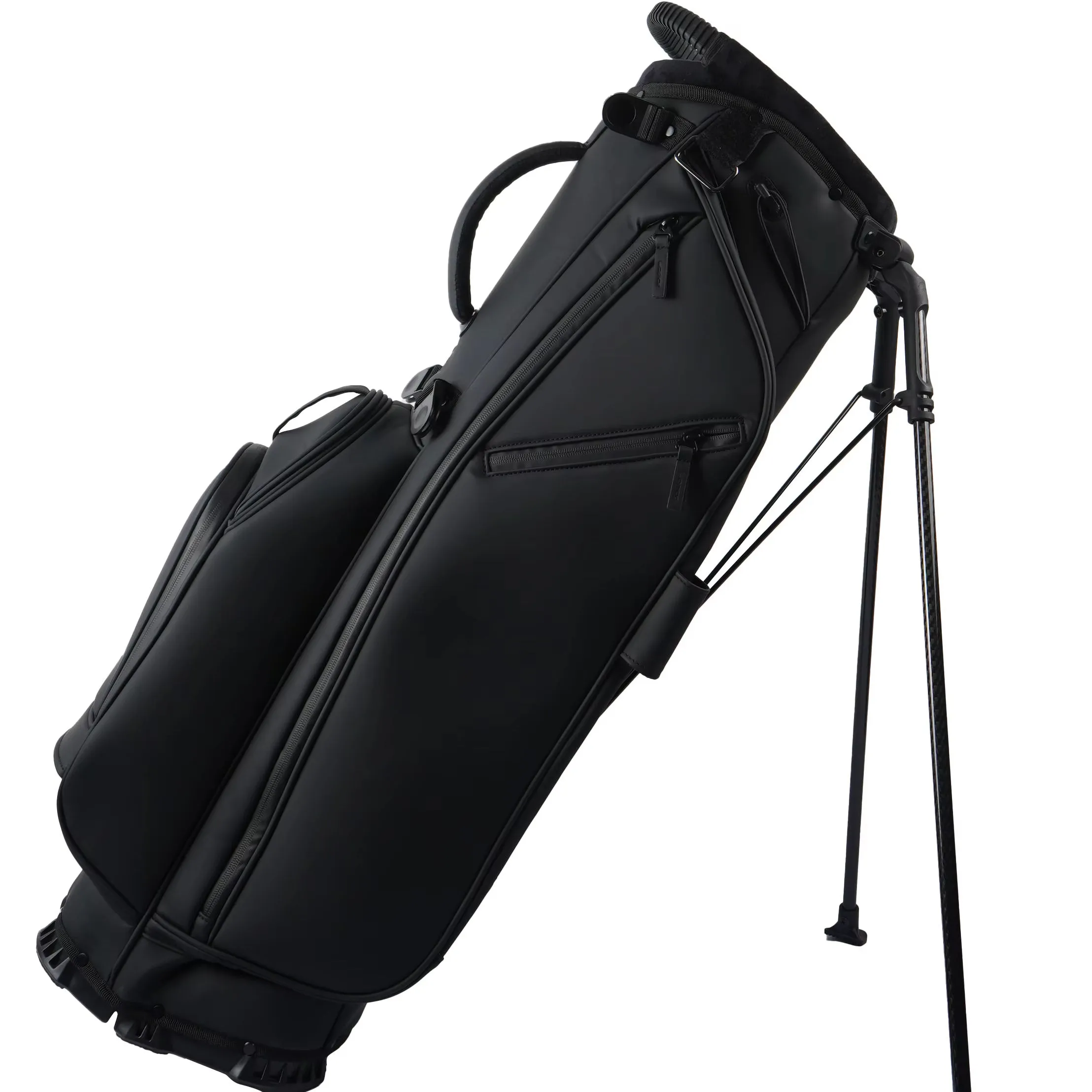
A well-built golf stand bag lasts 3-5 seasons or more when you follow a routine of cleaning after wet rounds, drying fully, storing upright, and servicing the zippers and hinge twice a year, which together buy far more years than any single fix. Most bags do not die suddenly; they wear out — the shell rots from trapped moisture, the hardware rusts, the stand hinge loosens, and the zippers jam from packed grit. This guide turns lifespan into a system of small recurring habits, plus the factory-side features that build longevity in from the start, using the wear thresholds our affiliated plant in Quanzhou validates on its bar-tacked stress seams and cycle-tested stand mechanisms. For a broader look across cart bags, staff bags and the full golf bag category from one source, our affiliated golf bag factory runs the complete line.
Key Takeaways
- Clean and fully dry the bag after every wet or dusty round — moisture and grit are the top killers
- Store it upright, empty, cool and dry; hot trunks and sealed plastic bags cook the coating
- Carry a packed bag by the straps or handle, never by the stand legs
- Run a seasonal service on zippers, hinge, feet and protectant twice a year
- Buy longevity with reinforced hinges, corrosion-resistant hardware, and bar-tacked seams
Why Bags Wear Out — and What That Tells You
A stand bag is not one component that fails; it is a system of five that wear on different clocks. The shell rots from moisture and sits under UV, the zippers jam from grit and strain, the stand hinge loosens from hundreds of deployments, the straps fatigue at their anchors, and the feet grind flat on cart paths. Because each wears independently, a bag can look fine while its hinge is silently loosening — which is why a preventive routine out-performs waiting for a failure. The honest read is that most bags are retired not because they broke completely but because their weakest part stopped being reliable, and that weakest part varies by how the bag is used.
Understanding the wear clock changes your maintenance. A walker who carries 25 rounds a season stresses the stand hinge and straps hardest; a rider who stores the bag in a car trunk stresses the shell with heat and the coating with UV; a golfer in a damp climate fights mildew and rust first. None of these need more hours than the others — they need different emphasis. A bag that is cleaned, dried, stored upright, and lightly serviced on schedule simply has none of its five subsystems failing ahead of the others, and that balanced aging is the real meaning of a long life.
Cleaning That Removes the Damage, Not Just the Dirt
Cleaning a stand bag is not cosmetic — it is structural, because the two worst destroyers, moisture and grit, hide inside a dirty bag. After every wet or dusty round, empty the pockets, tap out trapped sand from the divider tubes, and wipe the shell down with a soft damp cloth. Give the hardware a quick wipe and run each zipper full-length to shed grit from the teeth. This two-minute habit removes the abrasive particles that would otherwise grind the weave and jam the zippers on the next dozen rounds, and it prevents the dirt-and-oil film that clouds a PU coating.
The second half of the round-after routine is drying. A bag stowed damp is a perfect incubator for mildew and accelerates the rust on buckles and zipper pulls. Let the bag dry fully with pockets open in a ventilated, shaded spot, and never store it wet in a car trunk or a sealed bag. On a heavier build, an occasional full hand-wash at lukewarm temperature — mild dish soap, soft brush, thorough rinse — every 4-6 weeks keeps the shell clean without the harsh chemicals that strip coatings. This is the imported detail of care that adds seasons to a bag's life.
The cleaning habit also protects the fittings that hold the bag together. After a round on a sandy or dusty course, give the zipper teeth a brush with a clean, dry brush to shed the grit that otherwise grinds the teeth flat and jams the slider, and wipe the buckle and strap hardware so chain-oil and sunscreen do not film onto the webbing. A lint-free cloth on the dual-strap padding keeps the padding from holding sweat, which is what cushions most backpacks into a stiff, smelly shell over a season. Small as they are, these two-minute passes at the end of each round are what keep every moving part on the bag moving, and a bag whose hardware still runs is a bag that is nowhere near the end of its life.
Storing the Bag to Slow Every Clock
Between rounds and between seasons, how you store a stand bag decides how fast its five subsystems age. Store it upright, empty of heavy gear, with the stand legs open so the hinge stays free and the base is not loaded. Put it in a cool, dry, ventilated spot out of direct sunlight — a hot garage or car trunk bakes the PU coating and dries the strapping until it cracks. Avoid sealed plastic bags, which trap the very moisture that causes mildew and rust. If shelf space is tight, store it on its base with the legs resting, never hanging from the straps for months, which fatigues the anchors.
Seasonal storage deserves a little more ceremony. Before a long break, give the bag its deep clean, lubricate the zippers, inspect the hinge for looseness and the feet for wear, and apply a fabric protectant to the clean, dry shell. Then store it upright, cool and dry, with the pockets open and a desiccant sachet in the main pocket in a damp climate. When you pull it out next season, run the stand ten times and the zippers twice before the first round, and you will find the small issues while they are still a weekend fix rather than a mid-round failure.
Weight and Carry Habits That Protect the Frames
A stand bag's frame and hinge are designed for a working load, and habit decides whether it stays within it. Always carry a packed bag by the dual straps or the top handle — never by the stand legs or the base, because a loaded bag lifted from the legs shears the hinge anchor, the very point this guide keeps returning to. When you set the bag down, set the stand open on level ground rather than dropping it, and if the bag carries a full set of clubs plus odds and ends, be aware that every extra pound goes through the hinge every time you set it down. Keeping the bag to what a round actually needs reduces that repeated strain.
A cart and a stand bag inhabit the same trunk, so protect the shell there too. Cushion the bag so it does not rattle against clubs and hard edges — constant transit banging is a quiet but real source of scrapes that open the weave for tears. Keep the valuables and cooler pockets from bulging into the stand hinge zone, and avoid crushing the bag under other luggage while driving. These are small courtesies, but a bag that is carried, set down, and stored with even weight on its designed carrying points simply does not meet the failures a rougher life invites.
Moisture is also the reason a ring of firm habit saves the bag more than any cleaner. When a bag comes home after a round played in heavy dew or light rain, wipe the dividers dry from the inside, open every pocket, and let the bag sit upright to breathe before it goes away. The internal foam and the divider tubes are the first places hidden damp lingers, so a bag stored dry across all its cavities is a bag that will not go musty by spring. This is the detail the dry-after-every-round habit is really for — not the visible shell, but the water that hides inside it and does the slow damage no store-bought cleaner can reach.
Seasonal Service: The Spring and Autumn Tune-Up
Twice a year, give the bag a structured service rather than just a wipe-down. The spring tune-up prepares the bag for the hardest months; the autumn tune-up sends it into safe storage. In both, run the same checklist: full clean and dry, zipper teeth lubricated with a light silicone-free lube and each pull run full-length, stand deployed ten times to check the hinge lock and leg return, strap anchors inspected for stitch wear, and leg feet checked for flat spots. Where the shell has picked up a scrape or a small tear, read the tear-repair guide before it worsens. This half-hour, twice a year, catches nearly every issue while it is cheap to fix.
The service is also the moment to reapply shell protection. A water-repellent and stain-block protectant, applied to a clean, dry shell and left to cure for 12-24 hours, keeps the next round's mud and morning dew on the surface where they wipe off. It also slows the UV fade that greyes a shell by mid-season. Confirm the protectant is safe for the coating and test on a seam first. Pairs with the cleaning habit, the seasonal apply-and-protect keeps the shell and hardware aging at the same slow pace as the rest of the bag.
Extending Life Through Small, Timely Repairs
The bags that last longest are the ones repaired while the damage is small. A loose zipper pull reseats in seconds; a pinched zipper slider that is ignored becomes a snapped tape that needs a full replacement. A loose hinge pin tightened early keeps the mechanism aligned and avoids the wallowed bore that forces a full base swap. A worn foot replaced before it grinds into the leg saves the leg extrusion. The habit is to treat small symptoms at the service window rather than waiting for a failure on the course. The stand-mechanism guide covers the hinge, cable and leg fixes; the stain guide handles the shell. Together they make the service routine complete.
Know, too, when a repair stops being worth it, because forcing a tired bag to keep going is not extending life, it is managing decline. If the shell has frayed around a structural seam, if the hinge anchor is cracked, or if a waterproof panel has delaminated, a replacement is the honest move — and the years of care you already put in mean the next bag gets the same routine from day one. Extending lifespan is not about making one bag last forever; it is about the system of care that keeps whatever bag you own on the course longer than it would otherwise be.
Lifespan Specification Table
Use this table to set care targets and to brief a factory on the features that add years. The values reflect the wear thresholds our affiliated plant validates on its builds.
| Parameter | Target | Maintenance / Spec Note |
|---|---|---|
| Service life (regular play) | 3-5 years / 5+ with care | Reinforced hinge and clean routine extend it longest. |
| Deep-clean cadence | Every 4-6 weeks | Plus a wipe-down after each wet or dusty round. |
| Zipper service | Lube twice a year | Run each pull full-length after a wet round. |
| Stand deployment test | 10 cycles at each service | Confirm hinge lock and smooth leg return. |
| Protectant reapply | Twice a year, cure 12-24 h | Water-repellent, stain-block, UV-slow. |
| Storage | Upright, dry, cool, ventilated | Pockets open; never sealed bags or hot trunks. |
| Hinge / hardware | All-metal or reinforced anchors | Confirm on the spec to avoid premature failure. |
| Stress seams | Bar-tacked, doubled panels | Choose at the factory to reduce tears. |
Buying Longevity: Features That Add Years
For buyers sourcing a line, the cheapest way to extend service life is to build it into the specification rather than rely on the end user's care. Four choices remove the most common failure modes. First, a reinforced hinge block with all-metal or reinforced-composite anchors, which survives the 3,000-5,000 cycle range without wallowing. Second, corrosion-resistant hardware — stainless or coated zippers and zinc-alloy buckles — which defeats the rust that appears on damp course mornings. Third, a higher ripstop material on the lower body, where stands and cart edges make contact, so the shell resists the scrapes that open into tears. Fourth, bar-tacked stress seams on the stand mount, strap anchors, and zipper ends, so the points that tear most on most bags simply hold.
Once the features are in the spec, lock them with a QC plan rather than a hope. Confirm a stand deployment-cycle test and a zipper cycle test on the pre-production sample, and inspect the bar-tacks and hardware on the first article of bulk so the first production unit matches the sample. The factory QC and material standards page lists these checks and the tolerances a reliable partner applies. With the right features and the right QC, the bag you ship is one whose remaining life is decided by the owner's care — which is exactly the relationship a long-lived product should have with its user.
Test Plan & Acceptance Criteria for a Care Program
A care program is only real if it is checkable, so attach a short acceptance list to each seasonal service. If any line fails, the bag is not being maintained to the standard that delivers its full life.
- Shell is clean and fully dry; no trapped grit in the divider tubes or pockets
- All zippers run smoothly, full-length, with no jams or skipped teeth
- Stand locks firmly open over 10 cycles and folds flat with no binding
- Strap anchors, hinge, and feet show no new wear beyond expected use
- Protectant reapplied and cured; the bag stored upright, cool and dry
Recommended Internal Links
- Products (Stand Bag Architectures)
- Factory & QC
- How to Repair a Broken Golf Stand Bag Stand
- How to Remove Stains from Golf Stand Bags
- Golf Stand Bag Buying Guide
FAQ
How long should a golf stand bag last with proper care?
A quality stand bag, with a reinforced hinge and regular care, typically lasts 3-5 years of regular play. With light use and consistent cleaning, storage, and small repairs, many shells and mechanisms stay sound well beyond five seasons.
What is the single most important habit for extending golf bag life?
Cleaning and fully drying the bag after every wet or dusty round. Moisture and packed-in grit are what rot the shell, rust the hardware, bend the stand, and wear the zippers — removing them each round is the habit that buys the most years.
How should I store a golf stand bag between seasons?
Empty every pocket, clean and dry the bag fully, open the stand so the legs are free, and store it upright in a cool, dry, ventilated space. Avoid sealed plastic bags and hot trunks, which trap moisture and cook the PU coating.
Does carrying the bag by the stand hurt it?
Yes. Lifting a loaded bag by the stand legs or the base strains the hinge and can shear the anchor over time. Always carry a packed bag by the dual straps or the handle, and keep the stand for its intended job of holding the bag upright.
What maintenance should I do at the start of the season?
Give the bag a full clean, lubricate the zippers, check the stand deployment and hinge wear, inspect the strap anchors and feet, and treat the shell with a fabric protectant before the hard months. This spring service catches small issues while they are cheap to fix.
Can I extend the life of a cheap golf stand bag, or should I replace it?
You can extend it with the same routine — cleaning, storage, and small repairs — but a thin shell and a soft hinge will still wear faster. Care adds the most years to a well-built bag, so it is worth the habit even on an entry-price model.
How often should I deep-clean my golf stand bag?
Wipe down the shell after each round and do a full deep clean every 4-6 weeks or after any wet, muddy, or sandy round. Frequent light maintenance beats occasional heavy cleaning, which is when coatings and stitching take the most stress.
What features should I choose to make a new golf bag last longer?
Choose a reinforced hinge block and all-metal anchors, corrosion-resistant hardware, a higher ripstop material for the lower body, and bar-tacked stress seams. These choices remove the most common failure points and are worth confirming on a custom build at the factory stage.
Final Note — Care Is the System That Buys the Years
Extending the lifespan of a golf stand bag is not one heroic repair; it is a quiet system of repeated habits — clean after the round, dry fully, store upright, service the zippers and hinge at the season's change, and fix small symptoms before they spread. A bag treated this way ages evenly, and even-aged aging is what lets it stay on the course for years beyond the bags that are simply used hard and stored damp. For buyers, the same philosophy applies a level earlier: specify the reinforced hinge, the corrosion-resistant hardware, and the bar-tacked seams at the factory, and QC the first article so the features are real. From the OEM/ODM service page to the seasonal service checklist, the goal is the same — a bag whose life is long because its weakest point never gets the chance to fail first.
Request a B2B quote for golf stand bags
Send your target market, expected MOQ, and reference photos. We respond within 24 hours with a sampling plan.