Practice golfers can also browse our range and simulator golf bags — For B2B buyers sourcing a carry stand bag for air travel, the two specs that decide whether it clears airline limits are an empty weight under 4.5 lb and a reinforced hinge block that survives transfer-belt handling, because most carriers cap checked golf bags at 23 kg (50 lb) and 158 cm total linear dimension. This guide turns that intent into a production-ready spec for a mid-tier travel stand bag, and it explains the material, stand, and packing details we manage at our SGS-verified affiliated plant (2026 audit, 4,950 sqm, 7 lines, 149 machines, 137 staff) so your first order does not get flagged oversized or fragile at the gate.
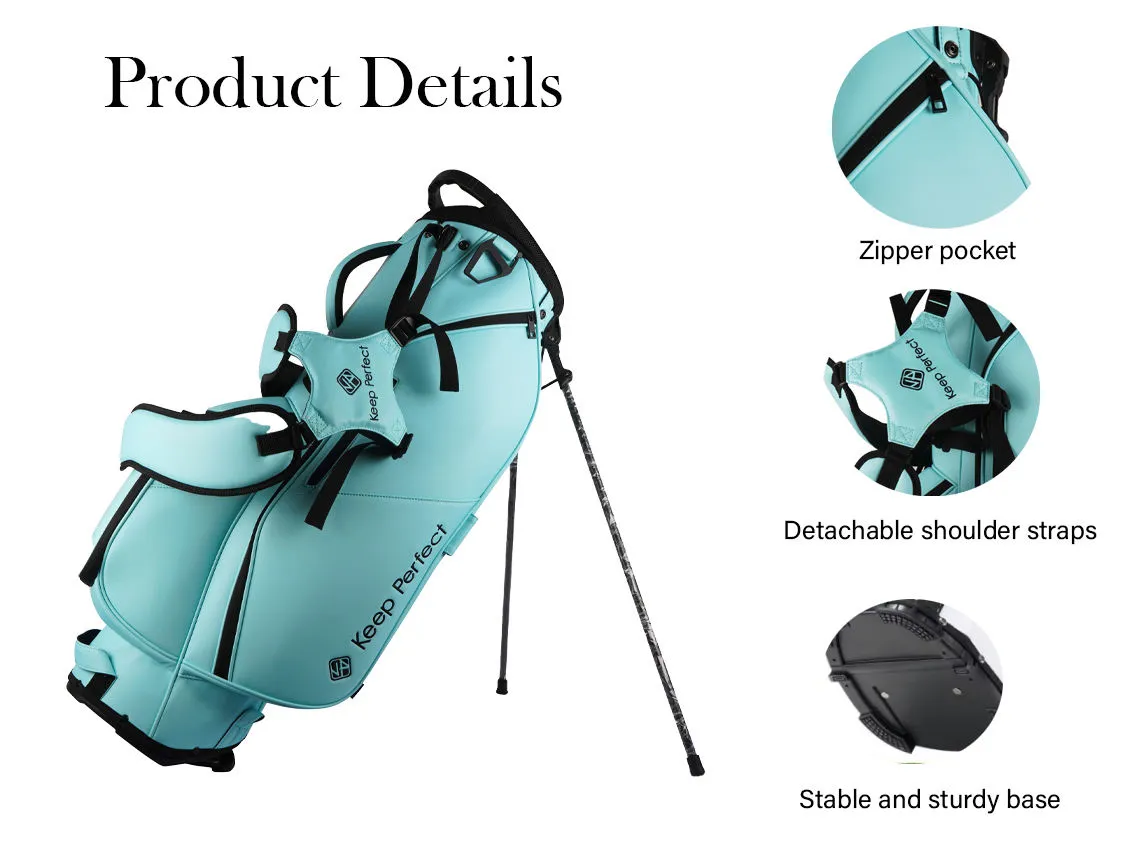
Key takeaways for air-travel stand bags
Travel changes every priority on a stand bag. On the course you optimize comfort and pocket access; at the airport you optimize packed size, weight headroom, and protection against mishandling. Build your buyer brief around these measurable targets rather than adjectives.
- Empty shell target 3.2-4.5 lb so packed weight stays under the 23 kg check limit with a travel sleeve
- Reinforced hinge block and padded base plate to survive conveyor and drop impacts
- Collapsible or removable leg system to shrink the packed profile
- Full-length dividers to keep club shafts locked and reduce rattle noise
- Durable 400D-600D nylon shell with a seam-sealed rain hood that stows in a dedicated pocket
Understanding the airline limit math before you spec
An air-travel stand bag is the intersection of golf and airline logistics, and the aeroplane rules are the harder constraint. The most common checked-luggage standard is a 23 kg (50 lb) weight limit with a 158 cm (62 in) total linear dimension. When you add a padded travel sleeve, a set of 14 clubs around 3.2 kg, balls, tees, a rangefinder, and a couple of layers of apparel, you can quickly hit 18-22 kg. If your shell alone is 6 lb instead of 4 lb, you have lost roughly a kilogram of usable weight headroom before you pack anything.
That is why the top architects we build keep the empty shell light. A travel stand bag should target 3.2-4.5 lb empty, which leaves room for a 1.2-1.8 kg travel cover without threatening the 23 kg cap. The second constraint is length. A stand bag that measures 38-42 in (97-107 cm) long, 12-13 in wide, and 9-10 in deep generally fits the 158 cm linear limit even when a sleeve is added, because 107 + 33 + 26 is about 166 cm when the bag is too tall. Keeping the shell at or under 42 in is therefore a design rule, not a preference.
Shell materials that survive the belt and the wind
Airline handling is a blunt-force environment, so the shell material is your first durability decision. For a travel stand bag we recommend a 400D or 600D nylon ripstop shell, which offers a good balance of tear strength and packed weight. A 600D nylon shell at roughly 210-260 gsm resists abrasion on transfer belts and airplane tie-down points, while a 420D ripstop keeps weight low for golfers who carry on the course. Polyester at the same denier is slightly cheaper but marginally less abrasion-resistant over 20+ flights a year.
Reinforcement matters more on a travel bag than on a weekend bag. We add a padded base plate with corner wear guards, a double-layer hinge block, and webbing loops on the bottom that let a luggage strap cinch the bag closed rather than relying on a cheap zipper. The base wears fastest against carousel and curb contact, so a TPU or rubber skid plate on the bottom buys months of life. For the buyer, that means specifying '600D shell + padded base + TPU skid' is more useful than 'durable'.
Stand system design for air travel
The stand mechanism is the part most likely to fail in transit. A fixed lightweight hinge can bend when the bag is thrown onto a belt, and thin legs can snap if the bag is dropped standing on its base. For travel we develop two options. The first is a reinforced hinge block with a folding travel-lock, which folds the legs flat and locks them so they do not deploy in the cargo hold. The second is a removable leg assembly that unclips at the base, shrinking the packed height by 8-10 cm and removing the most fragile protruding part.
The trade-off is complexity and cost. A folding lock adds a small mechanism and roughly 30-60 g; a removable leg adds a clip-and-catch system that must be tested for hundreds of attach cycles. On a travel-focused tier, we recommend the folding lock as the standard because it protects the bag without asking the golfer to assemble anything. We test both options to 3,000-10,000 deployment cycles, checking for cracking, wobble, and leg-spread consistency, and we put a 5,000-cycle hinge test in the first-article QC plan.
Packing geometry: dividers, pockets, and the travel sleeve
Once the bag is packed it needs to protect the clubs and lay flat in the hold. Full-length dividers matter here more than on a normal carry bag, because they keep club shafts from crossing and clattering. A 4/5/6-way or 14-way top with full-length tubes holds each shaft, reduces head-on-head contact, and minimizes the rattling that makes a bag look fragile to airline staff. If a golfer travels with a full 14-club set, a 14-way full-length divider is the premium choice.
| Parameter | Typical Spec | Buyer Notes |
|---|---|---|
| Target empty weight | 3.2-4.5 lb | Leaves weight headroom under the 23 kg check limit |
| Shell length | 38-42 in | Keeps packed linear dimension near the 158 cm limit |
| Shell material | 400D/600D nylon ripstop | Reinforce hinge block, base plate, and corners |
| Divider | 4/5/6-way or 14-way full-length | Full-length tubes stop shaft clatter in transit |
| Stand option | Reinforced hinge + folding lock OR removable legs | Folding lock is lighter; removable legs shrink height |
| Packing helper | Rain hood stow pocket + luggage-strap loops | Hood protects clubs; loops let a strap cinch it shut |
| Pocket brief | Small valuables, rangefinder, apparel, ball pocket | Keep pockets flat-ish so packed volume stays compact |
Pocket architecture that fits a carry-on budget
Every pocket adds weight, fabric, and zipper hardware, so on a travel stand bag the pocket list should be deliberate. The essential set is a small valuables pocket, a rangefinder slot, a ball pocket, an apparel pocket, and a dedicated rain-hood stow. A cooler pocket is optional and adds roughly 300-400 g plus insulation, which is often worth it for resort golfers but wasteful for a pure carry traveler. The buyer should state the pocket list explicitly so the factory does not default to a heavier seven-pocket layout.
We also pay attention to how pockets sit when packed. Pockets that bulge outward enlarge the packed width and can push the bag past its linear-dimension budget. Specing flat-pack pockets, using lightweight zippers, and avoiding hard-molded valuables boxes helps the bag collapse into a compact, carry-on-friendly shape. Magnetic rangefinder closures are a nice-to-have that saves weight versus a plastic buckle on that pocket.
Hardware and closure details for the road
Travel is hard on hardware. Zippers that are fine on a cart bag may fail when a bag is tossed. Spec a durable zipper with a cycle target of 3,000-10,000 open-close cycles and a low jam rate. Use self-healing or YKK-style coils on the main compartments, and add a pull-tab that a gloved or cold hand can grab. The carry handle is another travel-critical part: a padded top handle and a side grab handle let airline staff lift the bag without grabbing the stand or the strap.
Strap anchors also carry more than on a walker on the course, because the packed bag is heavier and the straps take the strain of lifting on and off belts. We reinforce the dual-strap anchor points with bartack stitching and a load-tested webbing webbing loop, and we set a static load acceptance criteria in the QC record. If your buyer travels weekly, this is where a few cents of extra webbing buys a bag that lasts seasons.
Color, trim, and brand recognition in the airport
In a crowded baggage carousel, a distinctive colorway and trim help the owner spot the bag and reduce the chance of it being grabbed by mistake, which is a real concern for frequent travelers. A bright accent zipper, a contrasting brand panel, or a reflective strip helps the bag stand out. For B2B buyers, this is also the merchandising angle: a strong color at the airport reinforces the brand every flight.
From a manufacturing view, a two-color shell with a contrast panel costs little more than a plain bag because it uses the same cutting and sewing steps. We recommend locking a colorway with a lab-dipped or physical chip before bulk, and keeping a sealed master so a reorder matches across production lots. The brand logo, whether embroidered or a molded patch, should sit on a stable panel away from the stand hinge and the bottom wear plate where flex and abrasion are worst.
Testing and acceptance plan for air-travel bags
An air-travel stand bag needs the standard stand, zipper, and strap tests plus travel-specific checks. We run a packed drop test that simulates checked-luggage handling: a weighted bag dropped on its corners, edges, and faces from a defined height, with pass criteria that no seam opens and the hinge block does not crack. We also test the floor of the bag against repeated base impacts and we cycle the stand with the travel lock engaged to confirm the lock holds under jostling.
- Packed drop test on packed weight (corner, edge, face drops, no seam or hinge failure)
- Stand deployment + travel-lock cycle test (3,000-10,000 cycles, no cracking or wobble)
- Zipper smoothness + cycle test (pull force and jam-rate target)
- Strap anchor load test (static load + stitch failure criteria)
- Linear-dimension and packed-weight verification on the actual production sample
Procurement worksheet for a travel stand bag RFQ
Collect these inputs before you send an RFQ so the factory quotes accurately on the first round. The single biggest cost and compliance driver is hitting the airline weight and linear-dimension targets, so state them explicitly.
| Requirement | Your Target | Notes / Questions |
|---|---|---|
| Target market / airline rules | Checked weight and linear-dimension limits for your main routes? | |
| Empty shell weight | 3.2-4.5 lb? State tolerance. | |
| Bag length / packed size | Keeps 158 cm linear dimension with a sleeve? | |
| Divider configuration | 4/5/6-way or 14-way; full-length tubes? | |
| Shell material | 400D/600D nylon; reinforced hinges, base, corners? | |
| Stand option | Folding travel-lock or removable legs? | |
| Pocket list | Valuables, rangefinder, ball, apparel, hood stow, cooler? | |
| Travel sleeve | Included / separate? Padded foam thickness? | |
| MOQ & lead time | 200 pieces standard, 100 test order; sampling 10-20 days |
Sampling and QC checklist
Align these expectations before sampling so the first article is worth shipping and reorders stay consistent.
- Empty weight and packed weight verified against airline limits on the production sample
- Stand folding lock or removable-leg assembly tested to cycle target
- Zipper and hardware cycle testing with defined pass/fail
- Packed drop test and base-plate impact check
- Packed linear dimension measured on the real shell + sleeve
- AQL inspection level and defect tolerance locked before bulk
The travel cover / sleeve decision
How the bag travels is as important as the bag itself. A padded travel sleeve is the most common companion because it folds flat when not in use, adds no permanent weight to the carry on the course, and wraps the bag in 8-12 mm of foam for the hold. A soft cover typically weighs 1.2-1.8 kg, which is why the empty shell must stay light: a 4 lb shell plus a 2 kg sleeve plus gear must still fit the budget. A hard-shell case, by contrast, adds roughly 1.5-2.0 kg and is overkill for a stand bag unless it is a heavy cart-bag setup — the added weight crowds the 50 lb limit and the case is awkward to store between trips.
For the OEM buyer, the decision is commercial too. You can sell a bag + sleeve kit (higher margin, one SKU), or sell the bag alone and let the golfer reuse an existing cover (lower cost, simpler stock). If you kit them, design the sleeve to fit the specific bag's packed length so it does not fight a 42 in shell, and add luggage-strap loops and a carry handle on the sleeve. If you sell them separately, spec the bag with cinch loops that work with any standard luggage strap. Either way, state the sleeve scope in the RFQ so sampling and QC include it.
Weight trade-offs that protect the airline allowance
Every component on a travel stand bag trades weight against comfort or durability, and the buyer should know where the weight lives. The shell fabric is about 20-30% of shell weight; the stand mechanism with legs and hinge is 10-15%; the dividers and pockets are 20-25%; and the straps, hardware, padding, and base plate make up the rest. Cutting 0.5 lb usually means lighter foam, thinner ripstop, or a smaller valuables box — each with a durability cost you must accept or offset with reinforcement.
| Component | Typical Weight Share | Where to Optimize |
|---|---|---|
| Shell fabric (nylon) | 20-30% | Ripstop under 200 gsm; 420D instead of 600D |
| Stand + hinge + legs | 10-15% | Folding lock over full removable set |
| Dividers + pockets | 20-25% | Flat-pack pockets, fewer large compartments |
| Straps + hardware | 10-15% | Lightweight zippers, magnetic vs buckle closures |
| Base plate + padding | 15-20% | TPU skid over heavy rubber plate |
The buyer's job is to set one weight ceiling and measure the sample against it, because a design that reads 'light' on paper may come in over budget once reinforcement is added. We recommend a stated empty-weight tolerance of +/-0.3 lb and an actual weighed sample at the first-article inspection, not a nominal catalog value.
Common mistakes when sourcing a travel stand bag
The most frequent error we see is treating a travel bag like a regular carry bag and discovering only at the packed-weight check that it busts the airline allowance. A second mistake is neglecting the stand hinge, which is the single most fragile part under airline handling — a fixed lightweight hinge that is fine for walking can bend badly on a conveyor. A third is oversizing pockets and boards so the packed bag no longer fits the linear-dimension limit, forcing the golfer to uncheck or pay oversize fees.
Avoid these by locking measurable targets early: an empty-weight ceiling, a packed-length cap, a hinge-reinforcement requirement, and a packed drop-test criterion. Bring the travel sleeve into the packing math from the start rather than as an afterthought, and ask the factory to measure the packed linear dimension on the actual production sample plus the sleeve during QC. These three checks prevent the two most expensive failures a distributor can ship to a disappointed customer.
Cost drivers specific to travel stand bags
Travel-specific features add a small but predictable layer of cost. A reinforced hinge block with a folding lock adds roughly 3-6% over a plain hinge. A TPU skid plate and padded base add 2-4%. Full-length dividers versus a 4-way add 5-8% because of the extra divider fabric and tube routing. A heavier 600D ripstop over a thinned-down shell can add 3-5%. When a buyer asks for all of these at once, the unit price can be 15-25% higher than a baseline carry bag — which is why we advise picking the three travel specs that matter most to the target customer.
The other cost lever is the travel sleeve. If you kit a sleeve with a foam fill and a rain-hood stow, it adds real material and labor. If you sell the bag standalone, you avoid that cost but the bag still needs the cinch loops and reinforced base. For most mid-tier programs, a bag + soft-sleeve kit is the better margin story, but it only works if the shell stays light enough to leave weight headroom. State your sleeve intent in the RFQ and we will quote the shell and the combined kit separately so you can compare.
How to brief the factory for a travel stand bag
A clear one-page brief cuts the sampling loop in half for a travel program. Start with the airline rules for your main sales routes, then the empty-weight ceiling, the packed-length cap, the divider configuration, the shell material, and the stand option. Add the pocket list, the colorway, and the logo method, and name the packing scope (sleeve kit or standalone). Send this with your target market and expected MOQ, and we can lock the spec and give a sampling plan in days rather than weeks.
Because the travel constraints interact, it pays to brief architecture and packing together. If the golfer will carry the bag on hilly courses between flights, a folding travel-lock plus a lightweight shell is the right balance; if the primary use is fly + cart, you can afford a slightly heavier, more protective build. Our team walks through these trade-offs with you and flags any conflict before sampling, so you do not pay twice for a re-design.
Seasonality, merchandising, and the repeatable program
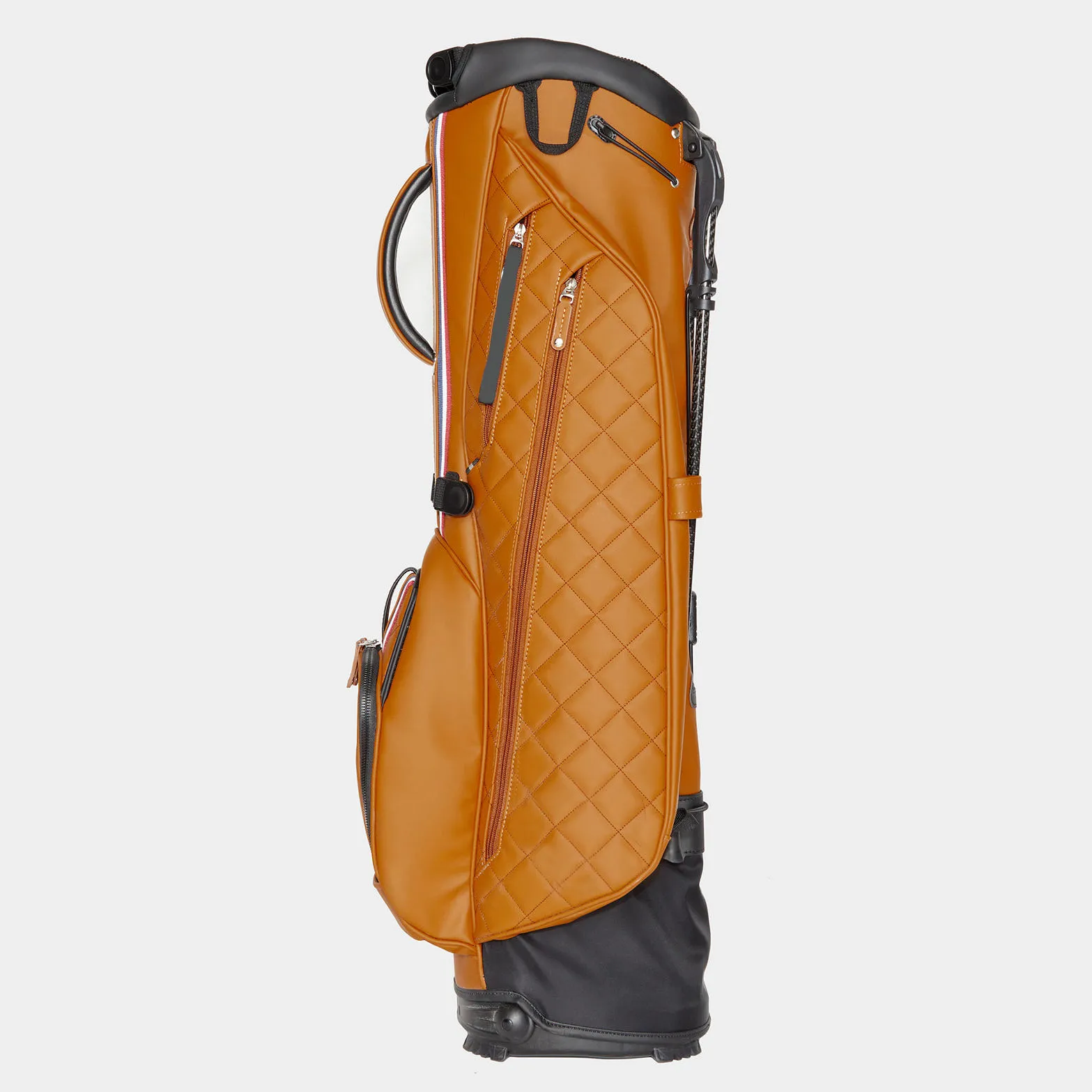
Travel stand bags are a seasonal and location-driven SKU. Demand spikes around holiday weeks, golf vacations, and corporate travel months, and it concentrates on routes to golf-tourism destinations. For a distributor, that means planning the program a season ahead, holding a small buffer of the top colorway, and keeping the spec file sealed so a reorder lands identically. We hold a sealed master and a color-sealed chip per program, so a relaunch the following season matches the shipped baseline exactly.
Merchandising-wise, retail buyers photograph the bag packed and the bag on the course. A two-color shell with a contrast panel and a bright accent zipper photographs well at the airport and on the carousel, and it gives the brand visibility twice in the customer journey. If you run more than one travel bag at different price points, keep the airline-compliance message in the copy; it is the single most valuable spec you can sell to the traveler, and it turns a commodity bag into a confident purchase.
Recommended internal links
- Lightweight Carry Stand Bags
- Products (Stand Bag Architectures)
- OEM/ODM Service
- Factory & QC
- Compact Travel Stand Bags
The practical bottom line for a B2B buyer: choose a travel stand bag around 4 lb empty, keep it under 42 in long, reinforce the hinge block and base, and confirm the packed weight stays inside your target airline's 23 kg allowance. Our team at QUANZHOU JUNYUAN BAGS helps you take a travel stand bag from a one-page brief to a repeatable, QC-locked production batch — reach us at service@junyuanbags.com or +86 17750020688 with your target market and pocket list.
FAQ
Will an airline treat a golf stand bag as checked luggage?
Most international carriers accept a golf bag as one checked piece within the standard 23 kg (50 lb) free allowance; beyond that or oversized dimension, excess baggage fees apply. Less than 1% apply a strict bag-total length limit below 158 cm, so check the airline's linear-dimension rule before bulk design.
Should a travel stand bag have a hard or soft cover?
For a standalone carry bag, a padded soft travel cover around 10 mm foam is the most practical because it folds flat and adds no permanent weight; a hard shell adds roughly 1.5-2.0 kg and is mainly for full cart-bag flights. The stand legs and hinge block are what need extra top and bottom padding.
What is the ideal empty weight for a travel golf stand bag?
A carry-oriented travel stand bag should sit around 3.2-4.5 lb empty, because the head cover, rain hood, travel sleeve, and your clubs plus apparel add 6-9 kg before the 50 lb limit. Every 0.5 lb saved on the shell buys you more packing headroom under the same allowance.
Which stand system survives airline handling best?
A reinforced hinge block with a folding travel-lock or removable leg assembly survives transfer belts far better than a fixed lightweight hinge. We spec stand deployment cycle testing to 3,000-10,000 cycles and add corner reinforcement on the base plate for drop impacts.
What dimensions matter for airline golf bag limits?
Most airlines cap total linear dimension (length + width + height) at 158 cm (62 in) and weight at 23 kg (50 lb). A stand bag shell at 38-42 in length with a collapsible carry handle usually fits within the limit even with a sleeve.
How quickly can you sample a custom travel stand bag?
Sampling typically runs 10-20 days, with bulk production at 45-60 days and a standard MOQ of 200 pieces or 100 for a first test order. Provide your target market and pocket list to lock the spec before sampling.
Request a B2B quote for golf stand bags
Send your target market, expected MOQ, and reference photos. We respond within 24 hours with a sampling plan.