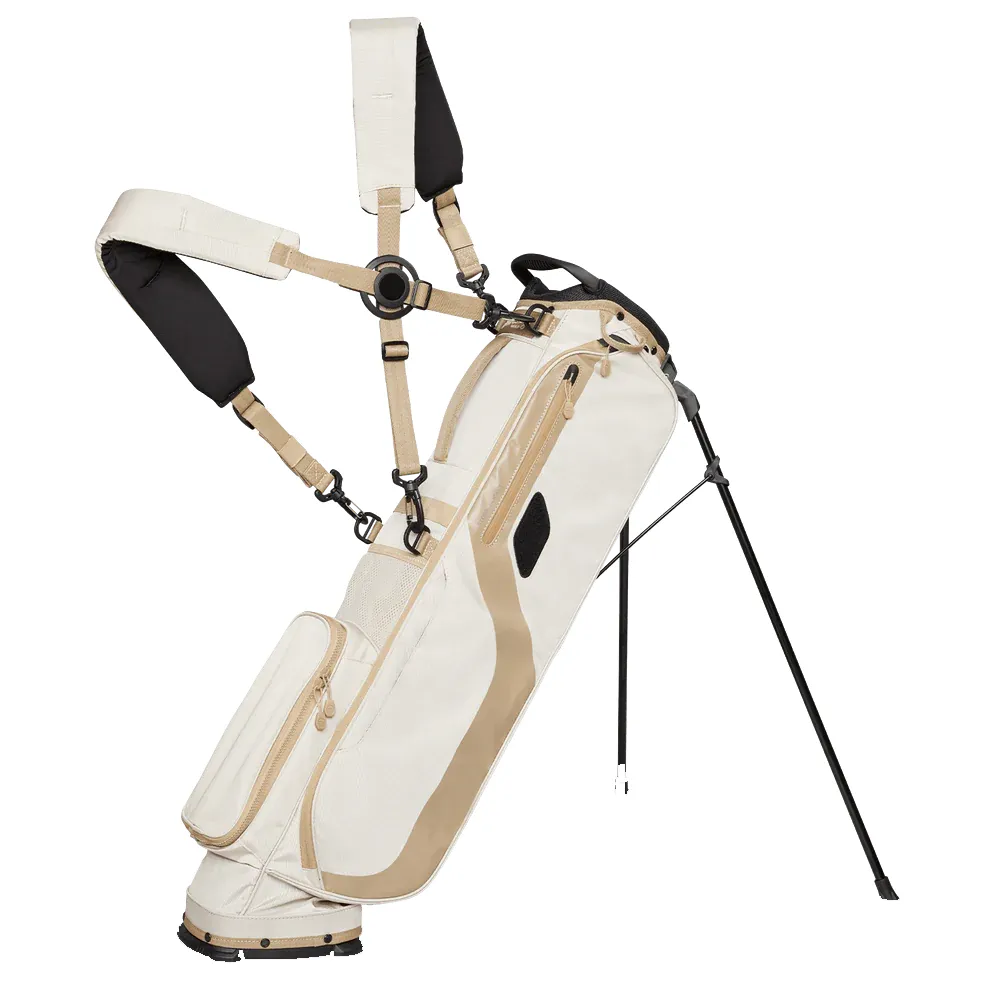
For a featherweight minimal carry, explore our Sunday bags — For the most compact small carry, see our pencil bags — A stand bag's carry comfort comes from three coordinated parts — balanced dual-strap geometry, enough adjustability to fit the player, and adequate padding matched to bag weight — and getting the strap right is what turns a 4-5 lb walking bag into one a player will carry all 18 holes without a sore shoulder. This guide walks a B2B buyer through the strap spec that matters: dual versus single straps, padding and adjust range, removable hardware, and the anchor-point design that keeps the bag balanced while the stand works. It draws on the strap and carry practice of an SGS-verified Quanzhou facility (4,950 sqm, 7 lines, 149 machines, 137 staff).
Key Takeaways
Hold these five rules before you brief. First, dual self-balancing straps are the core of a comfortable walking bag; single straps suit light Sunday bags. Second, balance is engineered — the strap anchors and stand hinge have to work together so the bag sits evenly. Third, adjust range must fit the player, so define it rather than assume "one size." Fourth, padding thickness follows bag weight and walk distance. Fifth, strap durability is a testable spec: lock a static anchor load target and confirm reinforcement at the attachment point.
- Dual self-balancing straps are the comfort baseline for walking bags
- Design straps and stand as one balanced system
- Specify the strap adjust range to fit the buyer
- Match padding thickness to bag weight and walk distance
- Lock a strap anchor load test and reinforcement target
Balance Is the Real Comfort Driver
Most buyers assume a comfortable strap is just a thicker pad, but the actual driver is balance. A bag that hangs evenly across both shoulders with the weight spread feels comfortable; a bag that pulls to one side or dig in at one point feels heavy no matter how thick the padding. Balance is engineered through strap geometry — the anchor points, the length ratio, and how the straps merge into a self-centering harness — rather than bolted on. This is why a well-designed lightweight bag can carry better than a heavier but poorly balanced one.
In the factory, balance is a measurable quality, not a feel. We check the strap anchors are symmetric, the straps align so the bag sits level, and the load spreads across the padded zones. Because a player carries a full 18 holes, a bag that is off balance by even a little becomes uncomfortable long before the last green. Brief the balance requirement explicitly, and confirm the carry on the sample rather than trusting a photograph of the straps.
Dual Versus Single Straps
The strap configuration is a segment decision. A dual, self-balancing strap system is the comfort standard for a walking bag: it distributes weight across both shoulders, centers the bag, and lets the player change shoulders to rest one side. A single strap suits a light Sunday bag or a logical style for a short loop, where the simpler harness keeps weight and cost low. Choose by the use case, and match the harness to how far and how often the buyer actually walks.
The dual system also carries a design obligation: both straps have to stay balanced as the bag is set down and picked up repeatedly. That is why the strap harness, the stand mechanism, and the bag's center of gravity are designed together rather than as separate parts. State the strap configuration in the brief, and ask how the harness performs through the full carry-deploy-carry cycle on the sample, so the comfort survives real course rhythm.
Adjustability Must Fit the Player
A comfortable strap has to fit the player's body, so the adjust range is a real spec. Too little adjust means a tall or short player cannot get the bag to sit right; too much adds slider hardware and weight. Define the adjust range and how the sliders feel, and confirm it on the sample with real bodies, not just a mannequin. Because height and shoulder shape vary across a market, a bag that fits one tester may fit nobody else if the adjust range is too tight.
We check the adjust hardware is smooth, the straps stay where the player sets them (no creeping under load), and the fit works across the intended body range. A strap that slips out of adjustment mid-round is a top complaint, and it is a QC field we hold. Lock the adjust range and the slider behavior in the brief so the "one size" assumption becomes a tested fit rather than a guess.
| Strap Feature | Typical Spec | Buyer Notes |
|---|---|---|
| Configuration | Dual self-balancing (walking) | Single strap for light Sunday bags. |
| Adjust range | Fit to intended body range | Confirm on sample with varied sizes. |
| Padding | Matched to bag weight and distance | Heavier bags need more padding and width. |
| Removable option | Per segment decision | Adds cost and a failure point to manage. |
| Anchor reinforcement | Static load test + stitch criteria | Stand straps share anchor zones with stand. |
| Strap material | Durable webbing + finish | Color-band against shell and trims. |
Padding Thickness and Material
Padding is where cost visibly lands, and it must be matched to how the bag is used. A heavy organizer carried over long distances needs generous, well-shaped padding; a light Sunday bag can run a slimmer strap because the load is small. The material matters too — a foam with the right density spreads pressure rather than bottoming out, and a smooth outer webbing prevents chafing against the neck. State the padding thickness and confirm the density on the sample, and the strap in the hand tells you if it is comfortable or just bulky.
We match padding to the weight target and walk profile for each segment, so a value bag gets enough without becoming plush-heavy and a premium bag gets the refined feel it is priced for. Because the padding is one of the least expensive but most felt parts of the bag, it is a fast way to lift perceived comfort without a large cost. Lock the padding spec, and let the wear test confirm the comfort claim.
Removable Straps and the Cost Trade-Off
A removable strap system is a genuine upgrade for a travel or premium buyer: the straps come off for storage, cleaning, or replacement, and the feature reads as thoughtful engineering on a shelf. But removable hardware adds cost and introduces a failure point — the connection has to stay secure under load. Decide per segment whether the feature earns its price, and confirm the release mechanism is both easy to use and impossible to pop free accidentally during a swing or a carry.
For a travel-heavy line, removable straps pair naturally with a rain cover or a travel loop, giving the buyer a reason to choose the model. For an entry value bag, a fixed harness keeps cost and failure points down. In our QC we load-test the removable connection to the same standard as a fixed strap, so the upgrade does not quietly become the weak link. Weigh the trade-off with the buyer's travel habit in mind, and the removable option either earns its margin or gets cut.
Design Straps and Stand as One System
On a stand bag, the straps and the stand share the bag body and its anchor zones, so they have to be designed together. A strap anchor that lands on the same fabric block as the stand hinge needs shared reinforcement; a strap that pulls against the stand hinge's flex can feel unbalanced or wear the panel fast. The bag's center of gravity, the strap geometry, and the stand deployment all interact. Treating them as one system is what produces a bag that both carries well and stands stable.
This is also why the pre-production sample matters more than the design image. Only the physical unit shows whether the straps stay balanced while the stand deploys and the bag is set down repeatedly. In our line we validate the carry-deploy-carry cycle on the sample and strengthen the shared anchor zones. Briefing the straps and stand together, rather than as two add-ons, is what leaves a bag that feels engineered rather than assembled.
Strap Anchor Strength and Durability Testing
Comfort is worthless if the strap tears off, so anchor strength is a tested spec. Define a static anchor load test with a set weight and duration, plus a stitch failure criterion, and confirm the reinforcement pattern at the anchor points. The anchor fabric block, thread density, and backing must be able to hold a loaded bag through years of use, not just through the first walk. Put this target in the brief so production cannot thin the reinforcement to save a few cents.
We run the anchor load test and inspect the stitching at the strap anchors inline, not only at final check. Because a separated strap is a show-stopping warranty claim, we treat it as a core QC field. When the anchor strength is written into the spec and held through bulk, the comfortable strap a buyer approves on the sample is the same comfortable strap in every unit shipped.
Strap Material and Trim Consistency
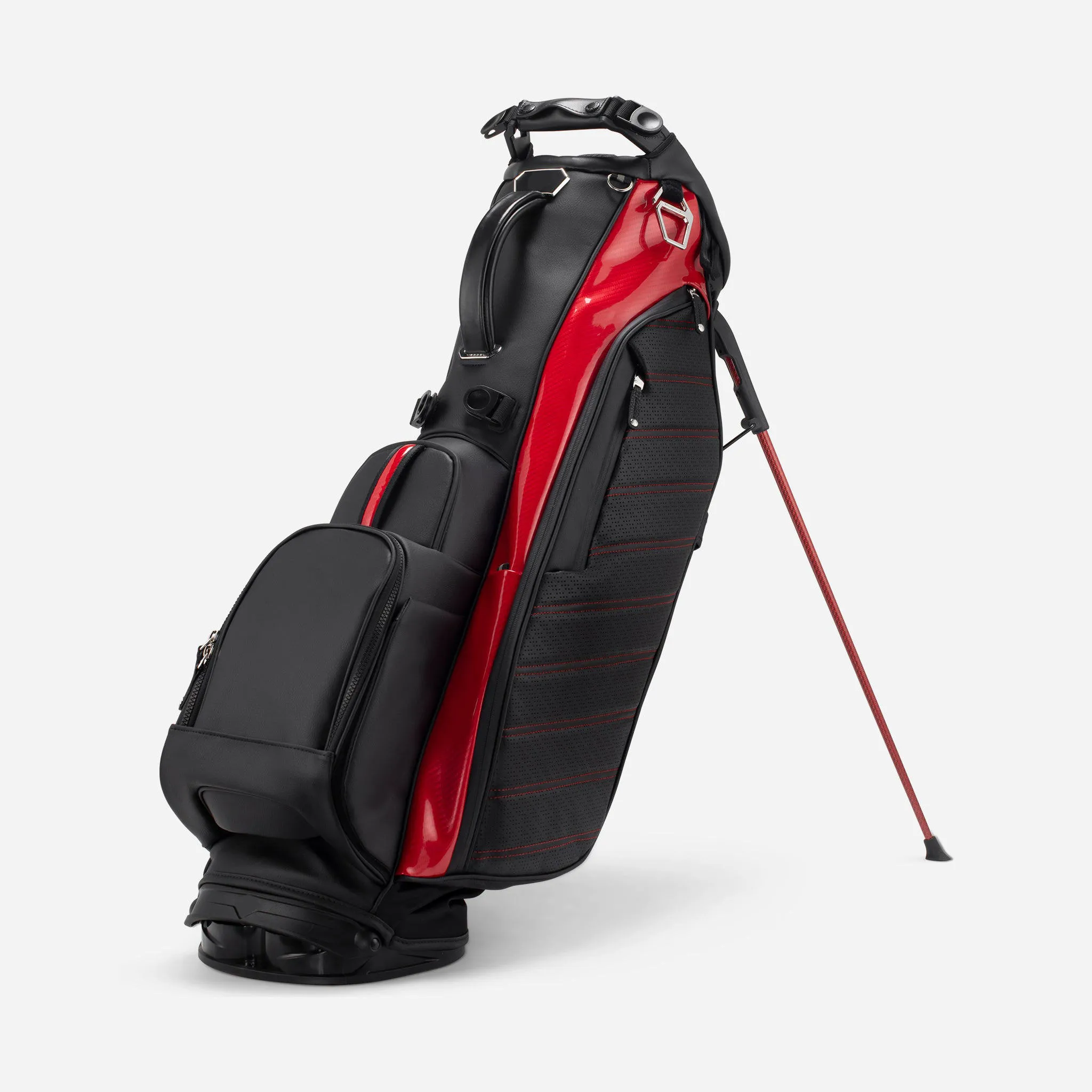
The strap webbing, buckles, and sliders are part of the bag's look as much as its function, so they need a trim standard. Color-band the webbing and hardware against the shell so a strap does not fight the logo or the colorway. Confirm the webbing finish resists fraying and looks clean at the edge, and that the buckles and sliders match the chosen hardware grade. Inconsistent trims across batches make the same bag look like two products on a shelf.
We lock the strap material and hardware finish on the sample and hold it through bulk, checking that straps sit tight, sliders run smooth, and color matches the approved trim. Because the strap is the most touched and most photographed part of a bag being carried, its finish quality reads instantly to a buyer. Getting the strap material and trim consistent is what makes the comfortable engineering also look premium on the course.
Match Strap Comfort to the Weight Target
The strap spec and the bag weight must be stated together, because the carry experience depends on both. A heavier bag needs a more capable harness — more padding, wider straps, a stronger anchor — while a light bag can carry on a leaner system. If the weight target drifts lighter or heavier during development, the strap spec has to follow or the comfort promise breaks. Lock the weight and the strap together in the same line of the brief.
We match the harness to the weight band per segment and re-check both on the sample, so the weight your customer feels is supported by the strap they carry it on. This pairing is what keeps a claim like "comfortable to walk 18" honest. When the strap, weight, and balance are specified together, the bag plays as it promises, and that is exactly what keeps a product line earning repeat buyers.
Test the Comfort With a Small First Order
Strap comfort is intensely personal, and no photograph proves it. The strongest validation is a test order put in players' hands for a weekend. Our test-order MOQ supports this at around 100 units, with a regular production order at 200 units per colorway, and sampling runs 10-20 days with bulk production about 45-60 days. Field feedback on whether the bag carries well, sits balanced, and stays put is worth more than another round of design review.
Use the field notes to adjust padding, adjust range, or anchor placement before locking bulk. A bag that a handful of testers carry without complaint is far more likely to earn good reviews than one approved solely against a checklist. This small-order discipline turns a strap spec from an assumption into an evidence-based decision, and it protects your first season from a comfort miss that would otherwise surface as returns.
Avoid the Common Strap Failures
Most strap complaints in the field trace to a handful of preventable causes. A strap that slips out of adjustment mid-round usually means the slider hardware is too weak for the load. A bag that sits lopsided typically has asymmetric anchors or an unbalanced center of gravity. A strap that chafes the neck often has too little padding at the right point or the wrong webbing finish. And a strap that tears away goes back to missing reinforcement at the anchor. Name the failures you most fear and put a check in front of each one.
We build QC checkpoints around these exact risks: a creep check under load, a balance check at the anchors, a fit-and-chafe review on the sample, and the anchor load test. Because the strap is the most handled part of a walking bag, its reliability decides a large share of your returns. Locking test targets for slippage, balance, and anchor strength is what keeps the comfortable first impression from turning into a warranty claim on round ten.
Branding and Strap Integration
The strap is one of the most visible parts of a bag being carried, which makes it a natural branding surface — and a natural way to look polished or messy. A tonal logo, a woven brand label at the top of the webbing, or a colored strap accent can carry your name into every exterior photo and on-course shot. Because the strap flexes with use, choose a logo method that survives folding: embroidery and woven labels hold best on webbing, while a printed mark can wear quickly on the high-flex zones.
Plan how the strap branding relates to the hero logo. A common clean approach is the hero mark on the front lower panel with a woven strap label as a second, quieter impression. State the strap branding method and placement in the brief, and test it on the sample so it does not peel or fray. When the strap carries your brand as cleanly as it carries the bag, the comfortable engineering becomes part of your brand story rather than a detail customers overlook.
Match the Harness to the Carry Profile
The ideal strap differs by how the buyer carries. A full-round walker wants maximum balance, generous padding, and a proven dual system because comfort across 18 holes is the whole point. A short-loop or resort player may value a lighter, simpler harness. A travel-heavy buyer wants a removable system that stores away. Define the carry profile in the brief and let it pick the harness, rather than selling every buyer the same strap. The feature that delights a walker can be dead weight for a rider.
Think of the harness as a small product-line decision inside the bigger one. Offering the same shell with a padded walking harness and a lighter removable harness expands your reach without a second full SKU, giving retailers two answers for a modest tooling cost. In our line we keep the anchor architecture compatible across harness options so a buyer can upgrade later. Matching the strap to the carry profile is what turns one architecture into several sellable stories.
Procurement Checklist for Your RFQ
- Strap configuration: dual self-balancing or single
- Adjust range and slider behavior (no creep under load)
- Padding thickness, shape, and density vs weight target
- Removable option and release-mechanism security
- Anchor reinforcement and static load test criteria
- Webbing, buckle, and slider finish and color-band
- Strap-stand shared anchor zone integration
- Test-order quantity and comfort validation plan
Related Product Architectures
Move from the article intent to a concrete model path. Use these as landing points, then submit an inquiry with your targets.
Lightweight Carry
Recommended Internal Links
- Products (Stand Bag Architectures)
- OEM/ODM Service
- Factory & QC
- Golf Stand Bag Buying Guide
- Choosing the Right Stand Bag
- Weight Targets by Segment
FAQ
What makes a golf stand bag strap comfortable?
Comfort comes from balanced geometry, adjustability, and good padding. A well-designed dual strap sits evenly on both shoulders, spreads the load, and lets you set the fit, which prevents the sore shoulder and slipped fit that ruin long walks.
How much padding should golf stand bag straps have?
It depends on the bag weight and the walk distance. Heavier bags and longer carry distances need more padding and a wider fit; light Sunday bags can use thinner straps. Specify the padding thickness and adjust range in the brief.
Are removable straps worth the cost?
Often yes for a travel or premium buyer. Removable straps make the bag easier to store, clean, or replace, and add a touch of upgrade. Decide per segment because removable hardware adds cost and a failure point to manage.
Why does the combination of straps and stand matter?
The straps and stand share anchor zones on the bag. A strap that pulls from a point that fights the stand hinge can feel unbalanced or wear fast. Design them as one system so the bag carries well and stands stable.
How is strap durability tested in the factory?
We run a strap anchor load test with a static load and a defined stitch failure criteria, and we check strap alignment so the bag sits balanced. Reinforcement and stitching at the anchors is part of the QC record.
Do you support OEM/ODM for golf stand bags?
Yes. We support OEM (branding on proven architectures) and ODM (co-develop structure, pockets, materials, and hardware). Provide your target market and quantity to start.
Request a B2B quote for golf stand bags
Send your target market, expected MOQ, and reference photos. We respond within 24 hours with a sampling plan.