On a golf stand bag, zippers and hardware are where quality shows first — a bag is only as durable as its weakest zipper, and brand-grade YKK or similar hardware that survives 3,000 to 10,000 open-close cycles will outlast cheap hardware that jams or breaks within a season. This guide covers what separates durable zipper and hardware systems, how to specify them, the cycle tests that verify strength, and the spec standards we hold at our SGS-verified affiliated plant in Quanzhou (4,950 sqm, 7 lines, 149 machines, 137 staff). For the wider golf bag category — cart bags, staff bags and more — our affiliated golf bag factory is the one-stop reference.
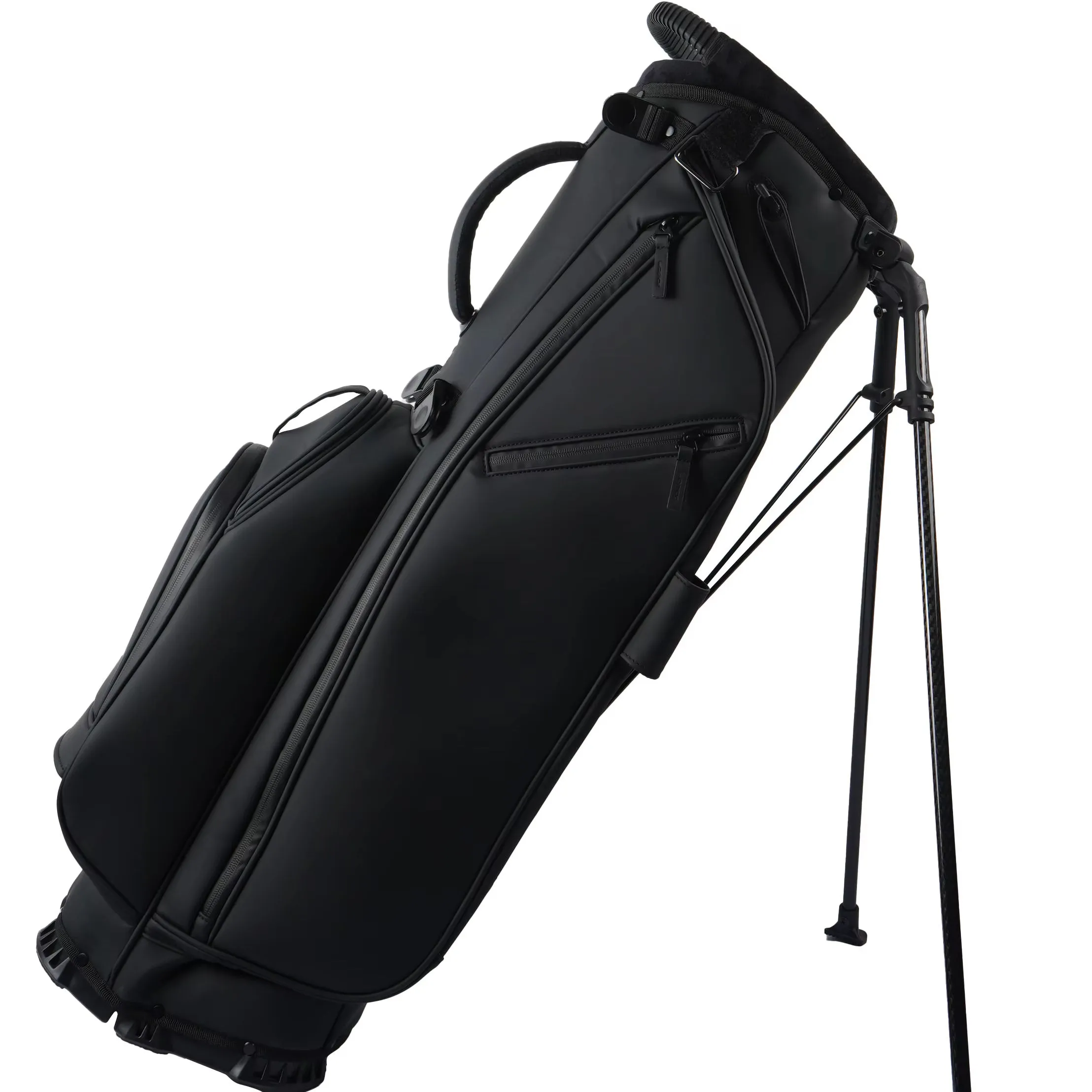
Key Takeaways
- Zippers and hardware are the highest-wear, highest-failure parts of a stand bag.
- Brand-grade zippers and hardware survive far more cycles than cheap alternatives.
- Specify zipper sizes and hardware materials in the tech pack, not just the look.
- Cycle tests and pull-strength tests verify durability before shipment.
- Coated or anodized hardware resists sun, weather, and rust.
Why zippers and hardware matter so much on a stand bag
A golf stand bag is opened and closed constantly — pockets for balls, tees, gloves, valuables, and the apparel compartment are all zipper-operated and get used repeatedly across a round. Zippers move sand, dirt, and moisture with them, which accelerates wear. Hardware — the clip buckles on the durability strap, the stand release, leg tips, and buckles — takes repeated force and exposure. Since the user handles zippers and hardware every single round, these small parts carry outsize weight in how a bag feels and how long it lasts. A beautiful bag with a sticky zipper reads cheap; a plain bag with smooth, solid zippers reads premium.
This is also where the durability floor is set. Cheap hardware is the most likely point of a mid-term failure: a jammed slider, a bent buckle, a leg tip that breaks, a pull that snaps. Because these parts are inexpensive individually, brands sometimes under-spec them to save pennies, then pay in returns and reputation. The counter is that specifying brand-grade zippers and hardware costs little relative to the fabric and build, yet delivers a disproportionate quality jump. For a B2B buyer this is one of the cheapest, highest-return spec decisions in the whole bag.
Zipper anatomy: what determine strength and feel
A zipper is a system, not a single piece. The coil or teeth, the slider, the pull, the tape, and the stops all work together. Coil zippers are common on bags because they are flexible and forgiving on curved panels; molded-tooth zippers offer a stronger, chunkier appearance; metal zippers give a premium look but need care in finishing to avoid snagging. The slider is the hardest-working part — the mechanism that opens and closes and takes the most routine stress. The tape that holds it all onto the fabric determines how cleanly the zipper sews on and how stable it stays. Each element is a spec choice with a cost and a durability consequence.
Standardization is a huge lever. Using a recognized brand, such as YKK, means you inherit consistent quality and predictable performance across sizes and models. Brand-grade zippers are also easier to source replacements for in spare-part programs, and their cycle-test documentation is available. Designers routinely choose the size of zipper by application — a heavier zipper for the apparel compartment and valuables pocket, a lighter one for smaller accessory pockets. Spec'ing the brand, size, and slider for each pocket in the tech pack is what separates a considered bag from one that just used whatever came to hand.
Hardware: buckles, clips, leg tips, and more
The hardware on a stand bag goes beyond zippers. The clip buckles that attach and adjust the straps take repeated, sometimes aggressive force, so they need a robust plastic or metal construction that resists stress cracks. The stand hardware — the hinge, springs, and the legs and tips — carries the mechanical load of deploying and standing the bag, so it must endure repeated cycles without wobble or breakage. Leg tips need a material that grips without wearing. Reinforced nylon or ABS with a UV-stabilized formulation is a common durable choice; metal accents add strength and a premium finish where weight allows.
The coating and finish of hardware matter as much as the base material. Unprotected metal rusts and dulls in the weather; plastic cracks when it is not UV-stabilized or is made of brittle recycled-grade material. Anodized, powder-coated, or brushed metal resists corrosion and sun dulling, and UV-stabilized plastics stay strong and color-stable. The right finish also lifts the perceived quality — a warm anodized buckle on a premium bag looks and feels expensive. Because hardware is touched constantly, both the mechanical strength and the finish are real quality signals a buyer can evaluate at a glance.
Brand-grade vs. generic: reading the quality gap
The difference between brand-grade zippers and hardware and generic alternatives is not marketing; it is measurable in cycle life and feel. A brand-grade zipper survives far more open-close cycles before wear becomes visible, keeps its slider moving smoothly longer, and holds its teeth alignment better. The visible payoff is a bag that still zips cleanly after a season of rounds. Generic hardware may pass basic inspection but degrade faster, jam sooner, and feel looser in the hand. For a product used as relentlessly as a stand bag, those differences surface in real use and are worth the modest spec cost.
The most reliable way to know you have brand-grade quality is to specify the brand in the tech pack and verify it at audit. Name your zipper brand and hardware grade in writing, ask for samples or certificates, and check the pulls and sliders carry the brand mark during inspection. A factory can and should confirm the brand and counterfeit risk. Spec'ing a recognized brand also smooths spare-parts support, because the same brand is easy to order replacements for. Brand-grade hardware is the single clearest proxy for "this bag will last," and it is purchasable for pennies more than the alternative.
Cycle tests that verify durability
The professional way to verify zipper and hardware durability is a cycle test, which mechanically opens and closes a zipper or deploys a stand over and over to reproduce field wear in a controlled way. A zipper cycle test that survives 3,000 to 10,000 cycles with a low defect rate is a strong durability standard, and it is how a factory proves the spec rather than asserts it. Stand and leg-cycle tests similarly confirm the mechanism can deploy and stand without wobble or cracking after thousands of uses. These tests convert "trust me, it's strong" into a number a buyer can hold the factory to.
Because the test is measurable, it belongs in the tech pack and the QC checklist. Specify the cycle target for the zippers and the stand, run the test on samples and at sampling QC, and ask for the test records on your lot. A factory that runs and documents these tests gives you proof that a season of use will not break the zippers — and that proof protects you from claims and supports a confident warranty. In our sourcing practice we align hardware and zipper specs to these cycle standards, and we support running the tests and providing the records a wholesale buyer needs to sell durability with confidence.
Hardware and zipper spec comparison
The table below compares common zipper and hardware choices across the tiers you will meet in sourcing, showing how price and durability move together. Use it to set a spec that fits your segment without overspending.
| Component | Entry Tier | Value Tier | Premium Tier |
|---|---|---|---|
| Zipper brand | Generic standard coil | Brand standard (YKK-class) | Brand heavy-duty coil |
| Slider feel | Functional, some drag | Smooth, consistent | Smooth, snag-free, premium pull |
| Buckle/clip | Basic ABS plastic | Reinforced nylon | Reinforced + coated / metal accent |
| Leg tips | Basic rubber | Durable rubber/TPR | High-grip, wear-resistant |
| Finishing | Standard | UV-stabilized | Anodized/powder-coated |
Design for zipper and hardware longevity
Beyond choosing good parts, how you design around them extends their life. Position high-wear zippers on flat or gently curved panels rather than sharp corners, where tape and teeth stress. Protect slider pulls so they do not catch and snap — a small design detail that prevents a common failure. Select zipper size appropriate to the pocket's load: the apparel compartment and valuables pocket carry the heaviest use and deserve the sturdiest zipper. Reinforce hardware anchor points where straps or the stand attach, so the seam holds as well as the part. Design and part choice work together for durability.
Water and dirt management matters too. Zippers and hardware packed with sand or moisture wear faster, so a mesh pocket that drains, and a construction that keeps grit out of slider tracks, prolongs life. Covered or recessed hardware where it is exposed protects it from knocks and weathering. These are low-cost design decisions that measurably extend hardware service life. For a B2B line, adding durability design to the tech pack — cycle-tested zippers, reinforced anchors, weather-tolerant finishes — turns "quality parts" into a fully specified, defensible build that sells itself on longevity.
Spare-parts support for zippers and hardware
Because zippers and hardware are the most likely components to wear, a spare-parts program built around them is the most valuable warranty support you can offer. Holding a small stock of zippers, sliders, buckles, pull cords, and leg tips lets you fix a component-level failure with a fast free part instead of a full-bag replacement. The big win is margin: replacing a slider is a fraction of the cost of a whole bag, and it resolves the claim quickly. Specify this spare list with the factory during production so the parts are reorderable and shared across models where possible.
For a wholesale buyer, spare-parts support turns a durable build into a lower-risk investment. It also protects your warranty program from the most common claim driver while improving customer satisfaction. Communicate the spare-parts promise clearly — a fast free replacement part for the zipper or buckle is a stronger message than a vague warranty, and it costs you little to offer once the parts exist. In our practice we support defining the spare-parts list and keeping brand-grade hardware reorderable, so your durable, hardware-strong line also has a support system that keeps every customer standing behind it.
Inspection and QC for zippers and hardware
To ensure the shipped bag matches the durable spec, fold zipper and hardware checks into inspection. At audit, verify the zipper brand and grade match the tech pack, run the slider smoothly through its full length on every pocket, and check the pulls for snag points and the stops for solid attachment. Check buckles for stress cracks, the stand mechanism for smooth deployment with no wobble, and leg tips for grip and hardness. A working functional test on sampling — not just a visual check — is the fastest way to catch a bad hardware batch before it ships.
A QC-enforced hardware standard protects both the buyer and the factory. For the buyer it means the durable claim is true for every unit, not just the sample. For the relationship it avoids the painful discovery of a jammed-zip lot on arrival. Ask your factory for the inspection checklist covering zippers and hardware, and request the cycle-test records on your lots where durability matters most. Making hardware QC a documented, repeatable step is the difference between a bag you assert is durable and a bag you can prove is — and proof is what wins repeat wholesale business.
Zipper size and placement by application
Zipper sizing is application-driven, and matching the size to the job extends life and saves cost. The apparel compartment that holds a change of clothes and the valuables pocket, both opened frequently and loaded heavily, deserve the heaviest zipper in the bag — commonly a larger coil or a reinforced construction. The ball, tee, and accessory pockets see lighter loads, so a standard-size zipper serves them well and keeps weight and cost down. The rain hood and small premium pockets can use lighter zippers, as they open less often. Choosing the right size per pocket is a small engineering decision with real durability and budget consequences.
Placement is the second half of the equation. A zipper sewn onto a sharp curve or a tight corner stresses the tape and teeth unevenly and fails early; laying the opening on a gentle curve or a straight seam keeps it reliable. The slider pull should sit where it is easy to grip but not likely to catch on the stand or strap. The valuables pocket zipper, which guards the most-cared-for items, deserves the surest slider. When size and placement are both planned in the tech pack, the bag's zippers feel intentional and hold up over a season, which is exactly the engineering polish a premium line shows.
Stand hardware: the mechanism behind a reliable stand
The stand system is the hardest-working mechanical hardware on a golf stand bag, and its reliability decides whether the bag stands level or sags. The hinge block, the deployment springs, the legs, and the leg tips all endure thousands of cycles. A well-built hinge rotates smoothly without wobble or creep, and the springs deploy the legs with a clean, consistent action. Over time, a weak hinge or a tired spring makes the bag feel unstable — the very "stand wobble" that tops warranty complaints. Spec'ing a reinforced hinge and springs matched to the bag's loaded weight is what keeps a bag standing straight for the long haul.
Test the stand, don't just admire it. A stand cycle test that deploys and folds the mechanism thousands of times reveals early wobble, cracking, or spring fatigue before shipment. Match the leg material and tips to the expected surface — on hard range mats and cart paths, wear-resistant tips with real grip matter. Because the stand is the bag's defining mechanism and its most complex hardware, verified stand durability is a line between a quality pulling stand and a frustrating one. A factory that cycle-tests its stands gives you a bag you can present as genuinely reliable in hand.
Reading quality at a glance: what to feel and look for
A buyer can read a lot of zipper and hardware quality without a lab. Run a slider through its full length by hand: brand-grade zippers move smoothly with even resistance, while cheap ones catch, skip, or feel gritty. Look for a positive, firm stop at both ends and a solid pull that does not rattle. Check the pulls for burrs or sharp edges that snag fabric and catch rope. Squeeze and flex a buckle to feel for flex and brittleness: a durable nylon buckle bends and springs back, while a brittle plastic creaks or flexes too far. These quick feel-tests are surprisingly predictive of how a part will behave after a season.
Visual cues matter just as much. Examine the sewing where zippers attach — dense, even stitches that hold the tape flat indicate care; wide, loose stitches invite early pull-out. Check that the zipper brand mark and pull logos are consistent and legible, which is also evidence against counterfeit hardware. Inspect the finish on metal parts for even coating without pitting, and confirm plastic parts are UV-stabilized (they resist yellowing and cracking in the sun). A buyer who adds these at-a-glance checks to the audit routine catches most quality problems before they ever reach the customer.
Approaches compared for a durable build
The table below summarizes how each durability lever — parts, design, finishing, and testing — contributes to a long-life stand bag, so you can balance them for your segment and budget.
| Lever | Example | Protects Against | Cost Impact |
|---|---|---|---|
| Brand-grade parts | YKK-class zippers | Jams, slider failure | Low |
| Sized-for-application | Heavy zipper on apparel pocket | Premature wear on loaded pockets | None |
| Reinforced anchors | Reinforced strap and hinge points | Pull-out at stress seams | Low |
| Weather-resistant finish | Anodized / UV-stabilized parts | Rust, cracking, sun dulling | Low |
| Cycle testing | 3,000-10,000 cycle test | Wobble, breakage, early failure | Moderate |
Wholesale and OEM: how to spec it all cleanly
For a wholesale or OEM buyer, the cleanest way to lock in durable zippers and hardware is to put every decision in the tech pack and the inspection contract. Name the zipper brand and grade, the slider type, the buckle material, the leg-tip material, and the finish for each component. State the cycle-test and pull-strength targets for the zippers and the stand. Then instruct the inspector to verify the brand marks, run the functional tests, and record the results. A fully specified, inspected build removes the guesswork and the silent spec-downgrade that happens when a factory tightens margin at audit time.
This clarity protects both sides. The buyer receives exactly the durability they paid for, and the factory avoids a dispute over an ambiguous spec. It also builds a smooth relationship for the next line: a buyer who specs cleanly is a buyer a factory wants to keep, which tends to flow back into better attention and service. In our OEM practice we support exactly this — putting brand-grade zipper and hardware specs, cycle-test standards, and inspection records into the work order so a durable build is documented, not hoped for. That is how a "sturdy zipper" becomes a defensible, differentiable quality claim. Reach us at service@junyuanbags.com or +86 17750020688 to lock in a durable spec for your line.
Recommended Internal Links
- Products (Stand Bag Architectures)
- OEM/ODM Service
- Factory & QC
- Golf Stand Bag Buying Guide
- Stand Bag Materials Guide
FAQ
Why do zippers fail on golf stand bags?
Sand, dirt, and moisture move with the zippers across thousands of openings, wearing the teeth and slider. Cheap hardware degrades faster, while brand-grade zippers that survive a 3,000-10,000 cycle test last far longer.
What zipper brand should a stand bag use?
Brand-grade zippers such as YKK are the reliable standard because they offer consistent quality, predictable cycle life, and easy spare-parts sourcing. Spec the brand in the tech pack and verify it at inspection.
How do I test that a zipper is durable?
Run a zipper cycle test that opens and closes mechanically, targeting roughly 3,000 to 10,000 cycles with a low defect rate. Stand and leg-cycle tests similarly verify the mechanism under repeated use.
What hardware on a stand bag wears out fastest?
Slider pulls that snag, buckles under strap load, and stand leg tips under repeated deployment wear fastest. Reinforced nylon or UV-stabilized plastics and coated or anodized metal resist these stresses.
Is brand-grade hardware worth the extra cost?
Yes. It markedly extends cycle life and keeps the bag feeling premium, at a modest spec cost. On a high-wear product like a stand bag it is one of the best quality-per-dollar returns available.
How do I stop zippers from rusting or snagging?
Choose coated, anodized, or powder-coated hardware, use UV-stabilized plastic parts, protect pulls so they do not catch, and keep sand and moisture out of slider tracks with mesh drains and tight construction.
Can you spec durable hardware for my line?
Yes. We support spec'ing brand-grade zippers and hardware with cycle-test standards, reinforced anchors, and weather-tolerant finishes, plus a spare-parts list for fast, margin-saving warranty support.
Request a B2B quote for golf stand bags
Send your target market, expected MOQ, and reference photos. We respond within 24 hours with a sampling plan.