For the most compact small carry, see our pencil bags — When B2B buyers say a golf stand bag is "top rated," they are rewarding four things in order of influence: a stand that stays stable without wobble across hundreds of rounds, a weight that matches its advertised spec within about 0.1 kg, reliable zippers and strap anchors, and honest value — the features that survive daily walking play rather than the ones that photograph best. This guide turns what consumers and distributors rate most into measurable, manufacturable specifications at QUANZHOU JUNYUAN BAGS (SGS-verified March 2026, 4,950 sqm, 7 lines, 149 machines, 137 staff) so your 2025-2026 catalog earns the ratings buyers actually trust.
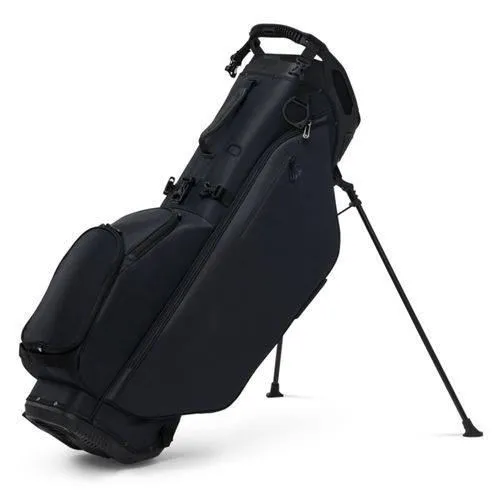
Key Takeaways
Review scores are not random; they cluster around a small set of behaviors that a factory can and should engineer. A top-rated bag is one where the stand does not betray the player halfway through a season, the weight is honest on the scale, the zippers and straps do not fail under real load, and the price is defensible for what is delivered. For a B2B team, that means the path to a high rating is a strong spec plus disciplined QC, not a clever gimmick.
- Stand stability is the #1 driver of top ratings and the #1 source of bad ones
- Weight must match spec within ~0.1 kg or reviewers penalize it hard
- Zipper smoothness and strap anchors drive consistent positive comments
- Organization (14-way) and waterproofing earn praise in their target markets
- Value is deliverability — features meet their stated spec at a fair price
- QC on the production sample is what turns intent into a real high rating
What reviewers actually reward
Rather than guess at what makes a bag "top rated," look at the language that recurs in high-scoring reviews across the category. The most repeated praise is about the stand: how it deploys smoothly, locks firmly, and stays put on a slope or wet grass. The second most repeated complaint, by a wide margin, is weight — not the bag's absolute weight, but the gap between the advertised weight and what it feels like on the shoulder. Buyers read a spec, and when the poduct does not match it, they downgrade with a very visible review.
The third cluster of comments centers on the zippers and straps: players mention a zipper that glides without catching, a strap that does not pinch or slide out of adjustment, and an anchor that holds the loaded bag without strain. What reviewers rarely praise is a specific abbreviation or a branded feature; they praise outcomes. That is the key insight for a B2B sourcing team: a bag earns top ratings by hitting its stated specs and by not failing at the daily-use points, which is exactly what a disciplined QC loop can guarantee.
The stand: the #1 rating driver
The stand is the first thing a player tests and the first thing that can fail, which is why it dominates ratings. A top-rated bag uses a reinforced hinge block, aluminum or composite legs with a comfortable spring-loaded deployment, and a base with traction lugs so it does not slip. The failure mode that triggers the worst reviews is stand wobble over time — hinge-tolerance drift, leg-tube fatigue, or base wear — which is why the deployment-cycle test with a defined target and a base-stability check for angle, slipping resistance, and leg-spread consistency are the most important tests in the QC plan.
If you are sourcing, put the cycle target and the stability criterion in the RFQ so the sample is judged against numbers. Reviewers reward a stand that feels solid on day one and is still solid at day sixty, and that is a manufactured property, not an accident. Our factory QC page shows the deployment and stability tests every stand program runs before it ships.
Honest weight: the fastest way to lose rating points
Nothing sinks a rating faster than an honest scale versus an advertised spec. A reviewer who weighs a bag and finds it 0.2 kg heavier than the listing will say so, and that one review colors the whole product. The discipline that prevents it is manufacturing to a weight target with a stated tolerance — typically around ±0.1 kg for a carry bag — and verifying it on the production sample, not just the concept sample.
The weight challenge is that every feature adds grams, and the bag changes weight with the material lot, the strap spec, and the divider system. The best practice is to set the weight ceiling, order the features by priority, and hold the heaviest adds — the waterproof package and the 14-way dividers — to a committed budget. A bag that delivers its honest light weight every season is the bag that keeps its high rating, and it is a spec we lock at the PPS stage and re-verify at inline QC.
What the top-rated feature mix looks like by segment
The "top rated" label is not one bag; it is a few well-executed archetypes. Here is how the winning feature mix clusters by segment, which a B2B team can use to plan SKUs that rate well in each target market:
| Segment | Top-Rated Feature Mix | Primary Rating Drivers | Key QC Point |
|---|---|---|---|
| Ultra-light carry | Sub-2.0 kg, simple 4/5-way, stable stand | Comfort, honest light weight | Weight tolerance + stand cycle |
| Core carry 4/5/6-way | 2.6-3.0 kg, durable zippers, dual strap | Reliability, value, balance | Zipper + strap-anchor load tests |
| 14-way full-length | 3.0-3.5 kg, full tubes, magnetic pocket | Organization, club protection | Divider alignment + top QC |
| Waterproof | Seam-taped package, water zippers | Dry gear, all-weather trust | Hydrostatic head + seam integrity |
| Hybrid stand-cart | Balanced carry + cart features | Versatility for mixed users | Weight creep + cart wear points |
Notice that the top-rating drivers in each segment are measurable. If your brand wants a bag that rates in a specific segment, brief the segment's driver as a number and lock its QC test. A core carry bag that survives the zipper and strap tests without complaints is a genuinely top-rated product in its band, and it needs no gimmick to get there.
Organization and waterproofing as rating multipliers
Two features act as rating multipliers when executed well. In the organization segment, a 14-way full-length top that keeps clubs from tangling and grips protected earns strong positive reviews, because it solves a problem the player feels every round. The layout matters too — a putter well that holds the flat stick without rattling, and club openings arranged the way players actually load the bag. In the waterproof segment, a seam-taped package that genuinely keeps gear dry in rain earns trust that carries across many reviews, because a dry bag is appreciated every wet round and a leaky one is unforgiveable.
Both features are rating drivers in their target markets and near-neutral elsewhere, which is why the marketing advice is to decide your segment before you build. A bag trying to be everything gets middling scores everywhere; a bag that nails one segment's driver gets a high score in the reviews that matter for that buyer. Plant the feature in the right market, hold its QC test, and the rating follows.
One nuance worth signalling in the spec is that a waterproof package and organization do not have to isolate from each other. A seam-taped 14-way bag that protects clubs from tangle and from rain is the fastest-rising "top rated" combination in temperate, wet regions, because it closes two complaints at once. If that is your target market, combine both drivers in one program and verify both QC tests on the same sample — it earns the label with a single SKU rather than two.
Market signals: what buyers actually rated well in 2025
The "top rated" conversation in 2025 was driven by a search-and-review volume heavily weighted toward a few proven feature words. Industry round-ups and retailer data tracked a persistent cluster of search interest in lightweight carry bags riding the walking-golf rebound after the post-pandemic participation rise, in 14-way organization, and in waterproof packages as weather variability pushed more rounds into wet conditions. Golf equipment market analyses sized the total equipment category in the low single-digit billions of US dollars with steady mid-single-digit annual growth, and stand bags consistently sat among the carry-adjacent segments that grew with walking participation.
Two data points sharpen the plan. First, the carry bag leadership battle revolves around a 0.2-0.3 kg weight band at the top of the market, where players who walk are willing to pay a meaningful premium for every hundred grams saved — far more than for any single accessory feature. Second, retention data in existing golf equipment programs shows that a buyer who is satisfied with a well-weighted carry bag reorders at a materially higher rate than one who bought on visuals alone, which is why brands that protect their weight spec protect their repeat business. Both points push a B2B team toward locking the weight ceiling as a hard number in the RFQ.
A realistic breakdown of the "top rated" decision
When a distributor narrows a shortlist to the final candidate, the tiebreaker is almost never the brand logo. It is a small set of felt details: does the stand deploy on the second try after a season, does the loaded loop sit comfortably, do the zippers run smoothly under tension, does the advertised weight hold up on a real scale. Because these are manufactured properties, the distributor's rating of one factory versus another tracks the factory's QC discipline. A buyer who has lived through a bad season of stand returns will rank a factory that can show a deployment-cycle test and a stability criterion well above one that cannot, regardless of samples that photograph beautifully.
That is the actual content behind the "top rated" label observed in 2025 purchasing decisions: the label is earned through repeatability. A trademark or a clever name gets a bag onto a shortlist, but it is the repeatable execution of the six-feature system — stand, weight, zippers, straps, dividers, pockets — that keeps it there and converts the shortlist into an order. Plan the catalog with that in mind and your SKUs are positioned to rate well in the segment you choose.
Why a top-rated bag is a six-feature system, not a single highlight
Buyers rarely describe a top-rated bag with one feature; they describe a system that works together. The stand, the weight, the zippers, the straps, the dividers, and the pocket layout all have to cooperate, because a bag that nails its stand but tears at a pocket seam, or that organizes clubs beautifully but is exhausting to carry, drops out of top-rated lists fast. Thinking in systems matters because changing one element changes the others: adding the waterproof package raises weight, which can upset a carry rating, so the material and the weight target have to be balanced in the same spec.
This is the most common sourcing mistake we see with buyers chasing a top-rated outcome — they treat features as an a la carte menu rather than an engineered system. The better approach is to define the target segment, attach its rating driver, and let every other decision serve that driver. A walking-first carry bag commits its weight budget and stand quality first; a waterproof bag commits its seam and zipper package first. Engineering the system around one clearly chosen driver is what separates a genuinely top-rated product from a specification sheet with a long list and a mediocre result.
A useful way to brief the system is to rank the features by their contribution to the rating you want, and to put a hard budget on the heaviest and most failure-prone ones. For a carry bag, the table below shows how a typical winning stack orders its priorities and where the QC budget is concentrated — the same ordering a design team should state at the start of a program.
| Feature | Rating Contribution | Cost Levers | QC Priority |
|---|---|---|---|
| Stand system | Highest (stability, wobble) | Hinge, legs, base | Deployment cycle + stability |
| Weight deliverability | Highest (perceived honesty) | Materials, straps, dividers | Weight tolerance on PPS |
| Zippers & straps | High (daily-use reliability) | Zipper standard, padding | Cycle + load tests |
| Organization | Medium (segment-dependent) | Dividers, top assembly | Divider alignment |
| Waterproof package | Medium (market-dependent) | Fabric, seam tape, zips | Hydrostatic + seam integrity |
The QC pass/fail for these drivers is the difference between a bag that claims weight and a bag that delivers it. Stand deployment targets the cycle count and the wobble threshold, the weight check hits a tolerance band around the advertised figure, the zipper and strap tests measure pull force and stitch load, and the seam test validates stitch spacing and reinforcement. Put them in the AQL with clear acceptance limits and the production batch inherits the rating drivers mechanically rather than hoping.
How to differentiate a top-rated bag without copying
Leading brands are top rated because they execute proven features reliably, not because they invented a secret. You can adopt the same feature logic — a stable stand, honest weight, reliable zippers and straps, good organization — and build your own design language and specifications around it, and the reviews will reward execution regardless of brand. "Inspired by a leading bag" is a market-accepted starting point; what the ratings separate is who executes the detail.
Differentiate on a functional signature you control and can measure: a stand that holds on a steeper slope than the category norm, a weight tolerance tighter than the advertised range, or a zipper cycle target higher than the entry standard. Each gives your sales team a defensible claim and gives reviewers a concrete reason to praise the bag. When every positive review names the same well-executed feature, that feature becomes your brand's top-rating signature.
Value: deliverability defines the rating
The word "value" in top-rated reviews usually means deliverability: does the bag hit its stated spec at a fair price, without a hidden compromise? Reviewers tolerate a bag that is not the lightest or the most feature-rich, but they punish a bag that advertises one thing and delivers another. That is why the highest-rated value bags are not the cheapest — they are the ones whose performance matches the price, backed by QC that keeps every unit consistent.
For a distributor, protecting the value rating means protecting consistency across the run. A sealed master, a first-article inspection, and a repeatable reorder that matches the original keeps the rating intact season after season. It also means being honest in the listing — state the real weight, the real divider layout, and the real waterproof scope, and let the product earn the four or five stars rather than the marketing.
Practical guidance for the listing is to publish the same numbers you manufacture to: grams or pounds with a tolerance, the divider count, the waterproof scope, and the material. When the listing matches the sealed master, the difference between expectation and delivery disappears, which is precisely the condition that produces the steady four-and-five-star distribution review sites reward with placement. A durable high rating compounds in search visibility and conversion, which makes honest deliverability a marketing asset rather than a cost.
Building the procurement worksheet for a top-rated program
To build a top-rated stand bag the way the data suggests, capture everything in a one-page worksheet before the RFQ: the target segment and its rating driver, the weight ceiling and tolerance, the divider configuration, the material and any waterproof or rPET scope, the pocket list, the logo method, and the AQL plus functional test requirements for stand, zippers, strap, and seams. State the rating drivers you intend to win and the tests that prove them.
Send that worksheet with your target market, expected MOQ, and reference photos to service@junyuanbags.com or +86 17750020688 and we return a concrete plan — a pre-production sample in 10-20 days and bulk in 45-60 days. The catalog that earns high ratings is the one that wires the rating drivers into the spec and the QC checkpoints, then repeats that formula reliably across the season.
QC checklist that protects a high rating
- Stand deployment cycle test (target cycles + failure criteria)
- Base stability check (angle, slip resistance, leg-spread consistency)
- Weight verification against advertised spec on the PPS
- Zipper smoothness + cycle test (pull force and jam rate)
- Strap-anchor load test (static load + stitch-failure criterion)
- Seam and (if applicable) waterproof-seam integrity test
Run these against the production fabric and components, keep a sealed master, and the top-rated outcome stops being luck. Reach us to start — a well-spec'd evaluation sample is one email away.
FAQ
What makes a golf stand bag top rated in reviews?
The consistently top-rated bags earn high marks for a stable stand that does not wobble, a balance of carryability and organization, durable zippers and straps, and value — the features that survive daily use rather than the ones that photograph best.
Are reviewers more likely to rate lightweight or 14-way bags higher?
It depends on the audience. Walker-focused buyers rate ultra-light bags highly for comfort, while organization-focused buyers rate 14-way full-length bags higher for club protection; top overall lists usually reward the bag that balances both rather than extremes.
Why do reviews penalize stand bags for weight more than other features?
Weight is felt on every single shot and walk, so it dominates satisfaction more than occasional-use features. A bag advertised as light that arrives heavier than its spec triggers the most negative reviews, which is why the production sample must hit the stated weight.
How important is a waterproof package to a top-rated 2025 bag?
Protection from water is one of the strongest drivers of positive reviews in rainy and temperate regions, because a dry bag earns trust every round; in dry markets it is a nice-to-have rather than a rating driver.
How can we build a top-rated bag without copying a leading brand?
Adopt the proven feature logic — a stable stand, balanced weight, reliable zippers and straps, good organization — and execute it with your own measurable specifications and QC, which reviews reward equally regardless of brand.
What is the fastest way to get an accurate quote for a top-rated style bag?
Send bag type, material direction, divider (4/5/6/14-way), pocket list, logo method, target MOQ, timeline, and reference photos or a tech pack.
Recommended Internal Links
Request a B2B quote for golf stand bags
Send your target market, expected MOQ, and reference photos. We respond within 24 hours with a sampling plan.