Practice golfers can also browse our range and simulator golf bags — For a B2B buyer of golf stand bags, the valuables pocket is the trust point of the whole bag — a phone and keys live in it through a round, and the difference between a splash-resistant pouch and a sealed waterproof pocket with a soft lining and a covered zipper typically moves unit cost by 3-7% while deciding whether your retailer hears "my phone got wet." This guide breaks down the lining decision, the waterproofing level, the closure security, and the placement rules we engineer at our SGS-verified Quanzhou plant (4,950 sqm, 7 lines, 149 machines, 137 staff), so your valuables pocket matches the real demands of your market.
Key Takeaways
The valuables pocket earns its place on the spec sheet because it carries the two things a player cares most about protecting on the course: a phone holding a scorecard and a wallet with cards. Its failure modes are specific — a wet phone from condensation or rain, a scuffed screen from a bare hard seam, a rattling pocket that draws attention, or an opening that invites a snatch. Each maps to a spec decision a buyer makes at the brief stage, so getting the pocket right is a real risk-reduction move rather than a line item.
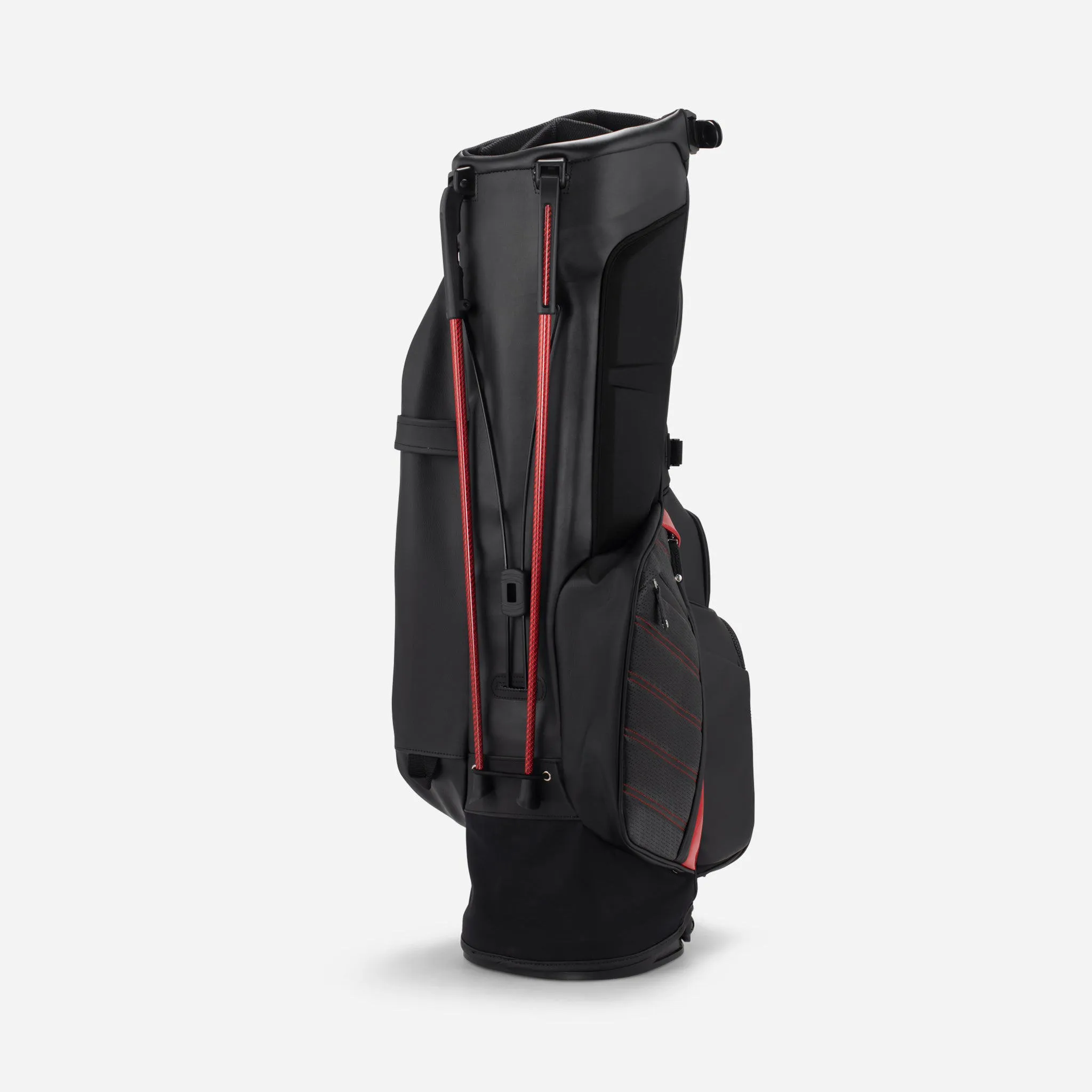
At QUANZHOU JUNYUAN BAGS we treat the valuables pocket as a small security and comfort engineer: soft lining, the right waterproof level, a secure closure, and a placement that balances reach against visibility. The values below are the levers we lock — a lining choice, a waterproofing method, a closure style — and we verify them on a loaded sample so the pocket's promise holds in the field. On a stand bag specifically, placement is tighter because the bag folds, so the pocket must clear both the strap and the leg mechanism.
- Soft, non-scratch lining protects a phone and cards and reduces rattle
- The waterproof level must be defined — splash-resistant is not waterproof
- A covered zipper and an interior secure insert improve both security and silence
- Placement balances reach against visibility and stays clear of the stand
- QC tests — a water-integrity check and a quiet-closure check — prevent wet-phone claims
What a valuables pocket must actually do
A valuables pocket is different from the other pockets because its job is containment and protection of items that are both fragile and high-value, not just storage of bulk gear like balls or apparel. It must hold a phone, a wallet, and keys together, keep them from rattling and scuffing each other, resist moisture, and open and close easily but securely. On a carry stand bag it also sits on the moving structure, so it cannot deform when the legs deploy or the bag is compressed on a cart.
The engineering starts with deciding what "valuables" means for your line. For a resort or club bag, the pocket may hold a phone, a glove, and a couple of cards; for a travel or competition bag, it may need to hold a larger phone, a passport-style wallet, and keys, and possibly stand up to a cart wash. Because the required size, lining, and waterproof level all scale with what the pocket must carry, the fastest path to an accurate quote is to state the intended contents and the environment. From there we route the pocket dimensions, the buff, and the closure to the real duty, not a generic pouch.
Lining: soft protection and rattle control
The lining is what separates a pleasant valuables pocket from one that turns a phone screen into a scratch magnet. We line the interior with a soft, non-scratch fabric — commonly a fleece-like or fine-napped material on premium lines, or a smoothly coated fabric on mid-tier — so a phone resting against the wall does not scuff, and keys do not rattle against a hard seam. The lining also gives the pocket a premium feel in the sample room, which retailers notice and photograph.
Rattle control is a separate but related concern. A loose pocket full of keys and coins clanks with every step on a quiet morning tee, drawing attention and annoying the player. The practical fix is an interior divider or a snug transverse strap that holds the contents rather than letting them slide. When you ask for a "quiet" valuables pocket, we spec the lining, a padded buff, and a close fit to the intended contents, and we confirm the silent closure on the sample. State whether a phone stays in all round or is taken out each shot, because that changes whether a snug friction fit or a quick-clear interior is the better call.
The waterproof level: splash-resistant versus sealed
Moisture is the valuables pocket's biggest enemy, and specifying the wrong waterproof level is the most common mistake. A standard valuables pocket with a plain zipper and an uncoated lining is splash-resistant at best — it shrugs off light rain but will wet a phone if water pools around the zipper or if the pocket is left open. A fully waterproof valuables pocket is a different construction: a TPU or polyurethane coated interior liner, a sealed or taped seam method, and a covered or water-resistant zipper, so contents stay dry through sustained rain or a cart wash.
Between those two ends there is a useful middle: a coated lining with a water-resistant zipper that handles normal rain without the full cost of a sealed welded pocket. The right level depends on your market and price position. A coastal, wet-climate, or travel-oriented line usually justifies the waterproof build; a dry-climate mid-tier line can hold cost with the splash-resistant package. Tell the factory the waterproof claim you intend to market — "waterproof valuables pocket" versus "moisture resistant" — and we will engineer the lining, seams, and closure to back that claim honestly, because marketing a claim the pocket cannot meet is a fast path to returns.
| Valuables Pocket Option | Water Protection | Lining / Construction | Best Fit |
|---|---|---|---|
| Splash-resistant | Light rain, no pooling | Soft lining, plain or lightly coated zipper | Mid-tier, dry-climate lines. |
| Coated / water-resistant | Normal rain, moderate sealing | Coated lining + water-resistant zipper | Standard all-season programs. |
| Sealed waterproof | Sustained rain, cart wash | TPU liner, taped/welded seam, covered zipper | All-weather, travel, premium lines. |
Closure and security: the covered-zipper detail
The closure is the valuables pocket's security layer, and it needs more thought than a simple open mouth. A full-width zipper is the standard for keeping contents sealed and rain out, and we favor a covered puller or a small zipper garage so the slider does not catch clothing or let water enter at the top. On the security side, a single covered zipper that terminates at one side gives a cleaner, more tamper-evident open than two pullers meeting in the middle, though two pulls can be convenient for reach on a deep pocket.
Some programs add a small interior secure insert — a mesh or fabric sleeve with its own mini-zipper inside the main pocket, so a phone or wallet can be double-contained. That is a differentiator for travel and resort lines, and it is cheap to add at the pattern stage. If snatch-resistance matters for your market, placement plays the larger role (a less visible rear or hip-side pocket), and we can add a low-profile closure tab that does not advertise the contents. Specify the security need and we will match the closure and the insert without over-engineering the pocket for a market that does not need it.
Placement: reach, visibility, and the stand structure
Where the valuables pocket sits balances three things: the player's reach, how visible and tempting the pocket is, and the folding stand geometry. The most trusted placement is a rear-facing or hip-side pocket high enough to reach without deep bending, usually tucked so it is not the first thing a passer sees as the bag hangs — a small deterrent to a casual snatch. It must also clear the shoulder strap line and the stand hinge, because a pocket that folds with the legs will buckle or tear out.
On the folding stand bag the placement constraint is the same map we use for every flank pocket: avoid the hinge block, the bottom wear plate, and the dual-strap anchors. Because the valuables pocket is typically on the rear upper zone, it sits close to where the strap webbing runs, so we confirm the opening axis does not collide with the strap on the loaded silhouette. If you offer removable straps, the pocket can sit a little higher; fixed dual straps constrain it lower. State the strap configuration and we will place the pocket so it is usable, tucked, and structurally safe.
Condensation and your wet-phone risk
Even a perfectly sealed valuables pocket can wet a phone indirectly through condensation. When a cool, sealed pocket meets warm, humid air, moisture condenses on the interior liner, and on a rear-facing pocket sweat from the wearer's back adds another source. The fix is partly the lining — a coated or TPU surface that beads rather than absorbs — and partly the seal, so moisture cannot enter and pool where the phone sits. On a rear pocket, positioning it slightly away from the highest-perspiration zone of the carry pad helps too.
We test for this rather than assume it: a water-integrity and condensation check on the assembled pocket confirms whether moisture migrates to the phone area, and we adjust the lining or the zipper seal if it does. Cleanliness is a related benefit of the right coating — a beading liner is easier to wipe than an absorbing fleece, which matters for a pocket that holds food-adjacent items. If your line markets the valuables pocket as phone-safe, the condensation test is the evidence your QC report should carry, and we are happy to include it.
Pocket styles: zipper, flap, and the mesh interior
Valuables pockets come in a few recognizable constructions, and the choice changes both the cost and the user experience. The classic is a full zipped pocket on the rear or hip side, which we prefer for security and water resistance because a covered zipper seals best and is the least likely to snag. A snap-flap or hook-and-loop closure is faster and cheaper, and it reads younger and sportier, but it offers less sealing — so it is a good fit for a dry-climate, casual line and a poor fit for a waterproof claim. A mesh divider inside, with a small mesh or fabric mini-pouch, gives the double-containment option we described for travel lines.
When the market wants the phone accessible while the bag stays on the shoulder, a smart detail is a clear- or quick-access sleeve on the outer face of the valuables pocket, so the phone slides in and out without unzipping the whole pocket. That sleeve is a popular feature on modern carry bags, and it has its own protection needs — the sleeve must be sized to the phone and given the same soft lining, and it should not compromise the sealed main pocket behind it. Tell us your line's phone-access priority and we will pick the pocket style and any quick-access sleeve so the feature supports the segment rather than adding unneeded cost.
Interior dividers and the carry balance
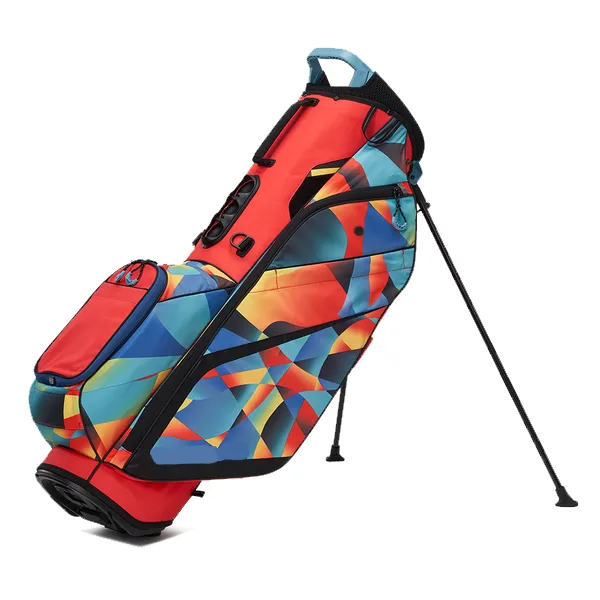
Inside the valuables pocket, dividers do more than organize — they stabilize the center of gravity and reduce rattle. A single open pouch lets a heavy phone slide toward the outer wall, which on a stand bag can tilt the loaded carry and add noise. An interior divider or a snug transverse strap keeps the contents centralized and quiet. We also consider the valuables pocket in the overall balance map, pairing a rear valuables pocket with the front ball or apparel pocket so the loaded bag sits reasonably neutral on the dual strap. That pairing is the first thing we check once the loaded weight target is set, because a good pocket layout feels balanced, not clever on paper.
Weight matters because a phone, wallet, and keys are carried all round, not stowed away. A small valuables pocket does not weigh much, but its contents sit high on the bag and can shift the balance feel, especially combined with a loaded cooler on the other flank. Keep the valuables pocket relatively compact and high-center, and confirm the loaded carry balance on the sample. When you send your full pocket list, we assemble the map so the valuables pocket, the cooler, the rangefinder pocket, and the apparel pocket support one another rather than compete for the same balance budget. For a stand bag the rear valuables zone sits close to the carry max, so we also double-check that the pocket's contents do not press into the back padding or the stand when the legs are stored.
QC and test plan for a valuables pocket
Because the valuables pocket guards a phone and wallet, its QC deserves its own pass. We run a water-integrity check on the pocket when a waterproof level is claimed, a quiet-closure check that confirms no rattle and a clean zipper action, an interior-lining check for any scuff-risk thread or seam, and a zipper cycle test. On the sealed waterproof build we add a seam-seal inspection at the threaded points. A first-article inspection on the run's first unit locks all of this before the rest of the batch moves, and we keep a sealed master so reorders match.
We also specify a practical dry-test on the production sample rather than only in a lab: a short simulated rain or a light water stream over the closed pocket, checking that nothing wets the interior phone area. This does not require lab equipment and it is the fastest way to catch a subtle zipper-gap or seam issue before a bulk run. Pair the dry-test with a drop-test of the fully loaded bag onto a hard floor, because the valuables pocket contents multiply the shock transmitted to the seams, and a bag that survives empty can still reveal a weak seam when it holds a phone and keys.
We also fold the valuables pocket into the general drop and flex tests, because a folding stand bag plus a heavy loaded pocket is where seams give out. Define your AQL level and the waterproof claim on the RFQ, and we will put the matching test method on the inspection form so your inline inspector checks the same points we do at the plant. This is the discipline at our Quanzhou facility that turns a "valuables pocket" requirement into a consistent, tested feature you can market with confidence.
Closing brief — what to send the factory
To quote a valuables pocket accurately, send three things: the intended contents and environment (e.g., phone and wallet, coastal or travel market), the waterproof level you want to claim, and a closure and security preference. Add your expected MOQ, timeline, target market, and reference photos of a valuables pocket you like, and we will map lining, sealing, insert, and placement before sampling. That compact brief gets you a locked spec instead of an estimate and cuts the sampling loop in a half.
We support OEM (fitting a valuables pocket with the right lining, closure, and waterproof level to proven architectures) and ODM (co-developing the pocket, dividers, and security features from scratch). Reach our sourcing team at service@junyuanbags.com or +86 17750020688 and we will schedule your valuables-pocket evaluation sample inside the 10-20 day window, with bulk production available at 45-60 days once the sample is sealed.
Recommended Internal Links
- Products (Stand Bag Architectures)
- OEM/ODM Service
- Factory & QC
- Golf Stand Bag Buying Guide
- Pocket Layout Guide for Stand Bags
- waterproof stand bags
FAQ
What lining should a valuables pocket have on a golf stand bag?
A soft, non-scratch lining is standard so a phone or keys do not scuff or rattle. For phones and cards we prefer a padded or fleece-type inner buff plus a secured zipper, and on waterproof programs the same pocket can include a sealed TPU interior to keep contents dry.
Is a valuables pocket on a golf bag waterproof?
It depends on the spec. A standard valuables pocket is splash-resistant; a fully waterproof valuables pocket is sealed with a TPU or taped liner and a covered zipper so phone and keys stay dry through rain. You should tell the factory the waterproof level your market needs so the enclosure method and closure match the claim.
Where should the valuables pocket be placed on a stand bag?
Most players choose a rear-facing or hip-side pocket that is high enough to reach without bending but tucked so it is less visible to passers, a small deterrent to casual snatching. Placement should also keep the pocket clear of the shoulder strap and stand hinge.
Why does my valuables pocket sweat and wet my phone?
Condensation forms when a cool sealed pocket meets warm humid air, and sweat from the wearer's back can also reach a rear pocket. A coated or TPU lining that beads moisture, a sealed zipper, and positioning away from high-perspiration zones reduce the risk.
Should a valuables pocket zip with two pulls or one?
A single covered puller that locks at the side is common for security and simpler construction; two pulls let you open from either end for reach but add a gap point. For security and water resistance we favor a single zipper with a locking or covered slider.
How do I stop items rattling in a valuables pocket when walking?
Add an interior divider, a snug transverse strap, or a padded buff so phone, keys, and cards are held rather than sliding. A pocket sized close to the contents and a quiet zipper with a covered puller reduce noise. Confirm the silent-closure detail on the sample.
Do you support OEM and ODM for valuables pockets?
Yes. We support OEM by fitting a valuables pocket with the right lining, closure, and waterproof level to proven architectures, and ODM by co-developing the pocket, dividers, and security features. Send your target market and pocket list to start — ship from our Quanzhou facility.
Request a B2B quote for golf stand bags
Send your target market, expected MOQ, and reference photos. We respond within 24 hours with a sampling plan.