A custom golf stand bag as a corporate gift typically costs from a few dozen dollars each at a 200 pcs MOQ and carries the company logo for years, making it a durable high-value gift that outlasts a watch or a gift box while reinforcing an executive relationship. This guide helps a corporate buyer plan, brand, and deliver custom golf stand bags at our affiliated Quanzhou factory (SGS-verified, 4,950 sqm, 7 lines, 149 machines, 137 staff). For brands that want a fully customized silhouette — structure, dividers, pockets and hardware — our custom golf bag factory team specializes in OEM/ODM programs.
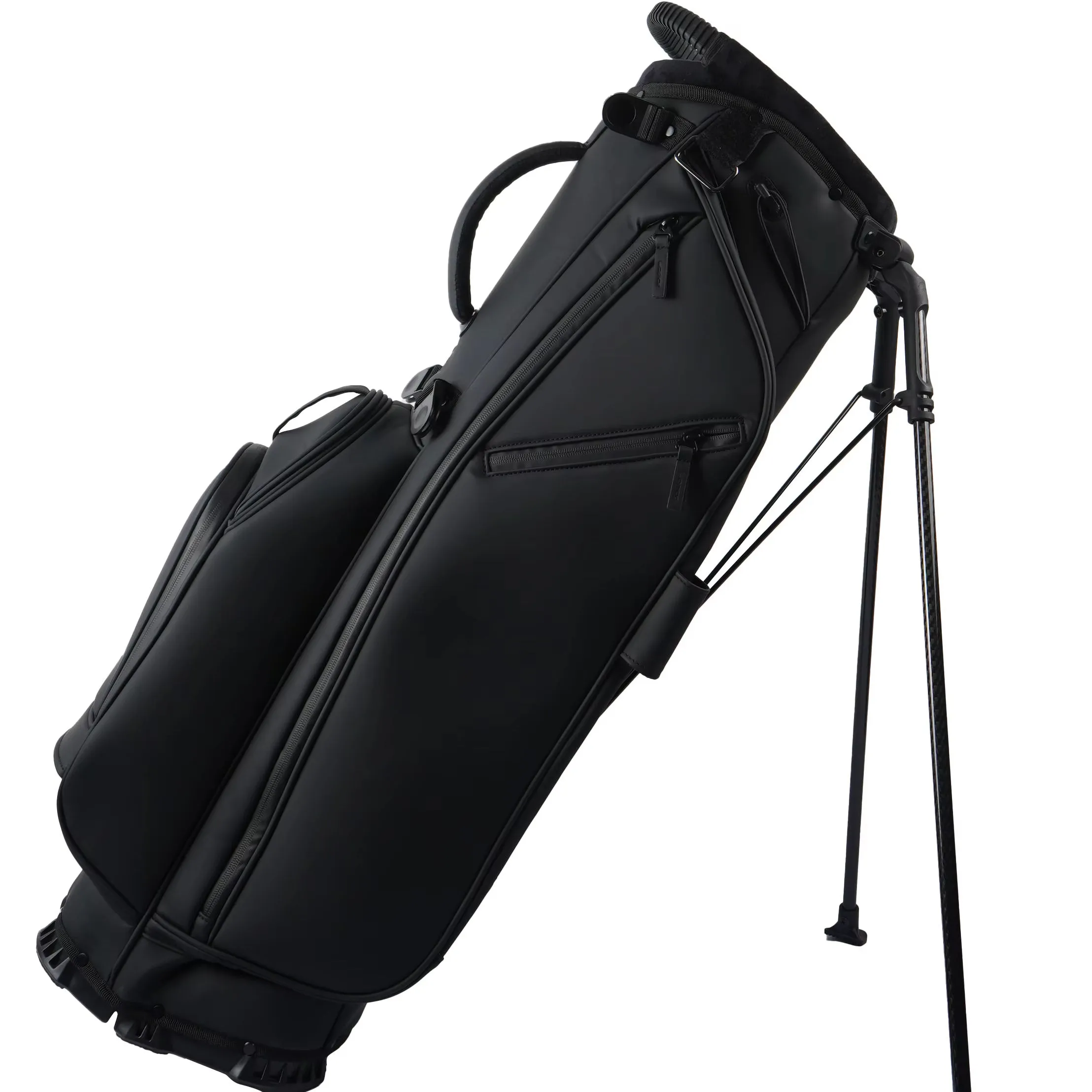
Why a Golf Stand Bag Is a High-Value Corporate Gift
A corporate gift should be memorable, useful, and a positive ambassador for the giver. A golf stand bag is all three: it is a daily-use premium item for a golf-enthusiast client or employee, it carries the company logo onto the course and into every round, and it signals that the brand understands and values the recipient's hobby, not just their business role. Compared with a generic luxury consumable that is consumed and forgotten, a stand bag is durable and reusable, so the relationship-building impression keeps working for years. Recipients attach a personal gift's perceived value to the giver, and a premium, well-made bag carries a higher perceived value per unit than many corporate-gift categories.
The bag also creates a habit of exposure. Every time the recipient plays, the logo is visible at the range, on the cart, leaning by a tee, and in photos, reinforcing the brand naturally without the recipient feeling marketed at. For a company gifting a small group of executives or a larger team, those recurring impressions compound across a full season. And because a golf bag is a considered, hobby-specific gift, it positions the giver as attentive and tailored — precisely the impression a relationship about to expand, or a partner about to be retained, deserves.
Choosing the Right Bag for the Recipient Type
Match the architecture to who is receiving the gift. A lightweight four-way stand bag suits a casual, social golfer who walks and values ease; a full six-to-eight-way stand bag suits a serious player carrying a complete set, signalling the company invests in quality; a waterproof or PU-accented bag appeals to a modern, tech-minded golfer and conveys a premium technical brand. Match the architectural quality to the recipient's status tier and the relationship value, because gifting a noticeably cheap bag to a top client can read as a lack of respect. A rule of thumb is to spend on the recipient's tier: a flagship bag for top executives and key clients, a solid standard bag for a broader team or partner list.
If you are gifting one design to a group, choose an architecture that flatters most golfers — a versatile mid-weight stand bag with good pocket access and an eight-way option tends to please the widest audience. If the group varies in level, offer two tiers so a top tier feels special. Anonymous or not, the recipient's golfing habits are part of the gifting strategy: ask whether they walk or ride, carry a full set, or value organization, and let those answers shape the architecture and divider count. When the bag genuinely fits how each recipient plays, the gift lands as thoughtful rather than generic.
Branding the Gift: Logo, Placement, and Methods
The logo is what makes a gift a corporate ambassador, and it must read premium rather than promotional. Place the primary logo on the front lower panel hero zone, with the option of a tonal repeat on the lid or a discreet mark on the valuables pocket, so the bag looks branded yet refined rather than covered in advertisements. Choose the method by the shell and the look: embroidery is the most premium and durable on nylon and polyester; heat transfer is a clean, fast option; a woven label suits a small tonal brand; and on a waterproof bag a bonded vinyl mark layers without puncturing the panel. Roughly 3-5% of unit cost goes to a single well-placed logo, a small price for the years of exposure it buys.
Protect the logo investment with correct files. Supply a vector AI/EPS with fonts outlined and Pantone references and approve a production-material sample so the logo's true color, size, and position are confirmed before bulk. Provide a minimum-size guide so no placement shrinks the mark into illegibility, and lock the placement tolerance so the logo sits in the same spot on every unit. If gifting to several departments or regions with slight differences, keep one master logo for the hero and reserve variations for a smaller secondary zone, so the gift fleet reads as one coherent brand statement.
Budgeting and Per-Unit Economics
Build the budget on the actual drivers. The per-unit price rests on the shell material and weight, the architecture complexity, the brand method and logo complexity, and above all the quantity, because setup is amortized across units. A standard MOQ of 200 pcs with a 100 pcs test order lets a company model both a trial and a full distribution economically. Embroidery and heat transfer add a modest per-unit cost plus a one-time setup, while a woven label is low; a custom structure or feature adds ODM engineering cost. Ask for a quotation that separates setup, per-unit production, sampling, and shipping, so the committee or CFO sees exactly where the budget goes.
Because a corporate gift is a small-volume purchase relative to retail, the setup share is high, so consolidate quantity rather than fragmenting into many small, differently branded runs. If you are gifting across offices or regions in one campaign, produce them together to spread setup and keep the logo and placement identical. A sealed master makes any later reorder skip re-setup, which is useful if the same gift recurs for an annual program. When you send the quantity, the tiers, the logo method, and the target landed cost, we build a model that shows where savings are and where quality is worth the spend.
Corporate Gift Bag Specification Table
Lock these rows on the pre-production sample, following the standards at QUANZHOU JUNYUAN BAGS.
| Element | Spec | Buyer Notes |
|---|---|---|
| Recipient tier | Flagship for top execs; standard for team | Match architecture to relationship value. |
| Logo method | Embroidery / heat transfer / woven / vinyl | Choose by shell and premium look. |
| Logo placement | Front hero + tonal lid / valuables repeat | Keep it premium, not promotional. |
| Artwork | Vector AI/EPS, outlined, PMS-referenced | Required for clean reproduction. |
| MOQ / test | 200 pcs standard, 100 pcs test | Quoted on quantity and tiers. |
| Sampling / bulk | 10-20 days sample; 45-60 days bulk | Align with the gifting occasion. |
Gift Value and Personalization Options
Personalization lifts a corporate gift from standard to memorable, and it is offered in a few flexible ways. A recipient's initials or name on a tonal tag or the valuables pocket tailors the piece without overwhelming the company logo; a monogram is the tasteful middle choice and often the most durable. At a co-branded tier, the client company's mark can sit in a fixed zone or be paired with the giver's on a combined lockup, which is common for partnership or prize gifts. For a truly individual feel, the bag can be produced with a recipient-facing name or message on a hang tag or liner so the unboxing itself is personal. These options add a modest cost but dramatically raise the perceived gift value.
Keep the hierarchy clean regardless of what you personalize: company logo primary, recipient or partner mark secondary, and any message discreet. Confirm with the factory how a personalized mark is produced on the actual shell — stitching versus bonding behaves differently — and approve it on the sample so the initials or name stay legible through production. For a year-end or launch gift, personalizing a defined number of units is straightforward if the list is locked early, so share the recipient details ahead of sampling. Personalization done well is the detail that makes the recipient feel individually considered rather than one of a bulk drop.
Timeline, Packaging, and a Memorable Unboxing
Plan the timeline around the gifting occasion rather than the order date. Work back from want the gifts to arrive: allow for a design brief, artwork, sampling (10-20 days), bulk lead time (45-60 days), and shipping, so a well-branded corporate run realistically needs about 3-4 months start to delivery. For a repeat annual program, lock the design once and reorder faster. Ask for milestone dates — sample approval, production start, mid-line QC, packing — and tracking so the gifting date is reliably met, because a corporate gift that arrives late undermines the very goodwill it is meant to build.
Presentation matters as much as product. Decide whether the bags ship individually boxed for a clean handover, bulk-packed for distribution, or direct to a partner's shipping address. A branded hang tag, a liner note, or an accompanying headcover or towel turns the handover into a considered moment, and a small accessories set makes the gift feel like a curated package rather than a single item. If it is a top-tier gift, an individually wrapped presentation supports the premium impression. When the product, the packaging, and the notes together read as intentional, the corporate gift delivers its full value as a relationship-building investment.
Sustainability and Modern Gift Values
Modern corporate gift-givers increasingly want a product that reflects their values, and a golf bag can carry a sustainability story as part of the gift. At our affiliated plant a buyer can specify recycled fabrics for the shell and lining, lower-impact dyeing, and a documented material chain, so the company can tell a credible sustainability story to the recipient. A durable, repairable bag is also a longer-lived ambassador than a cheaper one, aligning a "quality over quantity" gift philosophy with lasting brand exposure. For a company building an ESG-conscious image, the very origin and material of the gift becomes part of the message it sends.
Frame the choice deliberately: if sustainability is a stated corporate value, select recycled materials and document them for the gift note or the company's own ESG reporting, and confirm the claims at the factory rather than relying on a market label. If the brand instead prioritises craftsmanship and premium finish, a dense shell and polished hardware carry that story. Either way, connecting the gift to a genuine value makes the handover more than a transaction and gives the recipient a reason to keep and use the bag — and every round it supports the company's reputation. Decide the value message early and let it shape the material and the packaging together.
Delivering to Executives, Teams, and Partners
How the gifts are delivered matters as much as how they are made. For top executives and priority clients, an individually boxed bag with a personalised note creates a handover moment that matches the investment; for a larger team, bulk distribution with a branded box or hang tag still carries the company's care without over-spending per unit. Co-ordinating the recipient list early is essential, because names, tiers, and any personalization must be fixed before production and translation-proofed before packing. Decide whether the bags ship to one central point for a presentation event or directly to multiple recipients, because that affects packing, labelling, and carton instructions, and it changes the shipping budget.
Plan the presentation to reinforce the relationship. A top-tier handover can pair the bag with a short note explaining the choice — why a premium stand bag for a golfer the company wants to keep close. A team or partner distribution can time the bags with a launch, a milestone, or a thank-you event so the gift arrives at a memorable moment rather than as an out-of-context delivery. If the program recurs annually, capture the recipient list centrally and reuse the sealed master so year two is faster and consistent. Managed well, the delivery itself becomes part of the gift's value, and the bag arrives not just in good condition but at exactly the moment it has the most meaning.
Common Corporate-Gift Mistakes to Avoid
The common mistakes in corporate bag gifting are avoidable. Over-marketing is the first — a bag covered in logos reads as promotional junk, not a gift; keep the company mark clean and premium. A mismatch between tier and architecture is the second, when a top client receives the same bag as a large team and feels undervalued. The third is a missed date, when production is booked without working back from the occasion. The fourth is artwork ambiguity, sending a low-res or undrawn logo that cannot reproduce cleanly. And the fifth is ignoring the recipient's playstyle, giving a heavyweight bag to a walker or a minimalist to a full-set player, which undermines the "we know you" impression the gift is meant to create.
Each has a clear fix: one premium hero lockup, architecture matched to recipient tier, a timeline built backward with milestones, vector artwork supplied early, and a short recipient questionnaire on playstyle. When these controls are in place, the corporate gift lands as thoughtful, premium, and exactly on time. That discipline is what separates a golf stand bag that becomes a lasting ambassador for the company from one a recipient quietly sets aside after one round.
Working With OEM vs ODM on a Corporate Program
Choose the sourcing route to match how custom the gift must be. In an OEM program the factory produces your chosen proven architecture and your logo, so the path is fastest because the structure and tooling already exist — ideal when the bag itself matters less than the seamless, predictable delivery of a high-volume corporate run. In an ODM program the factory co-developes the bag, which suits a company that wants a bespoke silhouette, a signature detail, or a specific premium feature as part of its own gift identity. An OEM route keeps cost and risk lowest for standard gifting; ODM is where a company builds a recognizable, ownable gift that no other brand hands out.
For most corporate gifts the pragmatic path is an OEM base with tailored branding and personalization: pick a proven, well-engineered architecture, apply a signature colorway and a clean logo, and add optional initials or a monogram. That delivers the premium durability of a quality bag at a controlled cost while still feeling bespoke in the hand. If your company gives the same gift every year, an ODM investment in a signature bag pays back by becoming part of the brand's gifting identity, and the sealed master makes every relaunch consistent. Decide with the factory which route matches your budget, your volume, and how ownable the gift should be, and you will spend on what actually raises perceived value rather than on unnecessary engineering.
Key Takeaways
- A custom stand bag is a durable, high-value gift that carries the company logo onto the course for years.
- Match the architecture and quality tier to the recipient and the relationship value.
- Keep branding premium: one hero logo, optional tonal repeat, refined not promotional.
- Budget on quantity, method, and setup; MOQ 200 pcs / test 100 pcs.
- Work back from the occasion, plan packaging for a memorable unboxing.
Test Plan & Acceptance Criteria
Add measurable checks so a corporate gift fleet ships premium and consistent.
- Logo color, size, and placement check against the approved sample within +/-2 mm.
- Logo reproduction check on the production fabric.
- Function check: stand, strap, dividers, and pockets all pass.
- Quantity and tier reconciliation against the packing list.
- First-article inspection and packaging/presentation check.
- On-time milestone tracking against the gifting date.
Recommended Internal Links
- Products (Stand Bag Architectures)
- OEM/ODM Service
- Factory & QC
- Golf Stand Bag Buying Guide
- Personalized Name Tags
- Charity Event Stand Bags
FAQ
How much does a custom golf stand bag cost for a corporate gift?
Per-unit price depends on quantity, material, architecture, and logo, with a standard MOQ of 200 pcs and a 100 pcs test order. A single well-placed logo adds roughly 3-5% to unit cost, and setup is amortised across the quantity.
Which golf stand bag is best as a corporate gift?
Match it to the recipient: a lightweight bag for casual walkers, a full six-to-eight-way bag for serious players, and a waterproof or PU-accented bag for a modern technical golfer. Match the architecture tier to the relationship value.
How should I brand the corporate gift bag?
Keep it premium: one hero logo on the front panel with an optional tonal repeat on the lid or a small mark on the valuables pocket. Choose embroidery for durability, heat transfer for a clean fast look, or vinyl on a waterproof panel.
Can I personalize each gift with the recipient's name?
Yes. Add initials or a name on a tonal tag or the valuables pocket, a monogram, or a recipient message on a hang tag or liner. Approve it on the sample so it stays legible and consistent.
How much lead time do I need for a corporate bag program?
Work back from the gifting occasion: about 3-4 months for a design brief, artwork, sampling (10-20 days), bulk lead time (45-60 days), and shipping. A repeat annual program locks the design once and reorders faster.
What artwork do I need to provide?
A clean vector AI/EPS file with fonts outlined and colors separated by Pantone, plus a minimum-size guide. Require this before sampling so the logo reproduces cleanly at any placement size.
Can a corporate gift program be sustainable?
Yes. Specify recycled shell and lining fabrics, lower-impact dyeing, and a documented material chain, so the company can tell a credible sustainability story and a durable bag lasts longer as an ambassador.
Request a B2B quote for golf stand bags
Send your target market, expected MOQ, and reference photos. We respond within 24 hours with a sampling plan.