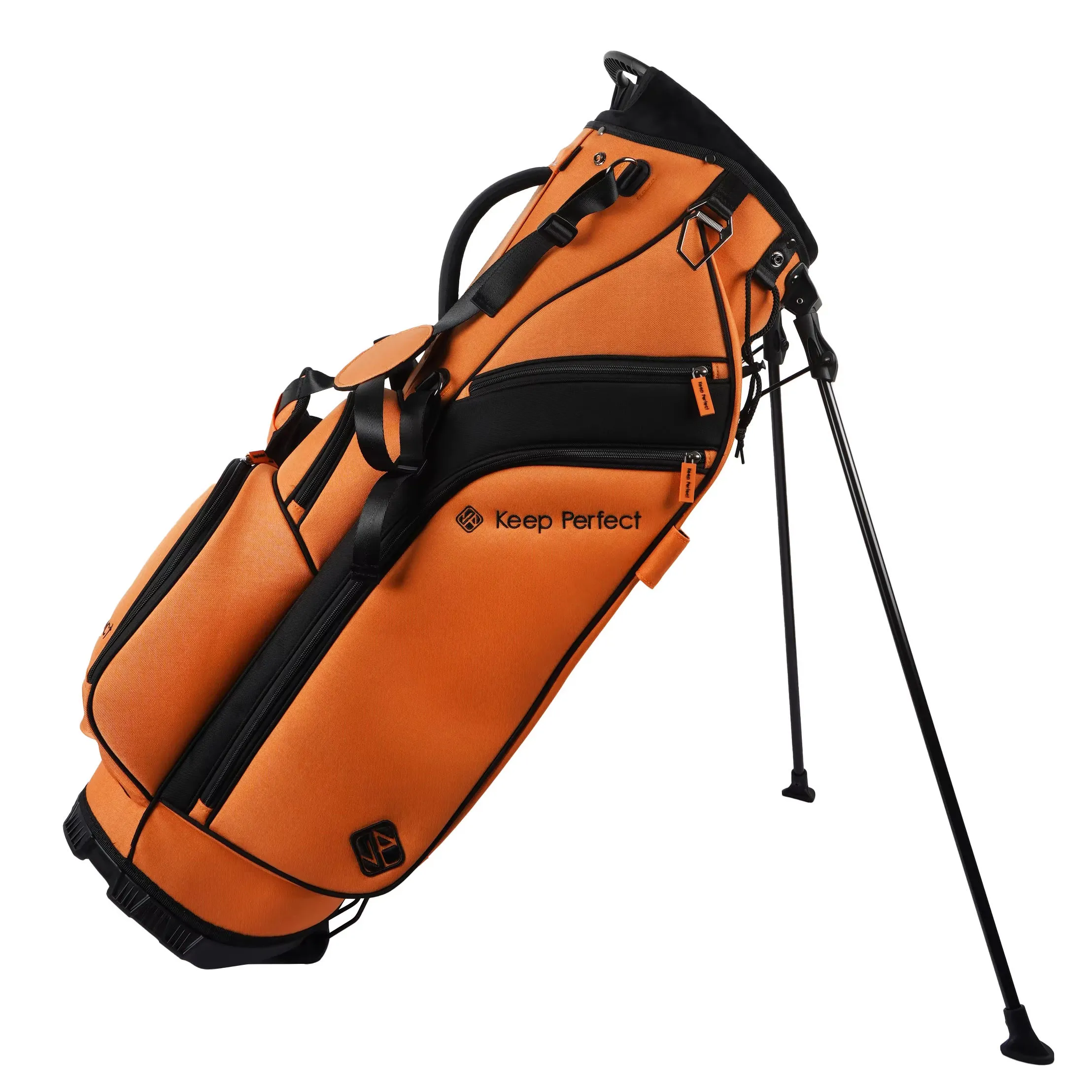
For the most compact small carry, see our pencil bags — Practice golfers can also browse our range and simulator golf bags — For golfers and the brands that sell them stand bags, pockets are the dirtiest part of the bag, and the fix is a short routine: wipe and empty every pocket weekly, do one deeper clean every 4-6 weeks with a neutral-pH cleaner around 6-8, then air-dry fully for 12-24 hours with every pocket open to protect the water-repellent coating and stop mold. This guide walks you through the exact steps and the tools — brushes, microfibre cloths, pH-safe cleaners, and a re-proofing spray — so your stand bag pockets carry gear cleanly, keep water beading, and last years instead of a season.
Key Takeaways before you start
Most pocket damage is not from heavy use; it is from leaving debris, moisture, and the wrong chemicals inside a sealed compartment. The three habits that prevent nearly all pocket problems are: empty and dry every pocket after a wet or sandy round, clean on a schedule rather than only when a stain is visible, and choose cleaners by pH rather than by label. If you keep those three in mind, the rest of this guide is just the exact technique and timing.
The cleaning routine also matters for the brand side of the business. A bag that discolors, smells, or sheds its waterproof coating in the first season comes back as a warranty claim and a negative review, both of which cost more than the care routine. Putting a care label and a short maintenance guide in your product program is a low-cost way to cut returns and protect the retail reorder. Whether you are caring for the bag you play or deciding what to specify in an OEM program, the physics is the same: keep grit out of the seams, keep water off the raw edge, and keep the bag dry when it is not in play.
- Empty and dry pockets after every wet or sandy round
- Deep-clean every 4-6 weeks with a neutral-pH cleaner (6-8)
- Air-dry 12-24 hours with all pockets open and loose inside
- Brush grit from zipper tracks and seams, never blast it deeper
- Re-apply a water-repellent spray after deep cleans
The right tools: brushes, cloths, and what to avoid
The tools matter because the wrong one drives dirt deeper or scrapes the coating off. Start with a soft nylon-bristle brush — a detailing brush of roughly 12-16 mm is a good all-rounder for zipper tracks, grommets, and fabric seams — plus a soft toothbrush for tight corners and a pack of lint-free microfibre cloths. A handheld vacuum or a can of compressed air helps clear grit from the deepest seam and divider channels, and a gentle soft-bristle brush on the outside keeps coarse sand from scratching a coated panel. Skip wire brushes, stiff scouring pads, and anything abrasive, which are the fastest way to strip a PU or TPU surface.
Choose your liquid cleaner by pH, not by marketing claim. A neutral-pH cleaner in the range of roughly 6-8, diluted with warm water, gently emulsifies dirt and sweat without attacking the fabric or the coating. Avoid strong alkaline soaps (pH above about 9), bleach, and solvent degreasers, because these strip the water-repellent finish and can yellow or harden PU-leather trim and TPU film. On a waterproof pocket with a DWR or PU-coated shell, the single most damaging move is to flood it with a harsh degreaser that dissolves the very layer meant to shed water. Spot-test any new cleaner on a hidden lower panel before using it on the visible pocket front.
Step 1 — empty and prep every pocket
Begin by unzipping every pocket completely and emptying its contents, including small gear you forgot was in the liner, spare tees, scorecards, ball sleeves, and any moisture-holding items. Turn the pockets inside out where the construction allows, or at least open the zippers wide and pull the liner away from the shell so air and the brush can reach the seams. If the bag has a removable cooler or insulated pocket liner, take it out and treat it separately, because it is the most likely place for lingering condensation and odor. The goal of this first step is to expose every surface you will need to clean rather than cleaning around a mess.
Then do a dry pass before you add any water. Use the soft brush or a vacuum to lift loose sand, grass, tees, and dust from the pocket bottoms, seams, and zipper tracks while everything is dry. This step is important because wetting loose grit first turns it into a grinding paste that scratches the panel and embeds dirt in the weave. Clear the zipper tracks by brushing along the teeth in the direction they mesh, then run the slider a few times to confirm it moves freely. With the dry debris gone, the wet clean below becomes a simple lift-and-rinse rather than a fight with caked-on residue.
Step 2 — wet-clean with a pH-safe cleaner
Mix your neutral-pH cleaner with warm water as a light suds and dampen a microfibre cloth (not soak, just damp), then wipe the pocket interior and the shell around the opening in slow, overlapping strokes. Work from the cleanest to the dirtiest area so you do not drag grime over an already-cleaned panel, and use a dedicated cloth for the dark bottom seam. For a coated or waterproof pocket, wipe in one direction and avoid scrubbing in circles with pressure, which can abrade the water-repellent layer. Rinse the cloth frequently and finish by going over the pockets with a clean, damp cloth to remove any soap residue, because leftover detergent is a magnet for dirt and can leave a dull haze.
Focus your effort where the pocket geometry collects debris: the bottom seam, the grommet or drain holes, the zipper pull region, and the flap seam on a valuables pocket. Use the soft toothbrush with a little suds to lift grit from these tight spots, then wipe with a microfibre cloth. If a pocket has a hardened stain like a spilled sunscreen or mud, treat it with the damp cloth and a small amount of cleaner and let it dwell for a minute before gently brushing — but never let a solvent-based stain-remover sit on a TPU or PU area. For the outside shell, a light pass over the whole bag at the same time keeps the pockets looking consistent with the body.
Step 3 — rinse, dry, and air properly
Rinsing and drying are where most pocket-cleaning mistakes happen. After wiping, go over the pockets with a clean damp cloth to remove suds, then leave every zipper open and every pocket inflated and drying on its own — do not zip them shut while the liner is still damp. Air-dry the bag fully in a ventilated, room-temperature space for roughly 12-24 hours, and allow longer when you cleaned inside a sealed cooler, a waterproof valuables pocket, or a removable liner, because those layers trap moisture. Do not use a machine dryer on heat, and never lay a telescoping stand on a heated surface; the tumbling and heat warp PU panels and degrade the coating faster than a year of rain.
A short period of gentle indirect air is fine, but avoid baking wet nylon and PU in direct, harsh sun for a long time, which can stiffen the shell and fade the colorway. If the bag has drain grommets, prop it so air can pass through them. When the pockets are fully dry — confirmed by touch on the inside seam, not just the surface — you can re-close them and store the bag. Staying patient on the drying step is the cheapest way to keep the bag water working and odor-free, because molded or musty pockets almost always trace back to moisture sealed in before the bag was truly dry.
Cleaning removable liners and full-length dividers
Many modern stand bags have removable liners, a washable valuables-pouch liner, or full-length divider tubes with a removable fabric sleeve. These are the pieces you can often wash separately, and doing so keeps the deepest parts of the bag clean without risking the shell's coating. Check the care tag before machine-washing a liner: many are machine-washable cold on a gentle cycle with a neutral detergent, while others are hand-wash only. Never tumble-dry a coated liner; air-dry it flat or hanging, fully open, just like the bag body. A removable liner that is cleaned a couple of times a season clears the ball-sleeve dust and sunscreen that otherwise builds up where your clubs rest.
For full-length divider tubes, slide the sleeve off where the design allows, brush any loose grit from the tube, and wipe the sleeve with a damp microfibre cloth and a little neutral cleaner. Reinsert the divider so it sits flush with the collar and confirm the slots still align, because a wrinkled or mis-seated sleeve can pinch a shaft on the way in. If a divider sleeve is not removable, leave it in place and reach inside with the soft brush and a cloth rather than flooding the tube with water, which can run down the channel and settle at the base. Keeping the divider crest clean protects both the club shafts and the collar seam, and it extends the life of the most-used part of the bag.
Protecting the water-repellent and waterproof coating
If your stand bag has a water-repellent finish or a waterproof PU/TPU pocket package, cleaning interacts directly with that coating. The coating fails two ways: mechanical abrasion from stiff brushes and dirt, and chemical removal from alkaline or solvent cleaners. So the care rule is to clean with neutral pH, brush gently and only with soft bristles, and never machine-wash or heat-dry a coated panel. When the water stops beading and starts soaking into a panel, that is the signal that the water-repellent layer needs renewal rather than a dirt problem.
To renew it, apply a textile water-repellent spray designed for coated nylon and polyester over a fully clean, fully dry bag, following the canister distance and dwell, and let it cure before the bag is used. A common habit is to re-proof every few months or after a deep clean, especially on a bag that sees a lot of cart and trunk transit where the coating wears. On the manufacturing side, this is why we specify the pocket fabric, the coating type, and the cleaning guidance in the care label — so the buyer does not unknowingly wash the very performance layer they paid for. Protecting the coating is a ten-minute habit that keeps a premium pocket performing like new.
Zipper, hardware, and stand care
Pockets rely on hardware, and hardware needs its own small routine. Keep zipper tracks free of grit by brushing them dry and occasionally rubbing a silicone or a very light lubricant pencil along the teeth — but skip oil-based lubricants that attract dust and stain the fabric. Check the zipper slider for smooth travel on every cleaning; a sticky or separating slider is replaceable, and a factory that provisions zipper spares makes that a quick fix rather than a bag-ending repair. Wipe down metal hardware like buckles, D-rings, and the closure plates with a dry microfibre cloth to clear tarnish-friendly moisture, and check the strap anchors and hinges for loose stitching.
The stand itself also collects debris. Clear sand and grass from the leg hinge block and the base, and make sure the legs deploy and retract smoothly on a clean, level surface. Wipe the aluminum leg tubes and check the hinge screws or rivets for looseness, but do not overtighten. A run of the stand deployment after each cleaning confirms the moving parts still hold their angle and the legs do not drag debris into the hinge. On a bag cleaned and dried correctly, the hardware stays clean with almost no extra effort, and a well-maintained stand and zipper set are what keep a bag in play season after season.
Mold, odor, and how to prevent them for good
Mold and musty odor start in one place: moisture held inside a sealed pocket. The prevention is a dry bag stored open. After every wet or sweaty round, empty the pockets, open the zippers, and let the bag air before it goes into a trunk, locker, or closet. For long-term storage, keep the bag in a ventilated, low-humidity space rather than sealed in a plastic bag, which traps exactly the moisture that breeds mold. If a pocket already smells, wash it gently with a neutral cleaner, dry it completely, and treat it with a fabric deodorizer meant for coated textiles rather than masking the odor with a spray that leaves residue.
Mold on a stand bag is not just an aesthetic issue; it weakens the fabric and can compromise the coating on the affected panel. The practical rule is to treat any damp pocket within 24 hours rather than letting a wet bag sit overnight. For a brand, putting "empty, air-dry, store open" on the care label costs nothing and prevents a large share of mold-related warranty claims. Since you now have a clear drying step in your routine, odor prevention is simply a matter of never re-sealing a pocket before it is truly dry — the single most reliable habit this guide can leave you with.
Pocket care reference table
Use this table as a quick-reference care spec for your stand bag and for the care guidance you put in an OEM program.
| Care Parameter | Recommended Value | Good Practice |
|---|---|---|
| Routine frequency | Weekly light wipe; deep clean every 4-6 weeks | Also clean after any rainy or sandy round. |
| Soft brush | Nylon-bristle, 12-16 mm detailing brush | Use on zipper tracks, grommets, and seams. |
| Cleaner pH | Neutral, roughly pH 6-8 | Avoid pH above 9, bleach, and solvents. |
| Drying time | 12-24 hours, air-dried open | Longer for sealed cooler and waterproof pockets. |
| Waterproof coating | Re-proof every few months or after deep cleans | Use a coating-safe water-repellent spray on dry fabric. |
| Zipper care | Dry-brush tracks; light silicone lubricant | No oil-based lubricants that attract dust. |
| Storage | Ventilated, low-humidity, unzipped pockets | Never store sealed in a plastic bag while damp. |
| Hardware | Wipe dry; check hinges/screws | Silicone or light lubricant only where needed. |

Simple repairs and when to replace parts
Not every pocket problem needs a new bag. A stuck zipper usually means grit in the track or a bent slider, both fixable with a clean and, at worst, a slider swap. A loose strap anchor or a popped seam at a high-load point may be resewn if it is caught before the fabric tears, but a torn seam on a load-bearing pocket should be repaired promptly rather than run to failure. A hinge or leg that will not hold its angle after repeated use may need a stand leg or hinge block replacement, which is straightforward if the factory provisions spares. Learning which parts are serviceable and which are life-expired saves you from replacing a whole bag over a $2 part.
When you do need to replace a part, source the correct spare rather than a generic substitute, because the fit tolerance in the hinge block, slider, and strap anchor matters. Ask whether the factory supplies spare stand legs, hinges, zipper sliders, and strap hardware at a modest carry, and whether the warranty covers normal-use hardware failure. A bag whose wear parts are replaceable lasts several times longer than one whose only repair is a full replacement. This is also the after-sales question worth asking at sourcing time, because the availability of parts decides whether your brand honors a warranty claim in days or in months.
Building care guidance into your OEM program
If you are sourcing stand bags for a brand, the care routine belongs in the program, not just in the consumer's head. Add a clear care label with washing, drying, and storage guidance, and pass the fabric and coating type to the label printer so the instructions match the actual materials. Consider a short maintenance card or a resources link that shows how to empty, clean, and dry the pockets, which cuts the support calls and the "how do I clean this" returns. On coated and waterproof models, make the re-proofing step explicit, because a buyer who does not know to maintain the coating blames the product when it stops beading.
Care guidance also belongs in the tech pack you hand the factory. Specify the fabric's cleaning tolerance, the coating type and its re-proofing needs, and the care-label content so the production batch matches the guide. A factory that understands its own materials enough to write accurate care labels is usually also one that controls its process, which is a good sourcing signal in itself. If you need help drafting the care spec or sourcing a coated, easy-to-clean pocket package, reach us at service@junyuanbags.com or +86 17750020688 and we will support your program.
Recommended Internal Links
- Products (Stand Bag Architectures)
- OEM/ODM Service
- Factory & QC
- Golf Stand Bag Buying Guide
- Stand Bag Materials Guide
- 14-Way vs 6-Way Divider Guide
FAQ
How often should I clean my golf stand bag pockets?
Give the bag a light surface wipe weekly or after every rainy round, and do a deeper pocket clean every 4-6 weeks or whenever you notice grit in the seams or a cooler pocket holding moisture. Wash any machine-washable removable divider or liner a couple of times a season.
What cleaner is safe to use on a waterproof stand bag?
Use a neutral-pH cleaner in the range of about pH 6-8, diluted with warm water. Avoid strong alkaline soaps (pH above 9), bleach, and solvent degreasers, which strip the water-repellent coating and degrade PU or TPU. Spot-test any new cleaner on a hidden panel first.
How long does a cleaned golf stand bag need to dry?
Air-dry fully with every pocket open and the dividers loose, allowing roughly 12-24 hours in a ventilated space, and longer for sealed cooler or waterproof pockets. Never machine-dry on heat, which degrades the coating and can warp a PU or TPU panel.
How do I stop mold and odor from forming in stored pockets?
Dry the bag completely before storage, keep pockets open while it airs, store in a ventilated low-humidity space, and avoid sealing it in a plastic bag for long periods. Treat a lingering smell with a fabric deodorizer meant for coated textiles rather than masking it.
What should I use to remove grit stuck in seams and zipper tracks?
Use a soft nylon-bristle brush (a 12-16 mm detailing brush is a good size), a soft toothbrush, or a microfibre cloth to work grit out of seams, grommets, and zipper tracks. Finish by vacuuming or tapping the pocket, then run the zipper a few times.
How do I care for the waterproof coating on a stand bag?
Clean with neutral cleaners that do not strip the coating and re-apply a textile water-repellent spray every few months or after several washes to renew beading. Avoid hot machine washing and harsh brushes on coated panels, and re-proof after any deep clean.
Can a golf stand bag factory provide care and replacement guidance?
A reliable factory gives you a care label and maintenance guide and can provision spare parts such as zipper sliders, stand legs, hinges, and strap hardware for after-sales. Ask about the spare-parts carry and warranty coverage as part of your sourcing decision.
Request a B2B quote for golf stand bags
Send your target market, expected MOQ, and reference photos. We respond within 24 hours with a sampling plan.