For the most compact small carry, see our pencil bags — A waterproof stand bag spec lives or dies on three details a buyer must write down: the seam-tape scope and width that seals the needle holes, the water-repellent zipper standard on the critical pockets and club compartment, and the test methods — hydrostatic head to ISO 811, seam-tape peel re-tested after cycling, and a spray/rain simulation that proves no water ingress on the assembled bag. This guide turns those three details into an auditable tech pack for a B2B buyer, so a "waterproof" claim is verified in the lab rather than assumed in a catalog, and so a reorder is judged against the same standard every time.
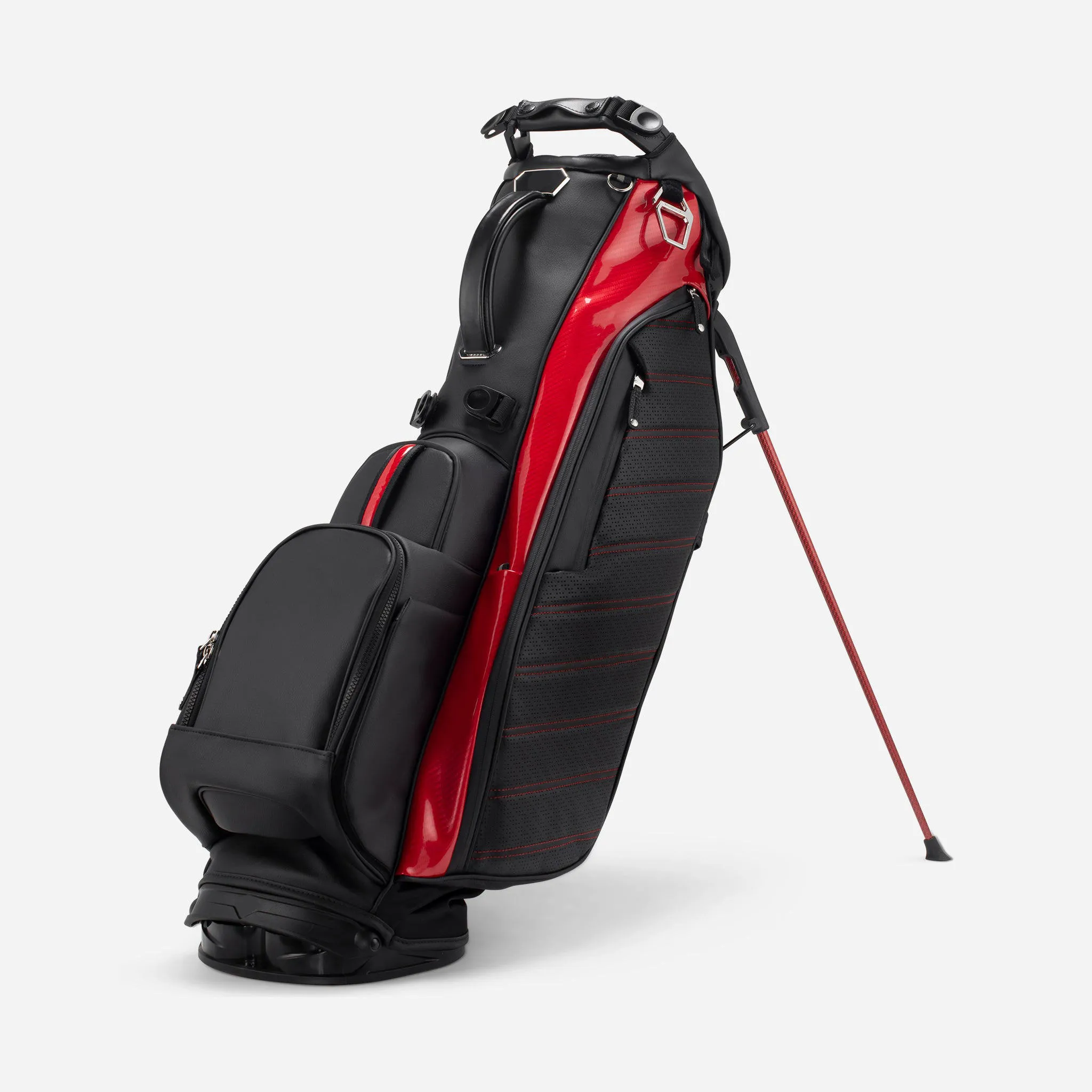
From a factory build standpoint, our dedicated waterproof stand bags page walks through the materials, hardware, and quality checks in detail.
Key takeaway: write the waterproof package as a spec, not a wish
The most common failure in waterproof sourcing is a one-line requirement — "make it waterproof" — that leaves the seam scope, the zipper standard, and the test method undefined. The supplier then delivers a coated shell, the buyer approves a sample in dry conditions, and the first storm reveals where the gaps were. This guide exists to give the buyer the exact fields to fill in so the waterproof package is a spec with a pass/fail outcome rather than a description. It is the engineering layer behind the waterproof guide and the material guide, focused specifically on the seam tape, the zippers, and the testing.
When every layer is written down and linked to a test, two things happen. The factory knows exactly what to build and quote, which shortens the sampling loop. And the buyer gains a defensible record that the assembled bag keeps gear dry, which protects the retailer relationship when a claim is questioned. Below, the seam tape, the zippers, the openings, and the test plan are each given the specificity a tech pack demands.
- How to write the seam-tape scope, type, and width
- Setting the water-repellent zipper standard and protected openings
- The test methods and pass/fail criteria for the package
- Care and repair guidance that protects the waterproof claim
Seam tape: scope, type, and width
Seam tape is the true seal of a waterproof bag because every stitch punches a hole through the coating that water can wick into. The spec must name the scope — exactly which seams are taped — the tape type, and the width. The critical scope is the main body seams, the pocket perimeters, and the shoulder-strap attachment zones, because those are the seams that see both water and stress. The common choice is a hot-melt or polyurethane (PU) film tape applied on one or both faces, typically at 18-25 mm width depending on the fabric weight and the curvature of the seam. A curved pocket seam may need a narrower, more flexible tape than a straight body seam.
The QC control is a peel-strength test plus a re-test after temperature cycling, because a tape that looks clean when new can lift after the bag is folded, packed, and carried in heat. Specify the tape type, the exact coverage list, and the re-test standard in the product spec, and confirm the result on the waterproof sample before bulk. This is the detail that separates a genuinely dry bag from a coated one, and it is the layer most often left vague in buyer briefs. At our SGS-verified Quanzhou plant we apply and test the tape as part of factory QC, verifying the peel before a batch ships.
Water-repellent zippers and protected openings
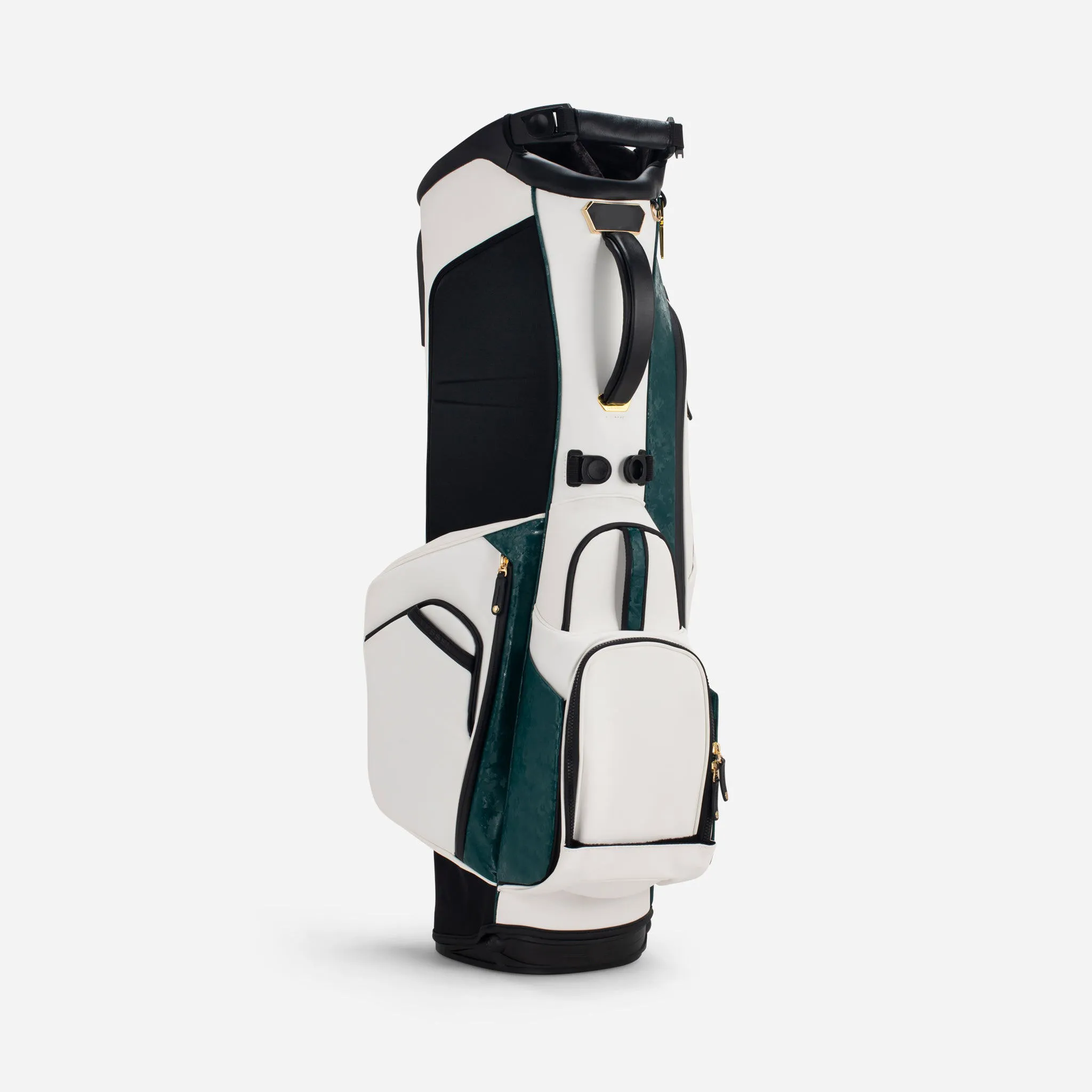
A sealed shell still leaks through a standard zipper, so the spec must name the zipper standard and the opening protection. On the critical pockets and the club compartment, specify water-repellent or water-resistant zippers — often with a PVC-free coating and a fold-over weather flap or a protected lip on the valuables pocket, which is where phones and keys live. The valuables pocket should be called out explicitly in the spec, because it is the opening a buyer most regrets not protecting when a soaked phone becomes a return.
Two realities should shape the zipper spec. First, water-repellent zippers are stiffer than standard ones, so the spec must include a zipper smoothness and cycle test to confirm no jamming after normal opening and closing — on a 14-way bag used every round, a jamming waterproof zipper is a defect even if it stays dry. Second, the protected openings need their own spray or rain test aimed directly at the pockets and zippers, checking that no water pools inside after repeated use. Write the zipper standard, the flap construction, and the cycle target into the tech pack and verify them on the sample.
Test methods and acceptance criteria
A waterproof claim is reproducible only if the test methods are written down and repeated at sample and bulk. The package-level tests are: hydrostatic head to ISO 811 at the chosen level (commonly 5,000-10,000 mm); a seam-tape peel-strength test re-tested after temperature cycling; a spray or rain simulation aimed at the pockets and zippers with no ingress; and a water-ingress inspection after a defined number of stand-deployment cycles, because the stand motion can stretch a seam zone or loosen a lip. Add the mechanical tests that keep the bag functional — stand deployment, base stability, zipper cycle, strap load, and a packed-carton drop test.
The pass/fail criteria should be named, not implied: a target hydrostatic head, a peel value on the seam tape, a zero-ingress result on the rain simulation, and a workable pull force with a zero or near-zero jam rate on the zipper cycle. When these are locked, a reorder or a second colorway is judged against the same standard, which prevents the drift that happens when a batch is approved by looks alone. It also gives the buyer a defensible answer when a retailer or a consumer questions the claim — the record shows a tested, sealed, and rain-simulated pass on file.
Specification worksheet for the waterproof package
Use this table to collect the waterproof inputs before you send the RFQ. Fill every row so the sample is judged against a complete package, not a single coating claim.
| Layer | What to Specify | Recommended Starting Target | Test / Evidence |
|---|---|---|---|
| Shell material | TPU-coated or laminated textile, denier | 5,000-10,000 mm (ISO 811) | Hydrostatic head report |
| Seam tape | Tape type, coverage list, width | Critical seams taped, 18-25 mm | Peel strength, re-test after cycling |
| Zippers | Water-repellent standard, coated | Critical pockets + club opening | Cycle test + spray/rain |
| Openings | Flaps / weather lips on pockets | Critical pockets protected | Rain simulation |
| Assembly | Water-ingress after deployment | No ingress in test | Spray + deployment-cycle check |
Care and repair that protect the waterproof claim
A good waterproof spec is wasted if the end customer stores the bag wrong. Provide clear care guidance in the program: dry the bag fully with pockets open, store in a ventilated space, and avoid long-term storage in a sealed plastic bag, which traps moisture and breeds mold. On the fabric side, limit heavy detergents and abrasives that strip the coating or the seam tape, and keep the valuables zipper clean so the water-repellent coating stays effective. A short care card inside the bag reduces returns and extends the life of the waterproof claim.
For repairs, the buyer should know which failures are fixable and which demand re-taping. A seam-tape tape that lifts on a seam not yet wicking can often be re-pressed cleanly; once water has tracked in or the tape has lifted across a worn zone, re-taping is usually the durable answer, best done at the factory or with the right hot press off-site. This keeps an otherwise good bag in service and avoids the cost of a full replacement. Building the repair path and the spare-part plan into the program — as we do with mature waterproof lines — is what turns a one-off sale into a repeatable product.
Test plan and acceptance criteria (checklist)
Confirm these on the pre-production sample and repeat them at bulk inspection so the waterproof claim is reproducible. The full checklist mirrors what we run on the line and at final inspection, described on the factory QC page.
- Hydrostatic head to ISO 811 against the locked target
- Seam tape adhesion / peel-strength check after temperature cycling
- Spray/rain simulation test for pockets and zippers, no ingress
- Water-ingress inspection after deployment cycles
- Zipper smoothness + cycle test (pull force and jam rate)
- Stand deployment cycle and base stability check
- Strap anchor load and packed-carton drop test
How to brief the waterproof package for OEM/ODM
Send the complete package as one statement: the shell material and hydrostatic head target with method, the seam-tape scope and width, the zipper standard and openings, the weight ceiling, the divider, the pocket list, and the branding method that does not pierce the seal. At QUANZHOU JUNYUAN BAGS we run OEM on proven waterproof architectures and ODM co-development of the shell and hardware, confirming the seam-taping scope and zipper standard before the sample is cut. A full brief moves you to a production sample in the standard 10-20 days and bulk in 45-60 days.
The waterproof guide and the material guide give the procurement and material context behind this spec-level piece, and our buying guide is there if you are still comparing architectures. Lock the package once, test each layer, and the bag earns its waterproof claim season after season.
Writing the seam-tape scope and the peel criteria precisely
The seam-tape scope is where a vague spec does the most damage, so write it as a list, not a mood. State exactly which seams are taped — the main body seams, the pocket perimeters, the shoulder-strap attachment zones, and the lid or top closure where the bag opens — and state the width, commonly 18-25 mm, and the tape type, usually a hot-melt or polyurethane (PU) film. Then name the acceptance test: a peel-strength check on the taped seam with a defined minimum, re-tested after a temperature-cycling exposure, because a tape that looks clean when new can lift after the bag is folded, packed, and carried in heat. Put the peel value and the cycle condition in the text pack so there is no room for two suppliers to interpret "seal it well" differently.
The placement of the tape also needs care at the curved seams. A straight body seam accepts a wider tape cleanly, while a curved pocket seam should use a narrower, more flexible tape that follows the radius without puckering gaps, and the taping machine speed and heat setting must be adjusted for each seam geometry. Confirm on the sample that the taped seams lie flat with no raised tape edges that can catch and peel under use. This level of precision is what separates a genuinely dry bag from a coated one, and it is exactly the kind of detail a factory appreciates because it removes guesswork from the build.
Zipper construction, slider quality, and opening protection
The zipper on a waterproof bag rewards the same specificity as the seam tape. Specify the zipper type for each zone — a water-repellent or water-resistant zipper for the critical pockets and the club compartment, a standard heavy-duty zipper with a protected flap for lower-priority pockets where a coated zipper would add cost and stiffness for no benefit. Name the zipper size (commonly a #5 or #8 standard) and the slider, because a good zipper with a thin slider is the weak point that jams or leaks at the teeth. Include a zipper smoothness and cycle test that confirms no jamming after a defined number of opens, since on a 14-way bag the club compartment is opened every round.
The opening protection should be written as a construction, not a hope. For the valuables pocket, require a fold-over weather flap or a protected lip that covers the zipper tape when closed, and confirm the flap geometry sheds water rather than funnels it into the zipper track. For the club compartment, a lid or a partial hood over the top opening keeps direct rain off the grips and the shafts. On the sample, run the spray or rain simulation aimed directly at each opening and confirm no water pools where the accessories sit. Locking the zipper type, the slider, and the opening construction on the tech pack is what keeps the last leak paths closed.
Environmental and compliance checks in a waterproof package
A waterproof package also carries compliance and environmental checks that a buyer should put on the RFQ. In the EU the relevant framework is REACH, which restricts certain chemicals in articles; for the US market, the California Proposition 65 framework governs disclosure of listed substances such as particular plasticisers and heavy metals that can appear in coatings, dyes, and PVC-based components. A PVC-free, water-based coating sidesteps many of those issues, so it is worth specifying where the destination market is sensitive. Confirm the destination-market requirement with the factory and the material labs, and keep the restricted-substance declaration and any certificates on file for the retailer.
The environmental angle also matters if the program claims a sustainable story. If the waterproof shell uses recycled-content fabric, confirm it carries a recycled-content standard such as GRS or RCS and that the certificate covers the exact colorway and lot. If the coating is PVC-free and water-based, keep that on the documentation as well. These checks rarely change the seam-taping or the zipper spec, but they complete the compliance record that a conscientious retailer or a regulated market will ask for. Building them into the spec from the start beats scrambling for certificates at the last inspection.
How to price and quote the waterproof package
List every waterproofing element in the RFQ, or the quote will quietly drop one of them to win the price. The elements with real cost are the TPU-coated or laminated shell, the seam tape and its application labor, the water-repellent zippers, the protected opening construction, and the testing. List them all as line items so the quoted price is comparable and honest, and get a per-unit price for each so a change to the seam scope or the zipper standard is a simple adjustment rather than a renegotiation of the whole bag.
The MOQ and the lead time should be confirmed alongside the price. For a satin-covered, certified, or coated program the sampling lead is typically 10-20 days and bulk production 45-60 days, and a full waterproof brief lets the factory plan the taping and zipper capacity rather than improvise. State the target MOQ, the timing, and the destination port so the quote reflects the real program. Getting the pricing and the capacity aligned to a complete spec prevents the most common delays — a redesign when an unpriced element is added late, or a schedule slip when the sewing line was not reserved for the extra taping pass.
One more habit makes the package reusable: keep the waterproof spec, the test methods, and the contact lane identical across not just colorways but across the whole bag line. If some SKUs are 14-way and others 5-way, the seam scope and the zipper standard can stay the same, and the factory quotes and builds more efficiently when the waterproof core is a standard. That single, consistent package is what lets a buyer scale the eco, UV, or all-weather story across the portfolio without re-qualifying every product from scratch.
Recommended reading and links
- Waterproof Golf Stand Bag Guide
- What Makes a Stand Bag Truly Water-Resistant
- Tour Waterproof Products
- OEM/ODM Service
- Factory & QC
- Golf Stand Bag Buying Guide
Finally, order a small run-down of the waterproof sample before a full container so you can photograph the sealed seams and the water-repellent zippers on the production silhouette for your retailers, and verify the tape adhesion on the actual pocket curves. Keep the seam scope, the tape width, and the zipper standard identical across colorways so the waterproof claim stays auditable. Reach us at service@junyuanbags.com or +86 17750020688 and we will build the package against your weight target.
FAQ
Can you repair a failed seam tape seam on a waterproof bag?
A lifted seam-tape tape can be pressed back down cleanly on a seam that is not yet wicking, but once water has tracked in and the tape has lifted across a worn zone, re-taping is usually needed; confirming adhesion on the sample avoids the problem at volume.
Which seams should be sealed on a waterproof stand bag?
At minimum the main body seams, the pocket perimeters, and the shoulder-strap attachment zones should be taped, with the tape width (commonly 18-25 mm) and coverage written into the spec.
Why does a waterproof zipper need a cycle test?
Water-repellent zippers are stiffer than standard ones, so a cycle test confirms they do not jam after normal opening and closing, which matters on a 14-way bag used every round.
How do we avoid mold and odor in stored waterproof bags?
Dry the bag fully with pockets open, store in a ventilated space, and avoid long-term storage in sealed plastic bags, which trap moisture and breed mold.
Do you support OEM/ODM for golf stand bags?
Yes. We support OEM (branding on proven architectures) and ODM (co-develop structure, pockets, materials, and hardware). Provide your target market and quantity to start.
What is the fastest way to get an accurate quote?
Send a short spec: bag type, material direction, divider (4/5/6/14-way), pocket list, logo method, target MOQ, timeline, and reference photos or a tech pack.
Request a B2B quote for golf stand bags
Send your target market, expected MOQ, and reference photos. We respond within 24 hours with a sampling plan.