For a B2B buyer weighing PU vs real leather on a golf stand bag, the practical verdict is that PU synthetic leather is usually the better production choice — it is 30-60% lower in unit cost, roughly 0.5-1.5 lb lighter, weather-resistant, and consistent in grain — while full-grain real leather buys a premium look and heritage feel at the cost of weight, care, and price. This guide compares the two across cost, weight, durability, water resistance, and branding, and maps each to a clear market position, so you can specify the right shell for your stand-bag line. We evaluate both at QUANZHOU JUNYUAN BAGS, an SGS-verified affiliated plant in Quanzhou (4,950 sqm, 7 lines, 149 machines, 137 staff), and walk through the finishing and QC that keeps either material honest in bulk.
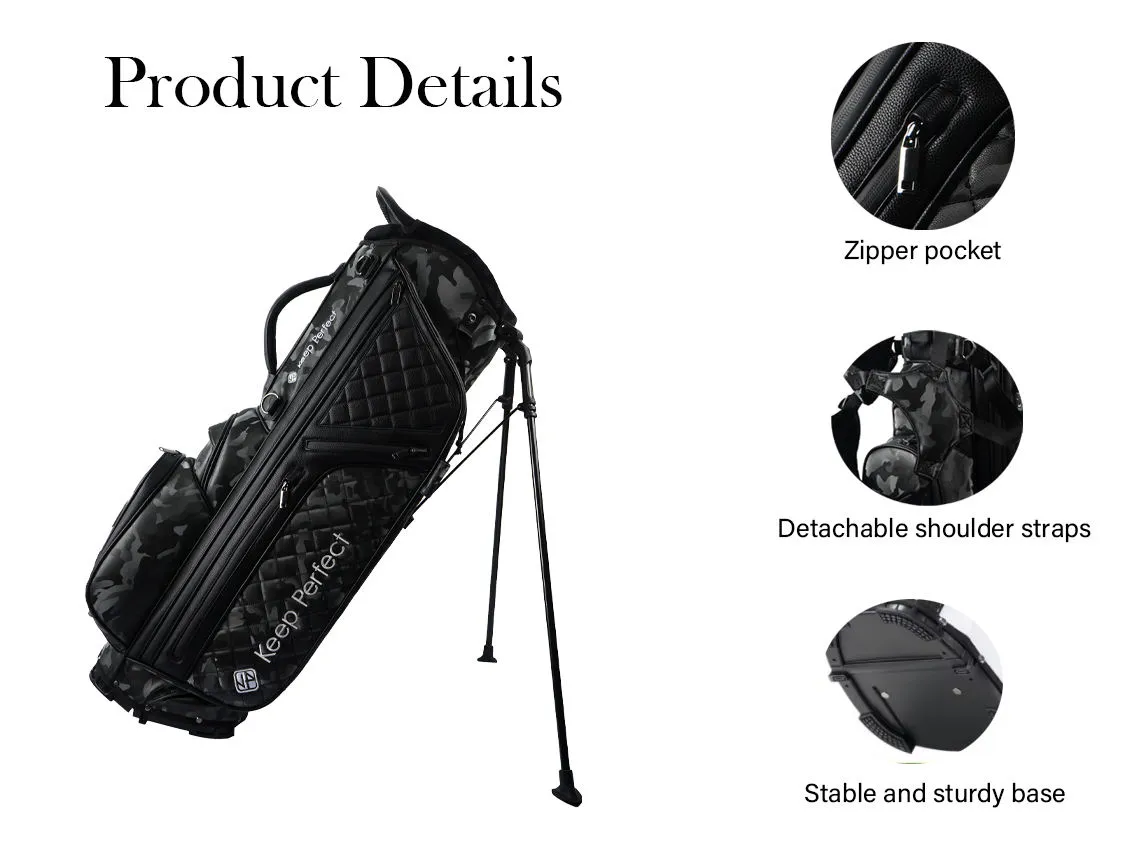
What PU and Real Leather Actually Are in a Factory Context
In a manufacturing spec, the two are not one material with two finishes; they are different classes of material with different supply chains. PU leather (polyurethane synthetic leather) is a coated textile: a fabric backing — nylon, polyester, or a cotton blend — coated and finished with a polyurethane layer that mimics the look and touch of leather. Because the base is a controlled fabric, PU gives consistent grain, predictable weight, and repeatable color across every meter. Real leather is an animal hide, so every hide varies in grain, stretch, and thickness, and the tanner's cut and finish determine what each panel looks like.
That difference drives everything downstream. With PU, you can quote a precise weight per square meter and lock a color across a run; with real leather, you buy by the hide, plan for cutting yield, and accept that each bag's panels share a tone but not an identical grain. For a brand that wants consistency at scale, PU is objectively easier to source and repeat. For a luxury line where each bag's natural variation is part of the appeal, real leather is the point. Name the material class in the first line of your brief and the rest of the spec follows.
Cost: The Spread That Reframes the Decision
Cost is where the two diverge most sharply. A PU synthetic leather offers the leather look at a fraction of the price because it is a manufactured coated textile with a stable yield. Real leather carries raw-hide cost plus tanning, finishing, and cutting loss, so a leather shell or even a leather-trimmed bag commands a meaningful premium. As a planning range, a real-leather stand bag typically costs 30-60% more than an equivalent PU build; the gap widens for full shells and narrows when real leather is used as trim or accent panels.
The cutting-yield point is what surprises first-time leather buyers. Because hides are irregular, you cannot always cut the panel you want from the shape you have, so more material is lost and the effective cost per usable panel rises. For a stand bag the shell is a large continuous surface, which is the least efficient shape to cut from a hide — so full-leather stand bag shells are among the priciest builds we quote. If you want the premium look without the shell cost, use real leather on the trim, handle, and branding patch and build the body in PU, a common and cost-savvy compromise.
Weight: Real Leather Puts the Load Back on the Walker
Weight is critical because a stand bag is a walking product. PU leather on a light backing adds minimal heft and is often lighter than a heavy ballistic nylon, which makes it a strong choice for a premium-feeling bag that still stays walkable around 4.2-5.5 lb. Real leather is dense natural material; a leather-trimmed stand bag can run 0.5-1.5 lb heavier than the same design in PU, and a full-leather shell more still. For a rider that extra weight is irrelevant; for a walker it is felt on every uphill.
For buyers, set the weight target before choosing the material. If the SKU must stay under 5 lb for walkers, PU on a light backing is the realistic route and real leather should be limited to trim. If the client is a cart-heavy or display-oriented program where weight does not matter, real leather's extra mass is acceptable in exchange for the touch and look. Confirm weight on the pre-production sample with the actual shell, because backing choice moves PU weight substantially and leather weight varies by hide.
Side-by-Side: PU vs Real Leather Material Comparison
| Parameter | PU Synthetic Leather | Real (Full-Grain) Leather | Buyer / Factory Note |
|---|---|---|---|
| Composition | Coated textile on a woven backing | Animal hide (cow, goat, sheep) | Different supply chains and cutting logic. |
| Grain consistency | Uniform across every meter | Varies by hide and cut | PU is easier to color-repeat at scale. |
| Typical unit cost | Low to moderate, stable | Premium, 30-60% higher | Cutting yield widens the real-leather gap. |
| Weight impact | Light, backing-dependent | Adds roughly 0.5-1.5 lb on trim builds | Walkability argues for PU. |
| Weather resistance | Sealed surface, water-resistant | Absorbs moisture, needs care | Rain programs favor PU or TPU. |
| Abrasion / daily wear | Good on a stable backing | Can scratch and crease | Test the stress points of the stand hinge. |
| Touch and feel | Consistent synthetic hand | Premium, natural, heritage | The main reason to pay for real leather. |
| Branding | Deboss, emboss, foil, molded patch | Deboss and foil; grain varies | Approve finish on the actual material. |
| Best-fit market | Value, all-weather, high-volume | Luxury, heritage, display | Position by shelf tier and care profile. |
| MOQ per colorway | 200 pcs (test 100) | 200 pcs (test 100); leather sourcing may vary | Same MOQ; leather yield can shift quotes. |
Durability and Water Resistance Where It Counts
On a stand bag the material is judged at the stress points: the hinge area where legs fold, the base where the bag sits on turf, the strap anchors, and the panels that brush against courses. PU leather on a stable backing performs well there because the sealed synthetic surface resists moisture and the backing absorbs abrasion without delaminating, provided the PU layer is matched to the use. Real leather can be more premium in hand but is more sensitive — it scratches, can crease at the hinge fold, and, if repeatedly soaked, can stretch or lose finish.
Water resistance is the deciding factor in rainy markets. A sealed PU surface holds up under light rain and morning dew, which is why all-weather and rain-gear programs favor PU or a TPU-coated approach. Real leather absorbs moisture and needs regular reconditioning to stay supple, which is fine for an occasional display bag or a dry-climate luxury line but is a care burden for a daily walker. If the product sheet promises weather protection, PU is the honest spec; if it promises heritage and touch, real leather suits a buyer who accepts the care.
Touch, Feel, and the Premium Positioning Gap
The strongest argument for real leather is intangible: touch. A full-grain shell has a warm, natural hand and a depth that synthetic can imitate but not fully match, and it ages with character a PU bag never develops. For a luxury or heritage line, that feel is what justifies the price and the weight. The counterpoint is that a well-finished PU leather, especially a matte microfibre or a premium coated-textile, closes much of the visual gap at a fraction of the cost, and it does so consistently across a full production run.
The positioning guidance is straightforward: if your target customer walks and buys on value or all-weather performance, PU wins on weight, price, and weather. If your target is a premium, cart-hungry, display-conscious buyer who values natural grain and is willing to maintain the bag, real leather earns its place. Many brands split the difference — a PU body with a real-leather handle, trim, and logo patch — to get the premium touch exactly where the customer feels it without paying leather prices across the whole shell.
Branding and Finishes on Leather Surfaces
Both materials brand well, but differently. On PU leather you can deboss (press) a logo cleanly and repeat the depth every time, add foil accents, or apply a molded patch; the consistent surface makes debossing reliable at volume. On real leather, debossing and foil also work, and a burned-edge or stitched leather patch carries a craft feel, but grain variance means the finish must be approved on an actual leather sample because tone and depth shift panel to panel.
Set the logo method and placement with the material choice in mind. A debossed logo on PU near the valuables pocket reads premium and stays crisp for thousands of rounds. On real leather, keep the logo on the flatter, less-flexed panels — the front lower panel or the lid — and avoid the stand hinge fold where a debossed mark can fatigue. Whatever the method, approve a physical sample on the exact shell material, not the tech-pack image, before bulk, because both PU finishes and leather grain differ from a screen render.
Cutting, Sewing, and QC for Leather Programs
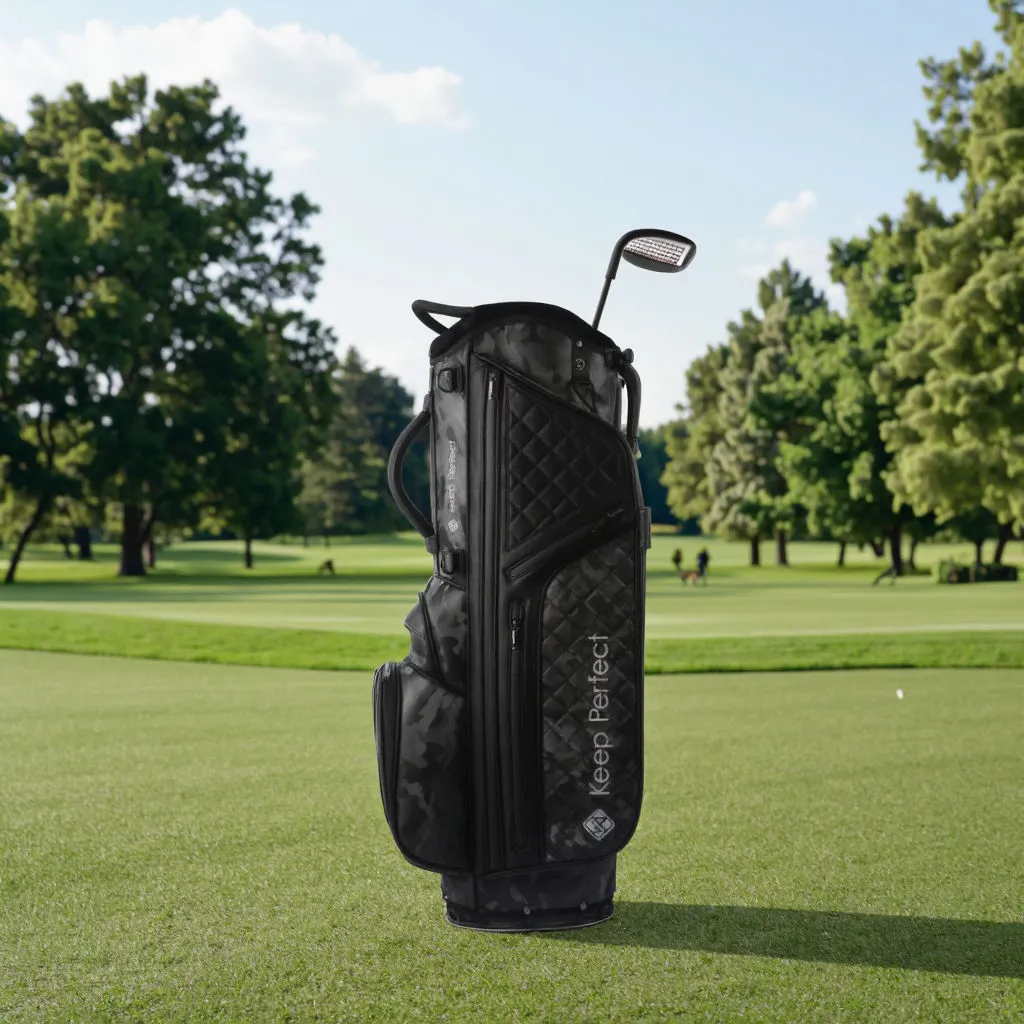
Making a leather bag well is about two things: stable cutting and precise finishing. With PU, cutting is fast and predictable because the coated textile rolls flat and the color is uniform. With real leather, the cutter must match grain direction, work around hide defects, and keep panels tone-matched within a bag, which is slower, wastes more, and needs a skilled hand. That is why a real-leather bag costs not just more material but more labor, and why a 200-piece leather MOQ can feel like a small-batch craft order rather than a bulk line.
For QC, set finish-specific checks. On PU, test adhesion at the stress points so the coating does not peel at the hinge or strap anchor, and confirm colorFastness in the sun-fading test. On real leather, check for scratches, crease lines at folds, and moisture-spotting on the sealed edges, and set an acceptable grain-tone range across the run. At QUANZHOU JUNYUAN BAGS, sampling for either material runs 10-20 days and bulk 45-60 days, and we encourage an inline finish inspection so the leather tone and the PU coating stay true before the run ships.
Sourcing Signals: Where the Material Story Meets Sustainability
Material choice is increasingly a sourcing story. For a value or all-weather line, PU is often paired with recycled polyester backings to support an eco claim; because a PU bag is a controlled textile, you can document the backing content and the coating chemistry for your certificate file. Real leather raises different questions — traceability of the hide, tanning chemistry, waste from cutting — that a buyer should ask about if sustainability is part of the brand story. Neither is inherently "green"; the question is what your market demands and what you can document.
Our affiliated plant is SGS-verified (March 2026, 4,950 sqm, 7 lines, 149 machines, 137 staff), with a monthly production capacity near 200,000 pieces and current monthly output around 150,000. That audit trail, plus clear material specifications and a sealed finishing sample, lets you put a defensible sourcing claim in front of your retailers. Decide whether the buyer wants value-based PU or heritage-driven real leather, and match the material spec to the story you will support after the sale.
Choosing the Right Material for Your Line
Narrow the choice with two questions: is the owner a walker who needs weight and weather resistance, or a cart-hungry buyer who wants premium touch and will maintain it? And is the line priced for volume or for a luxury tier? A value or all-weather line should be PU; a premium line can justify real leather on trim, handle, and logo patch at a modest premium. Ask for physical swatches of both, weigh them on the actual backing, and confirm the finish on a pre-production sample before you commit to bulk.
For related guidance see the stand bag materials guide for the full material canvas, the weight guide to set the right target, and our bag architectures. Review the factory QC process, consult the buying guide, or start a program through our OEM/ODM service with a material brief and a swatch request.
Construction Details: How Leather Panels Are Built
The way a leather panel is assembled changes how it ages, and this is where a factory's craft shows. A PU leather panel is usually cut from the coated textile, edge-finished, and stitched to the shell; the critical QC is that the coating does not lift at the seam allowance and that the edge paint or binding stays clean under repeated flex. On a real-leather panel, the cutter works with the hide's natural stretch direction — cutting against the grain can make a panel warp or a long seam pucker — and the edges need a burnish or an edge paint that seals the cut so the leather does not fray or soak at the seam.
There is also a structural difference in how the two attach to the stand hardware. A PU panel with a woven backing holds a bar-tacked strap anchor or a hinge-bolted bracket well because the backing gives the stitching purchase. Real leather, being a denser, more elastic material, needs a slightly different stitch density and possibly a reinforcement webbing behind the anchor so a heavy load does not tear the leather at the stitch line. When we build a leather-trimmed stand bag, we put the reinforcement behind the logo patch, the strap anchors, and the hinge bracket so the premium material does not fail at the mechanical stress points.
Maintenance, Care, and the After-Sale Story
The difference between PU and real leather does not end at the seam; it continues into how the bag is cared for and how that shows up in reviews and returns. A PU leather bag is essentially maintenance-free — a damp cloth to clean, no conditioning, and it keeps its color and finish through a season of use. That low-care profile keeps after-sales simple and supports a retailer's warranty story. A real-leather bag needs periodic conditioning to stay supple, must be dried if soaked, and will develop a patina that some love and others read as wear — a distinction you should put on the product sheet so buyers set the right expectation.
For a distributor, this care profile is a practical inventory consideration. The low-care PU bag returns fewer "it lost its finish" complaints and is easier to restock with consistent color. The real-leather bag, if a customer does not maintain it, can come back with a water-warped or dried-out panel that looks like a defect even when it is care-related. Price the real-leather line for the premium tier, support it with care guidance, and keep the PU line as the dependable volume seller. Give us your expected market and we will recommend the material and the care note that protects both your margin and your return rate.
For larger programs, order a small run-down of 20-30 units in the chosen material before the full batch so you can photograph the real finish and confirm the touch for your catalog, in both the leather and the PU option if you are running a two-tier line.
FAQ
Which is more durable for a golf stand bag: PU leather or real leather?
For a stand bag that is carried and set down daily, PU leather with a strong backing is usually the more practical choice because it resists weather, holds its structure, and weighs less. Full-grain real leather is more premium in feel and ages characteristically but is heavier and more sensitive to moisture, abrasion, and temperature.
Is real leather heavier than PU leather on a golf bag?
Yes. Real leather is a dense natural material, so a leather-trimmed stand bag can weigh 0.5-1.5 lb more than an equivalent PU build, and full-leather shells are heavier still. Weight is a key reason PU or leather-look synthetic is chosen where walkability matters.
Does real leather deteriorate on a wet golf course?
It can. Full-grain leather absorbs moisture, can stretch, and may lose finish if repeatedly soaked without reconditioning. PU leather resists water far better as a sealed synthetic, which is why rain-gear or all-weather programs favor PU or a TPU-coated approach.
What does a leather golf stand bag cost versus PU?
Real leather commands a meaningful premium — typically 30-60% higher unit cost than a comparable PU build — driven by raw hide, cutting yield, and finishing. PU delivers a leather look at a much lower cost and with consistent grain across pieces.
Can I get a raised logo on PU leather?
Yes. PU leather accepts deboss, emboss, foil accents, and molded patches well, making it popular for premium detailing. Real leather also accepts debossing and foil, but grain variance means you should approve the finish on an actual leather sample before bulk.
Which leather type is best for a golf stand bag?
For most production stand bags, PU synthetic leather is the best fit: it is weather-resistant, lighter, consistent in grain, and cost-effective. Use real leather only where a premium, heritage feel is the explicit selling point and the buyer accepts higher weight and care needs.
How do I choose between PU and real leather for my line?
Decide by positioning: a value or all-weather line favors PU; a luxury or heritage line can justify real leather on trim or panels. Ask for physical swatches of both, confirm weight and touch on the actual shell fabric, and lock the finish on the pre-production sample.
Request a B2B quote for golf stand bags
Send your target market, expected MOQ, and reference photos. We respond within 24 hours with a sampling plan.