A stand bag that follows an appearance-care routine — a spot wipe after each wet or dusty round, a full hand-wash every 15-20 rounds, and a yearly finish refresh including UV protection and trim conditioning — will hold its retail-fresh look for 3-5 seasons before the colourway or coating begins to visibly age. This guide focuses specifically on looking-new maintenance: fighting fade, dullness, stains, and trim damage, with the tools and numbers our SGS-verified Quanzhou factory (4,950 sqm, 7 lines, 149 machines, 137 staff) uses to keep sample and production colourways consistent. For a broader look across cart bags, staff bags and the full golf bag category from one source, our affiliated golf bag factory runs the complete line.
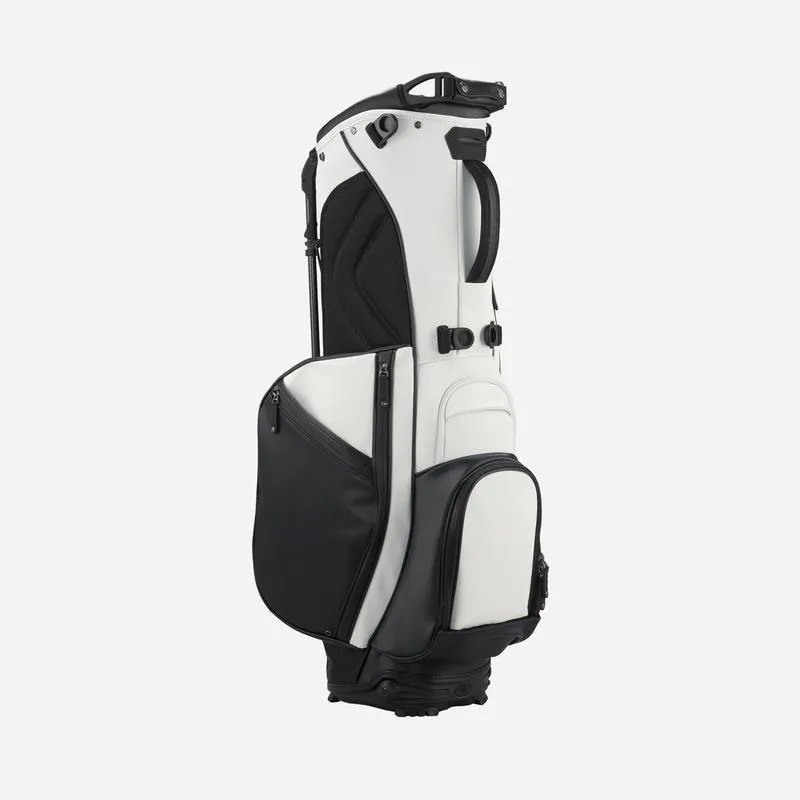
Looking new is a different job than lasting longer
A bag can be structurally sound yet look years old, and it can look brilliant yet be days from a hardware failure. Keeping a bag looking new is a subtraction job — removing the fade, stain, dullness, and trim wear that make a bag read as aged — rather than a mechanical job. Appearance care protects the sales story: a bag that still photographs like new sells for more on a reorder, photographs better in retail, and reflects better on the brand. That is why appearance deserves a dedicated routine, separate from the lifespan and repair habits.
Three forces age a bag's looks: UV from the sun, which fades colourways; embedded grime from oil, dirt, grass, and sunscreen, which dulls panels and stains seams; and chemical or trim wear that cracks PU, scratches hardware, and frays webbing. Each force has a prevention and a correction. Get ahead of all three and the bag keeps its factory-fresh silhouette long after the same design, neglected, would look tired by its second season. Your care goal is to remove the evidence of play, not to hide it — a genuinely well-kept bag photographs better than a polished one.
Fight fading before it starts: UV is the number-one enemy
Sun-fade is the single most visible sign of an old bag, and it is almost entirely preventable. The dye molecules in the shell break down under prolonged ultraviolet light, so the panels that face the sun — the outer shell, the lid, and the strap area — fade first and fastest. The first defence is physical: keep the bag out of direct sun whenever possible, on the cart, in the trunk, and especially during storage. The second defence is a UV-protective fabric treatment refreshed each season on the outer panels, applied after the bag is completely dry.
Not all colourways fade at the same rate, and that is a sourcing decision you can make today. Deep, saturated dye lots and lightfast pigments hold colour far longer under sun, while bright, non-lightfast colours degrade visibly within a season of heavy play. When you source, ask for the fade-test data of your chosen colourway and confirm it, because it is far cheaper to choose a fade-resistant colour at the factory than to give every customer a fading bag. Our factory QC validates lightfastness before a run, so the bag's look matches the design intent across years.
Stop grime and stains before they set
Embedded grime is the second force that ages looks, and it is best handled by speed and prevention rather than by heavy scrubbing. Oil from hands, sunscreen, and grass sits on the surface at first, then migrates into the weave and darkens the panel. Treat every mark while it is fresh: a quick soap-and-water spot on the afternoon you notice it removes most stains that a week-old mark would require a deep soak to lift. This is why the single best appearance habit is a 60-90-second spot wipe after every wet or dusty round, before the residue has a chance to bond with the weave.
A stain-repellent spray on the shell and light panels is the preventive counterpart. Coated panels shed oil and water so they never bond with the fibres in the first place, dramatically slowing the dulling process and making future cleans easier. On light or white panels — the highest-visibility and hardest-to-keep-clean zones — a repellent coat is close to essential for keeping them bright. Pair the repellent with the correct cleaner for the fabric, and your customers' bags will spend far less time hiding in a trunk between good looks.
Refresh the finish to restore sheen and water beading
A bag that looks dull after a clean is usually carrying two problems: detergent or softener residue left in the seams, and a worn DWR (durable water repellent) finish that no longer beads water. Detergent residue coats the fibres and flattens the nap, while a dead DWR leaves panels looking flat and letting water soak in. The correction is short: rinse the bag until the rinse water runs completely clear, let it dry fully, then apply a fresh, breathable waterproofing and sheen-restoring treatment to the outer panels.
Choose a treatment formulated for the fabric type. A nylon or polyester shell takes a DWR-style spray that rebuilds water beading and adds a subtle sheen; a PU-laminated or TPU-waterproof shell needs a treatment made for those films so it does not peel or yellow. When sheen and beading are restored, a bag that looked tired suddenly reads as new again, which is the cheapest 'new bag' any owner can buy. The full wash-and-restore sequence is in our step-by-step cleaning guide.
Keep light and white panels bright
Light-coloured panels are the pride and the vulnerability of many stand bags. They show the design beautifully but advertise every mark. The rules that keep them white and bright are simple: treat stains immediately, use a mild detergent only, scrub gently, and never let a mark reach the set-in stage. A dedicated light-panel cleaner or a gentle paste of mild detergent and cool water lifts most stains without yellowing the fabric.
Also watch for transfer staining: dark trims, thread, or a lower panel bleeding onto a light panel when the bag is wet. Store light-coloured bags so dark panels do not press against them while damp, and dry the bag fully before it sits against anything coloured. For the white or very pale panels that matter most to your brand's look, a photoprotective and repellent coat refreshed every few cleans keeps them from the grey surface film and yellowing that make white look old, and it shortens every future clean by keeping dirt on the surface instead of in the weave.
Protect the trims: PU leather, webbing, and thread
The small components — PU leather trim, webbing straps, zipper webbing, and accent thread — carry much of the premium look and are the first to age if ignored. PU leather dries out and cracks when exposed to heat, direct sun, and repeated flexing, so condition it periodically with a product made for PU, keep it out of extreme conditions, and avoid creasing it at storage. Webbing fades and frays from UV and abrasion, so treat it with the same UV protection as the shell and check the edges for fraying.
Accent thread loses its pop when it collects grime, so spot-clean the visible stitching lines with a soft brush and mild soap. Colour-matched contrast piping is a high-visibility trim that shows dulling quickly; keeping it clean preserves the sharp line that gives a bag its deliberate, designed look. When trims stay crisp, a bag that is a few seasons old can still pass a close look, which is exactly the effect a brand wants when a retailer or customer photographs the bag in use, and it is the detail work that separates a cared-for bag from a merely washed one.
Brighten hardware and zippers without scratching
Zipper pulls, D-rings, buckles, and the top handle wear a reflective coating or plating that dulls with contact. A soft, slightly damp cloth removes the dulling residue from oils and grip, and brings the shine back quickly. For uncoated metal, a light metal polish restores gloss, but use it sparingly and rinse it off so residue does not transfer to panels. Avoid anything abrasive — a scouring pad, a hard brush, or certain metal polishes will scratch the plating and make the hardware look worse.
Clean the zipper tracks at the same time, because a dirty track around bright pulls undermines the whole impression. Use a dry lubricant after cleaning so the zipper stays smooth, which also prevents the wear that dulls the pulls' finish. Hardware that stays bright makes a bag read as new even if the shell has some patina, so a few minutes on the metal is disproportionately effective for appearance. Keep a check on the painted or anodised pulls to make sure the coating is not flaking, and replace any that are, because chipped pulls are an instant tell that even the boldest colourway cannot hide.
The yearly looking-new deep clean
Even with a good routine, give the bag one dedicated appearance deep clean each off-season. Empty it, hand-wash all panels with cool water and a mild detergent, de-stained light panels, then dry fully with the stand deployed so air reaches every pocket and seam. After drying, apply the finish refresh — UV protection on the shell, a fresh DWR on the outer panels, PU conditioner on the leather trim, and a light oil or wax on the metal hardware. Finally, polish any visible accent stitching and check that all pullers and clips are bright and present.
This yearly job restores everything the year's play took off, and it is the moment to make any cosmetic repair — re-threading a faded accent line, replacing a chipped pull, or touching up a scuffed panel — before the bag goes back into use. Do this once a year and the catwalk look stays alive for 3-5 seasons instead of one, and the bag stays valuable as a display or resale item. It is the same discipline we apply to production samples, which is why the bags we photograph for our product line still look factory-fresh even after many test sits.
Appearance maintenance schedule
| Appearance Task | Frequency | Tool / Product | What It Protects |
|---|---|---|---|
| Spot wipe lower panels | After every wet/dusty round | Microfibre cloth, soft brush | Prevents embedded grime and dulling |
| Stain-repellent spray | Every 4-6 cleans | DWR/repellent spray | Keep oil and dirt from bonding |
| Full hand-wash | Every 15-20 rounds | Cool water, mild detergent | Removes grime, restores colour |
| Finish refresh (DWR + sheen) | Yearly deep clean | Breathable waterproofing | Restores beading, removes dullness |
| UV protectant on shell | Yearly and after each clean | UV fabric treatment | Prevents colourway fade |
| PU trim conditioner | Yearly | PU leather conditioner | Prevents cracking and drying |
| Hardware polish + lube | Yearly / as needed | Soft cloth, mild metal polish | Keeps pulls, rings, clips bright |
How sourcing decides how long the look lasts
No amount of care can resurrect a colourway that was never fade-resistant or a coating that was applied thinly, so appearance longevity starts at sourcing. Specify lightfast dyes for your signature colour, confirm the coating thickness on PU panels, and request a fade-test record on the actual shell fabric before bulk. These choices cost far less than the returns and re-brands a fading bag creates, and they give your care card an honest claim to make. If you plan strong, saturated colours next to light panels, also flag the contrast-upkeep burden so the care instructions match the design you chose.
At QUANZHOU JUNYUAN BAGS we validate appearance-critical specs at factory QC — lightfastness, coating coverage, and finish durability — so the bag that leaves our plant holds its looks. Combined with the appearance routine above, a brand can confidently promise a bag that looks new for 3-5 seasons. When you pair fade-proof sourcing with a customer-kept look-maintenance plan, the bag continues to photograph like retail stock long after purchase, which quietly sells your brand to every caddie, cartie, and camera that sees it.
Stain-specific treatment for the common culprits
Different stains need different treatments, and using the right one keeps a panel from being over-scrubbed or stained further. Grass and mud come out with a mild detergent soak for 5-10 minutes followed by a gentle wipe; tree sap and resin call for a dab of rubbing alcohol on a cloth (never on PU), tested on a hidden area first; sunscreen and body oil lift with a slightly stronger soap solution on the touch points; and a ball-marker scuff or shoe mark is best removed with a soft eraser or a light abrasive-free cleaner. Knowing the stain's source lets you pick the gentlest effective method.
For stubborn, set-in stains, a dedicated upholstery or stain cleaner for outdoor gear is a useful last resort, always test-probed on a hidden seam first so you do not lighten the colourway. Treat stains with the panel dry where possible, working edge-to-centre so you do not spread the mark. Speed is the edge: a mark removed the same day comes off with a cloth and soap, while the same mark left for a week needs a full soak and risks a permanent ghost. This is why we put a stain-first checklist in every care card we help brand teams produce.
Keeping a bag photogenic for retail and resale
A bag that looks new is a bag your brand can photograph at any time, and appearance care doubles as a resale and merchandising asset. A distributor's display bag that still looks fresh sells the architecture better in-store, and a resale or trade-in standard in good cosmetic condition holds a far higher resale value. Keeping fade, stains, and dullness off the bag keeps the option open to photograph, display, and resell it — all of which convert appearance maintenance into revenue rather than mere routine. For a retailer, the display bag is the hero of the sales floor, and its condition is what a shopper reads as the quality of the whole line.
Practical photogenics guidance: keep at least one 'hero' bag in your program minted — cleaned, refreshed, and stored flat with panels open — so you always have a bag that photographs like retail stock. Refresh the hero before any product shoot with a finish refresh and hardware polish, and it will read as new in the frame. This is the same practice our team follows for the imagery on our product pages, where a bag that still looks factory-fresh makes the product sell itself. Appearance care is not vanity; it is the cheapest way to keep your bag selling itself season after season.
A quarterly appearance audit in five minutes
A short quarterly audit catches appearance decline before it compounds. Work the bag top to bottom and ask five questions: are the colourways even, or is any panel visibly lighter where the sun hits? Is there a sticky or cloudy patch on a touch point that a clean will not lift? Are the light panels holding their white, or showing a grey surface film? Is the PU trim dry or cracked at the folds, and are the hardware pulls dull or chipped? And finally, does the DWR still bead water on the outer shell, or do the panels soak instead? Tick each off and you know exactly what the next maintenance day must address.
Write the answers down or photograph the bag from the same angle each audit, because a photo archive shows slow fade and dulling that the eye normalises away. A quarterly five-minute check turns appearance preservation from guesswork into a dated, catch-it-early routine, and it feeds straight into the yearly deep clean so nothing is reinvented at season's end. This is the practical version of the discipline our team applies between product shots, keeping every hero bag minted and ready for the camera, and it is a habit any owner or brand staff can complete in one coffee's worth of time.
Recommended Internal Links
- Products (Stand Bag Architectures)
- Factory & QC
- Golf Stand Bag Buying Guide
- Step-by-Step Cleaning Guide
- Stand Bag Materials Guide
- Extended Lifespan Maintenance Guide
Keeping a stand bag looking new is a subtraction job you can run on a simple calendar. Wipe grime off while it is fresh, keep the colourway out of the sun and under UV protection, refresh the finish each yearly deep clean, and budget a little time for trims and hardware. Do that and a bag will still read as new for 3-5 seasons, photographing like retail stock on every outing. For care-card artwork that matches your branding, or a bag sourced with fade-proof, appearance-first specifications, contact us at service@junyuanbags.com or +86 17750020688.
FAQ
How do I stop my golf stand bag from fading?
Fade is driven by UV and repeated sun exposure. Keep the bag out of direct sun when you can, refresh a UV-protective treatment each season, and confirm at sourcing time that the colourway uses lightfast dyes. Panels like the lid and strap area face the sun most and will fade first.
Why does my bag look dull even after cleaning?
Dulling usually comes from detergent residue, fabric softener coating, or a worn DWR finish. Rinse until the water runs clear and refresh a light waterproofing treatment to restore sheen and water beading.
How do I keep white or light-coloured panels clean?
Treat a light stain quickly before it sets, use a mild detergent spot treatment, and apply a stain-repellent spray so dirt and oil bead instead of absorbing into the fibres.
Should I polish the hardware and zipper pulls to keep them bright?
Yes. A wipe with a soft, slightly damp cloth removes dulling residue, and a light metal polish on non-coated hardware restores shine. Avoid abrasives that scratch the coating.
How can I protect PU leather trim from cracking?
Condition PU leather periodically with a product made for PU, keep it out of extreme heat and direct sun, and avoid creasing it when storing. Cracking happens as the film dries and flexes.
How often should I clean to keep the bag looking new?
A spot wipe after every wet or dusty round, a full hand-wash every 15-20 rounds, and a yearly deep clean with a finish refresh keeps a stand bag looking new for multiple seasons.
Request a B2B quote for golf stand bags
Send your target market, expected MOQ, and reference photos. We respond within 24 hours with a sampling plan.