A golf stand bag that receives proactive maintenance on just three moving systems — the stand hinge, the zippers, and the strap anchors — typically lasts 5-8 seasons, while a bag that only cleans the shell wears out its hardware in about half that time. This guide gives you the maintenance priorities that actually extend usable life, with the tools and intervals we use in our SGS-verified Quanzhou factory (4,950 sqm, 7 lines, 149 machines, 137 staff), so a brand or distributor can turn these into a durable care program for their customers. For a broader look across cart bags, staff bags and the full golf bag category from one source, our affiliated golf bag factory runs the complete line.
The maintenance principle: mechanical parts, not just fabric
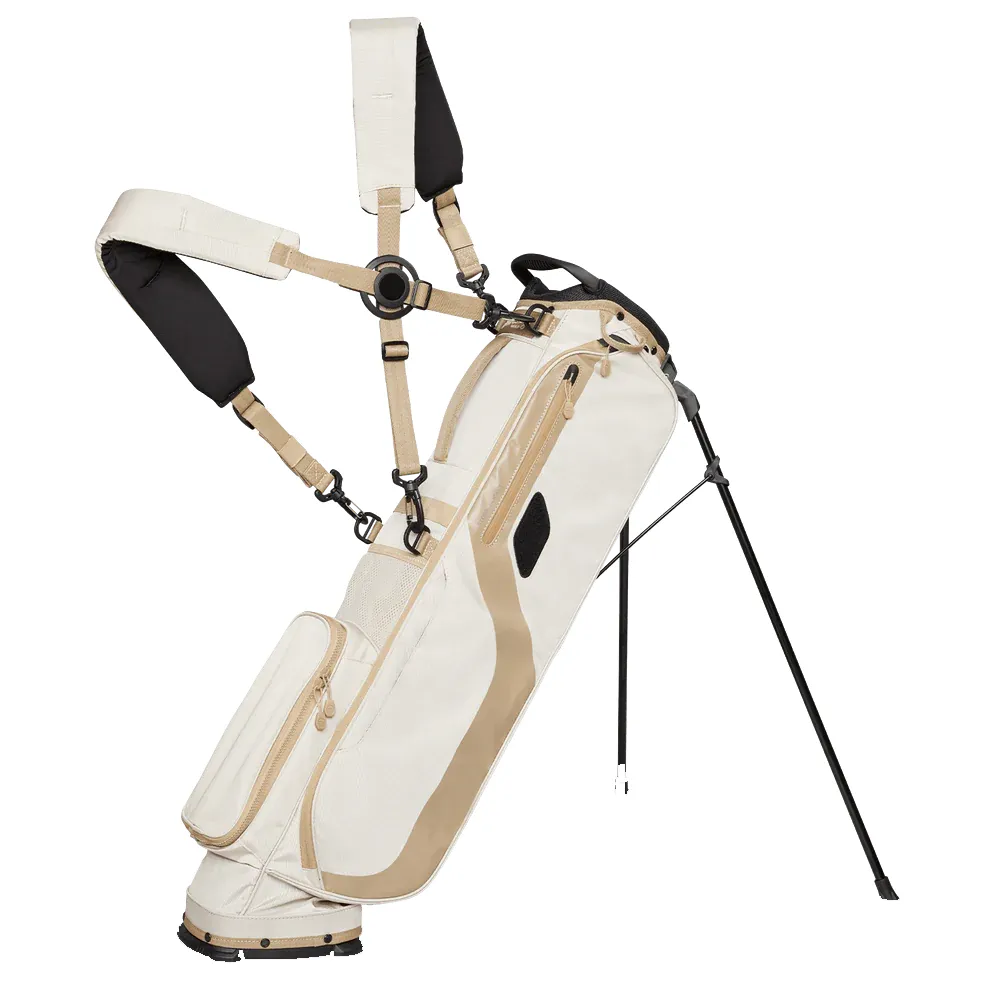
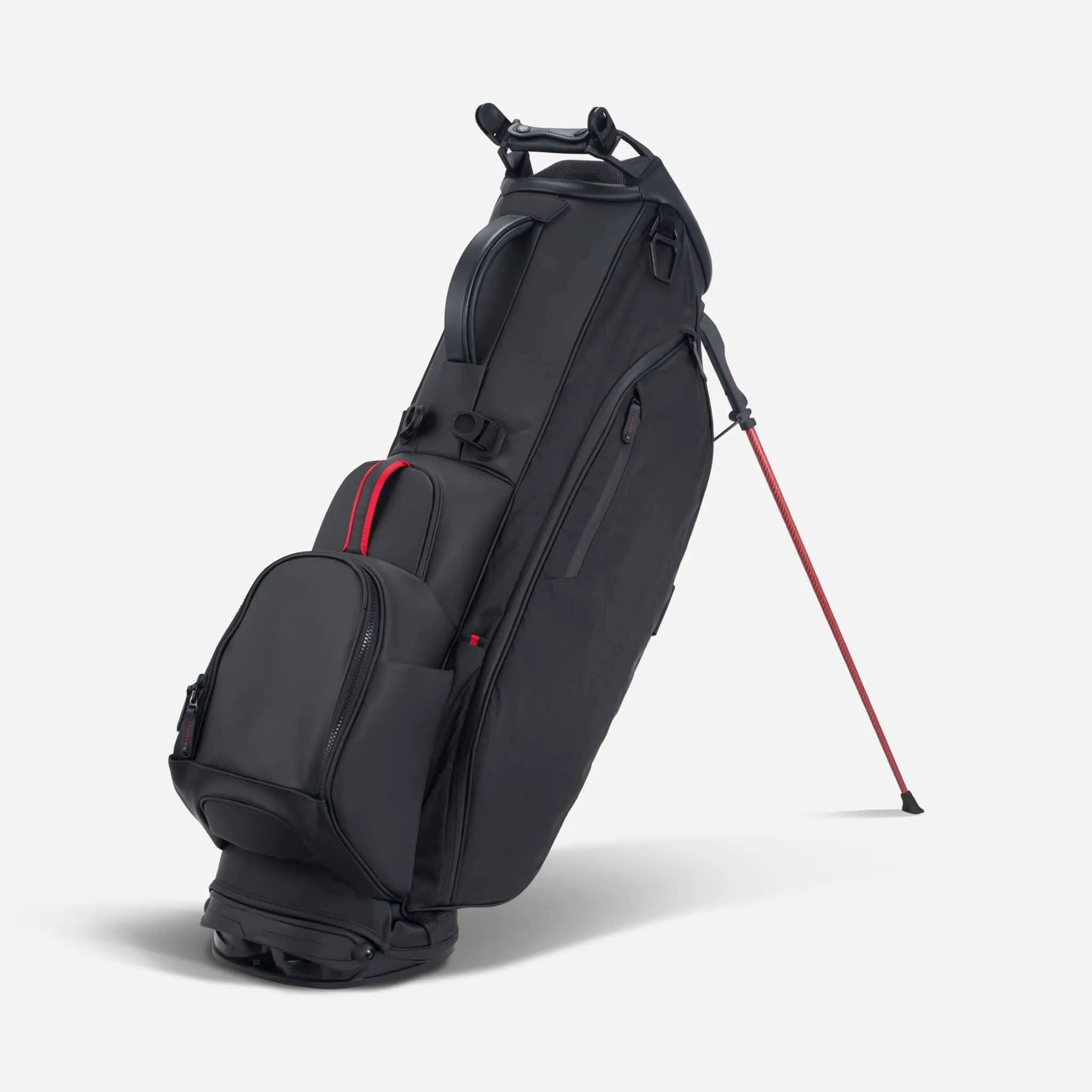
Most owners think of a stand bag as a fabric product and spend their care effort on the shell. But a stand bag is really a mechanical product wrapped in fabric — a frame, a hinge, springs, legs, zipper sliders, and strap anchors that flex thousands of times a year. Those mechanical parts, not the panels, are what actually wear and fail, which is why lifespan is won or lost in the hardware and the stress points rather than in the colourway. Keeping the fabric clean preserves the looks; keeping the mechanical parts lubricated and stress-free is what preserves the life.
The build quality sets the ceiling on what maintenance can preserve. A bag with a reinforced hinge block, a stability-focused base, and cycle-tested zippers sustains years of active use, whereas a lightweight shell with thin stitching will fatigue at the stress points no matter how well it is cared for. That is why we run factory QC cycle tests on the stand and zippers before a run ships — so buyers know their maintenance budget is spent on a foundation that can actually repay it, and so a care card never over-promises what a low-end build can deliver.
Habit 1 — Deploy the stand and let the legs work
The most common stand fault is not wear but atrophy: a bag stored with the legs folded and compressed for months lets the springs and hinge settle into a stiff position. On the first deployment of a new season the spring fights back and the hinge strains. The fix is deceptively simple — periodically deploy the stand fully and let it sit open for a few minutes, then retract it. This keeps the springs limber and confirms the legs still lock.
Make a habit of running the stand through 10-15 full deploy-retract cycles at every quarterly maintenance session. Listen for a clean click at full extension and watch for a wobble at the hinge. If a leg deploys with a jerk or will not lock, stop using that hinge position and clear the debris before continued use. A small amount of dry lubricant on the hinge block helps the mechanism run smooth, and a can of compressed air keeps the pivot clear of the sand and grass that cause the jerk in the first place. Letting the mechanics cycle keeps the most expensive moving part of the bag healthy with almost zero cost.
Habit 2 — Protect the zippers, the most-failed component
Zippers fail more often than any other stand bag component because they are a moving mechanism exposed to grit, and the failure is almost always grit-driven rather than a raw-material defect. Sand and grass work into the track, abrade the teeth, and bend the slider. The protection routine is short: after each dusty round, wipe the track with a soft brush; quarterly, clean the track and apply a dry lubricant (silicone zipper wax or powdered graphite), then cycle the zipper 4-5 times to distribute it.
Never use oil or grease on a zipper — it traps dirt and stiffens in cold weather, turning a smooth track into a gritty one. When a zipper begins to drag or skip, address it immediately: clear the track, then if needed replace the slider, a five-minute swap with the right size. Because zippers carry the load of a fully packed bag, a stiff zipper that is ignored will soon drag the surrounding seams out of shape, turning a cheap fix into a structural one and forcing a repair far beyond the zipper itself.
Habit 3 — Check the strap anchors and webbing
The dual-strap system bears the full weight of a loaded bag — a 14-way bag can ride at 15-22 kg — so the anchors and webbing are load-bearing stress points. At each quarterly check, fill the bag, lift it by each strap, and look for stitch separation or weave fraying where the webbing loops through the anchor. Also inspect the shoulder pad where the strap rubs, since body oil and sweat break down the foam and webbing over time, and look at the bar tack stitching around the adjuster buckles for any loose or pulled loops.
Wipe the pads and webbing after sweaty rounds and treat the metal adjusters with a light anti-corrosion wipe before off-season storage. Loosen the straps fully when the bag is in storage so the webbing is not held under tension for months. Catching a frayed anchor at the 'just starting' stage means a simple re-stitch; ignoring it until it snaps on the course means a backpack-style failure mid-round. The anchor inspection is 60 seconds and repays itself many times over.
Habit 4 — Shield the base and wear plate
The base plate and the lower third of the shell take the most abrasion, because the stand bag lives standing on its base in trunks, lockers, and cart paths. Grit ground into the base squeezes between the plate and the seam, weakening the stitching and abrading the shell. The routine is to knock and brush sand off the base after every round and to inspect the wear plate quarterly for cracks or excessive wear.
On many stand bags the base wear plate is a replaceable component, so a worn plate can be swapped rather than retiring the whole bag. Protecting the base also protects the stand geometry — the legs anchor near the base, and a distorted base throws the deployment angle off. If the base shows stress, address it before the stand follows, and choose a bag with a reinforced base at sourcing time so this stress point starts stronger.
Habit 5 — Clean the shell, but never with heat or a machine
Shell cleaning preserves appearance and prevents embedded stains, but it must be done gently. Hand-wash with cool water below 30°C and a mild, bleach-free detergent, wiping with a soft cloth in circular motions; never machine wash, never tumble dry, and never use hot water, because heat warps the padding and embrittles the stand springs. Rinse until the water runs clear and let the bag air-dry with the stand deployed and every pocket open for 24-48 hours.
The cleaning schedule matters as much as the method. A light spot wipe after every wet or dusty round, a full hand-wash every 15-20 rounds, and a yearly deep clean with a fabric-waterproofing refresh keeps the shell healthy without over-cleaning. Over-washing with the wrong products can dull the colourway and wear the coating faster than dirt would. Balance the routine: clean often enough to prevent embedded grime, gently enough to preserve the finish. If the bag has a PU or TPU waterproof zone, check it separately and treat it with waterproofing products only, since generic detergents and conditioners can strip the laminate's water-beading performance.
Habit 6 — Never store the bag wet, compressed, or in heat
Storage conditions quietly decide a bag's lifespan as much as anything on this list. Never store a damp bag — moisture trapped inside zipped pockets is the fastest route to mildew and rust. Before off-season storage, empty every pocket, deep-clean, leave the stand deployed and all pockets open, and allow 24-48 hours of full drying. Then store the bag standing upright on a shelf in a ventilated, low-humidity room, away from radiators, direct sun, and concrete floors that wick moisture.
Do not stack heavy gear on top of the bag, which compresses the padding and bends the frame, and do not hang the bag by its straps. Loosen the straps so the webbing relaxes. For humid climates, add a silica-gel sachet to the main compartment and check it halfway through the off-season, replacing it if it has absorbed moisture. The golden rule is simple: the storage space must let the bag breathe and stay dry. A detailed yearly storage protocol is in our off-season storage guide.
Habit 7 — Repair early, replace parts, not the bag
The single biggest lifespan lever is refusing to wait until a component is completely broken. A zipper that drags, a hinge that wiggles, a strap that frays — each of these is cheaply fixable at the early stage and expensive at the late stage, because a failing component drags its neighbours with it and eventually forces a full replacement. Set a rule: any moving or load-bearing part that feels wrong gets inspected within the week, not "sometime before next season."
Component-level repair is also a sustainability and cost win. Replacing a zipper slider, re-stitching a strap anchor, or renewing the hinge module costs a fraction of a new bag and restores full function. This philosophy is the same one that drives our OEM/ODM service — using the best materials and serviceable hardware so that maintenance can always extend, rather than end, a bag's life.
Maintenance interval table
| Maintenance Habit | Interval | Action | Lifespan Impact |
|---|---|---|---|
| Stand deploy/retract cycle | Quarterly | 10-15 full cycles, listen for clean click | Keeps springs and hinge limber |
| Zipper clean + dry lube | Quarterly | Brush track, apply silicone wax/graphite | Prevents most zipper failures |
| Strap anchor load test | Quarterly | Fill bag, lift by each strap, inspect stitching | Catches load-bearing seam failure |
| Base + wear plate inspect | Quarterly | Brush grit, check plate for cracks | Protects stand geometry |
| Shell spot wipe | After wet/dusty rounds | Microfibre cloth, soft brush | Prevents embedded stains |
| Full hand-wash | Every 15-20 rounds | Cool water, mild detergent | Preserves colour and coating |
| Off-season storage prep | Yearly | Empty, clean, dry 24-48h, store upright | Prevents mildew, foam warp, rust |
What maintenance a brand should put on the care card
For a brand team, the value of this guide is packaging it into a care card customers actually read. The table above is short enough for one card, and it speaks in dates and actions rather than vague advice. Pair the card with a QR code to a short video of each habit, and customers are far more likely to do the quarterly 10-minute checks that protect the stand, zippers, and straps — the parts whose failure generates the most warranty claims. Keep the language simple and the actions discrete, so someone reading it in the garage on a Sunday can act on it immediately rather than having to interpret it.
Buyers can also design for easier maintenance at sourcing time: choose a replaceable base wear plate, a coated grit-resistant zipper, a quick-dry mesh lining with a drainage vent, and a reinforced hinge block with serviceable springs. These details cost little at the factory but change the maintenance burden and failure rate dramatically over the bag's life. Our buying guide covers how to spec these, and our product line shows the architectures that already support them.
Making lifespan a spec, not an afterthought
When a brand treats lifespan as a measurable requirement, the entire program improves. Define the targets up front: a minimum number of stand deployment cycles, a zipper cycle count, an abrasion rating for the lower panels, and a stitch-density spec at stress points. Then validate with a pre-production sample built exactly like the production bag, and keep the test data on file so an reorder or a warranty dispute has a reference.
At QUANZHOU JUNYUAN BAGS we build this into the QC record so a buyer can prove what a well-maintained bag can deliver. Combined with the customer-facing care habits in this guide, lifespan stops being a vague marketing word and becomes a documented, engineered outcome — a bag that plays for 5-8 seasons because both the factory and the end-user did their part.
Material-focussed care that slows overall wear
The shell fabric ages through a mix of UV, abrasion, and chemical exposure, and tailoring care to the material slows all three. A standard 600D nylon shell wants cool water, a mild detergent, and a soft cloth, plus a UV-protective treatment refreshed each season if it sits in carts and sunlight — prolonged UV is what fades colourways and weakens the weave. Polyester behaves similarly but shows sheen loss sooner if it is scrubbed hard, so keep the pressure light. For PU-coated panels, avoid alcohol and solvents entirely and use only pH-neutral soap so the film never dissolves.
TPU waterproof pockets tolerate more but still dislike heat and ironing, so treat them gently. Understanding the material your bag is built from lets you choose the right care products, and it also tells you which treatments — waterproofing sprays, UV protectants, leather conditioners on PU trim — are safe to apply. Matching the cleaner to the fabric is one of the cheapest ways to extend panel life, and it is the same logic our materials guide applies at the point of sourcing, so the bag you order is the bag your customers can actually maintain.
Seasonal maintenance plan for a year-round program
Maintenance is easiest to sustain when it is tied to the seasons rather than remembered ad hoc. In the spring, before the first serious play, run a full service: deep-clean the shell, refresh the zipper lubrication, deploy the stand 15-20 times, and check the strap anchors and base plate. Mid-season, in summer, focus on sweat and UV: wipe the touch points after hot rounds and touch up the waterproofing on the lower panels. In the autumn, clean the bag thoroughly after the season's last muddy round. In winter, protect the stored bag as detailed in the off-season protocol.
A simple quarterly calendar — Refresh in spring, Sweat-guard in summer, Deep-clean in autumn, Store in winter — turns this guide into four concrete actions a customer can put on their calendar. Brand teams can ship a seasonal checklist with each bag or email it at the turn of each quarter. Because the habits are small and dated, compliance rises, and compliance is what converts a good bag warranty record into a minimal one. Pair this calendar with the look-new maintenance guide and customers have both a lifespan plan and an appearance plan they can follow.
The economics: maintenance is far cheaper than replacement
It helps to think of maintenance in cost terms, because the numbers make the decision obvious. A zipper slider replacement costs a few dollars and five minutes; a re-stitched strap anchor is a quick service-bench job; a hinge module renewal is a modest part cost. A full stand bag replacement, meanwhile, is ten to thirty times the price of any single component repair. Small, dated, proactive checks are essentially free — a brush, a dry lubricant, a microfibre cloth — and they protect the most expensive part of the program, the bag itself.
For a brand or distributor, this math flows straight into the warranty ledger. Every bag that returns with a worn-out hinge, a siezed zipper, or a popped anchor is a claim that careful maintenance would have prevented or reduced. Sharing this maintenance routine with customers lowers your return rate and shortens the pain of after-sales, and it gives your product a reputation for durability that drives repeat purchases. When you combine maintenance-friendly sourcing with a customer-kept care plan, you move from replacing bags to supporting them, and that is where the real margin lives over time.
Recommended Internal Links
- Products (Stand Bag Architectures)
- Factory & QC
- Golf Stand Bag Buying Guide
- Off-Season Storage Guide
- Step-by-Step Cleaning Guide
- Stand Frame Care Guide
Extending a stand bag's lifespan is a maintenance system, not a single trick. Protect the three moving systems — the stand hinge, the zippers, and the strap anchors — keep the shell clean and dry, store the bag upright in a ventilated space, and repair parts early instead of retiring the bag. Match the cleaner to the material, tie the routine to the seasons, and set the lifespan as a measurable spec at sourcing time. Follow the quarterly schedule in this guide and a quality bag will serve 5-8 seasons with a single hardware refresh in between. For care-card templates, spare hardware, or a bag engineered to be maintainable, contact us at service@junyuanbags.com or +86 17750020688.
FAQ
How many years should a golf stand bag last with good maintenance?
With proactive care, a 600D nylon stand bag typically serves 5-8 seasons; the stand hinge and zippers are usually the first parts replaced within that window, and they are serviceable, not the reason to retire the bag.
What maintenance gives the biggest lifespan return?
The biggest return comes from protecting the three moving systems — the stand hinge, the zippers, and the strap anchors — because those are what actually wear and fail. Cleaning the shell is cosmetic by comparison.
How do I keep the stand mechanism working longer?
Clear grit from the hinge with compressed air quarterly, deploy and retract the legs 15-20 times to keep springs limber, and avoid storing the bag with the legs under load or compressed.
Should I lubricate the zippers regularly?
Yes. A dry lubricant such as silicone zipper wax or graphite every quarter, after cleaning the track, keeps pulls smooth and prevents the grit-driven wear that causes most zipper failures.
Does overloading pockets shorten a bag's life?
Yes. Overloading the valuables or apparel pocket beyond its stitched capacity stretches zipper tracks and pops seams, especially on a lightweight stand bag designed to a strict weight budget.
What are the first signs a bag needs maintenance?
A zipper that drags, a strap anchor that wiggles, a hinge that deploys with a jerk, or fraying webbing. Catching these at the 'sticky' stage avoids small faults becoming replacement parts.
Request a B2B quote for golf stand bags
Send your target market, expected MOQ, and reference photos. We respond within 24 hours with a sampling plan.