Practice golfers can also browse our range and simulator golf bags — Fix a sticking golf stand bag zipper in about 10 to 15 minutes by first cleaning the teeth with a dry brush, then applying a dry lubricant such as powdered graphite or a wax stick — repeated every 10 to 15 rounds — and avoiding oil-based sprays that attract grit and shorten the zipper's life. This guide covers the full zipper care routine we reference at our SGS-verified Quanzhou factory (4,950 sqm, 7 lines, 149 machines, 137 staff), so brands can both fix bags and source zippers built to stay smooth.
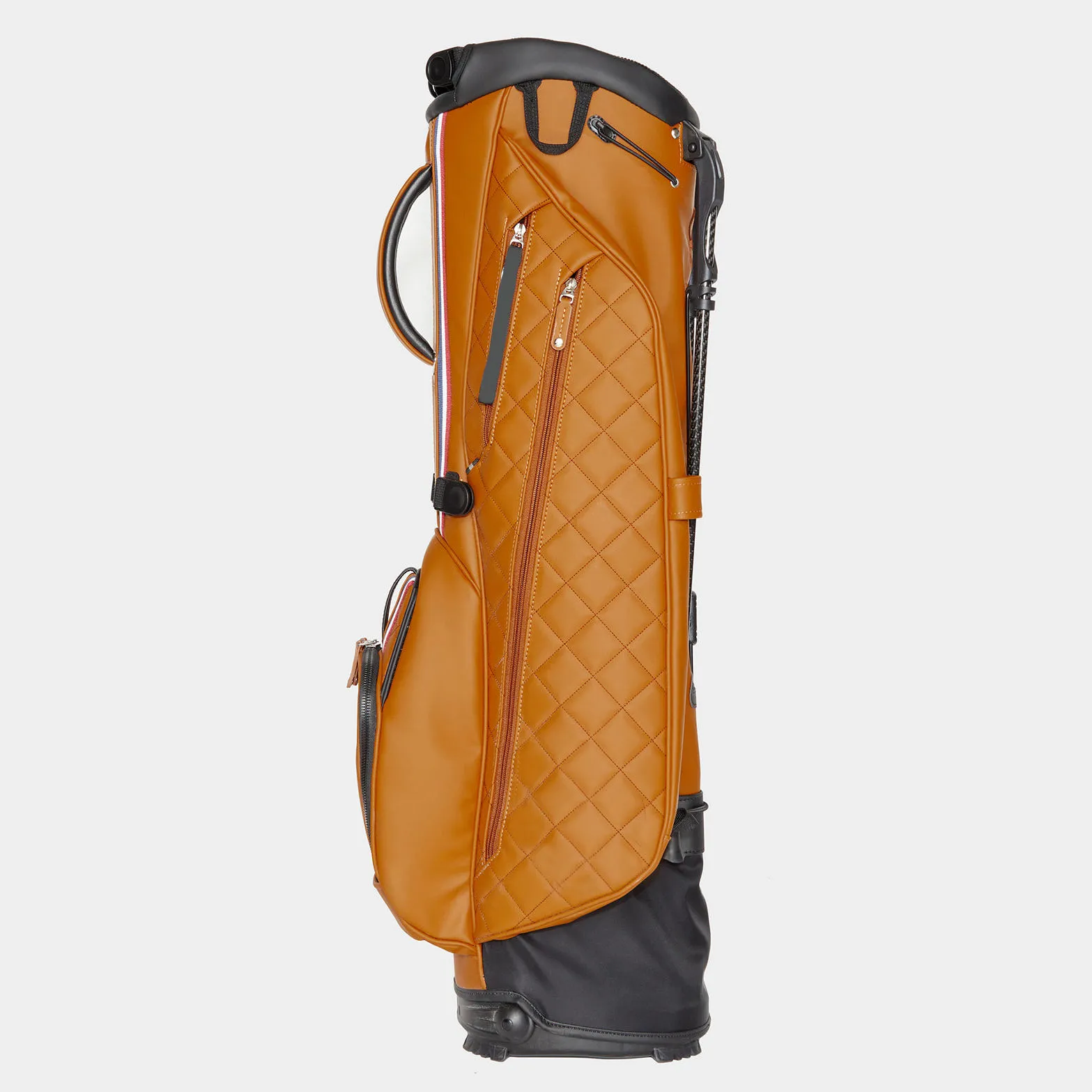
Why zippers stick, and why it matters
A stand bag zipper sticks for a handful of reasons, most of them preventable. Sand and dirt from the course are the number-one culprit: grit works into the teeth, causing the chain to jam and wearing the teeth down as it is dragged back and forth. Dried sweat, sunscreen, and grass residue coat the track and make it sticky. Occasionally a slider is slightly bent or a tooth is out of alignment, but before assuming structural damage, clean and lubricate — the vast majority of sticking zippers are a dirt and lubrication problem, not a broken one. Even the best-built pocket develops a gritty chain eventually, because no zipper is immune to a season of sand.
Zipper care matters beyond annoyance. A jammed zipper on the main compartment can strand your clubs, a stuck valuables pocket is a safety and security concern, and dragging a gritty chain wears the teeth until the zipper no longer closes at all — a repair that a minute of lubrication could have prevented. A zipper that fails on the course is also the failure most likely to get a bag replaced or returned, so its care is directly tied to product satisfaction. Because zippers carry daily load and see the most repeated motion of any bag component, keeping them smooth is one of the highest-value, lowest-cost maintenance jobs on the bag — a few minutes every couple of weeks that pays off across the whole life of the bag.
For a brand sourcing bags, zipper smoothness is a spec you can test. Pull-count testing — running a zipper thousands of cycles and measuring the force — reveals which sliders and teeth hold up and which degrade fast. In factory QC we combine pull-count testing with material checks, so a pocket that an owner lubricates every ten rounds is a pocket built to tolerate that care without binding prematurely. A bag whose zippers run smoothly for years is a bag customers notice, praise, and reorder, which is precisely why zipper quality shows up in sourcing decisions before a single logo is stitched.
Why a dry lubricant, not oil or WD-40
The single most important zipper rule is to lubricate with a dry product, not a wet one. Dry lubricants — powdered graphite, wax sticks, and silicone-free dry sprays — stay on the teeth where they reduce friction without attracting dust. Oil-based lubricants and WD-40 feel slick at first, but they leave a wet film that catches sand and grit, turning a smooth zipper into a gritty, worse-than-before one within a round, and they can stain the bag fabric. That initial "smooth" feeling is exactly what makes people reach for oil, and exactly why it backfires. The wet-vs-dry distinction is the difference between a zipper that gets smoother over time and one that quietly deteriorates, so make the dry rule the first thing you teach anyone who carries the bag.
Match the dry lubricant to the zipper and the bag colour. Powdered graphite is excellent on metal teeth but can leave a faint dark mark on pale fabric, so wipe the teeth with a cloth after applying. Wax sticks are clean and easy to control on both fabric and metal, ideal for light-coloured bags. Silicone-free dry lube sprays reach recessed tracks. Whichever you choose, the rule is the same: clean first, lubricate dry, wipe the excess, and never turn to household oils.
Step-by-step zipper lubrication
The proper routine has four short stages. First, clean the zipper: open it fully, brush the teeth with a dry, stiff-bristled brush or an old toothbrush to lift sand and lint, and wipe the track with a cloth. For stuck-on grime, dampen the cloth with isopropyl alcohol and wipe the teeth (allowed to dry completely) before lubricating — never lubricate a dirty zipper, because the lube coats the grit and grinds it in. Second, apply the lubricant sparingly along the full length of the open teeth on both sides of the tape.
Third, work it in: close and open the zipper 5 to 10 times to distribute the lubricant evenly along the chain, and wipe any excess off the fabric with a clean cloth so nothing transfers onto the bag. Finally, test and re-apply if needed — a zipper that still catches after cleaning and one light application may need a second pass or a realignment of the slider. The whole job, done well, takes about 10 to 15 minutes and leaves every pocket running smooth.
How often to lubricate
Lubricate the main-compartment and most-used pockets roughly every 10 to 15 rounds, or whenever a zipper starts to feel rough or catch. The frequency depends on conditions: a golfer playing sandy or dusty courses, or in wet weather, will need the routine more often, because grit and moisture are exactly what clog the chain. A golfer on clean, dry fairways can stretch it further. The audible and tactile cue is your guide — the moment a zipper no longer glides easily is the moment to clean and lubricate it. Trust the feel over the calendar, and you will never be far wrong.
It is better to lubricate on a schedule than to wait for a jam, because once a zipper has been dragged gritty a few times, the wear is done even after it is fixed. Fold the 10-15 round zipper pass into the same periodic check as the straps and the stand, so the whole bag is serviced on one weekday evening rather than caught out mid-round. That cadence prevents the small jobs from compounding into a broken zipper during a competitive round, and it is the habit lifespan-focused maintenance depends on. Consistency beats intensity: a minute of prevention every few weeks outperforms a full rescue after a jam by a wide margin.
When sticking means something else
If a zipper stays stiff or catches after a proper clean and lubricate, the problem is structural, not dusty. Check the slider: a worn or slightly bent slider is a common cause of one-direction jamming or a track that separates behind the pull. Check the teeth for bends, burrs, or missing teeth, especially near the bottom stop where the most stress lands. And check the zipper tape for catching fabric — a fold of shell fabric that the slider habitually picks up will jam a perfectly good zipper over and over.
Many of these issues are repairable while the bag is still sound. A new slider can often be fitted without replacing the whole pocket, and a bent stop can be straightened. When the teeth are badly worn or the tape is pulling away, the zipper may need replacing — a seam-sewing repair a factory or a tailor can do. Knowing the difference between "needs lubrication" and "needs a part" prevents both an unnecessary repair and a frustrating, unrepairable jam at the worst possible moment on the course. It also lets an owner decide confidently whether to spend five minutes or to book a repair, which matters most ahead of a busy stretch of play.
Zipper care for water-resistant and torch zippers
Some stand bags use water-resistant zippers or waterproof "torch" zippers, and these need extra respect with lubrication. Only use lubricants the zipper manufacturer approves for water-resistant types; heavy fluids or waxes can break down the seals and compromise water resistance. Many water-resistant zippers rely on the lips sealing dry, so a light dry lubricant on the teeth is enough — do not flood the tape with product. On "torch" zippers, follow the maker's specific lube guidance, since these are precision parts where the wrong product affects both water protection and smoothness.
For a bag advertised as waterproof or with AquaGuard-style zippers, default to the most conservative option: clean with a dry brush, apply a minimal dry lubricant if specified, and otherwise just keep the teeth free of grit. When in doubt, favour no lubricant over the wrong lubricant for these zippers. If the factory's warranty covers the water resistance, confirming the approved lube keeps the seal intact and the claim valid, which protects both the owner and the brand. A waterproof zipper is a precision weather seal, and treating it like an ornamental chain risks a leak that no amount of lubrication can undo.
Zipper care schedule at a glance
| Task | Frequency | Time | Key Rule |
|---|---|---|---|
| Clean the teeth | Every lubrication pass | 3 min | Dry brush first; isopropyl only on grime, dry fully |
| Apply dry lubricant | Every 10-15 rounds / when rough | 5 min | Graphite, wax, or silicone-free dry lube |
| Work in + wipe excess | Every pass | 2 min | Close-open 5-10 times, wipe fabric clean |
| Structural check | Seasonal | 5 min | Slider wear, bent teeth, bottom stop, tape catch |
| Water-resistant zippers | As needed | — | Only approved lube; never flood the tape |
Sourcing zippers that stay smooth
Owners maintain zippers, but sourcing decides how much maintenance a zipper needs. A quality zipper — smooth metal or moulded plastic teeth on a dense tape, with a solid slider and a reinforced bottom stop — resists grit and wears slowly, needing little more than the occasional clean and lube. A cheap zipper with a flimsy slider and soft teeth jams early and frequent. So the zipper care story starts at the factory: choosing a zipper matched to the pocket load and the climate is part of a durable stand bag build.
At QUANZHOU JUNYUAN BAGS we select zippers by use case and test the sliders and teeth in factory QC, so the care routine an owner follows protects a component designed to be maintained rather than one fighting its own design. The result is a bag whose zippers glide for years with a ten-minute pass every few weeks. Combine good sourcing with the dry-lube habit and owners get smooth, reliable access to every pocket for the life of the bag — and fewer warranty calls for a brand. It is a textbook case of a small, repeatable maintenance habit protecting a substantial investment, and it is a habit worth teaching on every care card you ship.
Understanding the zipper parts first
A little anatomy makes the care clear. A zipper is made of two tapes, each carrying a row of teeth, joined by a slider that meshes the teeth as it travels; a top stop at each end and a bottom stop (or a separating box) keep the slider from running off the chain. The slider holds the teeth together on its closed side and releases them on its open side. The parts that wear are the teeth and the slider, and the things that clog them are grit and residue. Knowing this is why lubrication goes on the teeth, not just the pull, and why the bottom stop needs the most attention — it sits where dirt and stress collect.
This matters for maintenance because the slider is where most "sticking" actually lives. When the slider's channels are full of grit, it cannot guide teeth cleanly, and the zipper feels rough or catches even over healthy teeth. Cleaning the slider's interior with a dry brush and a dab of isopropyl, then working the lubricant through, often restores smooth operation without touching the teeth at all. Understanding the anatomy turns zipper care from guesswork into a targeted fix: keep the slider channel clean, the teeth lubricated, and the stops intact, and the chain runs true.
Cleaning per zipper type
Stand bags use a few zipper styles, and each cleans best a little differently. Metal teeth (usually brass or nickel) respond well to a dry brush plus powdered graphite, which reduces friction between the metal teeth; they are the heaviest and most durable but can rust if a wet product lingers, so keep them dry. Plastic coil and moulded nylon teeth are lighter and smoother but softer, so they are more sensitive to grit and most forgiving of wax sticks and dry silicone sprays — avoid anything abrasive on nylon. Water-resistant zippers are the exception, as covered above, needing only approved care to protect their seals.
Match your cleaning tool to the type: a stiff dry brush for coarse grit in metal teeth, a soft toothbrush for delicate nylon coils, and a lint-free cloth with isopropyl for sticky residue. Never use a wire brush or metal pick, which scratch the teeth and create new snag points. The right tool for the zipper type is part of protecting the component and part of teaching customers the correct routine on a care card — a small detail that prevents a whole class of avoidable damage.
Troubleshooting a zipper that separates or slips
Beyond sticking, a zipper that separates behind the slider — where the two sides come apart as you pull — or that slips open on its own signals a different problem. A slider that is too loose or worn will let the teeth separate behind it no matter how smooth the chain is; squeeze the slider's sides gently back together with pliers to retension it, or replace the slider. A zipper that comes apart at the bottom stop has a worn or loose stop; a new stop or a re-sewn tape fixes it. These are mechanical fixes, not lubrication ones, and doing them preserves a pocket that is otherwise fine.
Distinguish clearly: if the zipper is hard to move but stays closed, clean and lubricate. If it moves but the chain unzips behind the pull, that is a slider or stop issue. If it splits at the bottom, check the stop. Getting the diagnosis right avoids wasting time lubricating a worn slider and, equally, avoids replacing a zipper that only needed a dry lube. This precise, judgement-based care is the kind that keeps a well-built factory bag opening and closing reliably for years, and it is what our QC testing bakes into the zippers before they ship.
Zipper care inside a clean-and-prevent routine
The best zipper care is prevention: keep dirt out of the zippers in the first place. Zip pockets fully after every use so the teeth are covered and less grit enters, especially the main compartment. Keep the valuables pocket and umbrella pocket clear of standing sand, and brush loose grit off the shell before it works into the tracks. These tiny habits reduce how often a full clean-and-lube is needed and dramatically extend zipper life. Prevention is the quiet partner of the 10-15 round pass, and together they form the whole of zipper maintenance.
A zipper that is cleaned, kept zipped, and lubricated on schedule essentially never jams during play. Owners who fold this into a regular evening check of the whole bag — straps, stand, and zippers together — protect the highest-wear components in one sitting. For a brand, printing the clean-and-prevent routine next to the lubrication step shows customers the full picture and reduces avoidable returns. Prevention, lubrication, and correct diagnosis are the three legs that keep every pocket on a quality stand bag gliding for the life of the bag.
Recommended Internal Links
- Products (Stand Bag Architectures)
- Factory & QC
- Golf Stand Bag Buying Guide
- Extended Lifespan Maintenance Guide
- Clean & Maintain Guide
- Related Care & Repair Collection
Smooth zippers come from a clean, well-lubricated chain. Clean the teeth with a dry brush, apply a dry lubricant — graphite, wax, or silicone-free dry spray — sparingly, work it in over 5 to 10 passes, and wipe up the excess. Repeat every 10 to 15 rounds or whenever a zipper feels rough, and skip oil-based products and WD-40 entirely. When a zipper still catches after cleaning, check the slider, teeth, and tape rather than accepting a jam. For durable zipper sourcing, water-resistant options, or a care card for your customers, contact us at service@junyuanbags.com or +86 17750020688.

FAQ
What is the best lubricant for a golf bag zipper?
A dry lubricant such as powdered graphite, a wax-based stick, or silicone-free dry lube. Avoid oil-based lubricants and WD-40, which attract dirt and can stain the fabric.
Can I use WD-40 on golf bag zippers?
No. WD-40 attracts dust and grit that will make the zipper worse over time, and it can leave an oily stain on the bag fabric. Use a dry lubricant instead.
How often should I lubricate my golf stand bag zippers?
Lubricate every 10-15 rounds or whenever a zipper starts to feel rough. Clean the teeth first, because lubricating a dirty zipper traps the grit and accelerates wear.
How do I fix a zipper that keeps sticking?
Clean the teeth with a dry brush and isopropyl alcohol, realign the slider, then apply a dry lubricant. If it still catches, inspect for bent teeth or a worn slider and replace the pull or slider.
Will graphite lubricant stain my golf bag?
Powdered graphite can leave a faint dark mark on light fabric, so wipe the teeth with a cloth after applying. Wax sticks and silicone-free dry lube are cleaner alternatives on pale bags, and a wax stick is both effective and nearly invisible on a very light shell.
Why is my zipper hard to close but easy to open?
Dirt or debris trapped in the teeth, or teeth slightly out of alignment, cause one-direction jamming. Clean the track, realign the chain, and lubricate; if it persists the slider may be worn. Once a slider wears unevenly it jams in only one direction, which is a strong clue that the slider — not the teeth — is the part to replace.
Request a B2B quote for golf stand bags
Send your target market, expected MOQ, and reference photos. We respond within 24 hours with a sampling plan.