For a featherweight minimal carry, explore our Sunday bags — An all-weather golf market only justifies a waterproof stand bag when the region genuinely delivers rain: wet coastal and northern climates with frequent downpours — the UK, northern Europe, the Pacific Northwest, and northern Japan — where a coated-but-unsealed bag leaks at its seams and soaks the clubs, the phone, and the scorecard, so a full waterproof package of a 5,000-10,000 mm hydrostatic head (ISO 811), seam-taped critical seams, and water-repellent zippers is the difference between a sold-through line and a return stream. This guide helps a B2B buyer decide when to invest in a waterproof SKU, how to size the waterproof scope to the target market, and which performance and compliance targets to lock so the bag earns its all-weather claim in the region where it is sold.
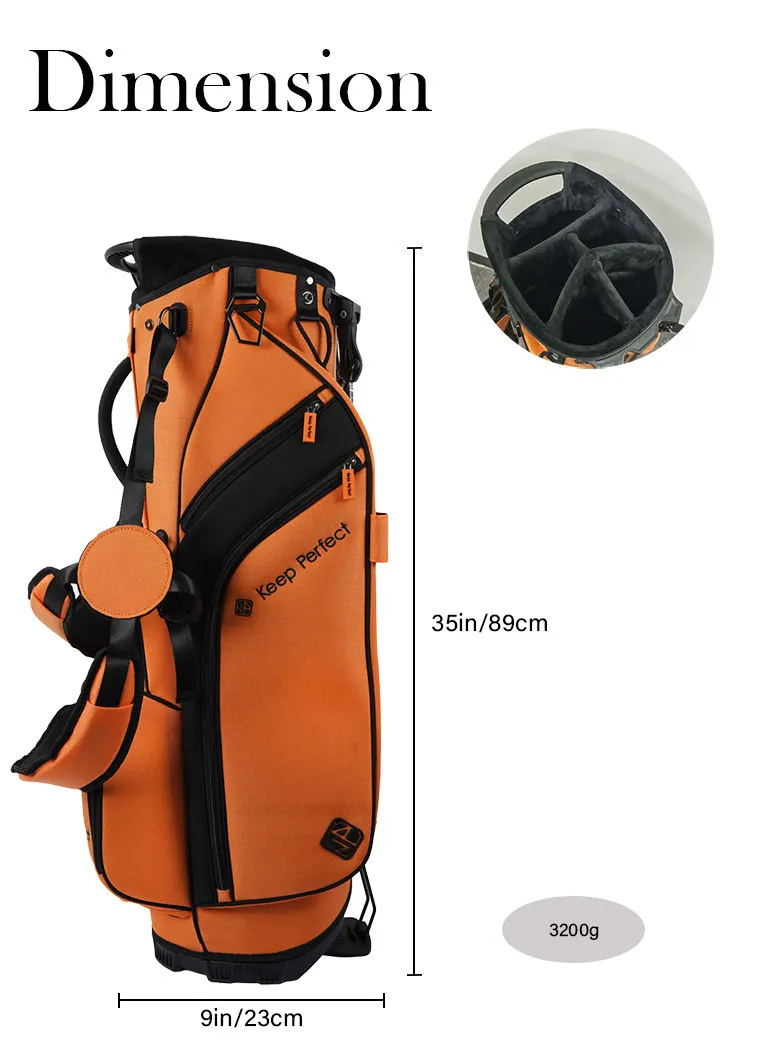
From a factory build standpoint, our dedicated waterproof stand bags page walks through the materials, hardware, and quality checks in detail.
Key takeaway: match the waterproof scope to the market
Not every region needs a fully waterproof stand bag, and buying the heavy waterproof package for a dry market is a cost and weight mistake. The smart B2B decision is to size the waterproof scope to the region the bag will actually be sold in. A wet coastal or northern market with frequent rain justifies the full package — sealed seams, water-repellent zippers, protected openings — because that is what protects the gear and preserves retailer confidence through the wettest months. A drier market may only need a water-resistant finish that sheds an occasional shower at a lower weight and cost.
This article frames the all-weather decision the way a product team should: start with the target market's climate, then decide the waterproof scope, then set the weight ceiling and the test plan. It draws on the same four-layer package described in our waterproof stand bag guide but focuses on the market-sizing logic and the compliance and performance targets that make an all-weather claim defensible.
- Which regions and seasons justify the full waterproof package
- How to size the waterproof scope to climate and price point
- The performance targets that make an all-weather claim defensible
- The weight trade-off and how to keep a walking line light
- Compliance and care that keep a waterproof SKU selling
Which regions truly justify a waterproof stand bag
The first decision is a market question, not a material question. All-weather golf is concentrated in regions where rain is frequent enough to make a wet round normal rather than an exception. The classic markets are the United Kingdom, Ireland, northern Europe including Scandinavia and the Benelux countries, the Pacific Northwest of the United States and Canada, and northern Japan with its long rainy season. In these markets, golfers expect a bag that keeps gear dry through a full round in a downpour, and a "waterproof" label that leaks once destroys both repeat purchases and the retailer's trust in the brand.
Outside those climates, the calculus shifts. A market that sees a few showers a season can run on a water-resistant finish at a lower weight and a friendlier price. The trap is selling a water-resistant bag as waterproof in a wet market, or paying for a full waterproof package in a dry one. The buyer who maps the target countries and their rainfall first, then chooses the scope, ends up with the right cost and the right claim for each market rather than one over-built or under-built SKU.
How to size the waterproof scope to climate and price point
Once the market is mapped, the waterproof scope should be sized deliberately. In a heavy-rain market, specify the full package: a TPU-coated or laminated shell at 5,000-10,000 mm hydrostatic head (ISO 811), seam-taped critical seams at 18-25 mm width, water-repellent zippers on the critical pockets and the club compartment, and protected openings with flaps or weather lips. This is the scope that keeps a phone dry and a set of clubs dry through a sustained downpour, and it is the scope a retailer can honestly advertise as all-weather.
For a moderate or entry price point in a damp-but-not-extreme market, a lighter scope is defensible: a water-resistant coating with a lower hydrostatic head, taping limited to the main body seams, and water-repellent treatment on the valuables pocket only. The buyer should state the scope explicitly in the spec so the factory does not overshoot or undershoot. At QUANZHOU JUNYUAN BAGS we work through the scope with buyers across OEM and ODM programs, confirming which seams are taped and which zippers carry the water-repellent standard before the sample is cut, so the price and the claim line up with the region.
Performance targets that make an all-weather claim defensible
An all-weather claim is only as strong as the tests behind it. Lock these performance targets on the sample and repeat them at bulk inspection so the claim is reproducible: the fabric hydrostatic head to ISO 811 at your chosen level, a seam-tape peel-strength test re-tested after temperature cycling, a spray or rain simulation aimed at the pockets and zippers with no ingress, and a water-ingress inspection after a defined number of stand-deployment cycles. Around these, add the mechanical targets that keep the bag functional through a wet season — stand deployment cycles, base stability, zipper cycle and smoothness, strap anchor load, and a drop test on the packed carton.
The value of locking the methods is that a reorder or a second colorway is judged against the same standard, which prevents the drift that happens when a new batch is approved by looks alone. It also gives the buyer a defensible answer when a retailer questions the claim: the bag has a tested hydrostatic head, a sealed-seam record, and a pass on the assembly rain test, all on file. That is the difference between marketing a word and engineering a guarantee.
The weight trade-off on a walking all-weather line
All-weather walking is where the waterproof and the lightweight goals collide, and the resolution is a buyer decision. Waterproofing adds mass through the coating or lamination, the seam tape, and the heavier water-repellent zippers, typically a 0.3-0.6 lb penalty over a non-waterproof carry bag of the same architecture. If the bag is a true walking Sunday bag, that penalty is felt on every climb; if it is a cart-allowed line, the weight matters less and the buyer can afford a tougher laminate.
The disciplined approach is to set the weight ceiling first, then choose the lightest waterproof package that clears it. On the production sample, verify the weight tolerance alongside the waterproof tests, because a bag that is dry but mislabeled on weight fails a different trust test. A 200D TPU-coated nylon keeps a walking line light at a still-defensible hydrostatic head; a heavier laminated polyester boosts abrasion at the cost of carry weight and suits the cart-allowed SKU. Setting both the weight and the waterproof target as one decision is what keeps an all-weather line competitive in both dimensions.
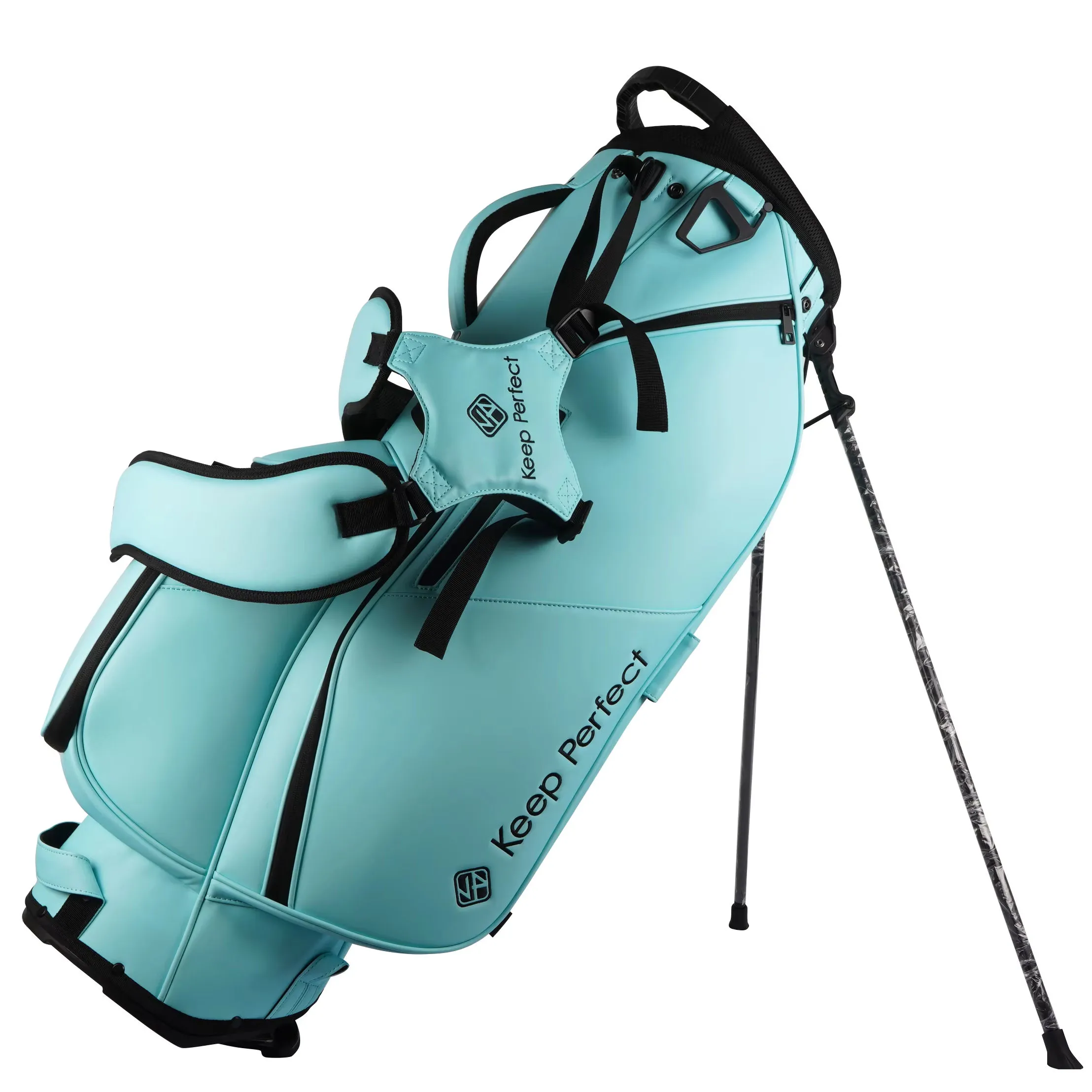
Specification table for an all-weather waterproof SKU
Use this table as the one-page scaffold for an all-weather waterproof program. Confirm each row on the sample and lock the values before bulk so the claim and the cost hold together.
| Parameter | Typical Spec | Buyer Notes |
|---|---|---|
| Target segment | Entry / Mid-tier all-weather | Confirm the region and its rainfall profile. |
| Shell material | TPU-coated 200D/400D nylon or laminated polyester | Coated nylon for light walking; laminate for toughness. |
| Hydrostatic head | ≥5,000-10,000 mm (ISO 811) | Name method and acceptance on the RFQ. |
| Seam sealing scope | Critical seams taped, 18-25 mm | List body, pocket, and strap seams. |
| Zippers | Water-repellent standard + protected openings | Prioritize the valuables pocket. |
| Target weight | 4.2-6.2 lbs | Set tolerance for the walking market. |
| Top divider | 4/5/6-way (optional full-length) | Confirm for the target player. |
| Assembly test | No water ingress after deployment cycles | Spray/rain simulation + ingress check. |
Compliance and care for an all-weather line
An all-weather waterproof line also carries compliance and care expectations that are easy to under-plan. In the EU, the materials and coatings should be checked against REACH for restricted substances, and for the US market the California Proposition 65 framework governs certain plasticisers and heavy metals that can appear in PVC and some coating systems; a PVC-free, water-based coating sidesteps many of those issues. Confirm the destination-market compliance with the factory and the material labs, and keep the test certificates on file for the retailer.
Care guidance matters as much as the claim, because a waterproof bag fails fast if it is packed away wet. Provide the end customer with clear care instructions: dry the bag fully with pockets open, store in a ventilated space, and avoid long-term storage in a sealed plastic bag, which traps moisture and breeds mold. On the fabric side, limit heavy detergents and abrasives that strip the coating or the seam tape. A short care card inside the bag reduces returns and extends the life of the waterproof claim, which is why we include it in mature programs.
Test plan and acceptance criteria for an all-weather program
Confirm the test plan on the pre-production sample and repeat it at bulk so the all-weather claim is reproducible. The waterproof core is verified by hydrostatic head to ISO 811, a seam-tape peel test re-tested after cycling, a spray/rain simulation on pockets and zippers, and a water-ingress inspection after deployment cycles. The mechanical layer covers stand deployment, base stability, zipper cycle, strap load, and a packed-carton drop test.
- Hydrostatic head to ISO 811 against the locked target
- Seam tape adhesion / peel-strength check after cycling
- Spray/rain simulation test for pockets and zippers, no ingress
- Water-ingress inspection after deployment cycles
- Stand deployment cycle and base stability check
- Zipper smoothness + cycle test and strap anchor load
- Destination-market compliance review (REACH / Prop 65 as relevant)
The factory QC page shows how these checkpoints run on the line and at final inspection, so you can see where an all-weather sample is verified before it ships. Locking the methods now also stabilizes reorders, giving every new colorway the same auditable standard.
How to brief the all-weather program
Send us the target market and its climate profile, the bag type and weight ceiling, the divider, the waterproof scope you want (full package or light), the pocket list, the branding method, your MOQ, and the timeline. With that, we can confirm a production sample in the standard 10-20 days and bulk in 45-60 days from a proven waterproof architecture. For a deeper look at the material and procurement layers, the material guide and the waterproof package specification cover the same decisions from those two angles.
The all-weather buyer's construction checklist
Beyond the waterproof package itself, an all-weather bag depends on a small set of construction details that a buyer should confirm on the sample. The top divider should be secure and full-length on a premium line so the shafts do not rattle against a wet shell and abrade the fabric from inside; a 14-way full-length divider is the strongest protection for a club set in a wet climate. The base should have a durable, weatherproof bottom panel or plate that lifts the bag off wet ground, because a soaked base is how water finds its way into the bag from below even when the rain is over. The stand should deploy cleanly on wet, uneven ground and be stable enough not to topple the bag in a gust, which is a real failure mode on a windy coastal course.
The strap anchors and the handle attachment need reinforcement in an all-weather line because wet loads are heavier: a bag with soaked gear weighs more, and the strap load test should reflect a wet weight, not the dry catalog weight. Confirming these details on the sample — the divider, the base, the stand stability, and the reinforced anchors — makes the difference between a bag that is merely labeled waterproof and one that behaves well in the rain on an 18-hole walk. These are the silent details that a buyer rarely reads about in a catalog but that decide whether a wet round ends with dry clubs, dry pockets, and a bag that still stands upright.
Market timing, packaging, and the wet-season launch
An all-weather line should be launched to land before the wet season, and the production and shipping calendar should back into that date. If the target market's rain peaks in winter, the sampling must be locked early enough that bulk clears inspection and arrives with time to stock before the first wet weekend. The buyer should confirm the lead time with the factory — a production sample in the standard 10-20 days and bulk in 45-60 days — and add shipping and any destination inspection time, so the launch is not late for the season that justifies the product.
Packaging matters more in a wet market than many buyers expect. Specify a moisture-barrier or a breathable protective pouch so the bag does not arrive damp after a humid ocean voyage, and include the care card that tells the end customer how to dry and store it. A bag that arrives dry and well-packed reduces the first-layer returns that a wet market punishes hardest. If the program includes a reorder for a second colorway, keep the waterproof scope and the test methods identical so the season-two launch is a fast repeat rather than a fresh negotiation. Getting the timing and the packaging right is what turns a technically sound bag into a commercially successful all-weather line.
Divider, base, and stand: the all-weather hidden details
Two details of an all-weather bag are easy to overlook but matter at the point of use. The cup holder and the accessories pocket should drain, because a cup holder or a side pocket that traps water becomes a reservoir that wets the shell and breeds odor; an open mesh or a drainable design prevents pooling. The valuables pocket, where the phone and the scorecard live, deserves the best zipper and a weather flap in the whole bag, and many programs make the valuables pocket easy to identify with a brand tab so the golfer reaches for the right pocket in a hurry. On a 14-way or a hybrid 14-way design, each slot should have a smooth, stiff entrance so clubs enter cleanly while the wet hand fumbles in a drizzle.
The final hidden detail is the rain cover or the hood if the program includes one. A dedicated, attached rain hood that stows in a lower pocket gives the golfer the option to cover the club heads when the worst of the weather arrives, and it should be tested with the bag to confirm it fits the divider layout and does not abrade the shafts. Not every all-weather buyer needs the hood, but those selling into a very wet region often find it is the differentiator that closes a retail order. Confirm these small details on the sample, because they are the parts of the product a golfer actually notices halfway through a wet round.
For a brand that sells into several climates, consider offering both scopes from one platform: a full waterproof SKU for the wet regions and a lighter water-resistant SKU for the dryer markets, sharing the same architecture and much of the tooling. This gives the retailer a coherent lineup and the brand a single production relationship, while each SKU carries only the waterproof cost its market can support. It is a practical way to serve an all-weather strategy without over-building across the whole range.
Recommended reading and links
- Waterproof Golf Stand Bag Guide
- Tour Waterproof Products
- OEM/ODM Service
- Factory & QC
- Golf Stand Bag Buying Guide
Finally, plan a small run-down of the all-weather sample before a full container so you can photograph the fabric hand, the sealed seams, and the real weight for your wet-market retailers, and confirm the bag on the production silhouette. Keep the material, the taping scope, and the test methods identical across colorways so the waterproof claim stays auditable. Reach us at service@junyuanbags.com or +86 17750020688 and we will size the waterproof scope to your target region.
FAQ
Which regions most justify a waterproof golf stand bag?
Wet coastal and northern markets with frequent rain, plus parts of the UK, northern Europe, the Pacific Northwest, and northern Japan, justify a full waterproof package; drier markets may only need a water-resistant finish.
Why does a wet market need a properly waterproof bag?
In a wet market, a coated-but-unsealed bag leaks at the seams and zippers, soaking clubs, phones, and scorecards. A waterproof package with sealed seams and water-repellent zippers keeps gear dry through a sustained downpour and protects retailer trust.
Does waterproofing add noticeable weight to a walking bag?
Yes, typically a 0.3-0.6 lb penalty from the coated or laminated fabric, seam tape, and heavier zippers; set the weight ceiling first and choose the lightest waterproof package that clears it.
Can the same waterproof architecture serve both walking and cart markets?
Mostly. A walking line favors a lighter TPU coating to protect carry weight, while a cart-allowed line can afford a heavier, tougher laminate; verifying the weight on the sample tells you which market a given architecture suits.
Which material is best for golf stand bags?
It depends on positioning. Nylon and polyester are common for lightweight lines, PU synthetic leather is popular for premium look, and TPU-coated or laminated fabrics are used for waterproof programs.
What is the fastest way to get an accurate quote?
Send a short spec: bag type, material direction, divider (4/5/6/14-way), pocket list, logo method, target MOQ, timeline, and reference photos or a tech pack.
Request a B2B quote for golf stand bags
Send your target market, expected MOQ, and reference photos. We respond within 24 hours with a sampling plan.